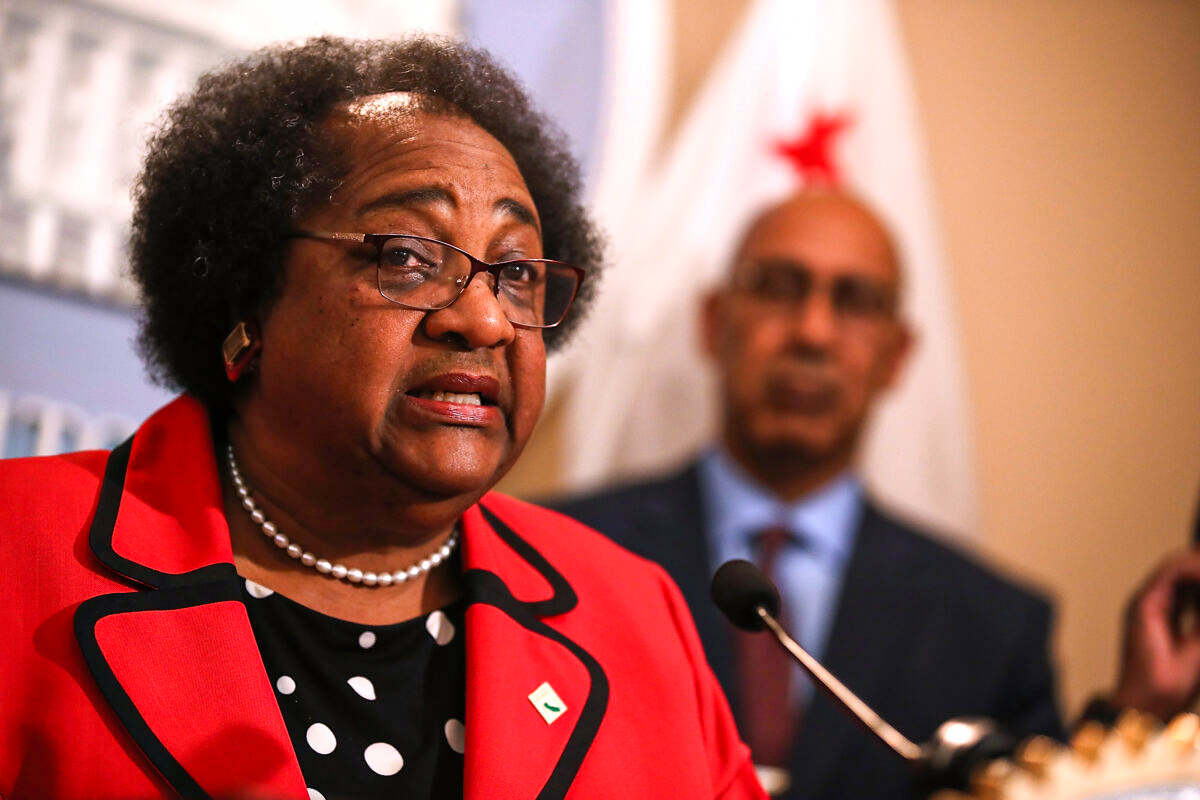

Since California is now moving toward being the fourth largest economy in the world, and we can do everything else, we can talk about reparations. Apologies without action means very little.
And she told KCRA 3:
There have been reparations given to all kinds of other individuals, but there’s been no serious effort to repair the damage done to African Americans in this country. Whether it’s been financial, legislative, educational, all those kinds of things, and it’s unquestionable that the damage has been done and that we must do something, otherwise we can’t really move forward because that legacy is there.
KCRA 3 also summarized some of her comments: “She said those who are descendants of people who were enslaved, or descendants of Black people who lived during the time of slavery but were free, would be the focus of the reparations program.”
A Great Idea
However, when the task force last met, on Jan. 27 at San Diego State University, a decent idea actually was presented. Wealth Insider reported:
The California reparations task force listened to testimony from experts who suggested possible sources for compensation, after previous meetings had touched on the potential for hundreds of thousands in monetary reparations for specific harms. The experts’ suggestions included taxing the rich, such as through a state estate tax or a “mansion tax;” incentivizing the wealthy to help fund reparations by providing tax breaks, akin to how charitable giving minimizes one’s tax burden; or helping all taxpayers with below-median wealth by means of a tax credit, which would in turn help Black households.
That last one is the key: Tax credits for those with poverty-level incomes. Then you don’t have to worry about DNA tests to prove one’s ancestry, combing through housing records for unjust uses of eminent domain against ancestors, and any other complicated way to figure things out.
More Reforms
But here are some more ideas along those lines:
[P]eople in the lowest bracket pay more than DOUBLE what the top 1% pay. Because everyone in a given area pays the same percentage of tax, it works out to be a larger portion of the overall income for people who earn less.
According to Gov. Gavin Newsom’s Jan. 10 budget proposal (pdf) for fiscal year 2023-24, which begins in July 1, sales tax revenues in that period are expected to be $33.6 billion. If the sales tax were cut by 1 percentage point (of 8 points), those revenues would decline by one-eighth, or $4.2 billion. Certainly, in a budget pegged to spend $208.9 billion for the general fund, cuts of that amount could be made. (It’s too bad this change wasn’t made last year when the state surplus was $100 billion.)
Conclusion
It’s a hopeful sign California’s reparations task force is considering at least one sensible remedy to the lingering effects of slavery and segregation. But the risk remains that the project as a whole will be counter-productive and just create more divisions, instead of bringing us together.