
A Georgia woman has been charged with murder due to her use of abortion medication allegedly leading to the death of her infant within hours of birth.
A ruling by Judge Steven Blackerby on March 23 allowed the woman to seek release and be granted bail, following the unusual charges brought against her.
Moore took the abortion drug misoprostol at home, and was later rushed to the Southeast Georgia Health System Camden Campus due to severe pain. She gave birth to a premature girl who had “major health issues,” according to police.
The mother of two admitted she had taken the abortion drug before arriving at the hospital, and police reported she also took illegal oxycodone.
Nearly all abortions are illegal in the state of Georgia after six weeks of pregnancy. The law states that an unborn child is considered a legal person once cardiac activity can be detected.
The newborn lived for about an hour, but the police report did not indicate the child’s gestational age.
The warrant for Moore’s arrest said that medical records estimated she was between 22 and 24 weeks of gestation. That age indicates the child could have been viable.
The warrant also stated the child was “a human being who was born alive and survived for one hour. Under Georgia law, the victim became a person at the moment of live birth.”
Following the 2022 Supreme Court decision in Dobbs v. Jackson Women’s Health Organization, which overturned Roe v. Wade, the federal government returned to the states the power to decide to what extent abortions are allowed in their individual jurisdictions.
The Georgia Public Defender’s office released a statement about Moore: “Today’s decision is a reminder that justice is not served by accusation alone. Our system works best when courts carefully weigh the facts, uphold constitutional protections, and safeguard the rights of every person who comes before them. Public defense exists to make those protections real.”
Some other states have sought prosecution against women who have had illegal abortions, but they have rarely been charged with murder, as in Moore’s case. However, it will still be up to state prosecutors to decide whether to move forward with the case.
Senior vice president at advocacy group Pregnancy Justice, Dana Sussman, said the case has no legal basis and the defendant should have a strong defense.
She said in a statement that Georgia’s abortion law “does not contemplate murder charges for someone who has an abortion, and self-managing an abortion is not a criminal act in Georgia. Charging Ms. Moore with murder is cruel and unjust.”
Elizabeth Edmonds, executive director of the pro-life Georgia Life Alliance, said it’s her belief that the murder charge was appropriate, in part, because Moore allegedly illegally obtained and consumed oxycodone before her fetus died.
Thus far, legal action related to abortion in states that have laws restricting abortion has been largely pointed at providers, including doctors who prescribe abortion medications remotely.
Sen. Josh Hawley (R-Mo.) introduced legislation to ban another chemical abortion drug, mifepristone, and remove its approval by the Food and Drug Administration (FDA) on March 11, saying the bill would allow women to sue the manufacturer for alleged harms caused by the drug.
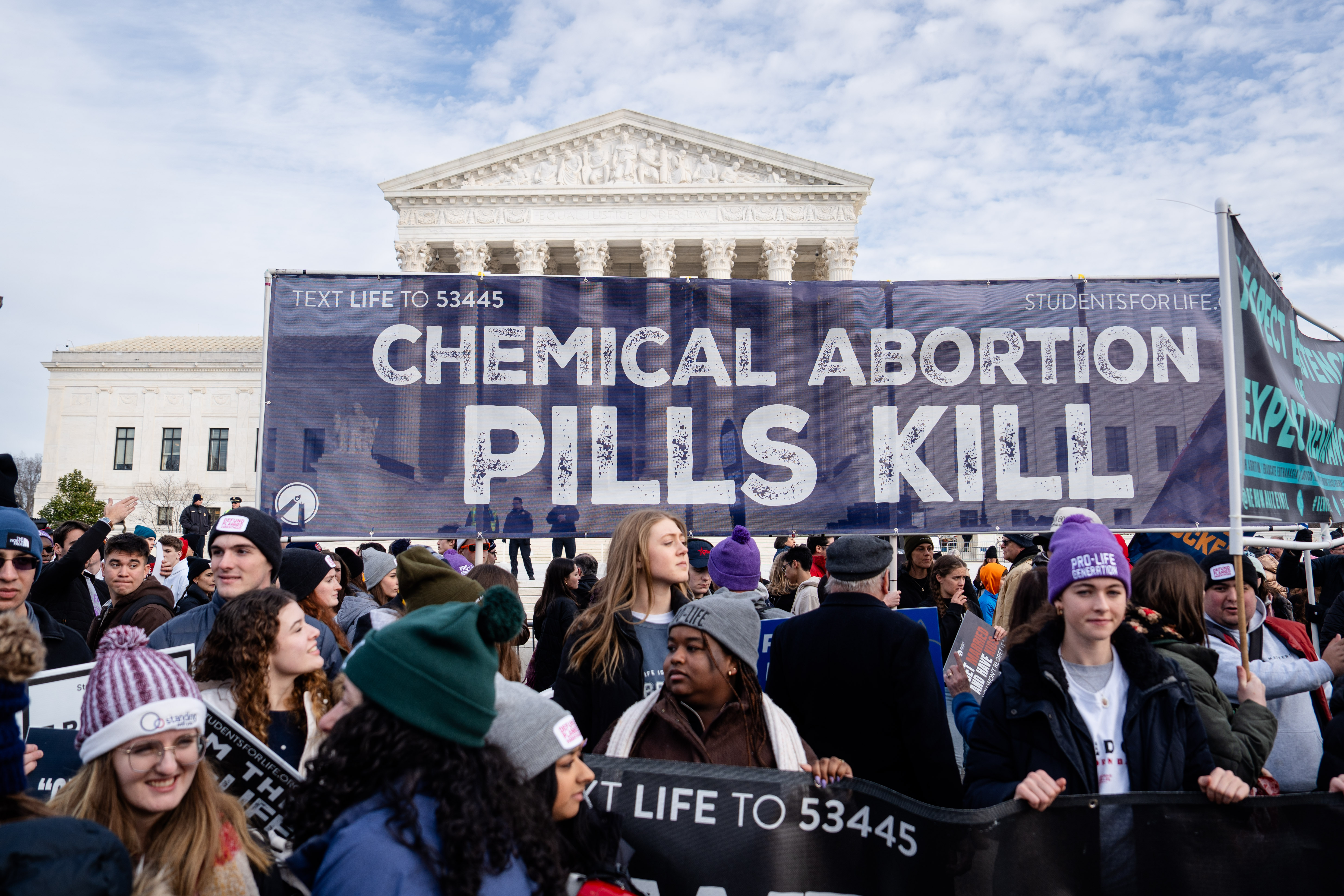
Pro-life advocates have called on the Trump administration to reimpose restrictions on abortion drugs following the Supreme Court decision in Dobbs.