
TUCSON—Andrew Thompson had only been working at Miller’s Surplus for a few weeks, yet on the day before Easter Sunday, every item he placed on the shelf seemed to carry a small farewell.
A Marine veteran and infantryman, Thompson had known the store long before he walked its aisles as an employee.
Although he was the “new guy,” barely two months on the job, the store’s closing stirred a deeply personal connection.
“I bought my first pair of combat boots here in middle school,” Thompson, 31, told The Epoch Times. “I grew up coming to this store. It breaks my heart to see it close.”
The closure is more than the end of a business—it is the conclusion of a chapter in Tucson’s history and the life work of its 97-year-old founder, World War II veteran Don Sloane.
According to the National WWII Museum, just 45,418 of the 16.4 million Americans who served in World War II were still alive in 2025—a number that continues to dwindle each day.
For three-quarters of a century, Sloane kept the doors open not just to a store, but to a space where memories were made, generations discovered what they needed, and people felt a true sense of home—a place now nearing its final days.
Difficult Decision
On April 2, the store announced that it would close after 75 years, putting its entire inventory up for liquidation.
“This has not been an easy decision,” the announcement reads. “Recent internal challenges have made it impossible for us to continue operating, and we feel it’s the responsible step to wind down the business at this time.
“We are incredibly grateful to the generations of customers, families, and friends who have supported us over the decades. Your loyalty and trust have meant everything to us.”
Seventy-five years was a remarkable run, said Sloane’s daughter, Jailyn Sloane, 30, who has been helping during the store’s final days.
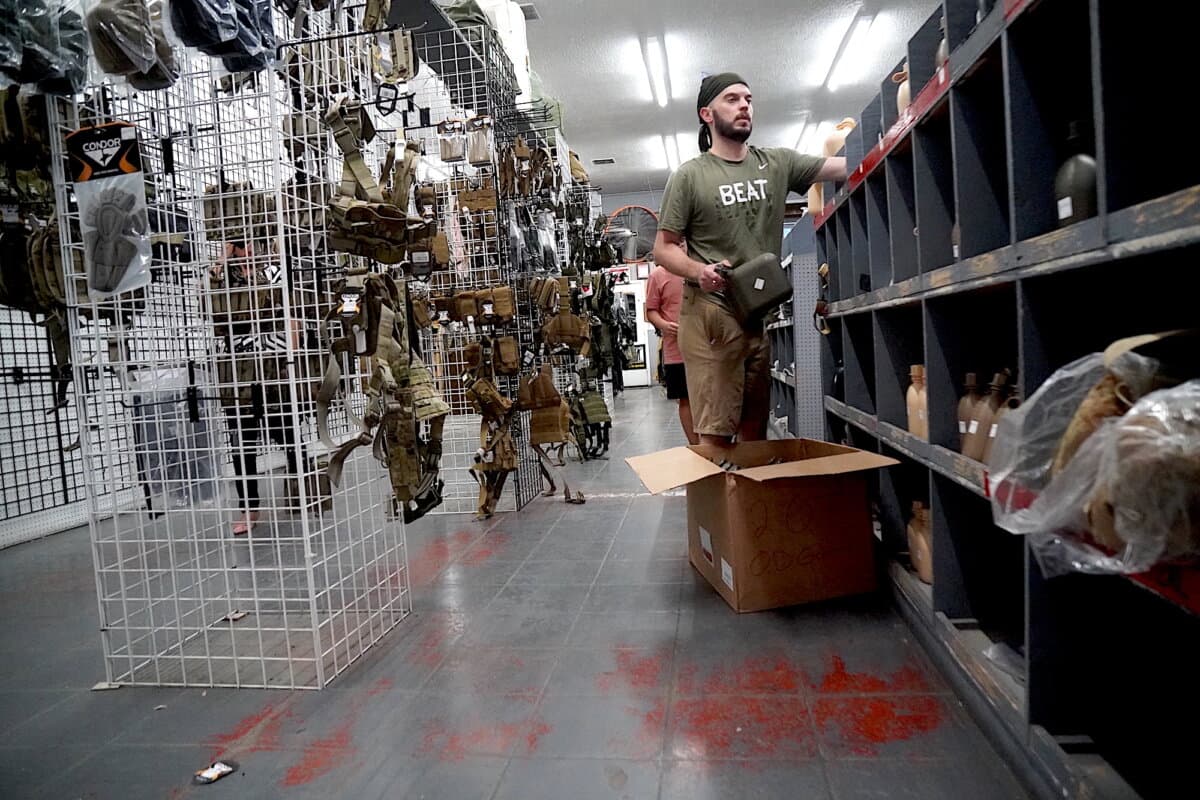
Andrew Thompson, an employee at Miller's Surplus, stocks a shelf during a business liquidation sale in Tucson, Ariz., on April 4, 2026. (Allan Stein/The Epoch Times)
“It feels bittersweet,” she told The Epoch Times. “I kept telling him he should have retired 30 years ago. He’s trying to stay positive.”
Miller’s Surplus was a downtown Tucson fixture, Jailyn Sloane said—a place where time seemed to stand still, its aisles filled with the mingled scents of canvas, leather, and memory.
From its earliest days, the store carried on the tradition of military surplus, turning unused gear from foreign campaigns and other hard-to-find items into durable, affordable treasures for anyone wandering its shelves.
The story of military surplus stores in the United States goes back to the Civil War, when production of supplies shifted from individual states and militias to centralized, industrial-scale manufacturing.
After the war, unused military equipment accumulated. The government auctioned off these surplus supplies at discounted rates to recover costs.
In 1872, Scottish immigrant Francis Bannerman opened a small store in New York City, starting what would become the American military surplus industry.
His business eventually supplied soldiers during the Spanish-American War.
After World War I, similar shops began appearing across the country, offering sturdy, budget-friendly clothing and equipment during the hardships of the Great Depression.
Following World War II, surplus stores expanded nationwide, filled with government-issue gear and pieces of military history.
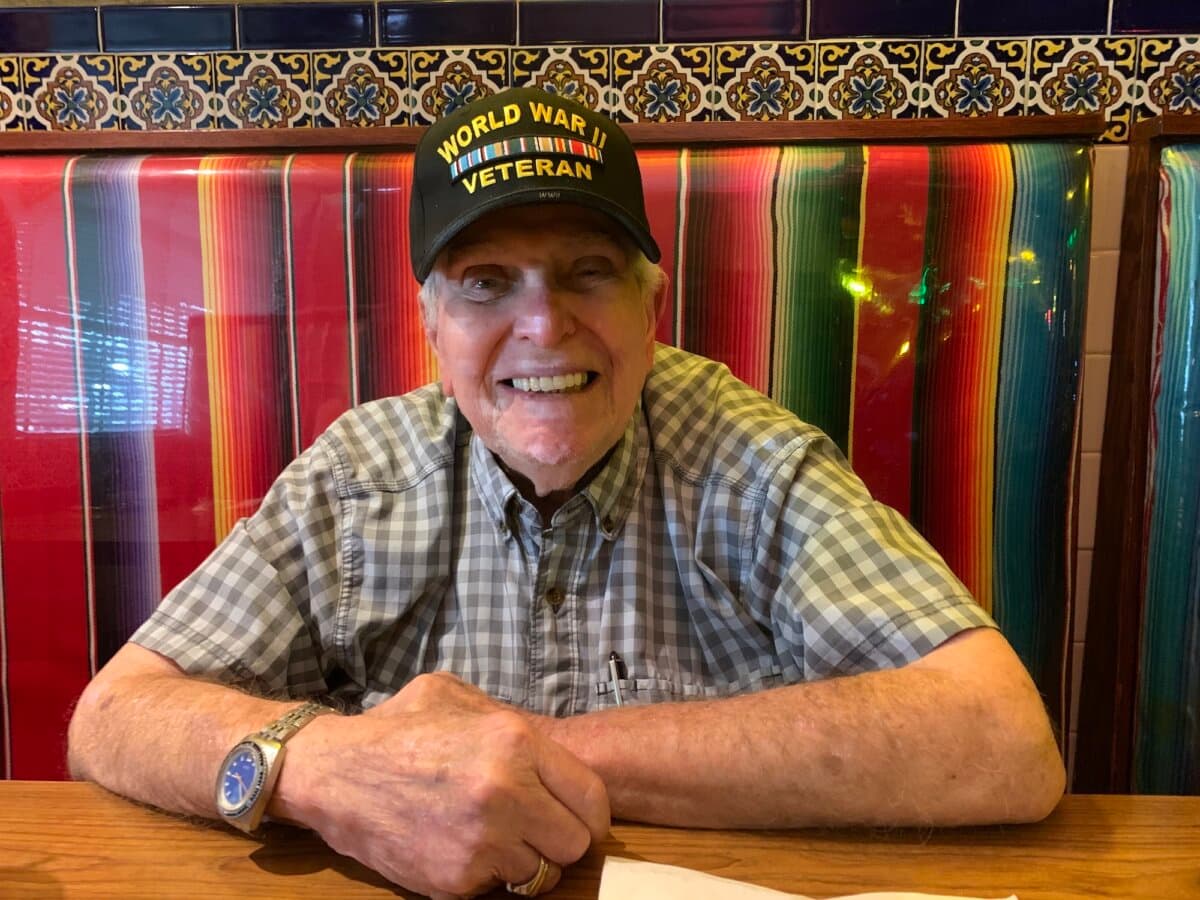
World War II veteran Don Sloane founded Miller's Surplus in Tucson, Ariz., in 1951. The business is closing after 75 years. (Courtesy of Jailyn Sloane)
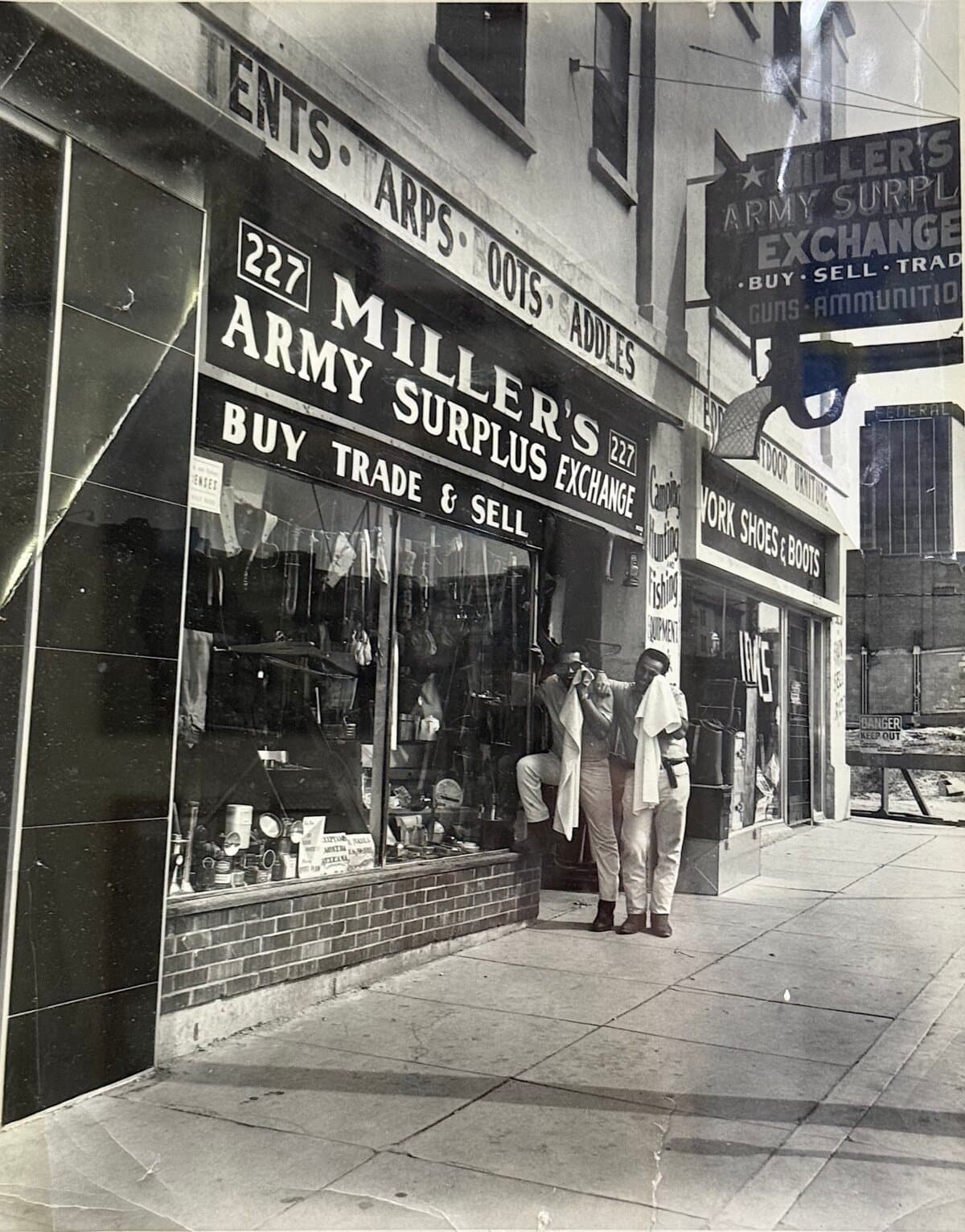
An early photograph of Miller's Surplus in Tucson, Ariz. (Courtesy of Jailyn Sloane)
By the 1950s and 1960s, these stores were fixtures in towns and cities, connecting everyday life with the legacy of past conflicts.
Eagle Army Navy Stores in Florida, for instance, grew from a single location in 1946 to 85 stores by the mid-1960s.
Carving a Niche
For decades, shoppers could find military uniforms, flags, emblems, gas masks, camping gear, survival equipment, vintage camo apparel, boots, and socks—all under one roof.
Even as large retail chains and big-box stores became common, military surplus shops remained in demand, according to Kaufman’s Army and Navy, which opened in Manhattan in 1938.
Although authentic military surplus stores are now rare, discovering a quality one reveals just how enjoyable the experience can be, the company’s website states.
Once thriving retail hubs in the 1990s, Army Navy stores have reached a turning point—reshaping their business models, carving out niche specialties, or shutting their doors under pressure from online competition.
Yet the global military surplus market continues to grow, projected to reach $12.5 billion by 2025, with an annual growth rate of roughly 6.8 percent through 2033.
Market Report Analytics says the surge is driven by outdoor enthusiasts, hobbyists, and budget-conscious shoppers seeking heavy-duty, genuine military gear. Rising interest in camping, hiking, survival activities, and historical reenactments has further increased demand.
“The military surplus market is experiencing a dynamic period driven by several user-centric trends,” the company stated in a March report. “A primary trend is the resurgence of outdoor and adventure activities.
“With an increasing number of individuals seeking experiences in nature, from hiking and camping to survival training and bushcraft, the demand for durable, reliable, and often cost-effective gear has surged.”
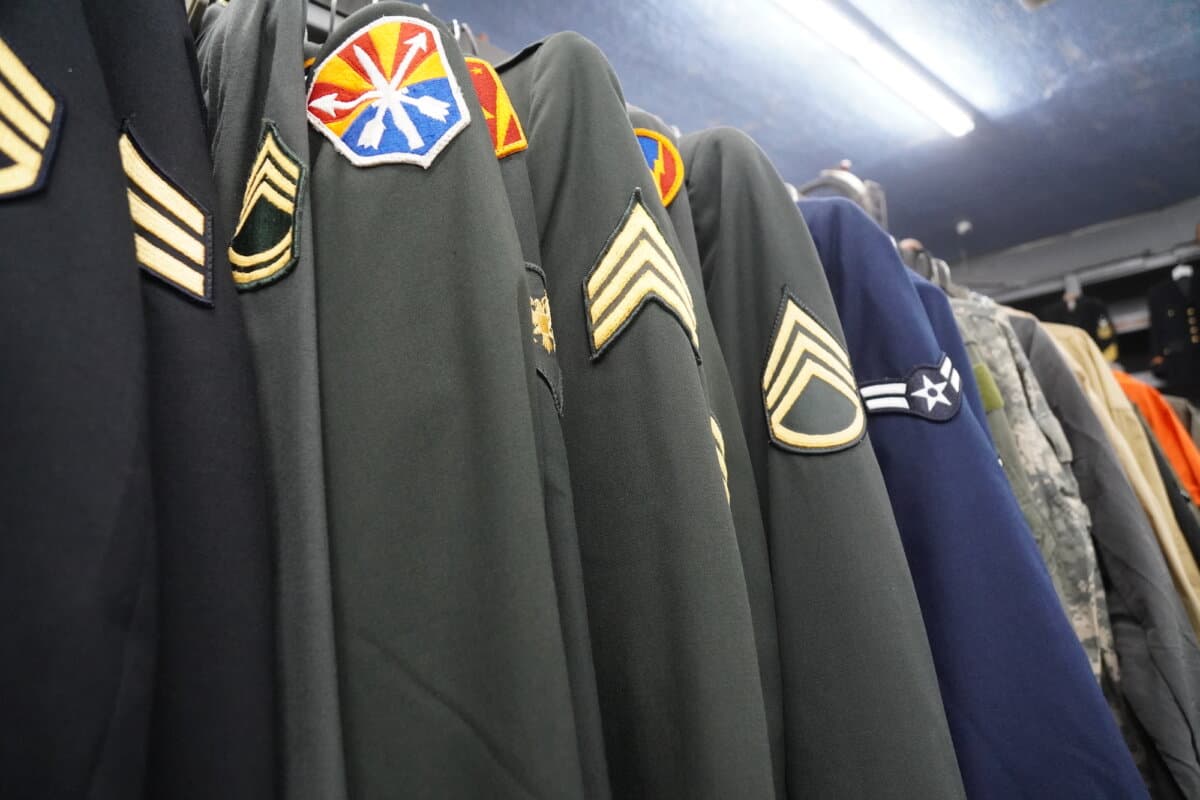
Authentic military uniforms at Miller's Surplus in Tucson, Ariz., on April 4, 2026. (Allan Stein/The Epoch Times)
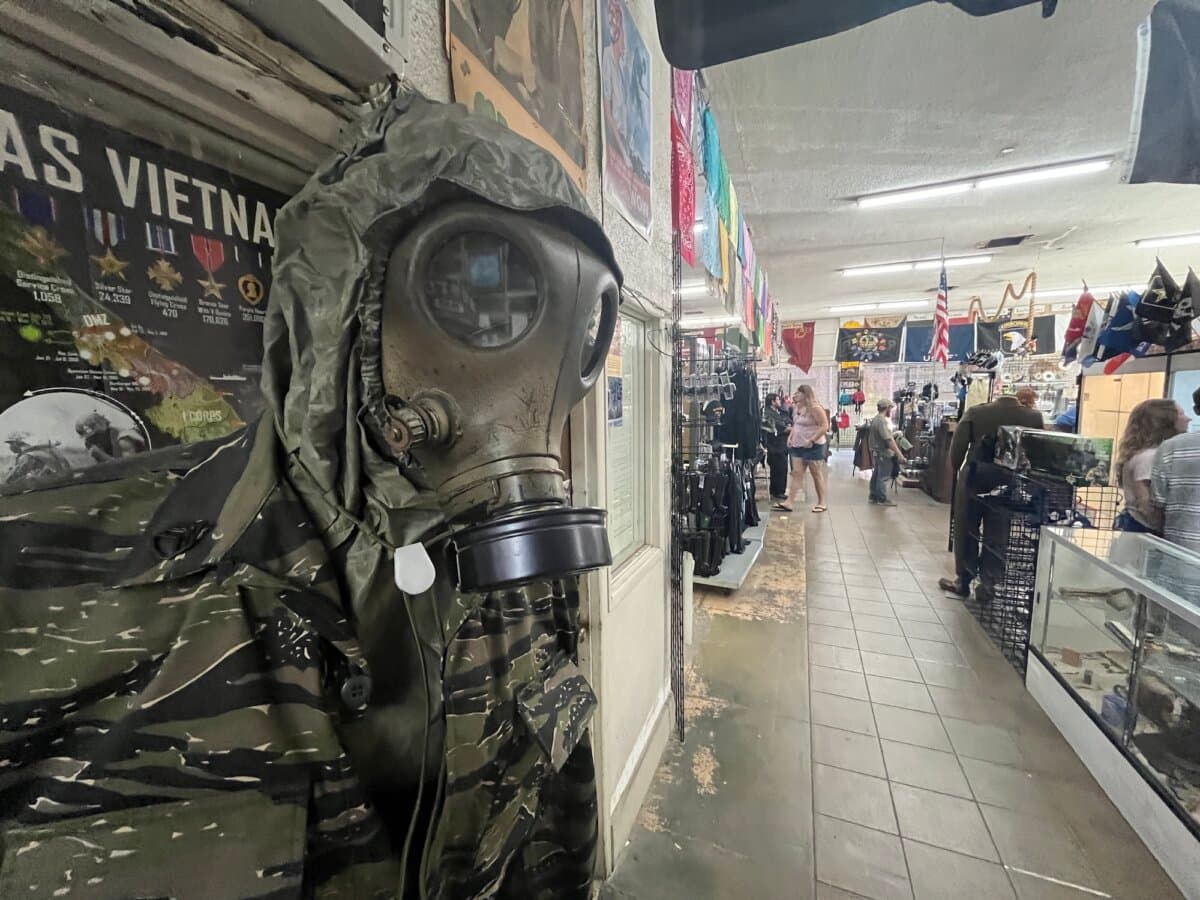
A military-grade gas mask completes a hazardous materials outfit at Miller's Surplus in Tucson, Ariz., on April 4, 2026. (Allan Stein/The Epoch Times)
Valued for toughness and functionality, military surplus items align with growing consumer interest, the company noted. This is reflected in the rise of “glamping” and rustic travel, for which such gear merges utility with style.
The company also highlighted increasing interest in the prepper and survivalist movement, as worries about instability and natural disasters push consumers toward self-reliance gear.
A steady supply of retired military equipment, combined with prices lower than those of new gear, makes surplus items appealing, the company added.
People Over Technology
Jailyn Sloane described her father as someone rooted in the past, running his business through relationships rather than technology, always favoring pen and paper over email and text messages.
“There’s not even a point of sale system, anything like that,” she said. “Since everything is old-school, you have to manually type everything into a cash register. That’s why it can be so slow.”
“It’s hard to even imagine what adapting to a new age would look like,” she said.
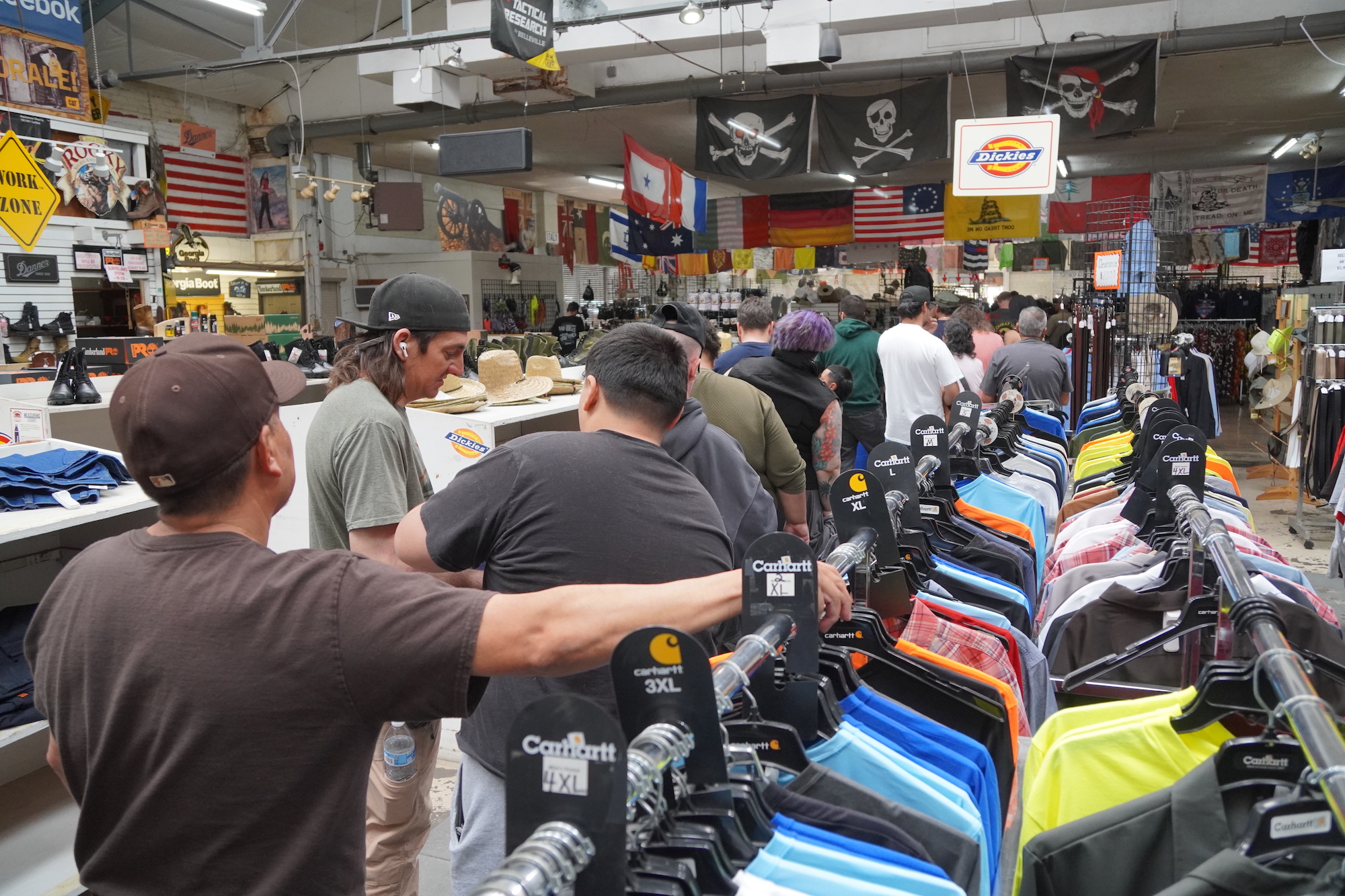
On April 4, shoppers spent more than an hour at the register completing their final purchases, with lines stretching all the way to the back of the expansive store.
“We’re handing out water in the lines to keep people hydrated,” Jailyn Sloane said. “Double hydrated.”
“A lot of this stuff you’re never going to see again. So this is a rare opportunity for people to get some cool items. We have punk rock kids, military folks, old vets, campers, outdoorsy people—literally everyone under the sun.”
The store will close once inventory is gone, Jailyn Sloane said; her father has not decided whether to sell the building.
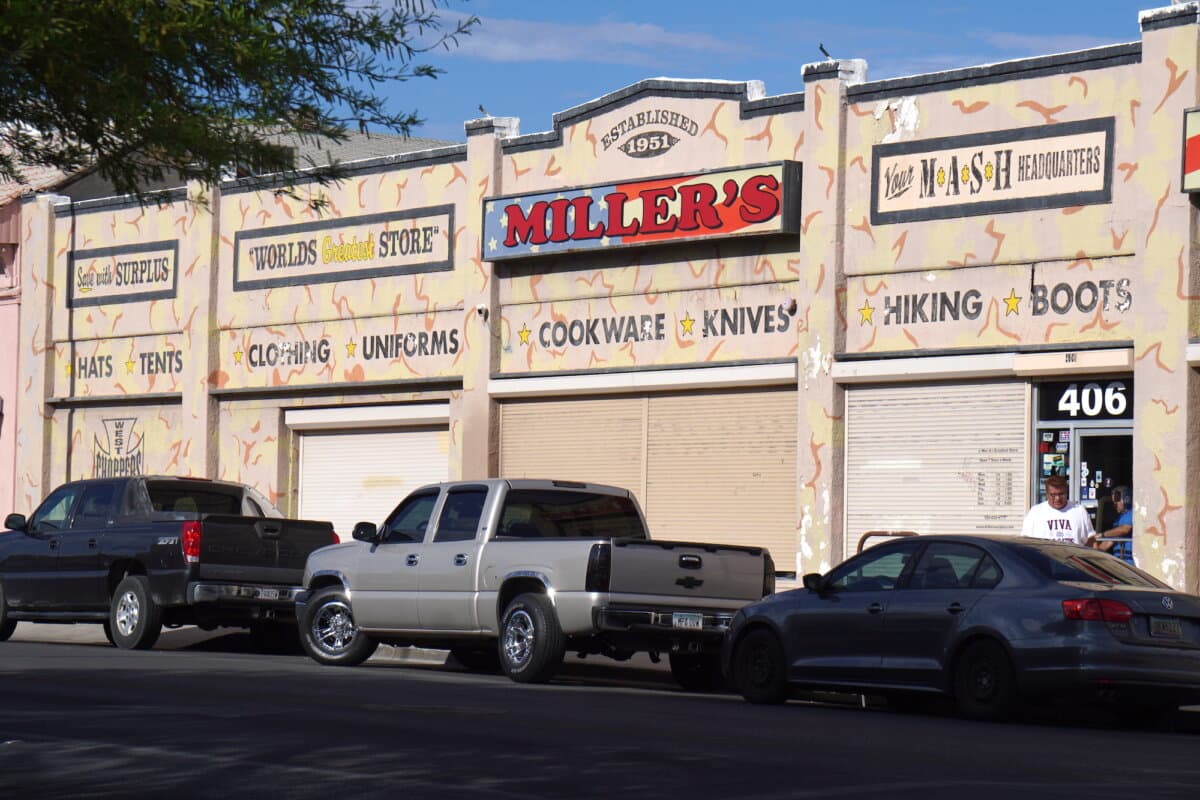
Miller's Surplus has been a mainstay in downtown Tucson, Ariz., since 1951. (Allan Stein/The Epoch Times)
Mizael Medina, 22, from Tucson, said he has been visiting Miller’s Surplus since he was a boy, following in his father’s footsteps. Tactical gear, knives, and camping supplies were the main draw for him.
“Seeing the doors close is sad,” Medina said. “But every chapter eventually comes to an end.”
Nick Jozwiak, originally from New York and now living in Tucson, visited the store on April 4 to take advantage of the liquidation prices.
“It’s an amazing store,” Jozwiak told The Epoch Times. “You can find just about anything here. But keeping a store like this running is tough. Its closing is definitely going to leave a big hole in the community.”