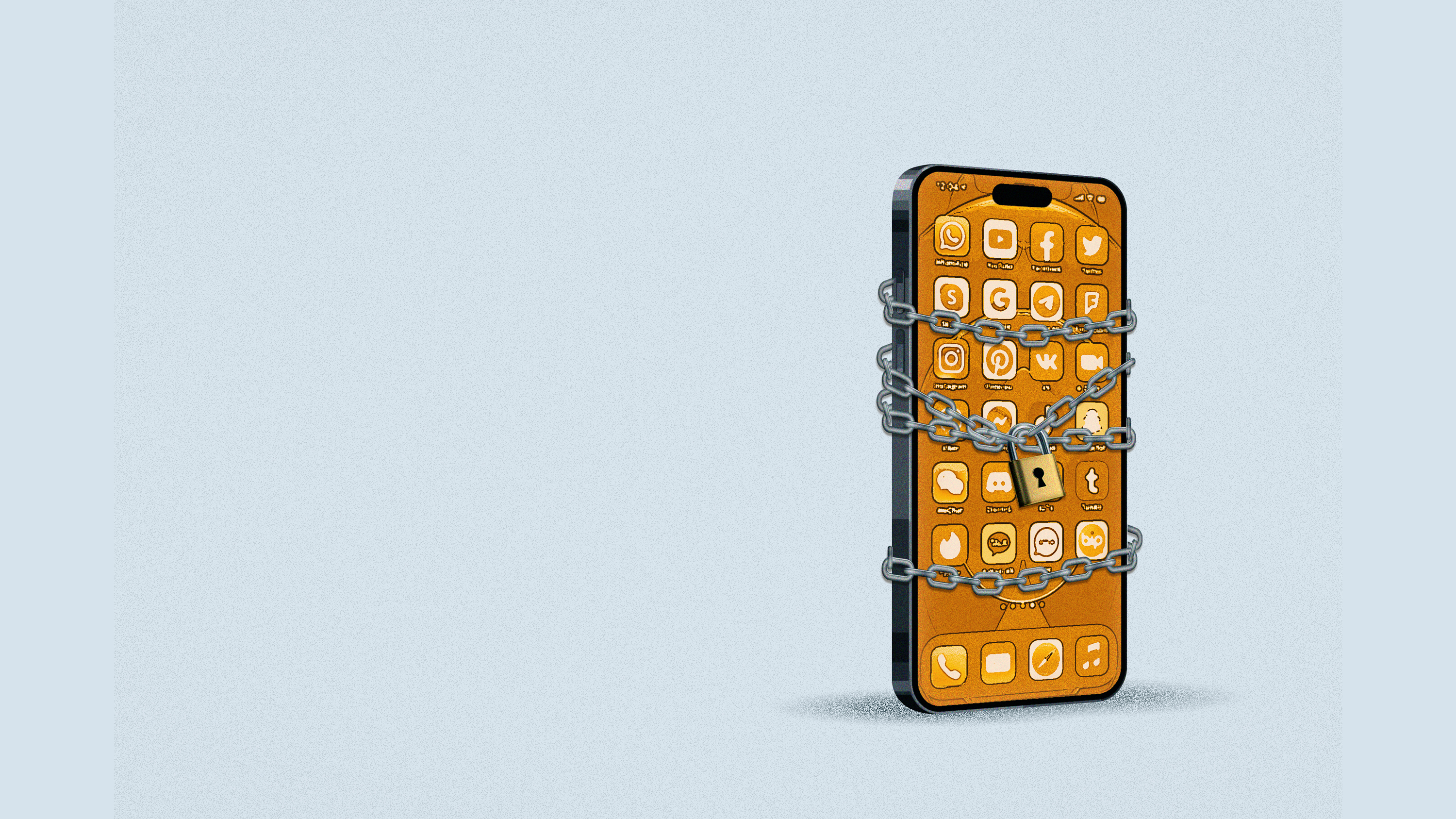

I made the decision around midnight. That’s when I noticed the clock while scrolling Instagram for a “few minutes” before bed. Nearly two hours had passed.
“Enough!” I said, for the umpteenth time, and I vowed to make a clean sweep.
Social media was just part of the problem.
On a given day, I was also checking three messaging apps, half a dozen news sites, YouTube, live sports scores, and good old-fashioned email—all three accounts. Television had become something I listened to while trolling for news, gossip, or cat videos.
My attention was no longer my own, and I wanted it back.
So I bought a flip phone, put my smartphone in a drawer, and set my internal clock to 2006, the year before the iPhone was released.
For the next month, I read books, wrote down driving directions, sharpened my listening skills, and navigated two major holidays without so much as Candy Crush for comfort.
The experience was different from what I imagined it might be. I learned much about the role of the smartphone in my life and how it came to devour so much of my focus.
And I learned that I wasn’t alone.
Smartphone Usage
The last thing I did with my smartphone was post a photo of my new flip phone on social media and humble brag about my bold experiment.
Friends began messaging almost immediately, and their curiosity betrayed a hint of longing. In fact, most Americans seem to have an uneasy relationship with their phone.
More than 90 percent of Americans have a smartphone, according to Pew Research. And those devices consume an increasingly large share of our attention.
Americans spend an average of five hours and 16 minutes a day on their phones, according to a 2025 report by Harmony Healthcare IT. That’s a 14 percent increase over the preceding year. Nearly half (49 percent) report feeling addicted to their phones. More telling is that more than half of Americans (52 percent) say they want to reduce their phone time.
For parents with kids at home, the stakes are higher. About 40 percent of parents would like to exercise more control over their children’s screen time, according to a Pew survey. The same percentage reports arguments with their teenagers over phone use.
The reasons people list for wanting to reduce their phone time largely mirror my own: to gain control of my time, increase focus, get more sleep, and improve overall health.
I took that hopeful attitude into my month-long trial.
Week 1: Free to Focus
I continued to pick up my phone and look at it, as if by instinct, for several days. Sometime during that first week, my brain realized there was no hope of seeing a social media notification or motorcycle video from my brother. So I quit looking.
With nothing but a numeric keyboard, texting was torture. No memes, no Memojis. I was back to tapping 555-666-555 for “lol.” It became so tedious that I began replying to texts with a phone call. I used my flip phone as a phone and nothing more.
Having no reason to look at the phone frequently, much less carry it around, I left it on the table when at home and sometimes when going out. That was freeing and allowed me to look elsewhere.
Everywhere I went, I noticed people, seemingly everyone, staring at their phones. They looked at their phones while walking, driving, eating, and talking with friends. Everyone seemed distracted.
They likely were, according to a 2023 study published in Nature. Researchers asked young adults to perform a concentration and attention test both in the presence of a smartphone and with none around. The result suggested that simply having a smartphone nearby lowers cognitive performance.
Without my smartphone, I felt more focused and engaged in the moment. My productivity increased at work. I felt more present at home.
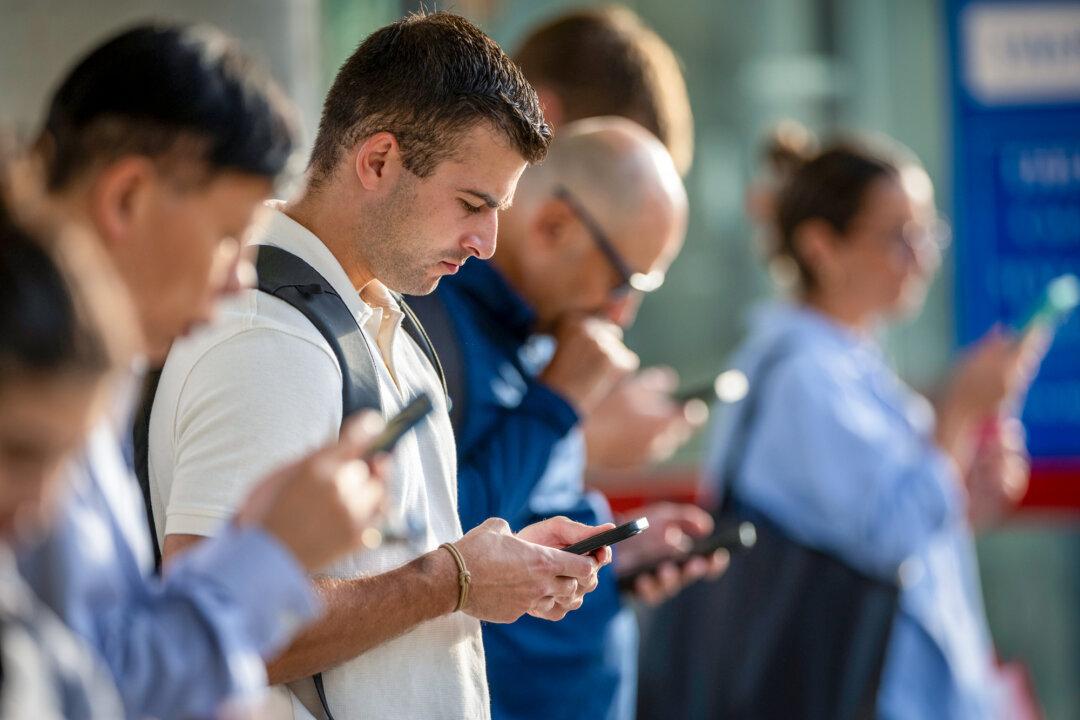
People check their phones while waiting for the train to arrive in Stamford, Conn., on Aug. 28, 2023. Americans spend an average of 5 hours and 16 minutes a day on their phones, according to a 2025 report by Harmony Healthcare IT. (John Moore/Getty Images)
Week 2: Seeing Reality
At the outset of this experiment, I knew I could still do everything I’d done with a phone using my laptop—scrolling social media, messaging, and quick internet searches. And I did all of that, but the experience wasn’t the same.
Mobile phones are portable in a way that laptops are not. Our phones go with us everywhere. They’re always near at hand, if not in hand, although we seldom use them for talking.
Instead, we look into them. They open a window to another world, one populated by impossibly attractive influencers who easily captivate our attention. We constantly banter with friends via text messages, making them seem present. We listen to endless rants on podcasts, news sites, and social media. We witness all manner of rude behavior.
Smartphones invite us into an alternate reality that is, well, unreal.
None of the people in my real life look like an influencer. None are as witty as a meme. Not a single one sneers at people who disagree with them, or behaves badly in public, or flies on a private jet.
Yet that’s the world we live in for five hours and 16 minutes every day. At some level, we realize that. But that false reality is strangely compelling, even when it makes us envious, disgusted, or angry. And that false vision affects our mood and outlook. It makes us simultaneously envious of others and suspicious of them.
Disconnecting from the virtual world actually makes people feel better, although it seems like a loss at first.
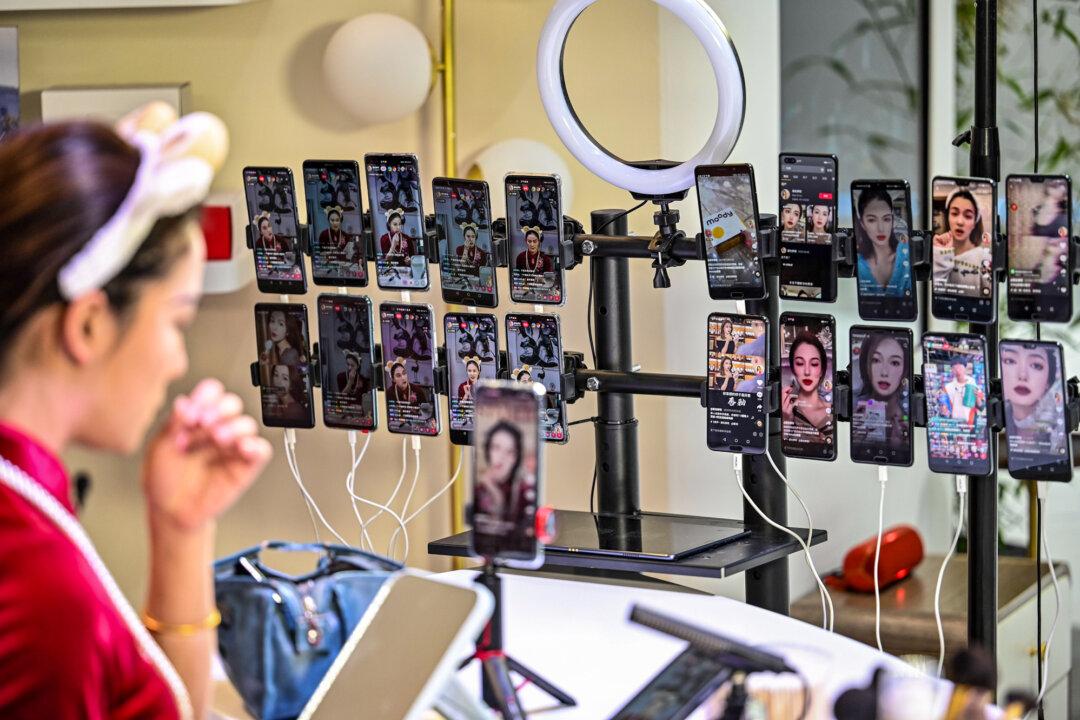
A woman applies makeup in a live studio at a Huawei booth during the Mobile World Congress in Shanghai on Feb. 23, 2021. (Hector Retamal/AFP via Getty Images)
Some 44 percent of American teenagers said they felt anxious without their phones, according to a 2024 Pew Research report. Yet 72 percent of the same teenagers reported feeling peaceful either sometimes or often when they didn’t have their phones with them.
After a week without mine, I felt as though I was seeing the real world again.
Week 3: Reaching the Limit
The novelty of using a flip phone wore off after a couple of weeks. Although I felt better, I began to realize how much our everyday life is tied to the smartphone.
I got a paper check in the mail. Rather than depositing it online with my phone, I’d have to drive out of my way to get to the bank.
I had to log into proprietary software at work. That required two-factor authentication, and the authentication app was on my smartphone.
I tried to enter stats from a workout on my fitness app, only to realize that it couldn’t be done online. The app is mobile only.
Audio books, music, online shopping, driving directions, hotel reservations, boarding passes, credit cards, newspaper subscriptions, all these things were on my phone. Not to mention a clock, timer, calculator, voice recorder, and a camera.
Of course, one can still buy watches, MP3 players, GPS devices, digital cameras, and scanners. But did I really want to be that old school?
That same week, I was preparing for a reporting trip to Washington. I’d be working out of our bureau office, but I’d also be out of the office quite a bit. Is it still possible to hail a taxi in Washington? Where could I get a street map on short notice? How many confirmation numbers and contacts would I need to copy down? I don’t even own a printer.
At first, I thought it would be fun to live like it’s 2006. It wasn’t. The world had changed more than I realized.
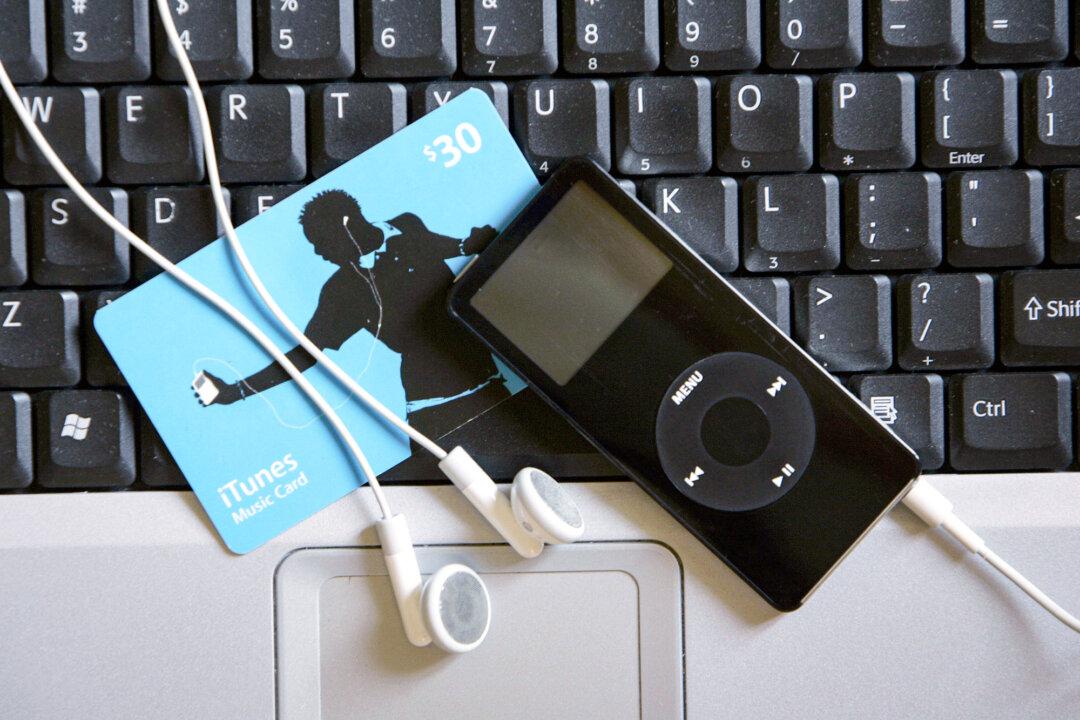
An iPod Nano and iTunes music card on a computer keyboard in Miami on May 7, 2007. (Robert Sullivan/AFP via Getty Images)
So I set a few rules to make life easier without compromising my experiment.
I would use my smartphone for things I could do with another electronic device using Wi-Fi, such as listening to music and podcasts. But no texting, no phone calls, and no social media. And no mobile data, except when traveling for work.
Problem solved, except that I now had a second device to keep track of.
It is possible to live in this society without a smartphone, although only 9 percent of Americans do so. But it takes effort. I realized that for the sake of my work and, to a certain degree, my own convenience, I would return to the smartphone when the month ended.
That made me a little sad.
Week 4: Preparing for Re-Entry
During the final week, I strategized my return to the mobile digitocracy. How could I retain the mental and emotional freedom I’d enjoyed for the past month while reengaging with mobile technology?
The one thing I knew for sure was that I wouldn’t return to carrying the device around like a ball and chain, looking to it for constant distraction or escape.
Here are the boundaries I set to ensure that.
I deleted social media apps from my phone. In fact, I closed my Instagram account, the biggest time waster. LinkedIn and X remain on the laptop only, because they are useful for journalism.
I turned off nearly all notifications. That lets me decide when to look at the phone. It still rings, of course, and I have notifications for texts.
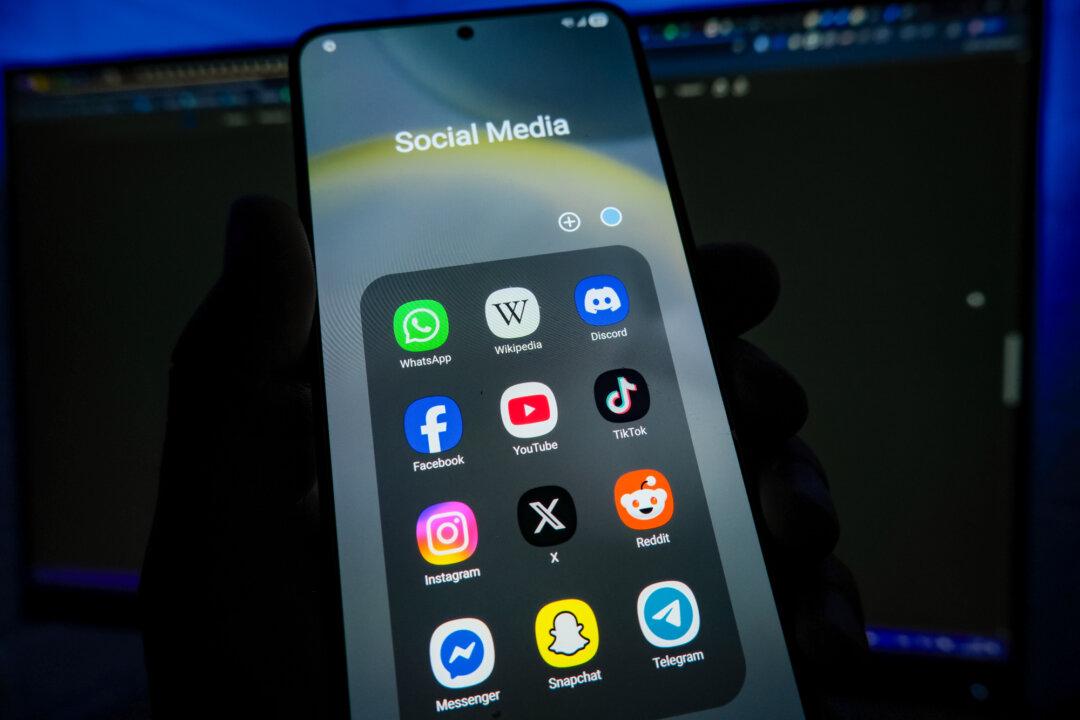
Social media app icons are seen on a smartphone screen in this photo illustration on Oct. 18, 2025. A 2023 study published in Nature suggested that simply having a smartphone nearby can lower cognitive performance. (Oleksii Pydsosonnii/The Epoch Times)
I turn on Do Not Disturb in the evening. That limits calls to people on my favorites list. I can still check messages anytime.
I turned off haptics. Haptics are the buzzes and clicks made by your phone. Without them, there is no “bzzt” for alerts or calls. Silent mode is truly silent.
When I’m not working, the phone is face down and plugged in. It’s easy to ignore and less tempting to carry around.
I leave the phone at home sometimes, or in the car. I don’t need it for quick errands, and I don’t want it when socializing.
I’m toying with the color scheme. A coworker pointed out how easy it is to switch the screen to black-and-white. The change is striking. Red notifications don’t scream for attention. App logos are less inviting, and videos are less engaging. I may or may not keep it this way.
Some friends have asked whether I recommend giving up the smartphone completely. I suspect most just want to get their smartphone use under control. My advice: Try it as an experiment, if you feel inclined. Think of it like an elimination diet. You’ll see which functions caused problems and which you’d like to bring back.
As for me, I’m glad I tried mobile detox. I’m also happy to be back on my smartphone, free of distractions—and once again free to send unlimited dad jokes to my daughter.