
TAIPEI, Taiwan—Communist China, which has long sought to internationally isolate Taiwan and eventually take over the island, has now taken issue with a Taiwan-themed play in France.
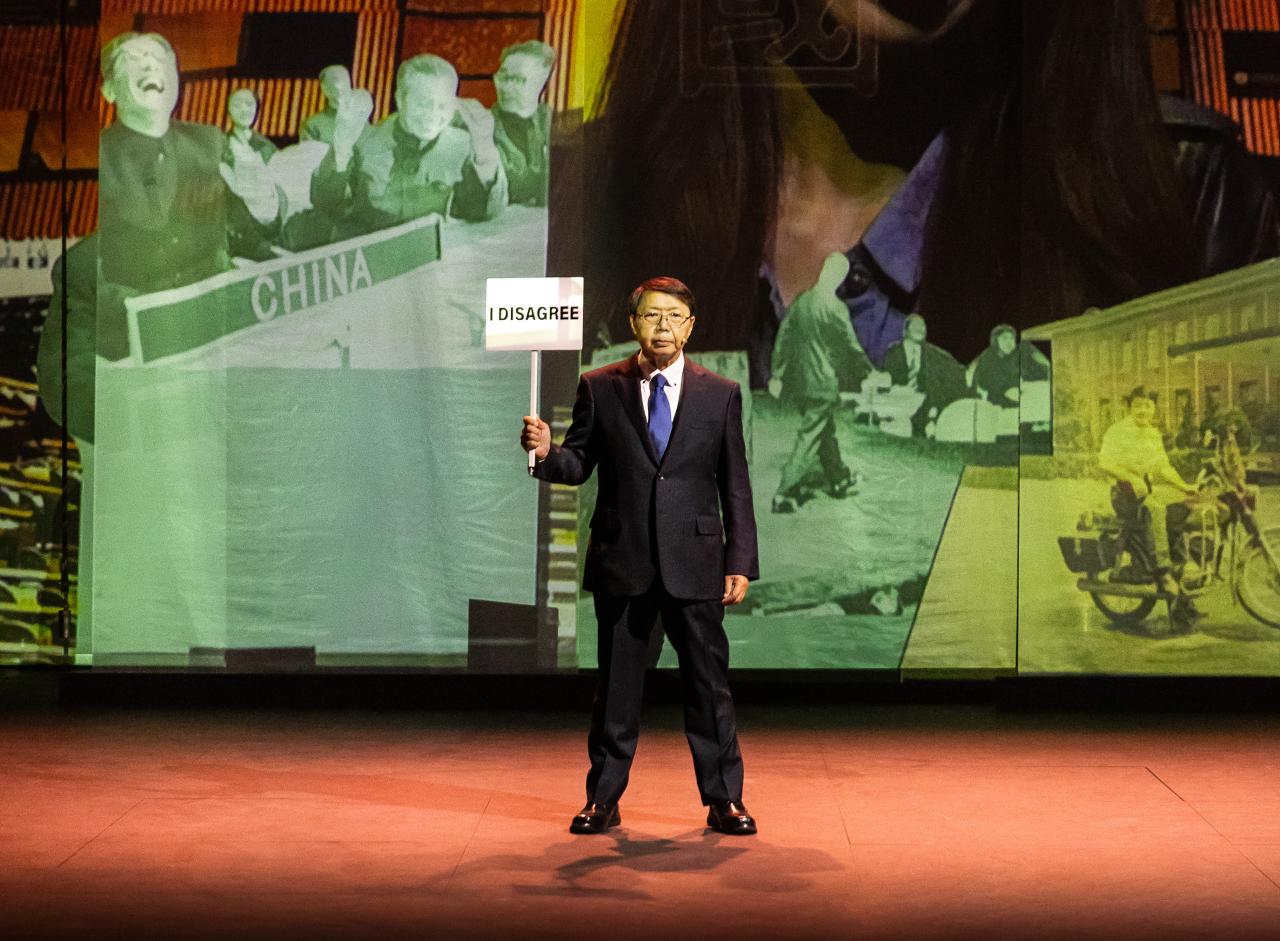
“This Is Not an Embassy,” a play directed by award-winning Swiss director Stefan Kaegi, recently staged three performances at Le Maillon theater in Strasbourg, France.
Before the performances began, the Chinese Consulate-General in Strasbourg wrote to both the theater and Strasbourg Mayor Jeanne Barseghian, asking them to cancel the show. Both refused, and Barseghian later went to reporters, criticizing the action as “extremely serious” and an attack on artistic expression in the European nation.
The Chinese Communist Party in Beijing considers Taiwan, a self-governed democratic island, as part of its territory and has vowed to take control of it, by force if necessary. The Chinese regime and Taiwan, also known as the Republic of China, remain technically at war, with no armistice or peace treaty to resolve it.
The play, which premiered in Berlin in January 2024, explores Taiwan’s diplomatic challenges as the Chinese regime seeks to shrink the island’s international space by poaching its diplomatic allies.
Kaegi cofounded his Berlin-based theater label, Rimini Protokoll, in 2000.
The production features three Taiwanese natives, including a former diplomat, who share their personal stories while establishing a fictional embassy on stage—a symbol of the diplomatic recognition that Taiwan largely lacks.
Kaegi said he was staying “relatively cool about” the Chinese Consulate’s efforts.
“We already know there are authorities from China that are not happy about certain things we say in our play,” he told The Epoch Times. “I would really like to know if they have ever seen the play.”
Barseghian and Le Maillon did not respond to requests for comment.
Taiwan’s representative office in France applauded Strasbourg for its “firm stance” in a March 4 statement.
“‘This Is Not an Embassy’ explores Taiwan’s unique position on the international stage,” the representative office said. “Beyond Taiwan’s own story, it sparks a global conversation about democracy and identity. Any form of censorship or repression will only increase the visibility of Taiwan’s resilience and highlight the fundamental importance of democratic values.”
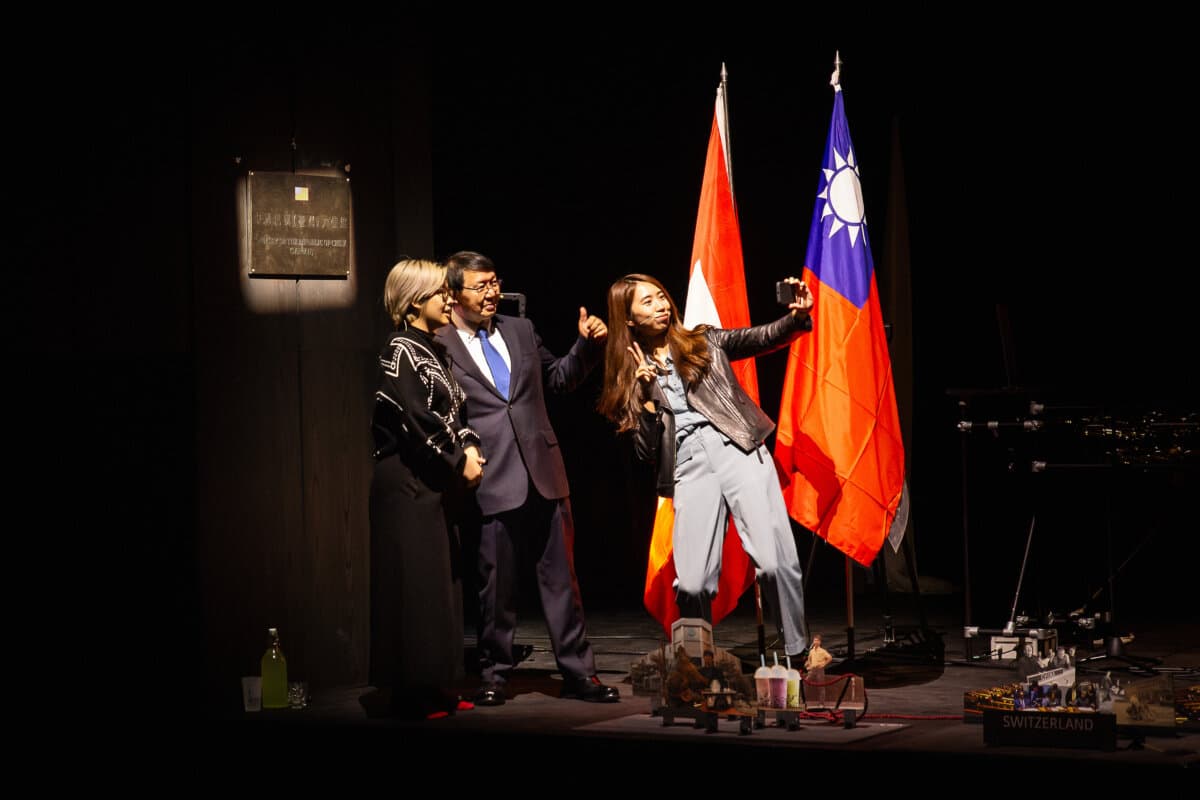
(L–R) Debby Wang, David Wu, and Kuo Chiayo in the play “This Is Not an Embassy.” (Claudia Ndebele/Courtesy of Rimini Protokoll)
Threats, Self-Censorship
The incident was not the only time that Kaegi’s play has faced coercion from communist China.
Kaegi recalled that Switzerland’s Federal Department of Foreign Affairs received some “nervous phone calls” and that in Austria, Chinese officials sent text messages to the Vienna theater company presenting the play, threatening that its future tours in China could be jeopardized if it allowed “This Is Not an Embassy” to proceed.
In some Asian nations, fear of the Chinese regime’s economic coercion has led to self-censorship, Kaegi said.
In South Korea, the festival director who invited the play in 2024 got into “a lot of trouble” with the country’s Ministry of Foreign Affairs, which was “very nervous about what could happen,” Kaegi said. He said the show also cannot be shown in Singapore or Japan. Japanese theaters that his company contacted described it as “too political,” he said.
The foreign affairs ministries in South Korea and Japan did not respond to requests for comment by publication time.
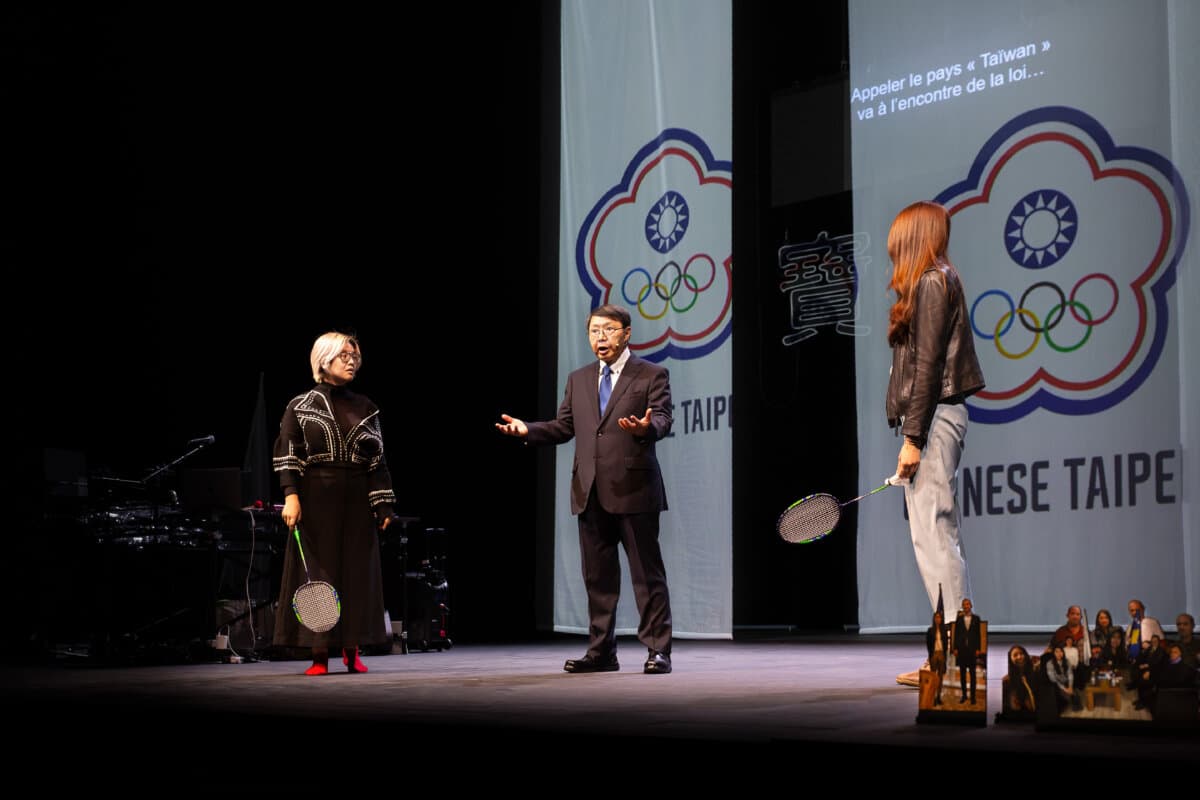
(L–R) Debby Wang, David Wu, and Kuo Chiayo in the play “This Is Not an Embassy.” (Claudia Ndebele/Courtesy of Rimini Protokoll)
“Unfortunately, we obviously cannot show the play in China,“ Kaegi said. ”But we’re not the only art that cannot be shown in China.”
Beijing’s tactics of coercion in the hopes of pressuring theaters to self-censor, as described by Kaegi, have been repeatedly seen in the arts.
Shen Yun Performing Arts—a New York state-based company that highlights human rights abuses in its performances showcasing “China before communism”—has been another target of the Chinese regime’s suppression. In 2023, a Chinese Embassy spokesperson admitted on record that it has been telling local theaters around the world to block Shen Yun. It is also banned from performing in China.
In an instance of self-censorship in 2025, a Thai gallery removed or altered works by certain artists upon Chinese authorities’ request, with words such as “Hong Kong,” “Tibetan,” and “Uyghur” redacted.
The Play
Kaegi said his idea for the project began after he received mail from the Trade Office of Swiss Industries in Taipei.
He said he wondered why a trade office would contact him, given that he is not a businessman. Later, he realized that the office was effectively an embassy under another name.
Kaegi said he is fascinated by how “creative” Taiwan is in showing sovereignty with its own currency, passport, and liberal democratic system.
Since Beijing, officially the People’s Republic of China, took over the “China” seat at the United Nations in place of the Republic of China in 1971, most nations have switched their diplomatic recognition and maintained only unofficial relationships with Taipei.
Currently, Taiwan has 12 remaining diplomatic allies, including Belize, Guatemala, Paraguay, Eswatini, the Marshall Islands, Palau, and Tuvalu.
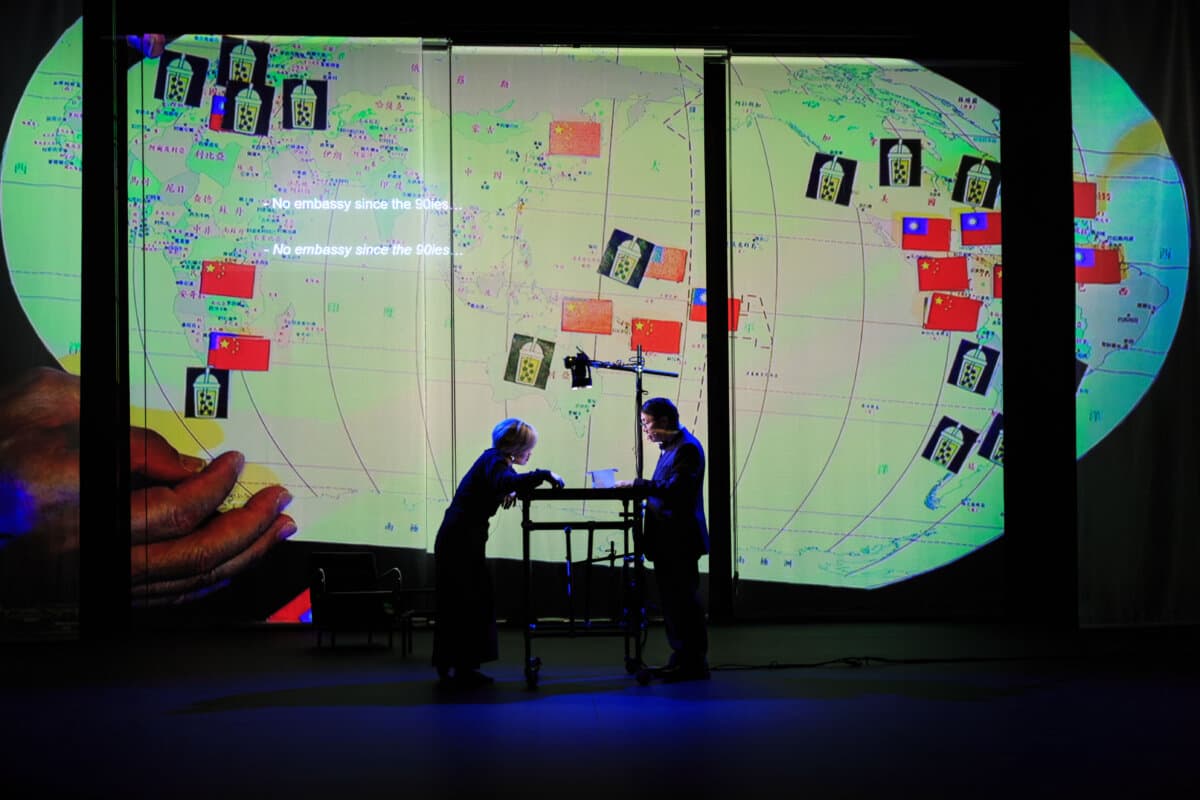
Debby Wang and David Wu in the play “This Is Not an Embassy.” (Claudia Ndebele/Courtesy of Rimini Protokoll)
In 2022, Kagei spent seven weeks in Taiwan. He said he spoke with about 70 people, including diplomats, scientists, geologists, journalists, and people with Taiwanese military or intelligence backgrounds. In the end, he cast three Taiwanese nationals—a retired diplomat, a digital activist, and a musician, who are not professional actors—in the play.
Kaegi said his theater company has long worked with non-actors such as truck drivers and call center employees, drawing on people with a wide range of backgrounds.
“It’s kind of a documentary strategy, like a documentary film,” he said.
The cast includes David Wu, a career diplomat who has served in countries including South Africa, Vietnam, and Thailand, and who was Taiwan’s ambassador to Belize, according to the play’s production booklet. The remaining two cast members are Kuo Chiayo, who founded the Taiwan Digital Diplomacy Association, and Debby Wang, a vibraphonist and heiress to a bubble tea company.
By creating an embassy onstage, Wu, Kuo, and Wang discuss their perspectives on issues such as the Taiwanese flag, their national identity, and the possibility of reunification with China, Kaegi said. He said it is “three case studies” of what it is like to live in Taiwan while remaining connected to the international community.
People from mainland China have watched the play. Some have been shocked because it contradicts what they learned in Chinese schools, which teach that Taiwan is part of China, while others have been touched because the play helps them understand “why the Taiwanese are so proud of their democracy,” according to Kaegi.
Kaegi said the play does not deliver a “simplified message.” He noted that in Europe, many people hear about Taiwan only when China conducts military exercises near the island.
“That’s just one side of the story—there is much more complexity,” he said.
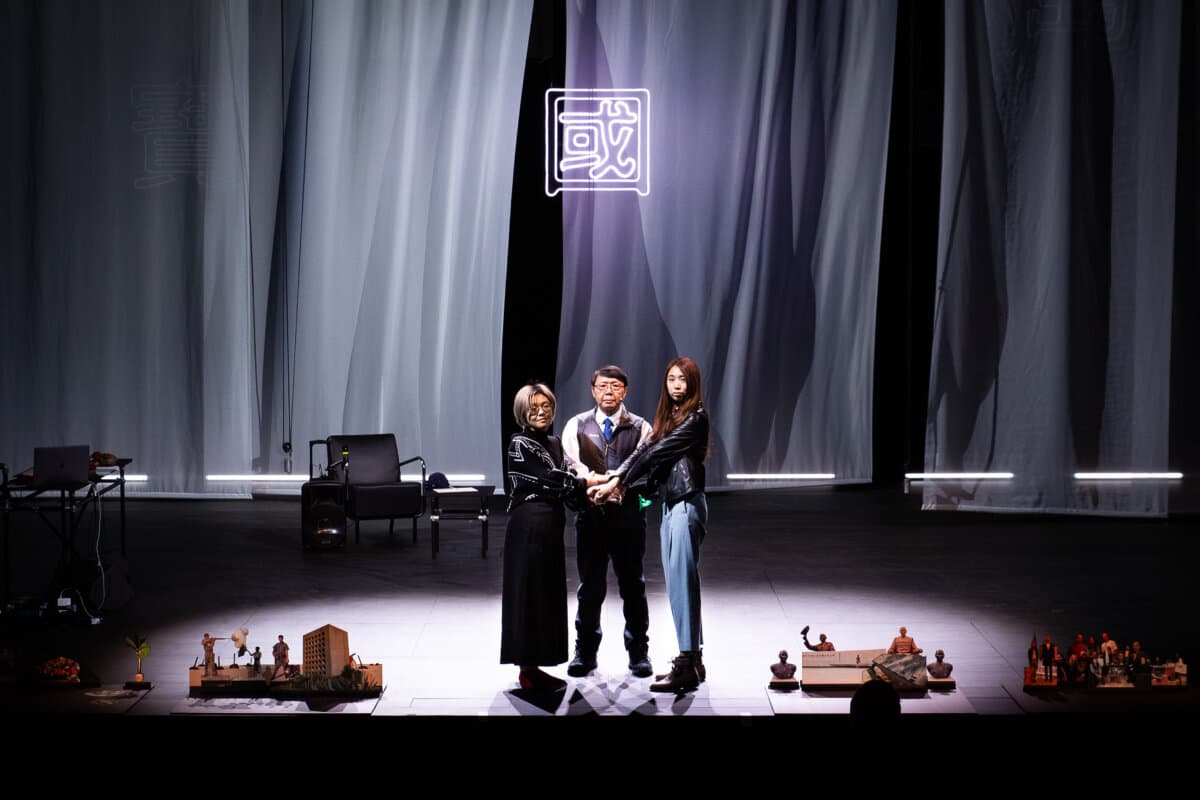
(L–R) Debby Wang, David Wu, and Kuo Chiayo in the play “This Is Not an Embassy.” (Claudia Ndebele/Courtesy of Rimini Protokoll)
Kaegi has received dozens of accolades throughout his career. In 2018, his production “Nachlass” earned him the BITEF Grand Prix of the Jury and the Politika Award for Best Direction.
What has happened around his play has made Beijing’s international coercion regarding Taiwan more visible, he said.
“Our piece seems to be relevant, because China is closely observing what we’re doing,” Kaegi said.
He said he is “quite confident” in freedom of the arts in Europe.
“China cannot take this away from us,” Kaegi said.