
A Republican lawmaker has introduced legislation designed to strengthen Taiwan’s energy security by boosting U.S. liquefied natural gas exports to the island and offering war-risk insurance to ensure that fuel shipments continue despite threats from China.
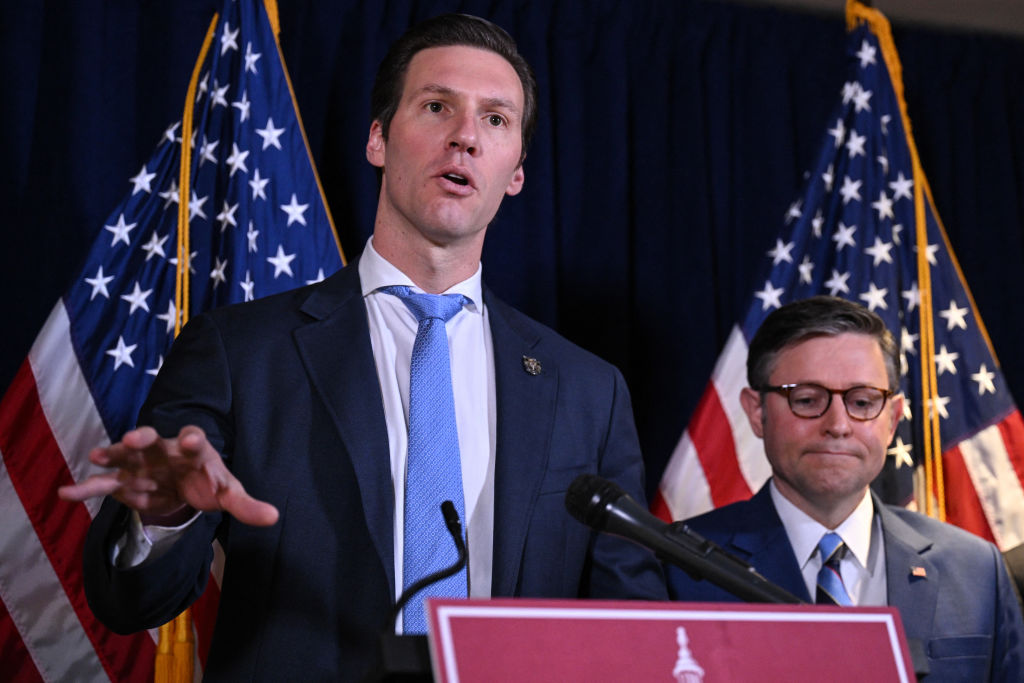
Rep. Pat Harrigan (R-N.C.), who serves on the Armed Services Committee, introduced the Taiwan Energy Security and Anti-Embargo Act of 2026 on March 10. According to his office, the bill aims to make sure that Taiwan “isn’t left vulnerable to supply shocks or coercion by the Chinese Communist Party (CCP) or external geopolitical turmoil.”
“Energy is leverage,” Harrigan said in a statement accompanying his legislation.
“Beijing knows exactly where Taiwan is weakest—and global events today, from strikes in the Middle East to threats at chokepoints like the Strait of Hormuz, underscore that energy vulnerability is national security vulnerability.”
The Chinese regime has signaled its intent to seize Taiwan, a self-governing island that Beijing considers part of its territory. Analysts have identified several potential strategies China could employ to compel Taiwan to surrender, including a blockade, a quarantine, or even an amphibious invasion.
Regardless of the approach, Taiwan would likely face significant disruptions to its energy supplies. In 2024, the island imported nearly 96 percent of its energy, according to Taiwan’s Ministry of Economic Affairs.
Harrigan’s bill comes as oil prices have surged in recent days amid supply concerns stemming from the escalating war involving Iran.
“This bill pushes U.S. [liquefied natural gas] to Taiwan, backs next-generation nuclear cooperation, and guarantees strategic shipping won’t be held hostage by hostile insurers or hostile powers,” Harrigan said. “If deterrence is to mean anything, it must start with hardening the points our adversaries count on.”
The legislation would amend the Taiwan Enhanced Resilience Act, which was signed into law as part of the 2023 National Defense Authorization Act.
Taiwan’s energy infrastructure—including electrical grid systems and liquefied natural gas facilities—is “vulnerable to asymmetric and kinetic threats” from China, according to the bill. As a result, the legislation seeks to enhance U.S.–Taiwanese cooperation on cybersecurity programs, physical security enhancements, joint training exercises, and workforce development.
In May 2025, Taiwan shut down its last remaining nuclear reactor, the No. 2 reactor at the Maanshan Nuclear Power Plant in southern Taiwan’s Pingtung County.
The bill argues that Taiwan should consider placing existing nuclear infrastructure back into service to ensure energy resilience during a potential crisis. It calls on the United States to “prioritize assistance and cooperation with Taiwan on nuclear energy,” including small modular reactors.
Under the proposal, the secretary of state, along with the secretaries of commerce and energy, would be required to prioritize efforts to support U.S. energy exports to Taiwan, including identifying export barriers, promoting investment in the island, and strengthening its storage facilities.
In 2024, the United States exported more than 212 billion cubic feet of liquefied natural gas to China and 118 billion cubic feet to Taiwan. The bill describes the gap as an “imbalance” that could be addressed by redirecting a portion of exports from China to Taiwan.
The bill would direct the secretary of transportation to offer insurance and reinsurance for vessels carrying critical energy, humanitarian, or other goods to Taiwan and other U.S. strategic partners facing coercive maritime pressure.
The U.S. State Department and the U.S. Department of Energy would also establish a joint U.S.–Taiwan Energy Security Center in the United States to foster “academic cooperation in energy security and resilience,” according to the bill.
Harrigan’s bill is cosponsored by Rep. Johnny Olszewski (D-Md.) and Rep. Mike Lawler (R-N.Y.), who both serve on the Foreign Affairs Committee.
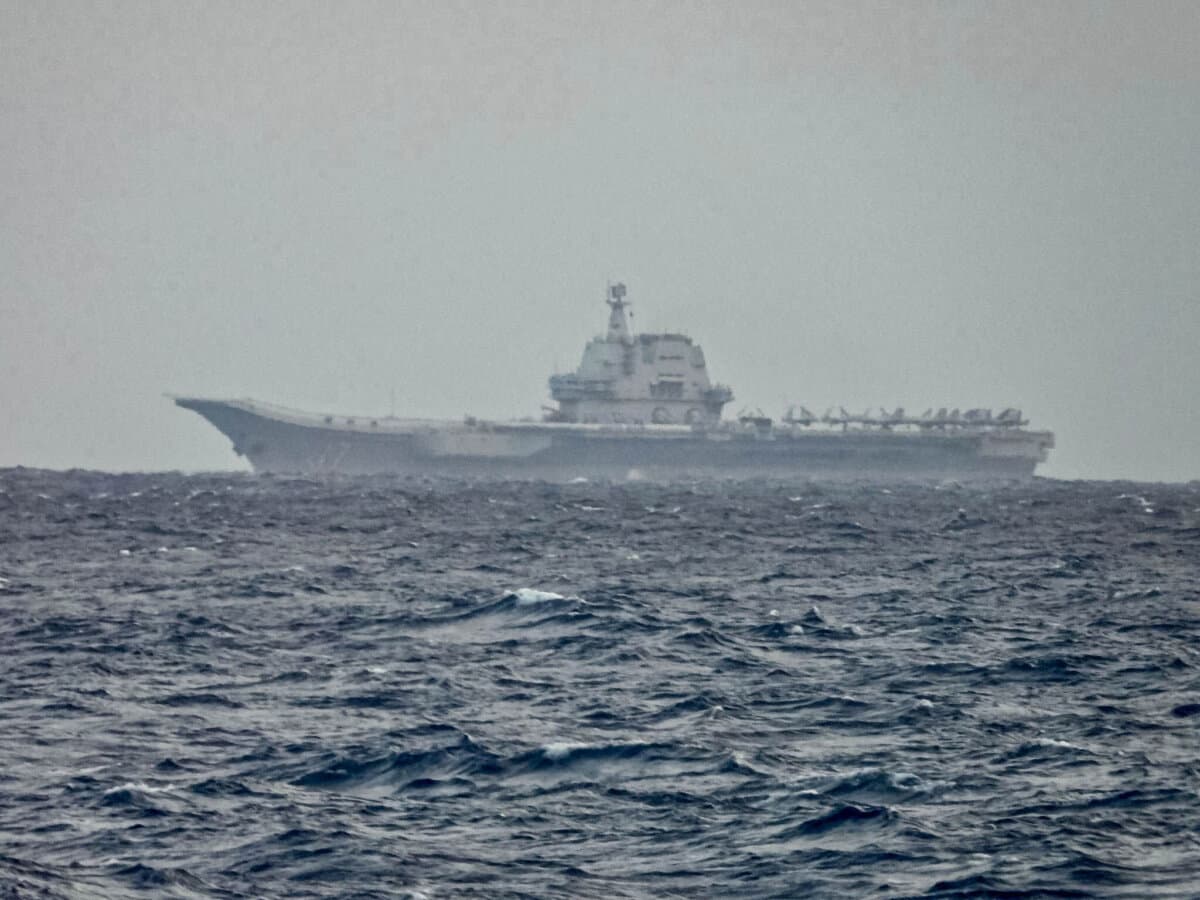
China’s Shandong aircraft carrier near Taiwan on March 31, 2025. (Taiwan Ministry of National Defense via AP)
In recent years, China has sharply escalated military pressure on Taiwan, regularly sending aircraft and vessels near the island. It has also held large-scale military exercises around Taiwan, such as the “Strait Thunder-2025A” drills in April 2025 and “Justice Mission 2025” in November 2025.
Taiwanese President Lai Ching‑te warned in a February AFP interview that China’s “expansionist ambitions” would not stop if it were to seize Taiwan.
“The next countries under threat would be Japan, the Philippines, and others in the Indo-Pacific region, with repercussions eventually reaching the Americas and Europe,” Lai said during the interview.