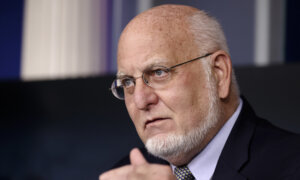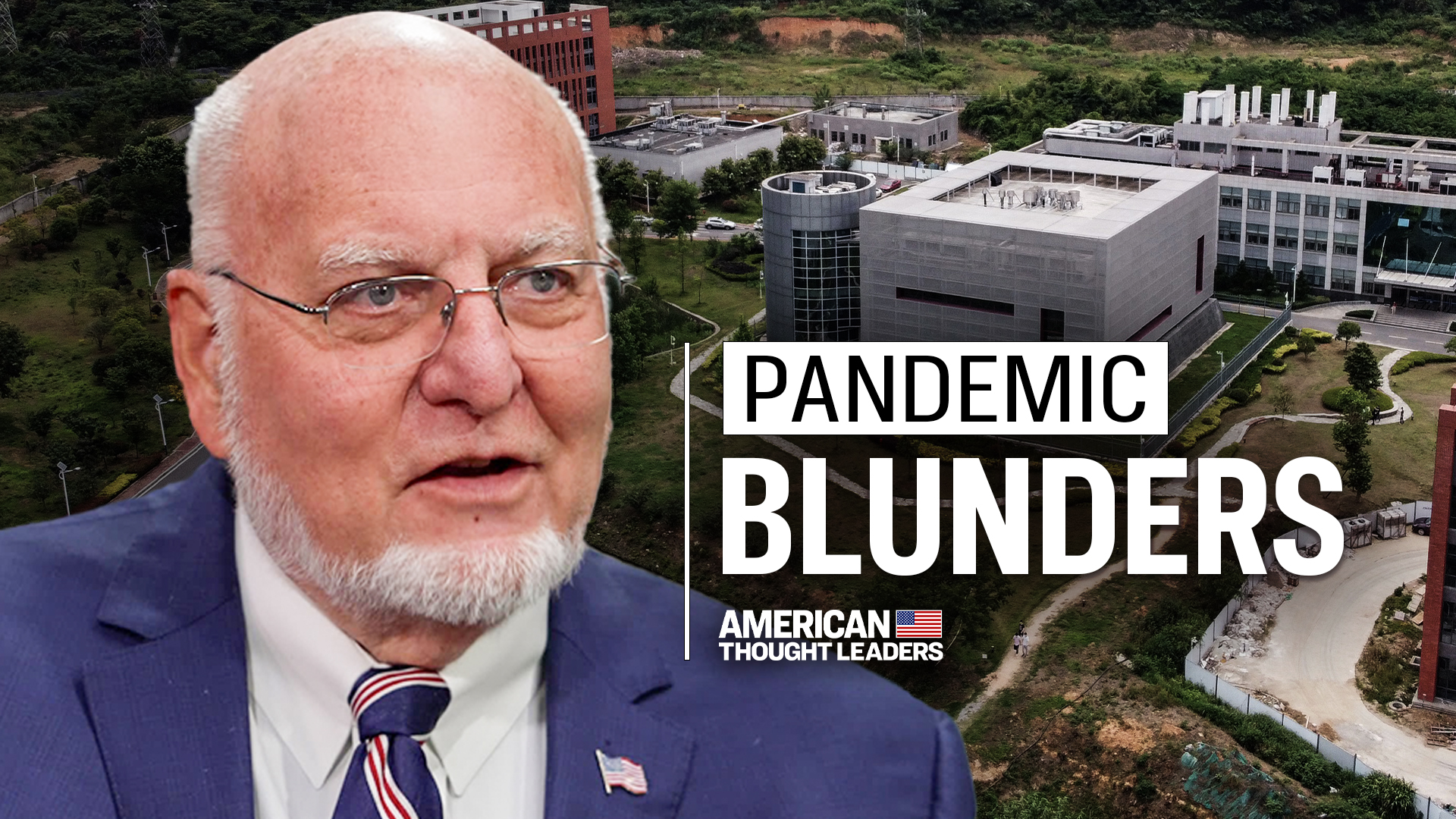
[RUSH TRANSCRIPT BELOW] Dr. Robert Redfield, former director of the Centers for Disease Control and Prevention, says he’d like to see the mRNA COVID-19 vaccines phased out and eventually removed from the market.
Redfield led the CDC from 2018 to 2021. While an avid proponent of vaccines in general, he hopes that the fallout from the emergency-authorized mRNA vaccines will lead to a broader recognition that vaccine manufacturers must no longer be exempt from liability.
Redfield is a clinical virologist who, prior to his appointment as CDC director in 2018, spent decades in HIV/AIDS research and clinical care, including service in the U.S. Army Medical Corps and later at the University of Maryland, where he co-founded the Institute of Human Virology.
Over the past few years, he’s been at the forefront of treating patients who were injured by the mRNA COVID-19 vaccines.
In my interview with him, we covered at length the many hot topics and questions surrounding the recent pandemic and our pandemic response, among them:
- How and why was the true origin of SARS-COV-2 suppressed? What indicators were there early on that the virus was likely leaked from a lab? What did Dr. Redfield know from classified documents at the beginning of 2020?
- What were the most significant missteps America made in its response to the pandemic?
- Is there a role for gain-of-function research in America? Or should it be outlawed?
- What is the future of mRNA technology? Should mRNA technology be used for vaccines at all?
- Why weren’t the vaccine-injured publicly acknowledged and adequately cared for?
- What kinds of reforms are needed in America’s public health system?
Redfield’s new book is titled “Redfield’s Warning: What I Learned (but Couldn’t Tell You) Might Save Your Life.”
He argues a lab-created bird flu may be the next pandemic. But are we prepared?
Views expressed in this video are opinions of the host and the guest, and do not necessarily reflect the views of The Epoch Times.
RUSH TRANSCRIPT
Jan Jekielek:
Dr. Robert Redfield, such a pleasure to have you on American Thought Leaders.
Dr. Robert Redfield:
Thanks for having me. I’m glad to be here.
Mr. Jekielek:
So the Center for Biologics Evaluation and Research Director Vinay Prasad recently circulated an internal email that talked about how no fewer than 10 child deaths could be related to COVID-19 vaccination. He said this is a profound revelation. For the first time, the FDA [U.S. Food and Drug Administration] will acknowledge that COVID-19 vaccines have killed American children. What was your reaction to hearing this news?
Dr. Redfield:
Well, I think it’s about time that there was greater transparency. You know, I happen to believe that vaccines are one of the most important gifts of science to modern medicine. That said, they also have a downside, and we have to always evaluate the benefit versus the potential risk with the vaccines. And one of the things I didn’t like about rolling out the COVID vaccine, I always felt that it was a vaccine that we had shown prevented serious illness and death in people that were vulnerable. But we never showed any evidence that it really prevented infection.
So I really think there was a lot of overreach in mandating this vaccine for the broader population. Now, you couple that with open transparency about any side effects or vaccine injury that may be associated with it. But there really was very little transparency, you know, in the Biden administration about the negative potential consequences. Right now, I still practice clinical medicine two half-days a week, largely long COVID, and the other part of my practice is vaccine injury from the COVID vaccines. And those vaccine injuries are very real.
So I’m glad. I had confidence that Marty Makary would go in and open up what we know about the vaccine injuries that are occurring and make them available to the American public so they can reevaluate the value of the COVID vaccine for them. I happen to be a big supporter of the CDC’s [Centers for Disease Control and Prevention] new recommendations for the COVID vaccine, which they recommended for people that are over the age of 65 who are vulnerable, obviously with certain morbidities that younger people could have, particularly obesity with a body mass index greater than 35. But I do not recommend them in general for the general population. So I think this is a breath of fresh air, and I think there’s more to come.
Mr. Jekielek:
When it came to children, I don’t know what the state of the data around this is, but the last time I looked, there wasn’t really any evidence of any child that was healthy having died from COVID. They were unusually low risk for a respiratory virus. Even as you went kind of up the age grade, so to speak, it became worse. So was there ever any reason for children to get them?
Dr. Redfield:
I don’t think so. I mean, I always advocated that the vaccine really should have been positioned for the vulnerable, the nursing homes, people over the age of 65, as I mentioned. There was a different point of view that was pushed on the American public, which was the idea that we had to get this concept of herd immunity, which is really not operational for the coronaviruses at all. It was really a scientific mistake.
But people really pushed that herd immunity, which meant everybody had to be immune. It turns out, when I was CDC director, if you looked at age-specific prevalence for COVID-19, one of the highest groups infected, you know, was actually the 5 to 10-year-olds. They just didn’t get sick. Back in March—many people didn’t think children were infected with the COVID virus. No, they were infected. They just were asymptomatic and subclinical.
So you are right that there are very few children that had bad outcomes. There are some, but this was largely a disease with bad outcomes for the elderly over 65, 70, 75, 80. And if you look at the FDA’s approval of the vaccine and what led to the approval of Moderna and Pfizer, they were approved for preventing hospitalization and death. They were not approved for preventing infection. And this is where I think the American public was misled. You heard people say, even President Biden said, you know, vaccinate your children so they don’t infect grandma. Well, no, the vaccine doesn’t stop transmission.
So I think the CDC finally got it right. The COVID vaccine is for high-risk individuals over the age of 65 who have a high risk of hospitalization and death. And I still do advocate it for them. When I give you an mRNA vaccine, what I do is I turn your body into a spike protein production factory. And spike protein is a very immunotoxic protein. But I don’t know how much you make, and I don’t know how long you make it.
And these are things that I think the FDA should have been more aggressive in requiring now, particularly when they went to general approval. How much do you make? And how long do you make it? What’s the boundary? I mean, do you make it for a week? Do you make it for a month? Do you make it for six months? It’s immunotoxic.
So I don’t really recommend the mRNA vaccines at all anymore, even for the vulnerable. I recommend a protein vaccine, which is made by Novavax, which when I give you the COVID vaccine as a protein, I know exactly how much protein I’m giving you, spike protein. And I know the decay curve of that protein in your body. I think it’s just a safer way to use these vaccines.
I’m still an advocate. I have been vaccinated myself eight times. The COVID vaccine has one of the biggest challenges: it doesn’t last. So I get vaccinated every six months, but with the protein vaccine, because I’m still at risk. I’m at risk for hospitalization and death if I get COVID.
Mr. Jekielek:
What about this idea that natural immunity was discounted?
Dr. Redfield:
It’s really an unacceptable lack of scientific debate. I mean, I think the idea that we had individuals who could show they had immunity greater than you get with a vaccine, and yet they still were mandated to get the vaccine in order to, you know, be a firefighter or a policeman or go to the hospital or travel was just anti-scientific.
Mr. Jekielek:
You’re giving me a hint here that you’re against mandating at least COVID vaccines. Is there ever a place for mandates in your mind?
Dr. Redfield:
Well, for COVID vaccines, I don’t think at all. I mean, if we had evidence that we could prevent infection, you know, universally, then we could get into a debate about it. But I’m a big believer in personal autonomy. When I was CDC director, one of the things that I had to deal with the first year was that the year before I was CDC director, we lost more children than any other year from flu. They died.
And when I looked into what the children had in common, they had really one thing in common: their parents chose not to vaccinate them. And so then I looked into the flu vaccine in general and I found out, you know, that only 50 percent of the American public takes the flu vaccine. And when you look at the flu vaccine on a good year, it only works half the time.
In my first year as CDC director, it had about 25 percent protection for infection. So if you only have 50 percent of the population vaccinated and it only works half the time, now you’re talking only 25 percent are protected. Of course, we have flu all the time. So I decided we have to change why the American public doesn’t take the flu vaccine, even realizing it doesn’t work that way. And I went on a campaign that I called Vaccinate with Confidence.
So when I looked at the population, 50 percent took the vaccine. When I looked at African-Americans, it was in the high 30s. When I looked at Hispanics, it was in the 20s. And I started working with the media for the African-American media, the Hispanic media, the Hispanic media, to try to get people to realize that vaccines for the flu, at least if you do get infected, kind of like COVID, if you do get infected and you’re vaccinated, you’re not going to die. Your children are not going to die. I think it’s a better thing to educate people so they choose to be vaccinated rather than mandating it. And so I’m a big advocate for personal choice when it comes to vaccines.
Mr. Jekielek:
The numbers that you described to me do not make me want to take the flu vaccine at all. And what they want to make me do is make sure I have a strong immune system, make sure I take my vitamins D and K, basically just stay healthy. And that probably will be probably the most effective thing. And then I don’t have to worry about whether someone is trying to hide negative effects, you know, side effects, because every medical product, every vaccine has side effects.
Dr. Redfield:
I think you’re insightful. I think the reality is the flu vaccine doesn’t work very well. It’s not a very good vaccine. This is, you know, again, I talk in my book about my big concern about the next pandemic, which is a bird flu pandemic, okay, and some people don’t believe that that’s going to happen. I think it’s going to happen, but I do think the answer for countermeasures is not a vaccine because the flu vaccines don’t work very well. And that’s why when the Biden administration gave $750 million to Moderna to make an mRNA flu vaccine, I thought that’s the wrong approach. The right approach from my point of view is to go and develop antivirals that can work.
And I would agree with you that there’s the potential that if you had a really good antiviral, and I’m working on one right now with a company that I’m involved with called TransPharma, if you have a good antiviral, and we have one now that’s in phase two trials in Australia, that I can give you a single dose and it stays in your body for at least three weeks, you could conceptually look at chemoprophylaxis that could prevent during flu season and actually work, not in 50 percent or 25 percent of people, but everybody, that chemoprophylaxis could really replace the vaccine because the flu vaccines are really not very good vaccines. They’re not vaccines like measles or polio that really work.
So I think you’re right. I mean, it’s one of the reasons I think people dismiss vaccines in general because of their experience. I get the flu vaccine and guess what happens? I get flu. So they say these vaccines don’t work. And so I think you’re right about honest discussion with the American public about the limitations of the flu vaccine. I’m a big advocate of moving towards chemoprophylaxis antivirals as really much more solid countermeasures for, say, flu, for example. Look at the COVID vaccine program.
And I was part of Operation Warp Speed. We developed those vaccines in less than nine months. The vulnerable, at one time, you can remember we were losing 3,000 people a day. I mean, it was not a good time when we first got this pandemic into our population. If you remember, the freezer cars outside the hospitals in New York were quite significant. And yet we developed a vaccine faster than ever, and yet 1.2 million people died. So to me, it tells you the limitations of vaccines as a countermeasure. And we ought to be looking at the alternative, which is antiviral drug development.
Mr. Jekielek:
There was a huge problem during that time. I did a lot of reporting with a lot of doctors who were treating it actually incredibly successfully. And so there were all sorts of products which doctors figured out through trial and error that actually were very effective. Some of them are extremely controversial. I don’t want to sort of dig in, but there were something like 20 different methods of treatment. And the other part that was very important was that you catch it early because it’s this two-stage disease. Once you let it progress…
Dr. Redfield:
Once you get in the cytokine storm phase, it’s a whole different disease.
Mr. Jekielek:
A hundred percent. So except that the protocols that we were using were all almost like, I mean, some people said they were designed to get you to the cytokine surface, which is, you know…
Dr. Redfield:
And we ventilate you once you’re already at the cytokine stage. You know, the early intervention, you know, is the key, you know, and obviously this was really important for the president when he got COVID and we got him on the antibodies from Regeneron. But I remember when he got better he wanted to leave the hospital right away. I was arguing with this doctor, no you keep him in the hospital, because he’s still at risk for the cytokine phase. It would be better for him to be in the hospital if he hits that cytokine phase than to be home. Of course, he made his own decisions. Let’s just leave it at that.
But you are right. I know with hydroxychloroquine, for example, I was the CDC director and people were using hydroxychloroquine off-label. I’m a big advocate for physicians and patients to make those decisions off-label, whether it’s ivermectin or hydroxychloroquine. I personally don’t think there’s evidence that they work that can convince me scientifically, but I know lots of patients that will swear to you they benefit from it.
So when hydroxychloroquine was being talked about, the president talked about it. One of the things I did as the head of CDC was to have the CDC’s Morbidity and Mortality Weekly Report [MMWR] publish everything we knew about hydroxychloroquine, so that if physicians chose to use hydroxychloroquine, they at least knew what we knew, all right? I got pummeled by my colleagues at CDC. They were really very angry at me. How can you do that? How can you endorse this? There’s no data.
I said, I’m not endorsing it. I’m just presenting the data so they know what doses doctors have used, what side effects people have had, you know, so they can use that to make the judgment that’s informed by everything that we know. I didn’t do it for ivermectin because most of us knew a lot about ivermectin. We used it for parasitic diseases. But I agree with you. There were a lot of therapies.
And one of the things I learned in my years as an AIDS doctor, and I did that for almost 40 years. I learned a lot by just listening to my patients.They would come in and tell me they’re taking milk thistle. I said, what do you mean you’re taking milk thistle? I’m taking milk thistle. I said, what are you taking milk thistle for? And all of a sudden, I learned after a year or two watching, my patients that took milk thistle didn’t have problems with getting liver enzyme elevation when they got these medicines. So it somehow protected the liver from getting transaminitis.
I do the same thing now with my COVID patients. I have so many patients with long COVID and there’s, you know, no real approved therapy. Most of the patients that I treat, I’m treating with off-label drugs and I’m learning from them. You know, we work together. I say, this is what I think. What do you think? You want to try this? They say, okay, let’s try this. And then we learn. I think it was really wrong in our country where doctors lost their license because they prescribed hydroxychloroquine.
Mr. Jekielek:
Or ivermectin.
Dr. Redfield:
Or ivermectin. I think it’s really, really wrong.
Mr. Jekielek:
How can you tell the difference in your practice between long COVID and vaccine injury? And the reason that I’m asking this is because I know a number of doctors who know they’re treating vaccine injury, but they call it long COVID because it’s unacceptable, basically, in their systems to say that it’s vaccine injury.
Dr. Redfield:
Well, I call vaccine injury vaccine injury. It is hard to get it coded, okay? So you end up coding it as a vaccine reaction when we really talk about its injury. And sometimes just to get it coded in the system, you end up deferring to long COVID. But in the records, it‘ll say it’s a vaccine injury. And how do I do that? Well, one is by history. You know, you’ll have a patient that will tell you two or three weeks, four weeks after they got their second mRNA vaccine, an event happened to them.
So there’s a temporal relationship. I can test their blood for antibodies against the COVID virus that are not spike protein. And one of them is called nuclear capsid. So if I look at their blood and I look for nuclear capsid and they don’t have nuclear capsid antibodies, it tells me they haven’t seen natural COVID. They temporarily say this happened after usually the second dose of the mRNA vaccine. It’s a clinical diagnosis.
Now, more commonly, patients who have vaccine injury have also had COVID, all right? So they’ve had COVID, and they give a history that will tell you, you know, doc, you know, after I got my second or third dose of this vaccine, you know, 10 days later, two weeks later, all these things started to happen. So it’s a temporal relationship. But it is a clinical diagnosis. But it is something that’s important to be able to do. And it’s very sad.
I tell a story about a patient that I had who’s very special to me, managing a lot of a company. And she got COVID. And subsequent to that, she lost her ability to communicate. And when I mean that, I mean she couldn’t speak more than two to five words at a time because she couldn’t remember what the next words were. And when I saw her, her first name’s Joy, same as my wife, I turned to Joy and I said, Joy, I need to tell you that you’re the sickest person I’ve ever seen from cognitive dysfunction from COVID.
She immediately burst out in tears. Very awkward. She had a friend with her. I had her leave and told her to come back and see me next week to continue our conversation. When she came back the next week, I told my wife the story. My wife said she thought I had a better bedside manner than that. She gave me a hard time.
So when Joy came back, I said, Joy, I want to start by apologizing to you for telling you the truth because you are the sickest person I’ve ever seen with cognitive dysfunction. But maybe I could have done it in a kinder way. And she said in her own way, and it took forever because she could only speak in two or three-word blurbs, she said, Dr. Redfield, when you told me I was the sickest person you’ve ever seen, I didn’t cry because you told me I was the sickest person you'd ever seen. I cried because you’re the first doctor who acknowledged I was sick. That’s the problem most long COVID patients have.
I have another gentleman that’s more like the patient you asked me about the vaccine, had a wonderful business, and he got COVID vaccine, an mRNA vaccine. And about two to three weeks later, he started having some big problems, cognitive dysfunction, fatigue, and post-exertional, and with Eddie, it persisted. He’s been my patient now for almost four years, and I have him on some off-label treatment just like I did Joy.
It’s really interesting, most people don’t understand COVID that are doctors. They think COVID is a lung disease. COVID is not a lung disease; it’s a blood vessel disease, and one of the things it does, because the key receptor for the spike protein is a receptor that lines all our blood vessels, the endothelium of our blood vessels, the blood vessels don’t end up working as well, the veins. They don’t stay open. And so if there’s an artery that goes on top of the vein, it compresses the vein, and so the vein can’t get the blood back to where it’s supposed to go.
And I had a number of patients that are very hard to be in a room with that are starving for air. They'll tell you they’re hungry for air. They can’t breathe. And yet you evaluate their heart all the way through cath, they’re normal. You evaluate their lungs, their lungs are normal. But these people are desperate. They can’t breathe. And so what could that be?
And I finally figured it out working with a colleague of mine in Birmingham, that the reason they couldn’t breathe is they’re not returning blood to their heart. And why aren’t they returning blood to their heart? Because in their pelvis, the pelvic veins are being compressed. We call it pelvic pain compression syndrome. And they then start forming other veins to try to get the blood back to the vena cava. So now they’re pulling more and more blood in their pelvis.
Normally, 70 percent of our blood’s in the veins, but now you add another five, 10 percent. They’re not getting blood back to the heart. So they’re starving for air. And who would believe, like this gentleman who had the vaccine and had all those symptoms, the other symptom he had was air hunger. And I figured out that he had pelvic vein compression syndrome. And we put a stent in that vein to keep it open. And they’re almost instantaneously able to breathe. So who would have believed that from COVID?
But there are cases like that from the vaccine. There are cases like that from COVID. And the hardest thing for these patients is that no one believes them. When I started a couple of years ago, I’ve been doing this actually, you know, almost for four-and-a-half years now. When I started, almost all my patients came to me via psychiatry. Functional disorder. Because they were told this was a psychiatric reaction, it’s not real.
But now I’m happy to say that very few of my patients come to me from psychiatry, meaning the medical community is starting to wake up and realizing long COVID is real, and they’re realizing that it’s a clinical diagnosis, so they don’t feel comfortable being the one to make it because they’re not an expert. So they end up sending them to people like me or Jordan Vaughn in Birmingham. There’s probably a dozen of us around the United States that have just specialized in only doing this. You know, hopefully soon there'll be a blood test, a test that we can do that will affirm the diagnosis. But it is hard because most clinicians are used to doing a test and saying, yes, this is what you have.
So I’m disappointed that I don’t think we should have immunity for the vaccine companies for vaccine injury. These people have very little recourse. Their lives have been ruined. And most of them got vaccines not because they necessarily wanted to. They had to. I just saw a patient recently, a wonderful young individual in their early 20s. Very, very sick because they had to get a vaccine in order to go to college and had a very serious vaccine injury.
Mr. Jekielek:
Well, you know, as a little background, my wife Cindy and I, we made a film, mostly with Cindy doing the work, made a film for Epoch Times called The Unseen Crisis. And the reason it’s called The Unseen Crisis is because of the phenomena that you’re just describing, all sorts of people having very serious, most typically neurological problems and so forth that are clearly associated with vaccines, but just no one would believe them.
And this phenomenon, as far as I can tell, I mean, we made this film a number of years ago, persists. On one side, doctors don’t recognize that this is a possible diagnosis, a possible reality. And the other part is if they suspect it might be there, they’re also afraid to actually even suggest that this might be the case because the system seems to be wired in such a way as to say, never say it’s vaccine injury. Does this make sense?
Dr. Redfield:
The truth is it’s easy for me as an unbelievable advocate of vaccines, I spent most of my life developing vaccines, to tell you that I think you’ve got vaccine injury. I don’t get the pushback, all right? But most people do. You know, Secretary Kennedy, who I have a lot of respect for, he’s not anti-vaccine. But if he just asks the question about a side effect for a vaccine, everyone says, oh, you’re anti-vaccine.
No, he just wants to know what the side effect is. Or if you ask the question, what’s the data we have on the efficacy of using the hepatitis B vaccine in children under the age of one month? What’s the data? Oh, you’re anti-vaccine. No, I’m not anti-vaccine. I just want to know the data. Show me the data, all right, on what the policy is based on.
But I do think you’re right. People are very hesitant. For a long time, it was unacceptable to suggest that this was the vaccine. You had to say the vaccines are safe. The other thing I'll say about long COVID that is important, and I’ve seen it now many, many, many times; patients with long COVID get better, right? I will say the group that has vaccine injury and symptoms of long COVID from vaccine injury seems to get better slower, okay, in my clinical experience. The ones that I have that are celebrating their fourth, fifth, and sixth year, you know, those individuals seem to disproportionately be people that I think had vaccine injury. People that had long COVID from COVID, I seem to really seem to resolve it within 18 to 36 months in general.
I had a young woman the other day, a very prominent young woman. She was having trouble. So I finally decided to put her on an off-label regimen that I use for people with cognitive dysfunction and who have trouble maintaining their job. And lo and behold, she comes back and sees me in about three to four weeks. And she says, I’m better. I said, Kate, how can you be better that fast if medicine doesn’t work that fast? And she says, oh, I never took the medicine, but I’m better. And that’s really important because then people just get better. It’s not like Alzheimer’s where you don’t get better.
And I do find I have a lot of patients that have thanked me, doctors that were giving up their practice of medicine because of COVID, figuring that they could no longer function effectively. I taught them how I have all my books on my phone, so don’t be embarrassed to take your phone and look something up while the patient’s there. You know, it’s no big deal, you can do it.
Now, this guy, the first guy was an anesthesiologist. I said your patients are asleep; he’s only enough to explain it to them. He said no, I just don’t feel right. I just can’t remember anything. Well, I said you’re going to get better; don’t give up your practice. Once you could take a leave of absence, if you give up, you’re never going to get back in the saddle. And he came with, you know, six months later, came back and thanked me. And I said, what are you thanking me for?
And he said, well, you told me I’m going to get better, and I can tell I’m getting better. So I took a leave of absence, and now I’m getting better. And so I took a leave of absence, and now I’m starting to work my way back into medicine. And I’ve seen him recently; he did some missionary work down in Central America; he’s practicing, doing great. So it’s just so important to realize you can get better.
I have one young lady that’s really remarkable. And she was mountain biking all through Colorado. And she got COVID. Three weeks later, she couldn’t function in any other position than laying down. She had such autonomic dysfunction from the COVID. And she actually lived on a stretcher for almost six months. She had to move in people to take care of her. She had to be transported in a station wagon type thing, you know, laying down. I mean, she fully lived on a stretcher.
You know, I just supported her. And I told her when she came in to see me, I said a prayer. I happened to believe in God. And I said a prayer, and I said, God, this lady is too sick. I have no idea what to do for her. I was just starting to do my long COVID experience. Now, fast forward three-and-a-half years later, she finished her first book on Beatitude. She’s back teaching multiple classes. She’s biking, driving a car. She’s totally normal, totally normal.
That’s one of the things that excites me about long COVID is people do just get better. The problem is getting them the care and treatment they need while they’re sick. And probably one of the biggest damages that happens to these patients is that the medical community doesn’t accept that they have an illness and tries to tell them they have some psychological problem.
Mr. Jekielek:
You know, there was a database, I remember, created specifically for COVID and the impact of the vaccines. I believe it was shut down now, but it showed that something like 7 to 8 percent of people needed to have some sort of serious medical attention after getting the shots. Or the VAERS [Vaccine Adverse Event Reporting System] database showed, you know it better than I do, this massive spike in injury reports, even though people were discouraged from actually providing those reports in the first place. So in this situation that we’re in, what do we do here?
Dr. Redfield:
Well, I think this is why we should feel a sense of hope that we have Marty Makary at the FDA right now and his team. Because I think they really are going to open up the books and be transparent and really try to get at understanding the reality of vaccine side effects, vaccine injury, vaccine reactions. I think the reality is the vaccine was approved on December 14th, I think, and I was out of office by January 20th. So I had very little influence on vaccine policy. That really was the Biden administration that took over, and really, you know, I remember he said he'd never mandate the vaccine, and the next thing I found out they mandated it for all the soldiers and everybody, and it became mandated.
So, and this is where I think Secretary Kennedy is; he wants the data. You know, he’s not going to just take your word for it that, you know, it’s, you know, let’s show the data. Some people who otherwise would benefit from vaccines now are reluctant to get vaccines because they just don’t trust the system.Some vaccines may be of no benefit to them, but there are vaccines that do clearly benefit patients, and they would benefit by accepting them, but they have to make that decision for themselves. I don’t agree with mandating vaccines. A lot of my colleagues push back to me because you think, what do you mean, you have to mandate vaccines? No, I need to educate people why they want to choose vaccines.
Mr. Jekielek:
It sounded like you’re suggesting you'd want a repeal of this 1986 act that granted immunity to pharmaceutical companies that produce vaccines.
Dr. Redfield:
Yes, absolutely. I think it was a mistake. I understand it because at the time I was deep into vaccine research, and we were losing all the vaccine companies. Nobody wanted to make vaccines because of the long-term liability issues, but I think there are other ways to solve the problem than blanket immunity. They could have done a cap. You know, they could have said, okay, vaccine injury will have a cap. You know, they could have had vaccine injury, but the statute of limitations is five years, you know, or whatever. There’s a lot of ways they could have gone about it.
But I think they have to remove the lack of liability from the vaccine companies. All right. And there are lots of ways they’ve done this, and they can do this. But I think there was not a step forward, all right? I don’t think it helped. And actually, when you look at the whole program with the vaccine injury, when I was CDC director, I was shocked.
Certain people that get shoulder problems from the injection, I mean, they basically only have to say, I have a shoulder problem, and all of a sudden, they get a check for $100,000. What’s that about? So I do think that has to be revisited. It’s complicated in how you do that and still stimulate innovation in the industry. We don’t want to have all our vaccines made offshore. But I do think the lack of accountability for their product needs to be repealed.
Mr. Jekielek:
You know, the argument is if these products in 1986 were creating so much liability that these companies couldn’t be profitable, doesn’t that suggest the product’s bad in the first place?
Dr. Redfield:
I don’t know the answer to that because I do think the liability issues can be so significant that you and the investors in that company just can’t take the risk. You can’t take the risk that you’re going to get, you know, several hundred million dollar judgments against you.
Mr. Jekielek:
So given our conversation, what do you make of groups like the American Academy of Pediatrics recommending COVID vaccination for children?
Dr. Redfield:
I don’t think it’s data-driven. I think it’s more ideological. It’s unfortunate. Same thing with the obstetrical groups, you know. So I'll just leave it at that. I don’t think they’re grounded in science. They’re sort of grounded in their emotional way for where the benefit far outweighs any of the risks.
Mr. Jekielek:
So in that vein, what came to my attention watching everything over the last five years, let’s say, is that there seems to be an acceptance of what you would call a noble lie, and the noble lie being what you just said, that all vaccines are perfectly safe, with the idea, perhaps well-intentioned, right, that if people don’t believe that, they might not do it.
Dr. Redfield:
Yes, I think there’s a lot of truth to that. I think that’s what really happened during the COVID pandemic for sure, that people assumed that anything that would be negative would dissuade people from getting the vaccine. And it had already been decided that everyone needed to be vaccinated. I mean, for example, the CDC stopped tracking patients that were vaccinated and got infected. And you had the president of the United States himself say this is an epidemic of the unvaccinated. And I’m sitting in Maryland realizing that half my cases that have new COVID are occurring in vaccinated people.
One of the problems that COVID just underscored in general is that there’s too much groupthink. You know, if you think like the group or you’re out. I mean, I know when it came to the origins of COVID, I was pretty confident in my hypothesis. You know, there were two things, spillover or lab leak. And pretty much by the end of January in 2020, my analysis was that what’s more likely is a lab leak.
And part of the reason is just how the virus affects humans and how infectious it was for humans, etc., which was really totally different than SARS or MERS ever was. But I will tell you, the groupthink basically pushed me aside. I mean, I wasn’t even included in the big calls in the first week of February that discussed the origin. You know, now Tony will say he didn’t exclude me, and I never said that Tony excluded me.
What I said was Tony didn’t include me. It’s a big difference. So I wasn’t included in those calls. And had I been included in those calls, I guarantee you I wouldn’t have changed my opinion within 72 hours by just listening to the arguments. And as you pointed out already, the proximal origin paper is a paper that I actually think needs to be retracted. I think it’s almost fraudulent. It definitely should be retracted, and those investigators should all retract it.
Mr. Jekielek:
That’s fascinating. Of course, when it comes to Tony, you’re talking about Dr. Anthony Fauci, of course, and with the proximal origins paper, we’re talking about a paper that appeared very early in COVID, which basically said it has to be of natural origin. Any suggestion that it’s from a lab is false. And you said earlier that just looking at how the virus affected people, if I heard you correctly, that made you think it was a lab spillover over natural origin or natural spillover. Now, that’s fascinating. I hadn’t heard that before.
Our own analysis, we did a documentary very early in the pandemic about this topic. And there were many features of the virus specifically, as well as things that happened in that lab, which happened to be right where the virus seemed to have originated, that it kind of looks like a duck, walks like a duck, quacks like a duck type analysis. And that has only been strengthened over the years with all sorts of other evidence. But I did not realize that there’s something about the behavior of the virus itself that made you think it might be from the lab. Explain that to me, please.
Dr. Redfield:
Well, you know, you have to take a look at me, what I am. I’m a clinical virologist with an emphasis on the word clinical virologist. And I’ve always studied how viruses affect the human host, right? And so when COVID started, I remember calling my counterpart, George Gao, who’s the head of CDC China, you know, New Year’s Eve, first couple of days of the new year in January, and talking to George, and he was telling me that they had 27 cases of a new pneumonia that was not SARS and wasn’t flu, that all came from the wet market.
I asked George for his case definition, and he said it was people with a pneumonia illness that wasn’t flu, wasn’t SARS, and they came from the wet market. So George said, by definition, everybody came from the wet market. Why are you trying to pin it on the wet market? You need to go outside the wet market and look at people that have a respiratory illness that’s not flu and not SARS in Wuhan and see whether this has anything to do with the wet market at all. And of course, George did that.
A couple of days later, he called me back and said, Bob, we have hundreds of cases, and it has nothing to do with the wet market. So we knew that from the beginning. The second thing we knew from the beginning is, and some of this was classified at the time, much of it has been declassified now, so anything I say is declassified. We now know that this epidemic started in Wuhan back in August, September. It didn’t start when the proximal origin says it started.
George also told me two things. He said there’s no asymptomatic infection. That turned out to be wrong, dead wrong. And he told me that he was really confident of, oh, and there’s no human-to-human transmission. Also turned out to be dead wrong. Partially that was based on his observation, no nosocomial infection for the patients who were in the hospital to the healthcare workers. And for me, I had 14 cases that we had diagnosed in the U.S. in the last couple of weeks of January and the beginning of February, and they had about 800 contacts, and all the contacts that I evaluated, well, they had two infections. So I also concluded that this virus was not very infectious.
Now, how did I diagnose those two contacts? Well, what we did was, since there were no asymptomatic infections, we asked people if they were sick. And if they weren’t sick, that was it. We didn’t do anything else. If they were sick, then we tested them for the COVID virus and found out the two of them were actually infected. Well, that was the wrong way to do it. What we should have done is test everybody.
Mr. Jekielek:
Broad sphere of prevalence.
Dr. Redfield:
And what we did is, several weeks later, the Diamond Princess happened, and the Japanese government asked for our help, and we went in to help. And in doing that, we decided to test everybody on the ship, and lo and behold, we found out half the people on the ship are infected and most of them are asymptomatic, we realized our whole premise for our public health response was wrong. Now why did we get there? We got there because in January at the beginning what happened very early? Everyone said this was SARS-like. Well, what do we know about SARS? SARS came in 2002-2003.
All right, it came in from a bat through civet cats into humans. But once it got into humans, it never really learned how to efficiently go human to human, all right? And so as you and I sit here today, you know, over 20 years later, there’s still less than 10,000 cases of SARS that ever happened in humans that we diagnosed. MERS comes in 2012, 2013, from a bat to a camel to humans, and it never learns how to go efficiently human to human.
So we’re also less than 10,000 cases as we look, you know, here 11, 12, 15 years later. COVID, when it came in, was immediately one of the most infectious viruses that we’ve ever seen. I'll argue that it’s probably right underneath measles, the second most infectious. How did this virus jump from a bat to man and become the most infectious virus? That’s not how these coronaviruses act. It takes them a long time to learn how to be efficiently infected in man. As I said, today they still haven’t.
Mr. Jekielek:
So you would have been seeing lower levels of infection, this thing coming up previously over years or something of this nature.
Dr. Redfield:
We should have. And so then I’m saying, okay, this doesn’t sound right. And then, of course, I know because of my virology that the Wuhan Institute of Virology is one of the leading COVID coronavirus research labs in the world. And so I researched their work and found out that in 2014, they published a paper that showed they taught the coronavirus how to infect humanized mice through the H2 receptor. So they were actually doing work trying to teach coronaviruses to infect human tissue, right? To me, it became clear that this virus was way too infectious for humans for it to be a natural bat-to-human phenomenon.
Then I looked at the COVID virus and found out that it’s really not very good at infecting bats anymore. It can still infect them, but it’s not efficient in bats. So how did this virus somehow go from bat to human, cause this pandemic, but now forget how to infect bats? That’s a problem. At the time, there was a classified document—it’s declassified now, so I can comment on it—that showed that when you looked at the molecular analysis of the virus, if you’re a molecular biology type, they showed that it had 12 nucleotides that we call a furin cleavage site.
The importance of that furin cleavage site is to know what it does. What it does is change the orientation of the SARS binding site for its receptor. So when the furin cleavage site isn’t operational, the virus still likes to bind to the bat. But you put a furin cleavage site in there and it changes the orientation; now that binding site likes to bind to the H2 receptor, which is the human receptor. So there’s a functionality to it.
It even gets a little more complicated in that classified document. If you look at those 12 nucleotides, six of them actually, two triplet pairs code for arginine. If you know anything, remember from your biology, each of these three nucleotides codes for an amino acid, but there are different triplets that can code for an amino acid. For arginine, it can have a series of different triplets that say arginine, right?
It turns out the triplets in this virus code for arginine that’s preferred in humans. It’s not the arginine that’s preferred in bats. So you have to ask yourself, how did that happen? Again, you couple that with the fact that you knew this lab was trying to intentionally teach these viruses how to infect humans. For me, the real answer was the rapid ability for it to go human to human to the degree that it did.
Mr. Jekielek:
It’s just the behavior for you that was the most important.
Dr. Redfield:
Behavior. This is why I always argue with Tony, because Tony’s an immunologist, okay? I’m a virologist, and I argued that the virology of how this virus affects humans made me basically say the probability of the origin was the laboratory and not the wet market.
Mr. Jekielek:
Did you try to alert people to this? Because I remember this time, right? We didn’t realize what hit us entirely when we published this documentary. Let’s just say it was the wrong thing to say, right? Even though, again, it was—and the argument is not that far different from what you just explained, right?
Dr. Redfield:
It was clearly not acceptable. I was obviously at the White House Coronavirus Task Force that Vice President Pence chaired, and I was a member. I articulated my position for the task force. These were obviously confidential conversations. They weren’t classified, but they were confidential. So I didn’t think the task force discovery discussions would put them in the public domain.
Secretary Pompeo asked me to be his advisor to help him interpret a number of classified documents. The one I’m talking about now has been declassified. I wish that all of them would be declassified. Congress voted for them to all be declassified, and I hope the president will finally declassify them all. But that one was the first document that really described the furin cleavage site, right? And a lot of the molecular biology that I just talked to you about.
I told Pompeo that this was a smoking gun, that there’s no way that this furin cleavage site popped in there. You‘ll hear people who want to discredit people like me say, oh, other coronaviruses have furin cleavage sites. Not this family of viruses, right? This is highly unique. But I did, obviously, express myself aggressively to the White House task force, the vice president, the president—everybody in the task force.You’ll even see Mike Pence; I’ve done a podcast with him, and he’s in his book. He'll say how Redfield said it came from the laboratory, and Fauci guaranteed him that it came from the wet market.
A lot of people took Fauci’s point of view over my point of view. Clearly, I wasn’t allowed to be part of the discussion that the NIH had on origins the first week of February. Again, correcting the record, Tony gets mad at me and says I said he excluded me. I said, no, I never said you excluded me. I said you didn’t include me. There’s a difference. So anyhow, I didn’t realize—I obviously made huge news after I was out.
I don’t remember the exact date of it, but when I did the Sanjay Gupta interview and Sanjay asked me what I thought about the origin of the virus, I said it came from the laboratory. After that, my life was not good because the next day the Baltimore Sun came after me, saying I was an Asian racist. I had the state legislators of Maryland passing resolutions that I should be sanctioned, you know, as a racist. They told Governor Hogan that he had to fire me. They passed a resolution against me.
To his credit, Hogan stood up for me. He said, I’m married to an Asian woman, and my kids are Asian, my grandkids are Asian. One thing I can tell you, Redfield is not an Asian racist. He’s just telling you what his assessment is as a virologist. The scientific community went after me aggressively, trying to discredit me, you know. All I was doing was raising my scientific hypothesis.
Back in January, I told Fauci and Collins, I said, there are two hypotheses. The scientific approach is to go after both of them. They didn’t want to have a debate. As you said, they came out with the proximal origin paper, which was really a planted paper, you know. I‘ll never forget when Tony brought it up at the White House press conference and said, we have this paper that I don’t know who the authors are, but I’ll get back to you,” that says, you know, that it came from the wet market. No, that was all planted.
Mr. Jekielek:
That paper was kind of a seminal moment for me during the pandemic. I remember because when I read it, I thought to myself, this is obviously not true, right? I think most people with basic biology training or molecular biology training would come to that conclusion. I don’t think it required some sort of advance, but because it was so absolutist in its assertions, right? You want to talk about loss of trust; you know, Nature—or this was, I believe, a Nature sub-journal. Yes, no, they should direct it. I dreamed about being published in this in my previous life, right? They lost a lot of credibility.
Dr. Redfield:
And then Lancet lost credibility too when they had the commission and put the head guy from EcoHealth Alliance, Peter Daszak, to be the head guy to decide on the origin of the virus. Daszak was involved in all this. My friend, Jeff Sass, who was part of that commission, finally came to me and talked to me. When he figured all this out and we explained the virology to him, he finally resigned from it. He was so angry that they had set this up, where they put, you know, highly conflicted individuals into these scientific committees to make these decisions.
I think the American public now knows that the most likely origin of this virus was that it came from the lab. I always said after the first year that this won’t, unfortunately, be defined by science anymore. We could have done it if we had done it the first, you know, right away. It will be defined by the intelligence community. That’s where the real answer is.
But this was clearly, in my view, dual-use research that was being done in the Chinese lab. I happen to think for good reasons. I think they were trying to develop a vaccine vector. And unfortunately, you know, the scientific arrogance about it all, they didn’t really have the containment that they needed to be able to do this kind of research.
Mr. Jekielek:
So it’s interesting. That’s also my, you know, much less educated assessment, what you just said. That’s what I thought for a while. But the practical reality is they have a very high priority in their own bioweapons research. We know that from their own documentation. So, you know, this lab was obviously a bioweapons research lab, among other things, right?
Dr. Redfield:
Yes, or biodefense. I’ve always argued I thought they were doing biodefense; someone will know what we do, but then some people argue once they solve the biodefense problem, then that opens up the opportunity for them to have a bio-offense program. I’m still going to give them the benefit of the doubt that they were developing a biodefense program, a vaccine vector that could really vaccinate the Chinese military, the Chinese people, and beyond, and for that vector to be useful, it had to be an aerosol droplet.
They didn’t, it needed to not make you sick. That’s why they’ve knocked out the interfering response element. That’s another manipulation of this virus. It’s not normal. And then they also knocked out certain what we call areas where they would have an immunodominant response. So you don’t get a dominant response to this virus, which is critical if you want to use it over and over and over and over again.
And that’s why there’s no lasting immunity to this virus. So that you and I could actually insert, you know, the hepatitis antigen or the polio antigen or whatever. We could use this now as a highly contagious vaccine against all different things. I think that was their intent. But people don’t realize respiratory viruses are very hard to contain.
Mr. Jekielek:
But talk about lack of informed consent.
Dr. Redfield:
Yes, there’s no informed consent in that regard. I mean, that’s exactly right. And there’s a lot of other problems with this that people don’t want to talk about is, you know, that this research was largely funded by the United States government. You know, the Defense Department, the State Department, USAID, and NIH all funded this research. Some of the most important collaborators for this research were the University of North Carolina, Ralph Baric, and his group.
When people used to accuse me of going after the Chinese, I said, I’m not going after the Chinese. The Chinese should be held accountable. I worked with the Heritage Foundation on our report on this for not following the international health regulations because they didn’t follow the international health regulations. And therefore, they should be held accountable for that. But the research was a joint research project between the United States and China and maybe some other countries.
Mr. Jekielek:
Is there any place for gain-of-function research?
Dr. Redfield:
No, I don’t see it. You know, maybe 50 years ago when we didn’t have the scientific power that we have now, but we have so much scientific power right now.
Mr. Jekielek:
And if I may jump in, just define for me, because this is also contentious, define for me, when I say gain-of-function research, what do you mean when you say there’s no place for gain-of-function research? What is it there’s no place for?
Dr. Redfield:
So for me, I just think gain-of-function research is something that has far too much risk to the potential benefit.
Mr. Jekielek:
But we’re talking about teaching a virus to be more infectious.
Dr. Redfield:
Or more pathogenic. So when gain-of-function research is, we take a pathogen and we intentionally teach it how to be more pathogenic or more transmissible, or both. This is important. Some people jump at me and are upset with me. They don’t think I’m hard enough on my colleague, and I would still say a friend, Anthony Fauci, because I would say, and I’ve told Rand Paul and his people this, that I don’t think Fauci actually lied before Congress. I do think he misled Congress, but I don’t think he lied.
And why do I say that? I said, listen very carefully to what he says. He says, according to the definition of the National Academy of Science, we weren’t doing gain-of-function research. It’s a very important phrase because what they did in 2017 is the National Academy of Science came up with a definition for gain-of-function research because Obama had outlawed it, and Fauci and Collins wanted to do it. And this is where they slipped in an exemption for them to be able to grant waivers to different projects provided they go through certain committees, which, of course, this project never went through, which is one of the mistakes. They define gain-of-function research as if you have a pathogen that’s already pathogenic for man, and you make it more pathogenic for man, or more transmissible for man, that’s gain-of-function research.
But if you start with a pathogen, like COVID-19, that’s not pathogenic for man, and you teach it to be pathogenic for man, or more transmissible for man, by definition, they say that’s not gain-of-function. Of course, it’s gain-of-function. It’s an arbitrary definition. It was a word game that was done, in my view, to support the comment that NIH could say they weren’t doing gain-of-function research. Because they were doing gain-of-function research.
So, no, I did the Wall Street Journal op-ed that I put out a couple of years ago where I tried to make the arguments that we should not be doing gain-of-function research. When I was CDC director, one of the more difficult decisions I made was to shut down Fort Detrick. Fort Detrick was doing research, and one of the things CDC does is it inspects all these high-containment laboratories, and Fort Detrick had some defects, and so we went back a month later to see if they corrected the defects, and they hadn’t corrected the defects. So they came to me with the report, and I said shut them down.
Now, these were my friends. I was in the army for 23 years. I had to call the commander and say we’re shutting you down, and they were, you know, hey, we have all the experiments; we got this money. I said, no, you didn’t; you know, biocontainment’s not optional. You had these things you were cited for; they’re not corrected; we’re shutting you down until you get everything corrected. We'll come back, and we can reopen you at a time in the future. Biocontainment is not easy. And for a respiratory pathogen, it’s really, really, really, really difficult. I think there’s very few places, if anywhere, that can really have maximum containment of respiratory pathogens.
So my view is that I don’t think we need to be making these pathogens more pathogenic or more transmissible. I think we have enough tools right now that we can figure things out within two, three, or four weeks. You know, in the old days where we might have gotten a two-year jump, you may want to make an argument, but I don’t think the human condition is served by us doing this research. I do think there are scientists that want to do it, and I happen to believe one of the reasons the scientific community ganged up on people against me who were suggesting this came from the lab. And they were unrealistically, unscientifically saying it came from the wet market, right?
Like with the proximal origin paper. Was their real agenda was to protect gain-of-function research? They didn’t want the federal government coming in to regulate science. If it was concluded that this pandemic, one of the biggest pandemics we’ve had in 100 years, came from science, what’s the public response? It’s going to be regulation. And the last thing the scientific community wants is to be regulated.
There was huge contention about, you know, one scientist publishing the recipe about avian... And I argued against it when they came up with it and showed the four amino acids that have to change. I suggested to people, including Fauci, that this paper should not be published. The gentleman that did it was actually on one of my boards, and I didn’t think it should be published.
I lost that debate. Everyone argued this is science. We’ve got to publish it. And unfortunately, it was published. I think it’s, you know, I happen to believe in God. I think it’s a miracle that someone hasn’t already used it. Now, that virus has already been created. It’s in freezers.
You know, I’m very worried and talk about it in my book about the next pandemic, the bird flu pandemic. I don’t think it’s probably going to come from nature because, as we’ve learned with SARS and MERS, they still haven’t learned how to go efficiently human to human. And right now, bird flu can’t go efficiently human to human. It has learned how to go elephant seal to elephant seal, but it hasn’t learned how to go human to human or mammal to mammal. And with those four amino acids that have to change exactly in a certain way, you know, it may never happen, or it may take hundreds of years.
Mr. Jekielek:
Well, except that...
Dr. Redfield:
But in research, I can create it, all right? And I can create it within a month. And actually, I think the virus has already been created and is in freezers. And if that virus gets out, you'll have a global pandemic.
Mr. Jekielek:
Okay. I mean, you’re the perfect person for me to ask this. And so we know from their writings and a whole range of information that China is developing bioweapons. It’s interested in using viruses. It’s interested in using ethnic-specific vectors. It’s a high priority for them. I don’t know what stage that development’s in. It’s obviously highly classified. That’s just the reality we face. What does the biodefense look like? Because really we’re talking about the same thing, right? Whether it’s a bioweapon or whether it’s this thing out of a freezer.
Dr. Redfield:
So for me, the first thing, and again, an important thing that I hope your readers will read my book that they'll get is me making the argument that biosecurity is one, if not the most serious national security threat that we face. And I will argue that we ought to have a response proportional to the threat. Now, for traditional security concerns, China, Russia, North Korea, and Iran, we’ve built an 800 billion dollar a year defense program and a huge defense industry which has both public and private components with bases all around the world to anticipate what our defense needs would be.
But most importantly, we’ve built a private sector network that meets our defense needs. The defense contractors, if it wasn’t for the defense contractors, we wouldn’t have a defense capability. I argue that we need to do the same thing for biosecurity. And what does that mean?
Well, it means we need to develop a network of defense contractors that, rather than focus on airplanes and missiles and bullets and bombs, are focused on antivirals, vaccines, diagnostics, protective gear, certain targeted medical equipment that we can anticipate we need. Now, what I'll argue, and I argue in the book, is, you know, the Defense Department’s got their hands full. You know, they’ve got enough on their plate, even with adding cybersecurity, which was probably more than they wanted.
Okay, so where would we do this? I’m sort of a small government guy. I don’t want to start a whole new apparatus. So when I looked at it and went to see the Oppenheimer movie for the second time, I said, you know, why don’t we put this in the Department of Energy? They’ve got six really good labs, biology labs. And one of the reasons the Energy Department came to the conclusion that this lab, this virus came from the lab is they used their own scientists to do the analogy, as did the FBI, whereas the other groups all used NIH advisors. Okay. Fascinating.
Mr. Jekielek:
Okay. So they have an independent system of labs.
Dr. Redfield:
When I met with the head guy from mass destruction for the FBI, he was a great scientist. And he had a whole team of scientists that were FBI. I didn’t know the FBI had a mass destruction group, but they do. And, of course, the Energy Department does, and they’ve been in this area for a long time because that’s where we put all of our nuclear.
So they have great experience in looking at weapons of mass destruction. They have a lab base. They could manage the extramural contracts with the private sector, and we could go ahead and start building a private sector, if you will, biosecurity defense contract network of companies that have, you know, 10-year, 20-year funding to build the capacity for the United States to have what it would need in case of a biosecurity threat. That’s what I want to see happen.
If the bird flu became transmissible human to human, and again, my own view, facilitated by science, not by nature, it would be catastrophic. I talk about bird flu as the great pandemic. I talk about COVID as a minor pandemic. And when I try to convince people to listen that this has biosecurity implications, I hope people think back a little bit about how COVID changed the way of life in America, right? And its long-term consequences are significant. I mean, the closing of our schools and the damage that that did to kids K-12, some of those kids are never going to get out of it.
Okay, so this is what I’m talking about, about building proportional to the threat. And we can argue what that is. Is it a $200 billion a year program? Is it a $50 billion a year program? Is it $250 billion? But it’s building the capacity to have enormous redundancy in antibio drug development and investing in platform technology. I mean, I have one platform technology that I’ve been involved in that’s pretty exciting. It’s like the mRNA technology, but I don’t think the mRNA technology ultimately is going to be in the position of preventive vaccine development. But I do think it’s going to be central to therapeutics, all right? And there are ways to develop therapeutics, you know, silencing RNAs that you can do using that technology.
The beautiful thing about the mRNA technology, if you convert it into therapeutics, is right now one of our biggest problems in therapeutics is we don’t have active pharmaceutical ingredients. You got to go to China or India to get it. But if you learn how to capitalize on the platform of the mRNA technology for therapeutics, all you need is four nucleotides. They’re highly stable. You can put them on the shelf. You can stockpile them. You need a couple of enzymes. You can stockpile them.
In other words, we no longer have a dependency on active pharmaceuticals. I’m glad we’re looking at rare metals and doing stuff, but you know, you’re looking at a 20-year effort for the United States to position itself where it needs to be in active pharmaceutical ingredients. And right now, if you look at the two suppliers that we can use, one’s China and one’s India. When you go to India, you find out India gets 80 percent of their active pharmaceuticals from China. And China is not the country that we want. to be dependent upon for our biosecurity needs.
Mr. Jekielek:
Explain to me what exactly you mean by using the mRNA platform for therapeutics as a solution to the fact that so many of these medical precursors and ingredients ultimately come from China, which creates this biowarfare opportunity as well as just supply chain risk.
Dr. Redfield:
So theoretically, if you know the sequence of what you want to make, like the actual compound that you want to make, you know the amino acid sequence of that compound, theoretically, you could make an mRNA that could manufacture that sequence. Just like you manufactured the spike protein, all right?
Mr. Jekielek:
Just you’re not putting it in the body. You’re making it, you’re cleaning it up, and now you have it.
Dr. Redfield:
You can do it. You can make it up. You can put it in biological systems that you make it, or you could put it into the body and let the body make it, okay? You can also make silencing nucleic acids. So in other words, if I knew there was an RNA virus that you had, I could create an opposite, a silencing RNA. And I personally didn’t believe this was going to work.
My father was a scientist at NIH back in the ‘40s and early ’50s. He died in 1956. My father really believed RNA was really important. He was working on the genetic code, trying to figure it out. Three people from his group went on later to get the Nobel Prize in Medicine separately. So these people really knew how to play science at the highest level. Some colleagues of mine had developed an mRNA technology to treat COVID, and they did it in ferrets, right? And I was convinced it wasn’t going to work, but they asked me to give some advice.
So, you know, I always like to do things that I don’t necessarily think are going to work because I learn something. And lo and behold, they were able to take ferrets that were infected with COVID, give them this mRNA, and they cured the ferrets. The advantage of this is that they could take another virus, Ebola or Marburg, and they could do the same thing. It’s just different sequences.
Mr. Jekielek:
What was the process? How did that work?
Dr. Redfield:
So for this one, this ferret experiment was developing an mRNA, which was the opposite of the actual COVID RNA. So it acted as a silencing RNA. So it just basically attached to the mRNA, neutralizing it. And then you get double-stranded RNA, and what the body does is it digests it. Because the body doesn’t like double-stranded RNA. They think that that’s a foreign invader. But you could, even though they didn’t do this, you could go a step further and have that RNA actually code for a product. It doesn’t have to code for an RNA, right? Or if you want to even go further, you know, you could code these products so you develop different antibodies.I mean, the potential of using molecular technology therapeutically is huge.
Now, Moderna is already moving on the cancer scene, and they’ve got some products that are coming. I don’t think they’re going to be in the preventive vaccine area because I think they’re, you know, it’s a risk-benefit ratio. Well, precisely, you’re giving it to healthy people versus people who are very sick. But if you’re sick and you’ve got AML leukemia, you’re going to take more risk, all right?
So I think the mRNA technology, because I do think there’s risk with it, it is going to be aligned with therapeutics. Also, from a therapeutic point of view, I think it helps those who are struggling with active pharmaceutical ingredients, you know? And particularly if you take the step of using the procedure to actually have the mRNA given to people to create the product, now you see that I’ve solved a couple of problems because normally what I have to do is I have to get the active pharmaceutical ingredient, and you have to deliver it. I’ve got to figure out how to give it to you, get the right pharmacokinetics in you, and then see how, you know, do the trials to see how it works. This way, all I have to do is give you the product, you'll make the product.
Now you can see there are a lot of issues in learning how to regulate how much you make and all that other stuff. We talked about that with the mRNA vaccines. But I think this is an enormously exciting technology for therapeutics. I don’t see the risk-benefit ratio holding up over time for prevention. I also see if there’s a limited amount of our nucleotides that we need, I think if society has to decide whether we use them for therapeutics or prevention, we’re going to use them for therapeutics.
Mr. Jekielek:
One more question as we finish up, and I want to go back to something I asked, but I don’t think we finished the discussion. And it had to do with, you know, there’s some hundreds of thousands, at least, of vaccine-injured people in America through these COVID vaccines. And they’re not getting a lot of help. In fact, many of them, some of them may not even understand that that’s what’s happened. Because there’s that level of, let’s call it gaslighting, to be fair, that happened around this whole issue in the past. And some know, but are not getting help or being told they have functional disorder or something like this. How do we get them help?
Dr. Redfield:
It’s complicated. I mean, I think first and foremost, it is honest transparency and acknowledging that vaccine injury does occur. And I think one of the advantages is that the FDA is looking at this again in the recent announcement with the death of these children, which is tragic, because now you say, well, maybe it’s 10 children that died or in another report, they were looking at 26, and there may be more. Then you realize, if you listen to me, the children probably didn’t need to be vaccinated. It’s tragic, right?
But first, it’s the knowledge that vaccine injury’s real. I really would like to see the mRNA vaccine use curtailed. Personally, I'd like to see it eliminated, all right, because I think there are too many unknowns. It was an emergency effort that we did at a time of emergency. I think the protein vaccine is a better option. And I’m disappointed that it has not been more aggressively embraced by the past administration.
But I do think, again, I’m going to come back to that I have a lot of confidence in Marty Makary and the team he’s putting together. And they’re not afraid to ask questions that other people, you know, refuse to ask. And I think we’re going to see more and more data coming out of the FDA that’s going to help us get greater clarity on how we want to use these vaccines in the future will lead to our recognition that vaccine companies also have to be subject to product liability, right?
And we have to figure that out because you don’t want to have it go the way of diving boards at swimming pools, where there are no more diving boards at swimming pools. You know, we need vaccines. So we’ve got to figure out the balance there. I mean, I’m a little countercultural again. When I’ve been involved in trying to think of how to improve our public health system, I’ve always felt that the FDA ought to be moved into the Department of Commerce for pre-approval.
And then the FDA that we have now should still do post-safety, but they should be separated. When you have the same group looking at the safety of the same products that they approved, I think there’s a conflict. So I would rather have a commercial group looking at the development of medical devices and pharmaceuticals to accelerate the commercial aspect to try to improve the human condition, and then take the traditional point that the FDA had for post-marketing safety and efficacy and have that job over there. So they’re separated.
I think it just makes better sense. When you have the same group, when you have me approving the drug and then you’re asking me to decide, did the drug really hurt you or not? I think there’s an intrinsic conflict. It’s a paralytic conflict. Things take longer than they should. It should be separated.
Mr. Jekielek:
So now the real final question. My contention would probably be based on my limited knowledge at this point, but significant, that possibly the best means of biodefense, and not just biodefense, but more broadly, you know, dealing with the reality that there’s infectious disease and airborne infectious disease in the world and so forth, is just having a healthier population, having people have their vitamin D levels significant. Is that the right way to view things? There’s this MAHA movement, they’re having Make America Healthy Again.
Dr. Redfield:
I’m a big advocate. So Trump would ask me, and when I did that original analysis in February 2020, CDC presented me the data, what they thought was going to happen. And it was a very difficult time for me and even my wife. It’s in the book where we sat that night and wondered whether we'd be alive in September because the CDC predicted 2.2 million Americans were going to die in the next eight months. It was pretty rough. Okay. You know, we did lose 1.2 million, you know, and that’s a lot of people. But then you look at another country like Taiwan and they had much, much, much less mortality.
So why, if we’re such an advanced medical country, and we are, even though we had a lot to learn about COVID, and the reason is because COVID exploited the reality that we’re not a healthy nation. This is why I’m really excited about Secretary Kennedy and making America healthy again. I mean, the fact that you realize that 20 to 30 percent of young adolescents are obese, 50 percent of the American population, 77 percent of young kids can’t pass a military medical exam. We’re not a healthy nation. It’s a big problem. So if your argument is what’s something that we can do that makes a lot of sense? Yes, get healthier. And how do we do that?
I think Kennedy’s on to something with the processed foods. I think getting toxins and chemicals out of our food, making sure that what we put in our bodies are healthy and not harmful. I think there are a lot of issues. I also worry about drug use disorder and depression that really we could address more effectively to become more healthy. I do think bringing exercise back into the real world, and the effort to bring his uncle’s physical fitness thing back into the mainstream, so kids want to get their patch on their shirt. So there’s no doubt we can become a healthier nation.
We’re not a healthy nation. And we have to figure out better incentives for health, because we don’t have it. I am a big advocate. I’ve been a doctor now, you know, what, you know, for 40, almost 50 years. And in that time, I’ve been part of, if you want to be honest, I’ve been part of a disease system, you know, that...
Mr. Jekielek:
As opposed to a health system.
Dr. Redfield:
As opposed to a health system. And we need to build a health system. And we need to move towards where I’m compensated not for making sure I treat your disease, but I’m compensated for keeping you healthy, right? We have to move to a value-based health system. Jay Bhattacharya is another guy I have a lot of respect for. You know, he’s talking about the National Institutes of Health. We’ve spent hundreds of billions of dollars at the NIH and all that’s happened since the 1950s is we’ve become a sicker nation.
You would think that the byproduct of that investment in research, in biomedical research, ought to be health. We should become a healthier nation. And I think you'll see Jay starting looking at that. Don’t feel good because you’ve published a lot of papers in a lot of journals. Feel good about making America healthy again. I think Kennedy’s going to try to make some progress in chronic disease.
I wrote an op-ed in the Chicago Tribune two Fridays ago where I made an appeal, and I’m gonna make that appeal to HHS, that we need to be more aggressive about early diagnosis and early intervention for Alzheimer’s disease. I mean, we'll talk about a terrible disease with an enormous burden. Well, we’ve got a new FDA-approved way to prove this early diagnosis with TALP [translocator protein]. And the drugs do seem to work in symptomatic Alzheimer’s. The trials are going on now for early stage one and stage two. And my gut instinct is that they’re going to work better if you treat early stage one and stage two than if you wait till stage three.
It’s no different than when we started treating AIDS. If you waited until people got AIDS, it was a lot harder to get them treated than if we started treating them when they had early HIV infection. So I think there’s a real opportunity to commit ourselves to building a health system of value-based healthcare. Right now I get paid for how many minutes I spend with you. No, don’t pay me for how many minutes I spend with you.
If I’m a primary care doctor and you’re my patient and at the end of the year I got your body weight ideal, your blood pressure is in good shape, your A1c is down, your lipids are good, then you should give me a bonus for that. And you should give yourself a bonus for being healthy. So we’ve got it all wrong. I don’t think I’ve always argued we don’t have a health system in this country. We have a disease system, and Kennedy is going to start changing it into a health system. That’s why I’m a big advocate of his. I wish people would give him the benefit of the doubt, and I wish the media would give him the benefit of the doubt. Let this guy try to improve the health of America and get on the train with him.
Mr. Jekielek:
Well, Dr. Robert Redfield, it’s such a pleasure to have had you on.
Dr. Redfield:
Thanks a lot. Glad to be here.
This interview has been partially edited for clarity and brevity.