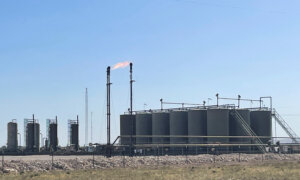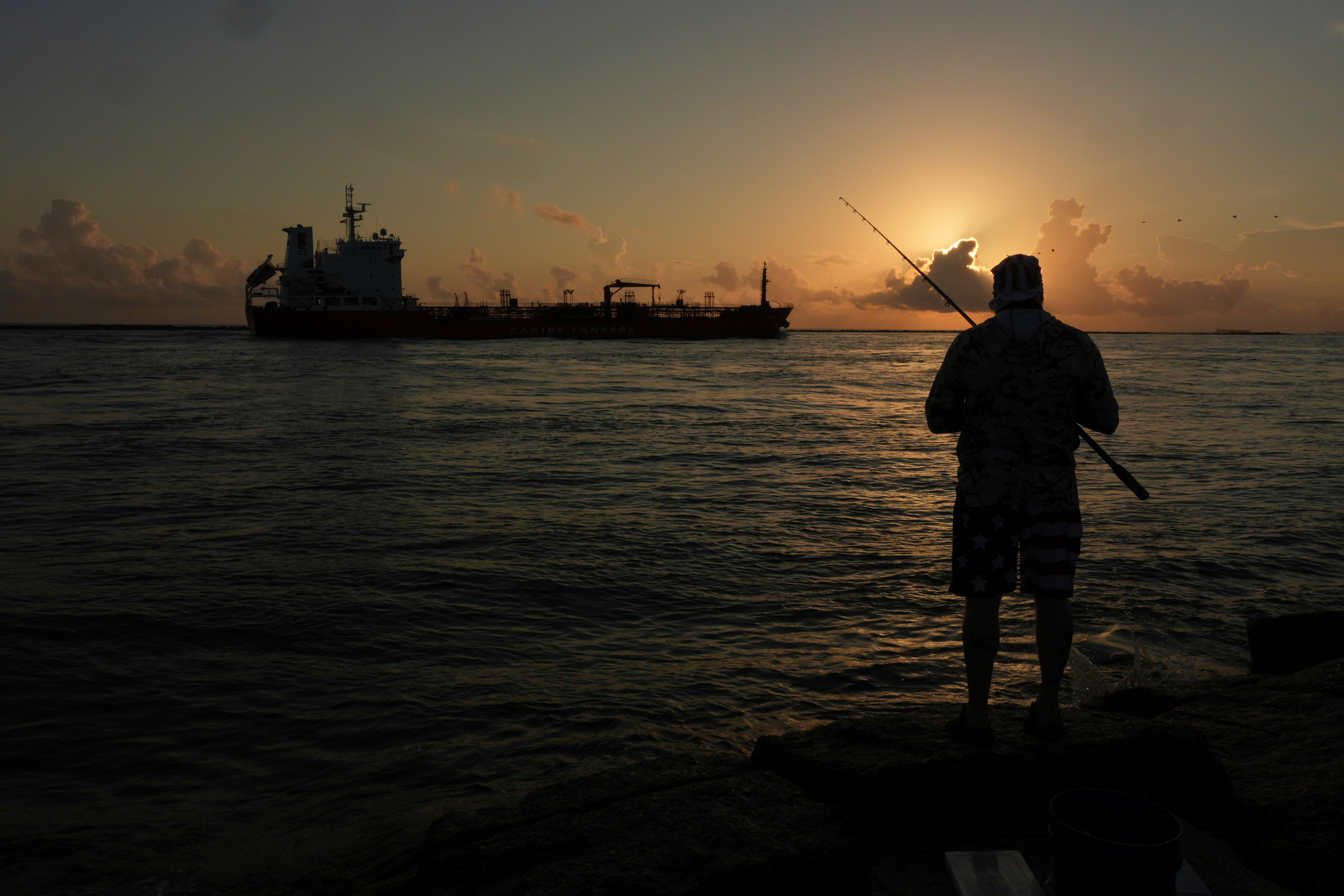

In a rare meeting of the federal Endangered Species Committee on March 31 over national security concerns, Trump administration cabinet members voted unanimously to grant an exemption to shield oil and gas production in the Gulf of America from the Endangered Species Act.
Secretary of the Interior Doug Burgum, who served as committee chair, called the meeting in accordance with a section of the federal law after he received national security findings on March 13 from Secretary of War Pete Hegseth.
Hegseth told the six-member committee that oil and gas production in the Gulf of America is a cornerstone of the nation’s security, providing 15 percent of our country’s crude oil.
“This is not just about gas prices. It’s about our ability to power our military and protect our nation,” Hegseth said. “That vital energy supply right now is under threat.”
War in Iran and conflict across the Middle East have strained oil and gas supplies globally in the past month, causing prices to rise at the gas pump. In the United States, the average gas price topped $4 per gallon this week.
Fuel shortages and growing concerns about cooperation in the Strait of Hormuz have taken center stage as the Trump administration doubles down on securing U.S. supplies.
Lawsuits pending in district courts are seeking to stop Gulf oil and gas production, instead of allowing it to co-exist with responsible endangered species protections, Hegseth told the committee.
“These legal battles waste critical government resources and make it impossible for energy companies to plan and invest in new projects,” Hegseth said. “When development in the Gulf is chilled, we are prevented from producing the energy we need as a country and as a department.”
Cutting off the United States’ ability to produce oil in the Gulf of America would weaken the nation’s ability to support its military and defend its citizens, Hegseth said.

Secretary of War Pete Hegseth listens as President Donald Trump speaks in the Oval Office on March 24, 2026. (Alex Brandon/AP Photo)
Recent hostile action in the Strait of Hormuz highlighted why domestic oil production is a national security imperative, Hegseth told committee members.
Gulf of America oil production also gives the United States a buffer, insulating the economy and the military from foreign instability. “We can do it here in the U.S. better and cleaner than anyone else while providing American jobs,” Hegseth said.
Burgum said energy production in the Gulf of America is “indispensable.”
“Robust development in the Gulf keeps our economy resilient, stabilizes costs for American families and secures the U.S. as a global leader for decades to come,” he said.
The Gulf of America makes up about 13 percent of the U.S. supply of crude oil production, producing about 1.8 million barrels of crude oil per day in 2025 and 1.81 million barrels a day this year, slightly more than in 2024, according to the Energy Information Administration.
Committee members confirmed the findings before voting unanimously to approve the permanent exemption.
Army Secretary Dan Driscoll said he fully supported the measure and said any disruption to production “would significantly impact the Army’s ability to man, train, and equip combat-ready formations.” Specialized Gulf fuels are “critical to [U.S.] military capabilities,” he said.
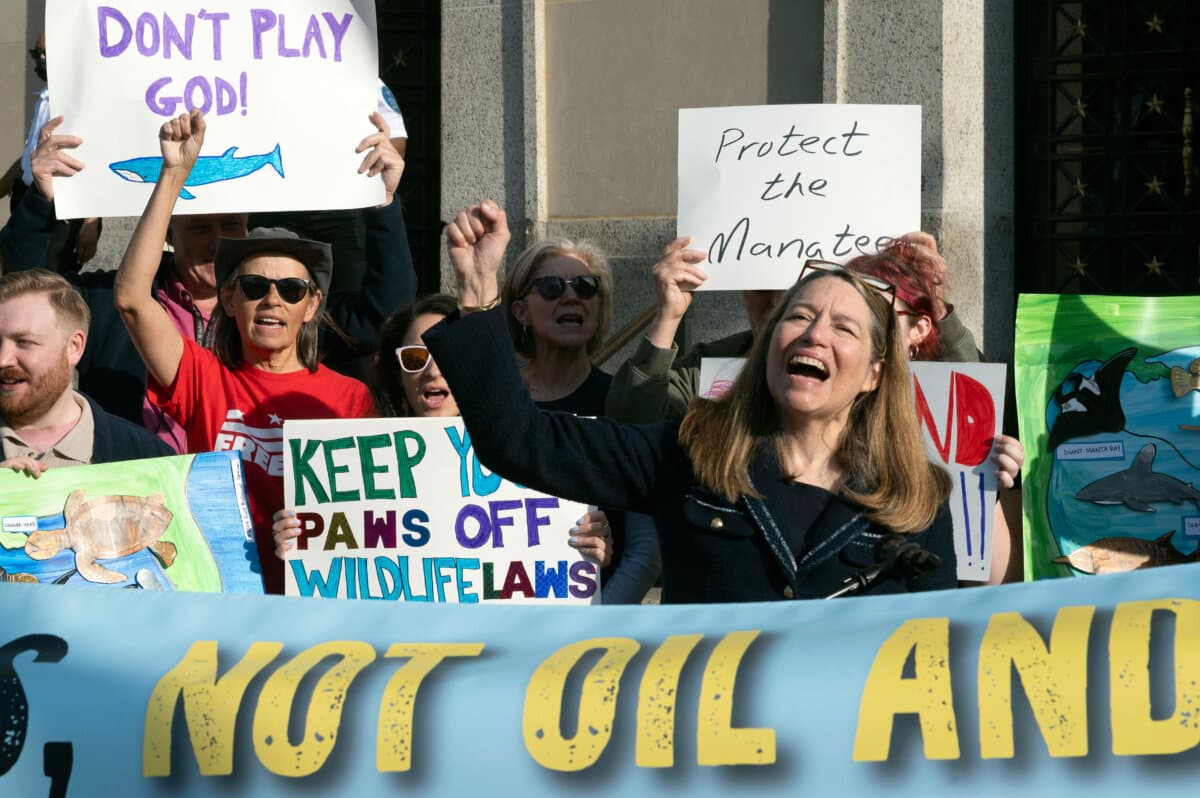
Susan Holmes, executive director of the Endangered Species Coalition, right, speaks in front of the Interior Department building during a rally to oppose the Trump administration's convening of the Endangered Species Committee, in Washington on March 31, 2026. (Cliff Owen/AP Photo)
Neil Jacobs, head of the National Oceanic and Atmospheric Administration, which oversees the critically endangered Rice’s whale and its habitat in the drilling zones, said he researched the 2025 National Marine Fisheries Service opinion, which found that oil and gas operations in the Gulf threatened the whales with extinction. That opinion is now rendered moot.
“I support today’s action,” Jacobs said.
The Rice’s whale is listed by the Endangered Species Act as a critically endangered species of baleen whale, with fewer than 100 populating the Gulf of America year-round.
The Sierra Club said in a statement a day before the committee’s decision that the Trump administration’s decision to “rubber stamp” oil and gas drilling in the Gulf would not only endanger the whale, but also sea turtles, coral reefs, and deep-sea ecosystems.
“If the committee votes to allow oil and gas activities in the Gulf to be exempt from the Endangered Species Act, there is a good chance the Rice’s whale will go extinct and that many other imperiled species will be negatively affected,” the Sierra Club stated.
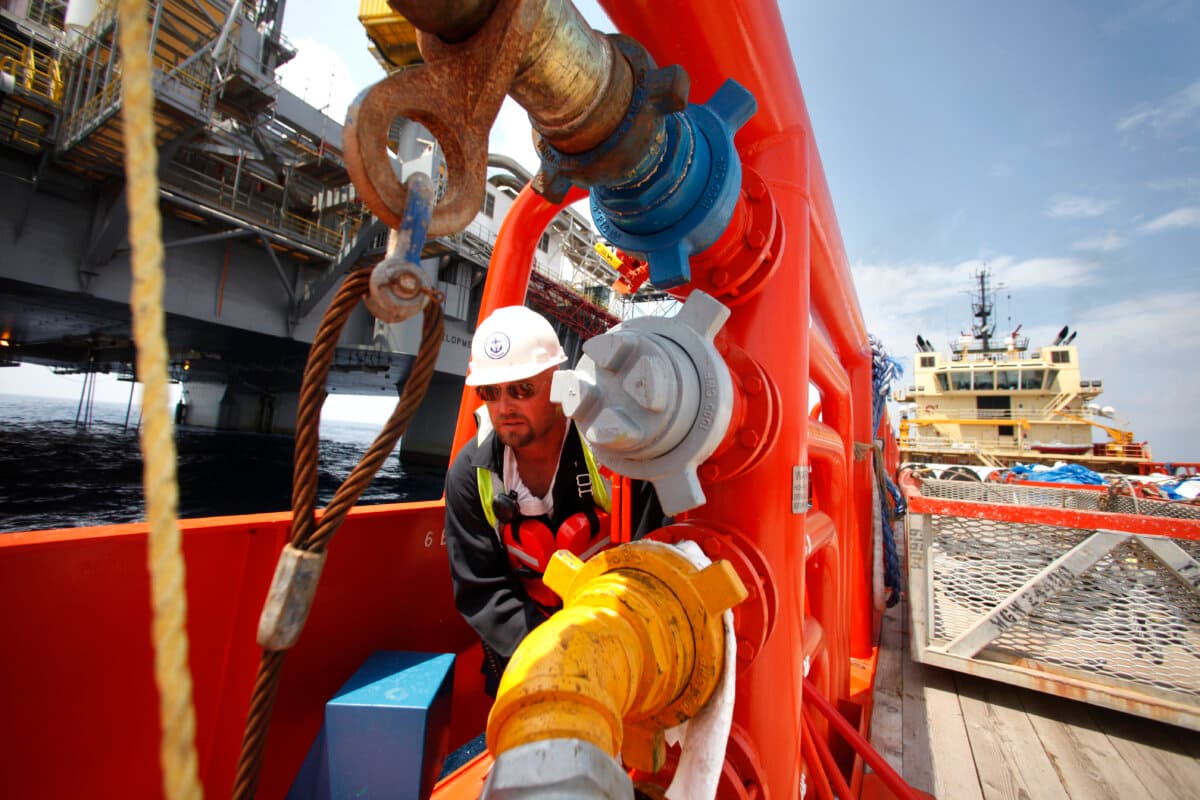
A crew member of a supply vessel turns a valve to transfer fuel to the Development Driller III drilling rig off the coast of Louisiana in the Gulf of America, on May 11, 2010. (Gerald Herbert-pool/Getty Images)
Before March 31, the Endangered Species Committee, nicknamed the “God Squad” by environmental activists, had not convened in more than 30 years.
The Center for Biological Diversity, an environmental activist group, filed a lawsuit in an attempt to block the meeting but a federal judge declined to grant the restraining order.
The Associated Press contributed to this report.