
Investors are taking a break from the artificial intelligence (AI) trade and rotating into more conventional bank and retail stocks.
The blue-chip Dow Jones Industrial Average rose by 874.86 points, or 1.73 percent, to close at a new record high of 51,561.
The popular index of 30 large-cap stocks has rebounded substantially since the March selloff and is up 7 percent this year.
Scores of non-tech names bolstered the Dow Jones during the June 4 trading session, including UnitedHealth, Costco, Eli Lilly, JPMorgan Chase, and Walmart.
“Each day and week, it’s interesting to watch the rotation,” Ken Mahoney, president and CEO of Mahoney Asset Management, said in a note emailed to The Epoch Times.
“One day, it’s semiconductors, then quantum, then to energy, and then to software, and so on.”
Small-cap stocks have also outshone the broader market.
The Russell 2000—an index that covers 2,000 small-cap names—rose by more than 1 percent and is close to breaching 3,000 for the first time.
The broad-market S&P 500 ticked up by about 30 points, or 0.41 percent, inching closer to 7,600 and adding to its year-to-date increase of almost 11 percent.
Technology stocks took a breather from their latest run, as the Nasdaq Composite Index closed down 23 points, or 0.09 percent, paring most of its intraday losses. The Nasdaq is up 15.44 percent this year and is hovering around record territory.
The market’s latest—and perhaps temporary—pivot away from tech was fueled by chipmaker Broadcom’s fiscal second-quarter revenue miss. This filtered through other semiconductor names, including Micron Technology, which declined by about 5 percent.
Broadcom’s performance on Wall Street could signal a maturing AI trade, said Mark Malek, chief investment officer at Siebert Financial.
“The AI trade is entering a more mature phase where story quality matters as much as revenue growth,” Malek said in a note emailed to The Epoch Times. “The market is no longer paying endlessly for ‘AI’ stamped on the box.”
Geopolitical strife is still lurking in the background for investors as the U.S.–Iran conflict drags on without any signs of a resolution soon.
Global energy markets eased on reports that President Donald Trump is reluctant to restart a full-scale war with Tehran.
A barrel of West Texas Intermediate crude—the U.S. benchmark for oil prices—declined by more than 3 percent to about $93 per barrel on the New York Mercantile Exchange.
Brent, the international benchmark, also fell by about 3 percent to $95 per barrel in overseas trading.
Although the shock initially posed a headwind for markets, investors have shrugged off oil-driven inflationary pressures stemming from the three-month-old Iranian conflict. Traders have also ostensibly brushed aside growing expectations that the Federal Reserve will raise interest rates later this year.
Market watchers will obtain a better sense of where monetary policy could be headed when the May jobs report is released on June 5.
Economists have penciled in about 85,000 new jobs and an unemployment rate of 4.3 percent. These figures, if accurate, would be enough to buy the Fed some time to determine whether to pull the trigger on a rate hike or maintain a higher-for-longer policy stance.
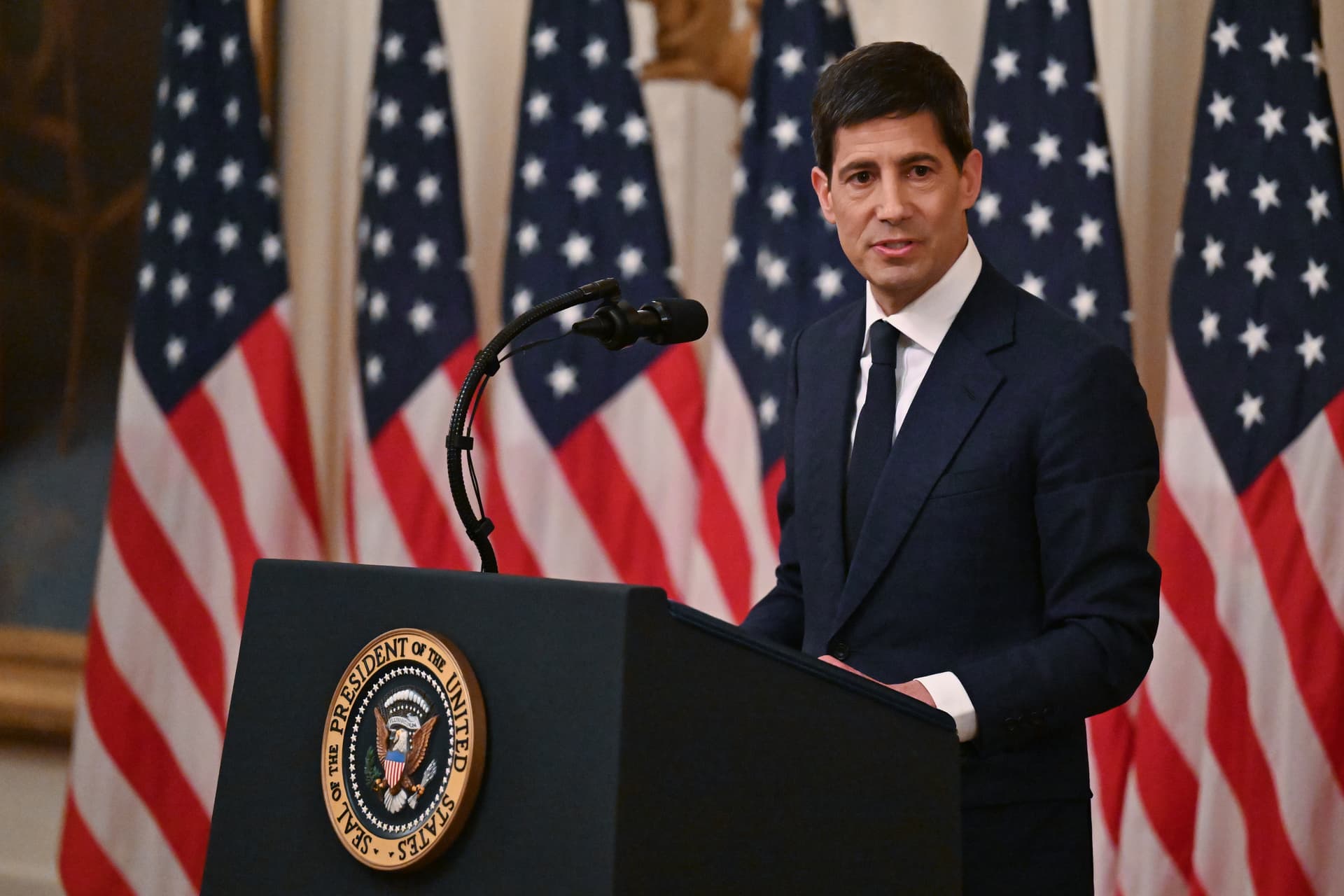
Fed Chair Kevin Warsh will helm his first Federal Open Market Committee policy meeting later this month. Investors anticipate no change to interest rates.
“We now have the new Fed Chair Kevin Warsh coming in from a mergers and acquisitions background, and we think he’ll be market friendly,” Mahoney said. “He seems to be aligned with the Treasury, and it seems like the plan could be to grow our way out of trouble [inflation].”
IPO Frenzy
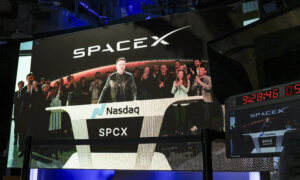
Tech could receive a boost this month as SpaceX is set to debut on the Nasdaq next week.
SpaceX plans to market its initial public offering—also known as an IPO—at a fixed price of $135 per share, putting its valuation at about $1.78 trillion. A filing with the Securities and Exchange Commission shows that the Elon Musk-led company plans to sell 555.6 million shares.
But it is not only SpaceX. AI trillion-dollar behemoths Anthropic and OpenAI are poised to go public this summer.
“Markets are ebullient, to say the least,” Giuseppe Sette, cofounder of market research firm Reflexivity, said in a note emailed to The Epoch Times. “For a lot of investors, this avalanche of supply awakens dark memories of other ebullient markets.”
Even though the AI trade is dominating financial markets, analysts have also debated whether a bubble is brewing. Both sides have presented data and trends to support their arguments, but experts have said that the performance of SpaceX, Anthropic, and OpenAI could confirm whether the tech-fueled rally still has legs.