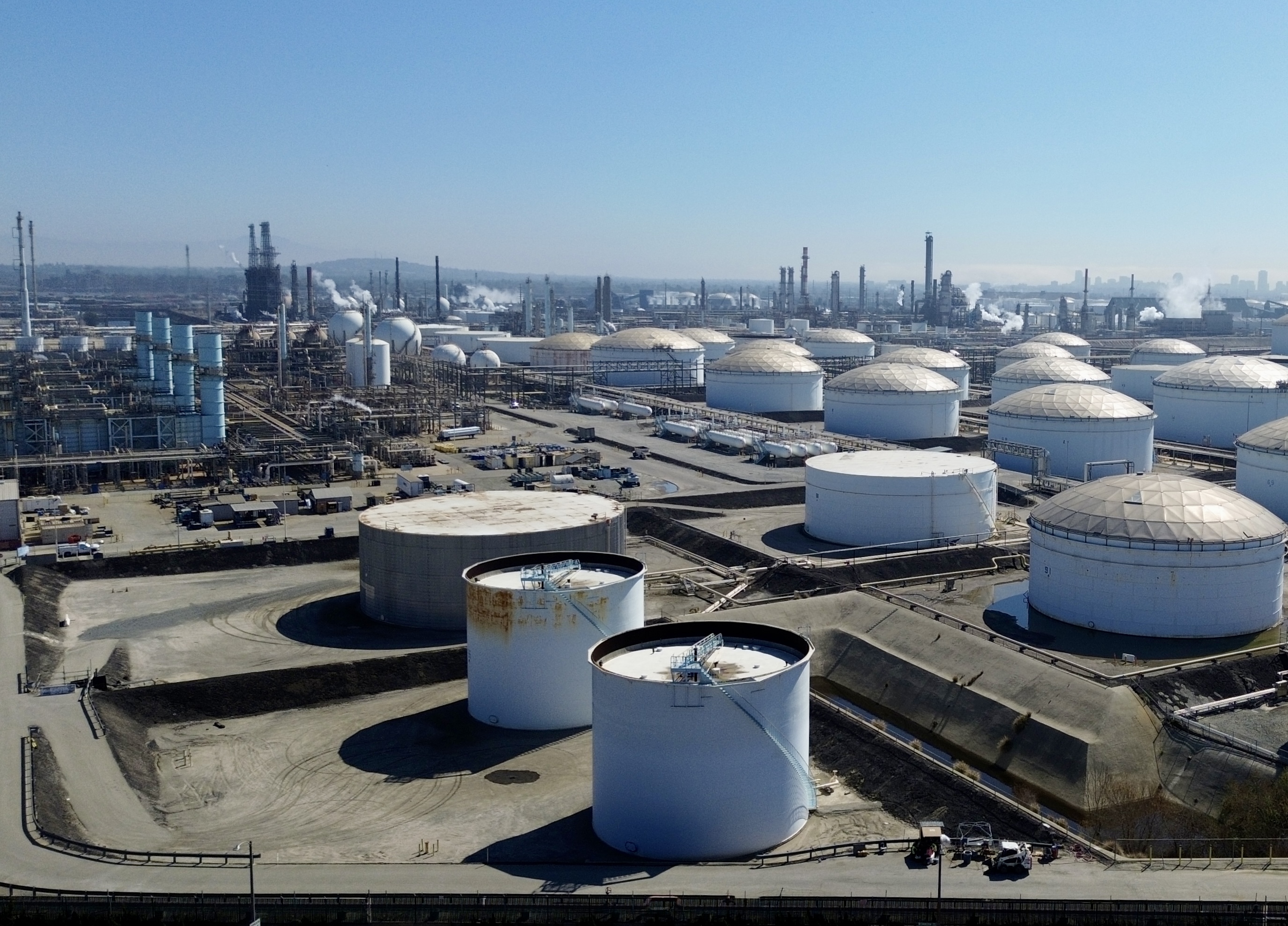

Brent crude oil futures were trading at multi-month lows on Oct. 20, amid concerns of a supply glut in the market and a worsening U.S.–China relationship.
Oil was trading at $60.95 per barrel as of 6:40 a.m. EDT, down by 0.55 percent from its closing price on Oct. 17. Prices have been hovering near this level for the past couple days. The last time oil prices were at this level was in early May, more than five months ago.
Before May, prices last traded at about this level in March 2021.
An Oct. 17 analysis from the International Energy Agency states that the global oil market may be at a tipping point as a “significant supply glut” comes to the fore. Between January and September, the overall global oil surplus was 1.9 million barrels per day.
“Crude oil prices remained largely resilient, as stock builds were concentrated in areas that have less direct influence on price formation, notably crude in China and gas liquids in the United States,“ the analysis reads. ”Crude inventory levels in key pricing hubs remained relatively low.
“However, more recently, surging supplies from the Middle East and the Americas are pointing to an untenable surplus of nearly 4 [million barrels per day] in 2026, making it increasingly clear that something has to give.”
The amount of oil being stored or transported over water has risen to 102 million barrels, the highest level since the COVID-19 pandemic, according to the International Energy Agency.
Once these vessels begin unloading, crude oil stocks outside of China are expected to spike, putting “further pressure on prices,” the agency stated.
Oil supplies have risen in the United States as well. According to data from the Energy Information Administration (EIA), as of Oct. 10, the United States had 423.8 million barrels of commercial petroleum stocks, excluding the Strategic Petroleum Reserve. This is 3.5 million barrels higher than the previous week and 3.2 million barrels higher annually.
Meanwhile, trade tensions between the United States and China are heating up.
On Oct. 10, President Donald Trump said the United States would impose an extra 100 percent tariff on Chinese imports beginning on Nov. 1. He accused Beijing of adopting “aggressive” export control for its products, including restrictions on rare earth elements.
A day earlier, Beijing had announced an expansion of its export control on rare earths, preventing foreign defense and semiconductor companies from accessing these elements. Any item that contains more than 0.1 percent of rare earth ingredients sourced from China will require an export license. The restrictions take effect on Dec. 1.
On Oct. 9, the Treasury Department’s Office of Foreign Assets Control launched new sanctions on Iran’s oil networks, including China-based Rizhao Shihua Crude Oil Terminal Co. and Shandong Jincheng Petrochemical Group Co.
The Treasury Department accused Rizhao’s Lanshan Port of having received more than a dozen “shadow fleet” tankers containing millions of barrels of oil from Iran.
“When terminals and unloading facilities are named, carriers, insurers, and agents all become more cautious,” economist Davy J. Wong told The Epoch Times.
“Delays in docking, offloading, and customs approval could significantly raise costs and turnaround times.
“This isn’t a total cutoff.
“But it raises the cost of breaking sanctions and makes compliance far harder. Iranian oil flows to China will likely fluctuate, reprice, and decline in phases, though not disappear entirely.”
The escalation of trade conflict between the two top oil-consuming nations in the world, the United States and China, is putting downward pressure on oil prices.
In its Oct. 7 Short-Term Energy Outlook report, the EIA stated that it expects global liquid fuel production to continue rising, driving up inventory accumulation.
Global oil inventories are expected to rise through next year, putting “significant downward pressure” on oil prices over the coming months, according to the report.
EIA foresees OPEC+ production remaining below the group’s announced targets, which it said will prevent the acceleration of inventory buildup, thus limiting the decline in oil prices.
“We forecast that the Brent crude oil price will fall to an average of $62 per barrel (b) in the fourth quarter of 2025 and $52 [per barrel] in 2026,” the EIA stated.
Michael Zhuang contributed to this report.