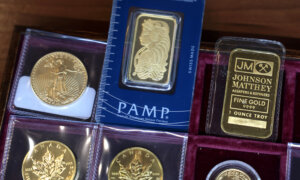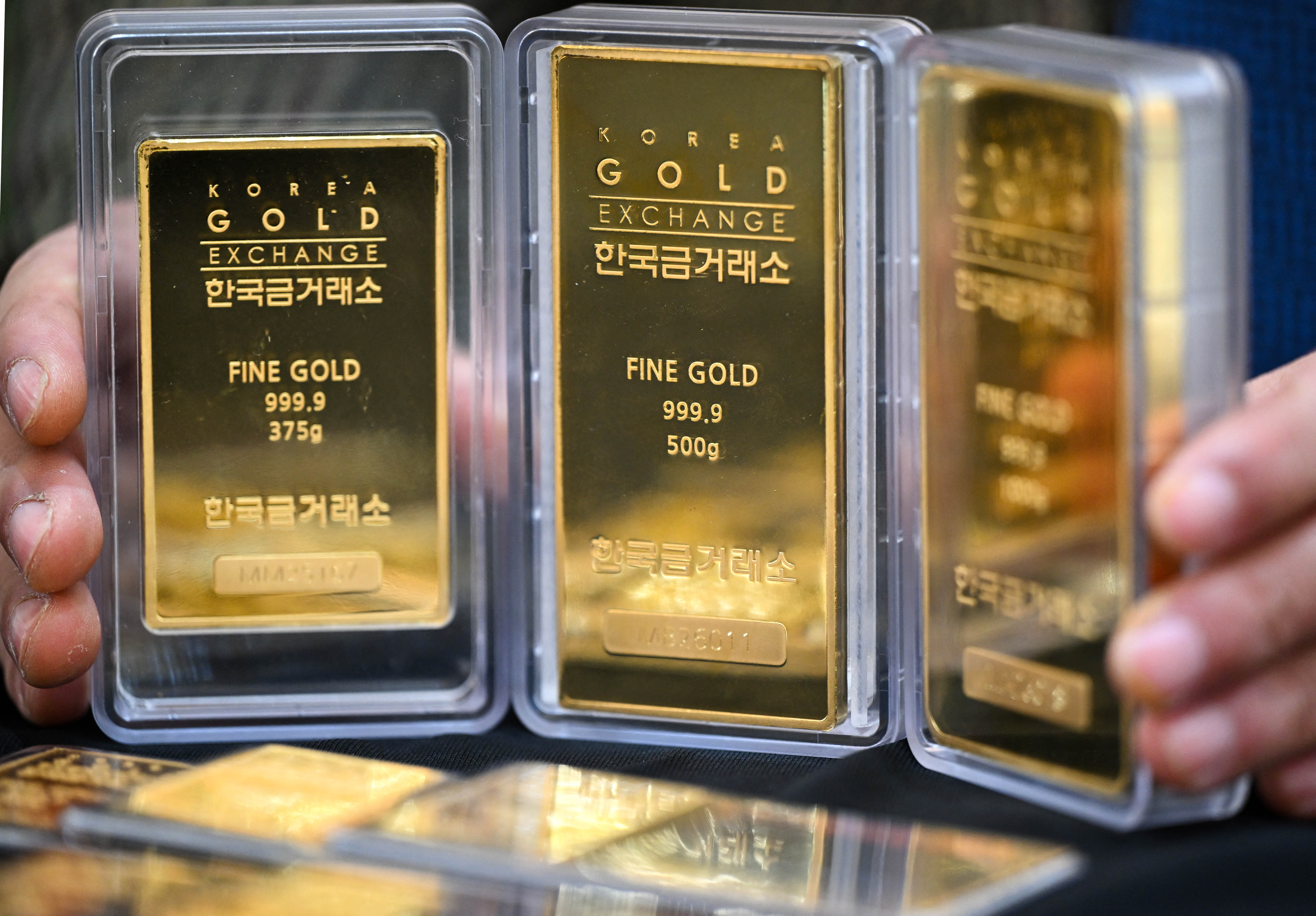

Gold and silver prices suffered a sharp selloff as President Donald Trump’s pick to lead the Federal Reserve eased concerns surrounding central bank independence.
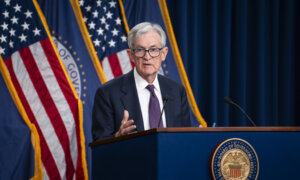
Following months of speculation, the president nominated former Fed board member Kevin Warsh, a hard-money hawk who has been highly critical of the century-old institution.
“I have known Kevin for a long period of time, and have no doubt that he will go down as one of the great Fed Chairmen, maybe the best. On top of everything else, he is ‘central casting,’ and he will never let you down,” Trump said in a Jan. 30 Truth Social post.
Gold prices had cratered to $4,700 during the end-of-week trading session—down 16 percent from its all-time high of $5,626 per ounce.
The yellow metal pared its losses, declining $473.60, or 8.9 percent, to $4,882.20 an ounce at 4:13 p.m. EST on the COMEX division of the New York Mercantile Exchange.
Silver slipped into a bear market after it suffered its sharpest decline in 46 years. Prices had tanked to as low as $70, representing a 42 percent drop from its record high.
Like gold, the white metal pared its losses, falling $30.864, or 27 percent, to $83.70 an ounce.
Both gold and silver are still up 13 percent and 17 percent this year, respectively.
The rest of the metals market also plummeted following the decision.
Copper prices erased $0.244, or 3.93 percent, to $5.96 per pound. Platinum plunged almost 18 percent to around $2,1500 an ounce. Palladium erased more than 15 percent to about $1,710 per ounce.
Trump’s selection appeared to have alleviated worries that Chair Jerome Powell’s successor would erode monetary policy independence as the U.S. dollar avoided the broader market selloff.
The U.S. Dollar Index (DXY), a measure of the greenback against a weighted basket of currencies, soared more than 0.8 percent to above 97.00.
After a rough start to 2026, the index remains down approximately 1 percent year-to-date.
The Kevin Warsh Factor
In the past, Warsh has been critical of the Fed’s expansive monetary policy decisions, favoring a smaller balance sheet.
Since the Global Financial Crisis two decades ago, the Fed’s balance sheet has soared due to the institution’s rounds of quantitative easing. These actions featured purchases of government bonds and mortgage-backed securities.
The balance sheet reached an all-time high of about $9 trillion during the pandemic, but the Fed’s books have retreated, with the central bank allowing its holdings to roll off. However, it paused these efforts late last year, meaning the balance sheet would stop shrinking as rapidly.
As of Jan. 28, the Federal Reserve’s balance sheet stood at $6.587 trillion.
“Given his balance sheet stance, we don’t expect the Fed will exert undue influence on long-term rates,” Charlie Ripley, senior investment strategist for Allianz Investment Management, said in a note emailed to The Epoch Times.
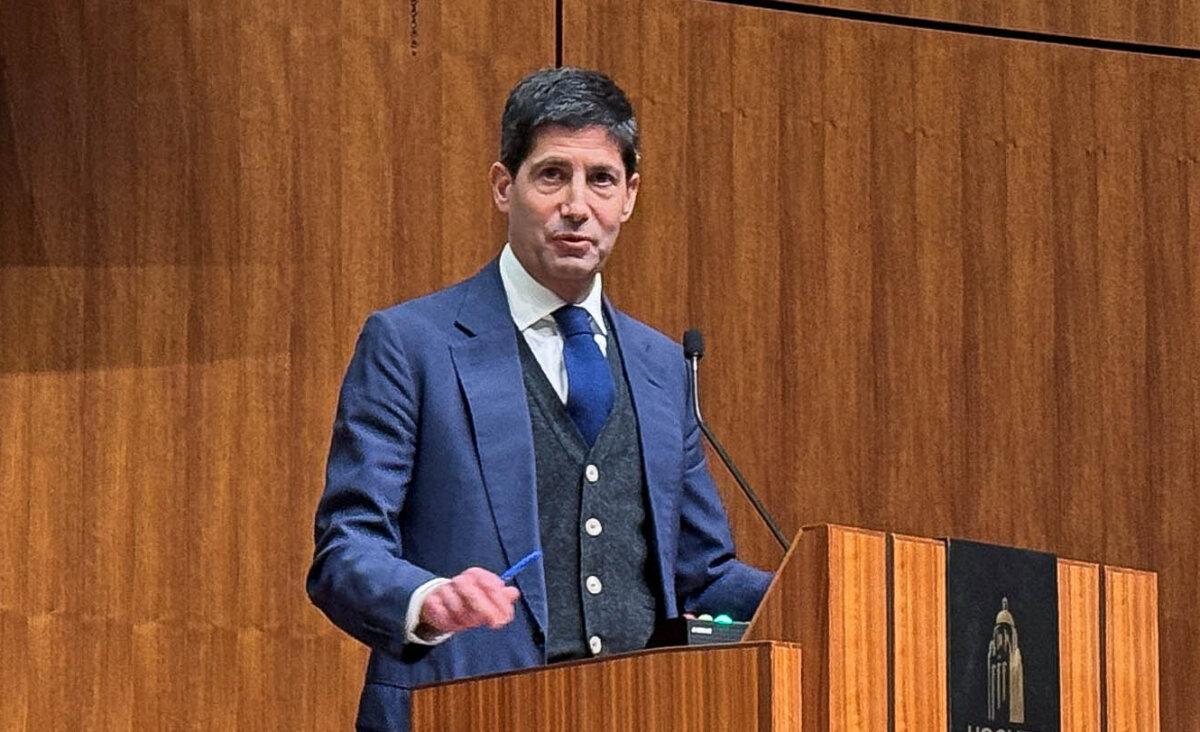
Former Federal Reserve Board member Kevin Warsh speaks during a monetary policy conference at Stanford University’s Hoover Institution in Palo Alto, California, on May 9, 2025. (Ann Saphir/Reuters)
“There is a sense that a Warsh Fed technically leans more hawkish with an unwillingness to utilize the balance sheet to cap long-term rates.”
This position could lead to higher premiums for the dollar and long-term interest rates.
U.S. Treasury yields were little changed to close out the trading week.
The benchmark 10-year ticked up 2 basis points to nearly 4.25 percent, while the 30-year jumped 3 basis points to above 4.88 percent. The 2-year, which tends to track Fed policy, shaved off more than 2 basis points to below 3.53 percent.
Metals could be adversely affected if the dollar and long-term rates start to strengthen.
A stronger greenback is bearish for dollar-denominated commodities because it makes them more expensive for foreign investors to purchase.
Likewise, increasing yields exacerbate the opportunity cost of holding non-yielding bullion.
Panic on The Street
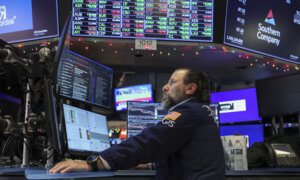
As for the broader market, Wall Street was submerged in red ink, although the leading benchmark averages were paring their losses heading toward the closing bell.
The blue-chip Dow Jones Industrial Average and the broader S&P 500 fell about 0.4 percent. The tech-heavy Nasdaq Composite Index erased nearly 1 percent.
If confirmed, markets will need to configure their models and strategists to determine how Warsh could craft monetary frameworks, says Jeffrey Roach, chief economist at LPL Financial.
“Investors could get nervous with Warsh’s view that many current monetary frameworks are just junk food, such as forward guidance and data dependence,” Roach said in an emailed note to The Epoch Times.
While he believes Warsh is a “safe pick” that will “not necessarily be a yes-man for the president,” his potential changes “could potentially be hazardous.”
All eyes will be on Capitol Hill in the coming months to see whether Warsh will have enough support among lawmakers to be confirmed.