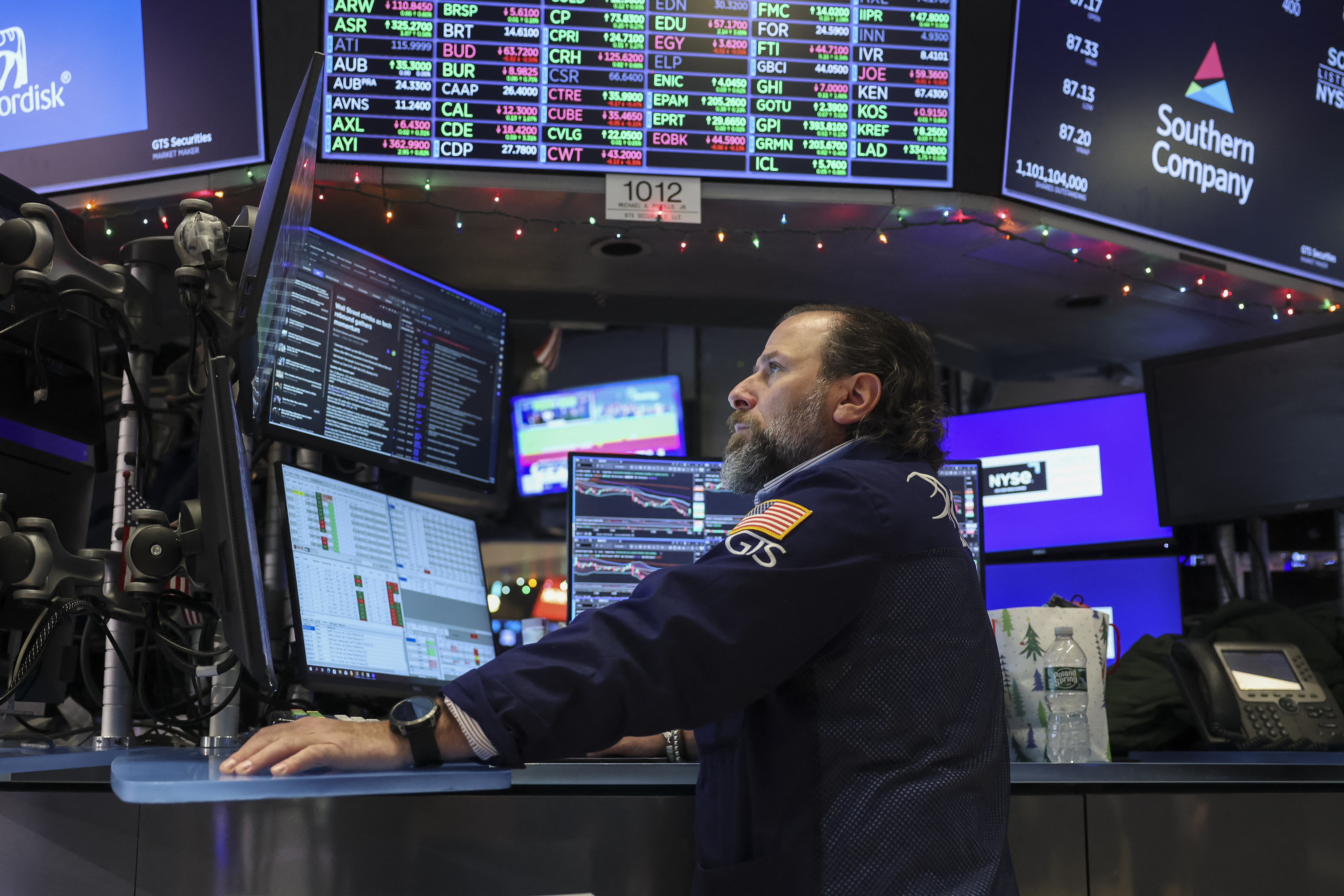

Equity markets rallied Friday as the Dow Jones Industrial Average crossed the 50,000 threshold at 2:30 p.m. ET for the first time ever.
President Donald Trump celebrated the news with a Truth Social post.
“Congratulations America!” Trump wrote in all caps.
The Dow spiked more than 1,200 points, totaling about 2.5 percent, while the tech-heavy NASDAQ climbed approximately 2.2 percent, slightly higher than the S&P 500’s nearly 2 percent gain.
The new milestone for the blue-chip index came 14 months after first topping 40,000 in May 2024, marking the fastest climb between 10,000-point landmarks, according to historical data.
Top contributors to the rapid escalation include financial services firms American Express, Goldman Sachs, and JPMorgan; machinery manufacturer Caterpillar; pharmaceutical giant J&J; and IBM, 3M, and Walmart.
Gina Bolvin, president of Bolvin Wealth Management Group headquartered in Boston, described the record high as “confirmation” that financial markets are adapting to new dynamics.
“Markets have adjusted to higher rates, slower growth, and global uncertainty—and still moved higher,” Bolvin said in a statement emailed to The Epoch Times. “That tells us confidence is real, and 2026 will be less about the Fed and more about fundamentals.”
She advised market participants to acknowledge the nature of tumultuous markets, with unknowns surrounding newly nominated Federal Reserve Chairman Kevin Warsh, and invest accordingly.
“With double-digit earnings growth expected for the S&P 500, equity investors are likely to be rewarded—but the path won’t be smooth,” Bolvin said. “Volatility should be expected. For investors, this is a reminder to stay intentional: lean into quality businesses with strong earnings power and be prepared for more rotation, not straight-line gains.”
One analyst pointed to the newly released report from the University of Michigan, which revealed easing inflation and the strongest U.S consumer sentiment since August 2025, as one catalyst for market strength, though he also cautioned that more volatility is likely.
“We think the markets may have to work through more jitters with a new Fed chair, but in the end, we think the Fed will cut rates later this year, which will grease the skids for more market appreciation,” Jeffrey Roach, chief economist for LPL Financial, told The Epoch Times by email on Feb. 6.
The moves follow three days of heavy selling across markets amid a cryptocurrency crash and heavy pressure on technology stocks.
Bitcoin fell from all-time highs in October 2025 of approximately $126,000 to about $60,000 in overnight trading between Feb. 5 and Feb. 6 before rebounding to nearly $71,000 by the end of the day.
Ethereum experienced similar jolts, topping at approximately $4,800 in August 2025 before sliding to about $1,850 Feb. 5 and bouncing back to $2,000 in a day.
Sharp drops also impacted crypto-related stocks, with Michael Saylor’s Strategy, the world’s largest bitcoin holder, suffering multi-billion-dollar paper losses as selling intensified in recent days.
Technology stocks declined as the impact of artificial intelligence on software companies negatively affected investor confidence.
ServiceNow, Salesforce, and Microsoft experienced single-day stock drops of 7.6 percent, 4.7 percent, and 5 percent, respectively. Chip manufacturer AMD saw its stock price decline 17.3 percent in one trading day, among other steep drops.
The NASDAQ hit year-lows earlier this week. Some stocks in the sector rebounded Friday, with AMD and Nvidia both spiking about 8 percent.
Precious metals joined the lot of volatile assets, with silver plummeting approximately 30 percent from its peak. Prices reached more than $114 per ounce on Jan. 29, then retreated to about $68 on Feb. 5 and bounced to $77 on Friday.
Gold fell from its high of about $5,600 per troy ounce to slightly more than $4,500 on Feb. 2. before rebounding to nearly $5,000 on Friday.