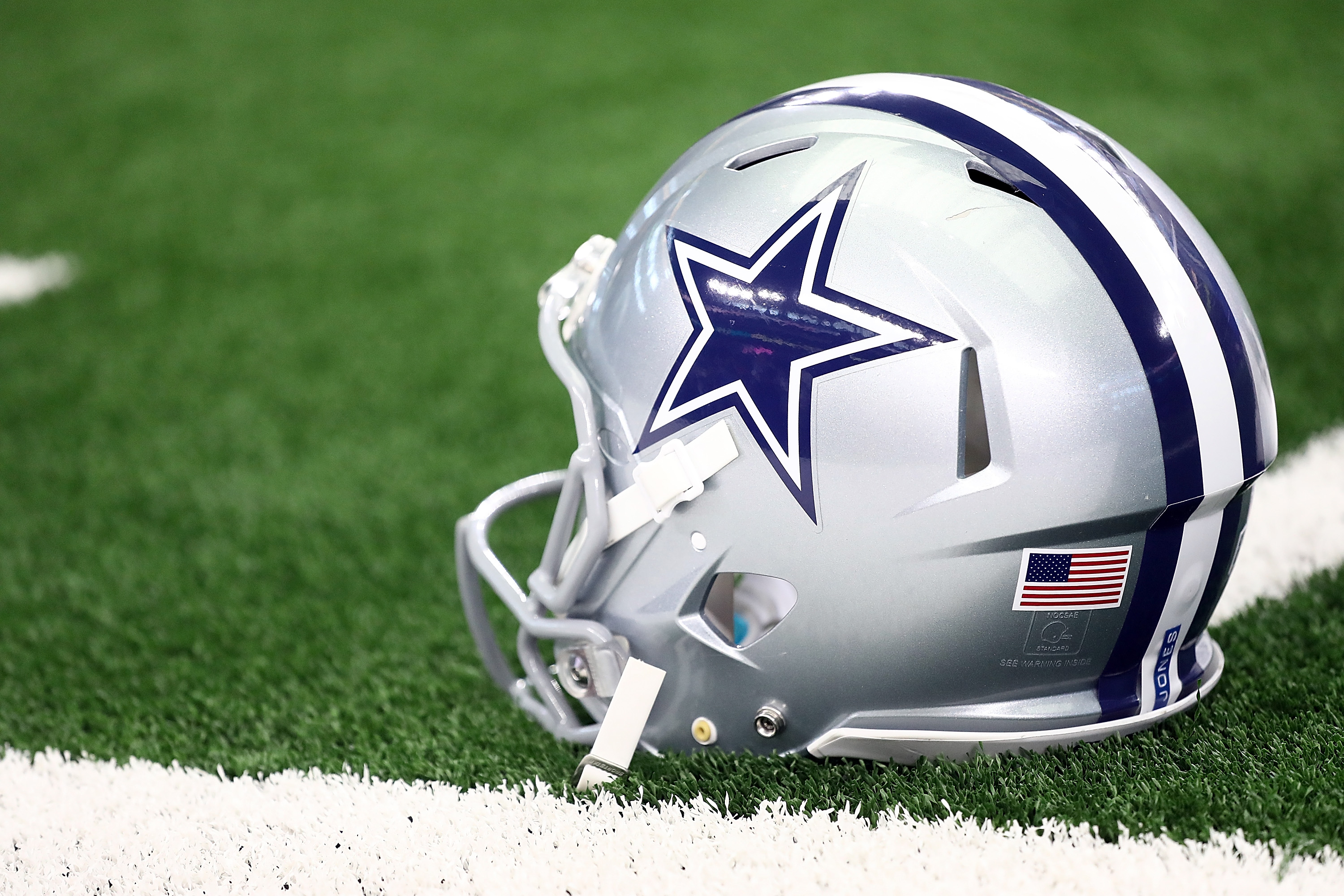

Former NFL defensive back Cornell Green, a basketball All-American who never played a down of college football but had a 13-year career with the Dallas Cowboys, including a Super Bowl championship, died Wednesday at 86.
Green was a key part of the Cowboys’ Doomsday Defense under head coach Tom Landry, never missing a game from 1962 to 1974.
“We are sad to share news of the passing of Cowboys legend Cornell Green this morning,” the Cowboys said in a statement.
“Cornell was a true trailblazer having never played football in college, yet becoming a multi-time Pro Bowler, All Pro and NFL Super Bowl Champion. … He was a member of the 25th Anniversary Cowboys Team as well.”
The statement went on to call Green “one of the best and most dependable teammates to ever wear the star.”
A five-time Pro Bowl selection and four-time All-Pro—including a pair of First Teams—Green also was a versatile member of the secondary. He began his career as a backup in 1962, then became a starting cornerback the next season and manned the left side of Dallas’ secondary for seven seasons. In 1970, when Dallas acquired Hall of Fame corner Herb Adderly, Green moved to strong safety, where he’d start at for the final five seasons of his career.
During the 1970-72 seasons, Green was the fourth member of a Cowboys secondary that featured three Hall of Famers. Adderly and Mel Renfro were the Canton, Ohio-bound starting cornerbacks, while Cliff Harris, who was inducted into the Pro Football Hall of Fame in 2020, was the starting free safety. Given Green’s credentials and lengthy career, many think he is also deserving of a bust in Canton.
Green started 170 of 182 games and recorded 34 interceptions. Two of those picks were returned for touchdowns, and he also returned a pair of recovered fumbles for scores. Across 15 postseason games, Green had just one interception, but he took it back 60 yards for a pick-six in a 1967 Divisional Round win over the Cleveland Browns.
Green started in two Super Bowls, losing Super Bowl V in 1971 to the Baltimore Colts, then winning Super Bowl VI the next year over the Miami Dolphins. When he retired after the 1974 season, Green ranked second in Cowboys history with 34 interceptions and still ranks fifth on the all-time list. His 170 games started are fourth most by a defensive player in team history, trailing only Ed “Too Tall” Jones (203), Bob Lilly (196), and Lee Roy Jordan (174).
Green’s career start was unconventional. He was not only undrafted, but he also never played a down of college football. He played basketball at Utah State, where he earned All-American honors in 1961 and 1962. He still holds the program record for rebounds and ranks sixth in school history in points.
The 6-foot-3 Green originally planned on a pro basketball career and was even drafted into the NBA. He was selected in the fifth round of the 1962 NBA Draft by the Chicago Zephyrs, who would relocate one year later and become the Baltimore Bullets, the predecessor to today’s Washington Wizards.
Around the same time, Green accepted an offer to try out for the Cowboys despite his playing just one year of organized football, which came during his junior year of high school at El Cerrito High in the San Francisco Bay Area.
“We had a lot of those guys that played for the Cowboys,” Hall of Famer Randy White said. “A lot of them that [player personnel director] Gil Brandt found were basketball players and ended up being great. Cornell Green, a bunch of them ended up being great football players.”
Green was also a stalwart in NFL front offices for decades after his playing days ended. He started working in Dallas’ scouting department while still an active player, transitioning to a full-time role upon his retirement. After 10 total years as a Cowboys scout, Green then stepped away from football for a while, only to return in 1987 with the Denver Broncos.
That’s when Green reunited with Dan Reeves, who served as Broncos head coach from 1981 to 1992 after being a Cowboys teammate of Green from 1965 to 1972. Green again worked in the scouting department and would hold roles with the Broncos for 28 years before retiring in 2015.
Though Green never received the honor of being a Pro Football Hall of Famer, or even going into the Dallas Cowboys Ring of Honor, he has received recognition for his athletic career. He was named to the Cowboys’ 25th Anniversary Team in 1985 and was part of the inaugural Utah State athletics Hall of Fame in 1993.