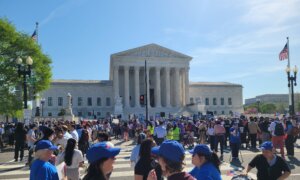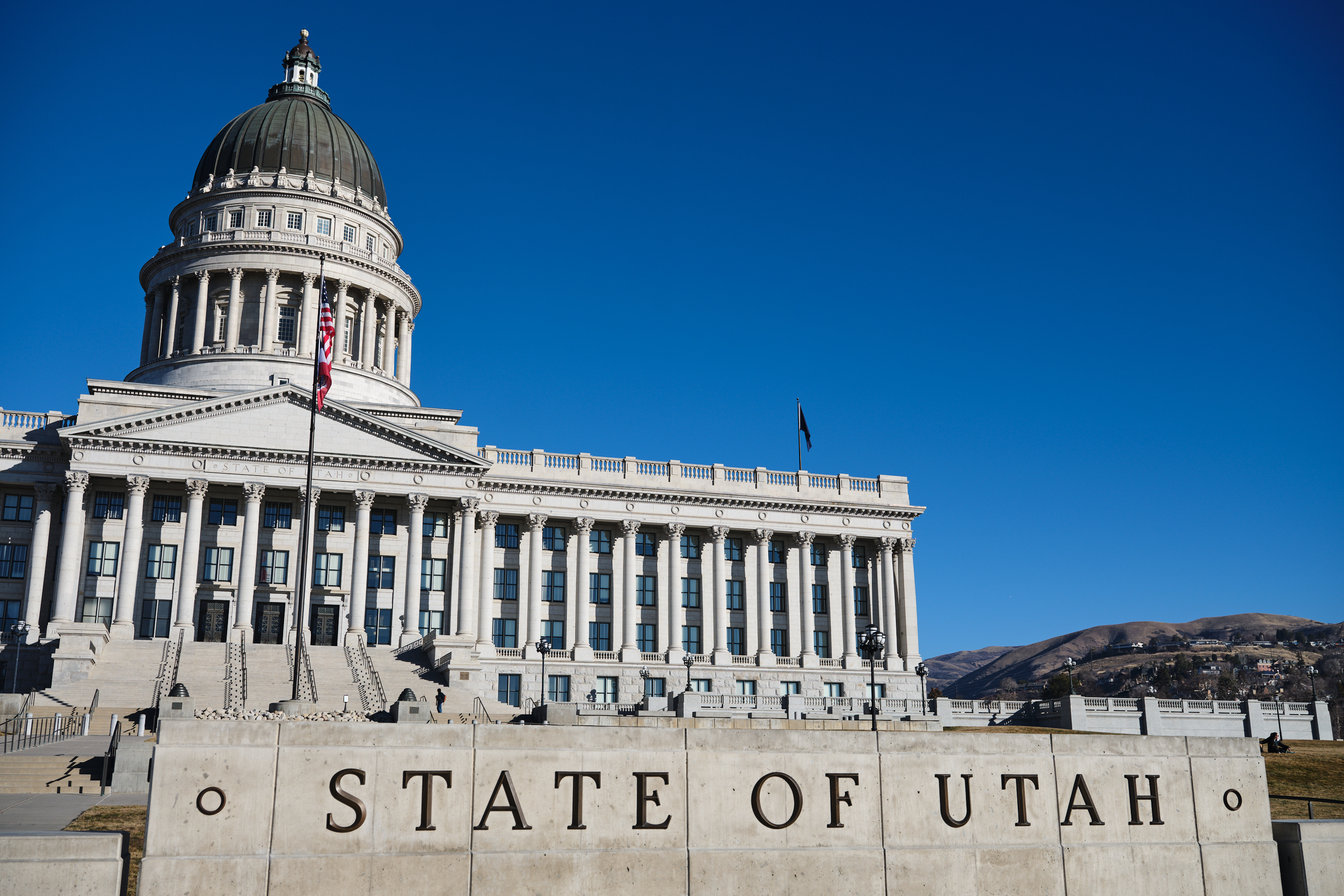


A federal court on Feb. 23 rejected Republicans’ request to block Utah’s congressional map ahead of the 2026 midterms.
Two judges on a three-judge panel disagreed with the politicians’ argument that a state court had exceeded its authority by implementing the map as a replacement for one created in 2021. The judges also said their hands were tied due to a legal doctrine known as the Purcell principle, which instructs courts not to alter state rules before election day.
The state court’s decision to invalidate the 2021 map came in August 2025. Utah District Court Judge Dianna Gibson said that the map, which was used for the 2022 and 2024 election cycles, stemmed from a law that violated the state’s constitution.
If the court-drawn map stands, it would create a Salt Lake City-area district more favorable to Democrats, potentially giving the party a boost in November.
“The candidate filing period opens in 14 days, the candidate selection process officially begins in just 22 days, and the requested relief would necessitate changing the voting districts for thousands of Utah voters,” an unsigned opinion from the U.S. District Court for the District of Utah read.
The decision also came on the same day Lt. Gov. Deidre Henderson said she needed to know which redistricting map to implement. Henderson was listed as a defendant but took no position on the merits of the dispute.
U.S. Circuit Judge Timothy M. Tymkovich agreed with the outcome of the decision but disagreed on certain issues, including that the Purcell principle prevented the court from intervening.
Multiple Utah voters and elected officials, including Republican Reps. Celeste Maloy and Burgess Owens, argued that the state court violated the U.S. Constitution’s Elections Clause by implementing the new map. Under the Elections Clause, state legislatures set the “times, places, and manner” of federal elections, while Congress retains the power to override those regulations.
The court majority disagreed, stating that Congress allowed courts to act in difficult situations.
“The court notes some discomfort with the tension between the text of the Elections Clause and the counter-majoritarian role courts sometimes play when they exercise judicial review and fashion relief accordingly,” the unsigned opinion read.
However, it said the state court had made its decision last year “with just literal minutes to spare,” as the Nov. 10 deadline for a map was quickly approaching.
On social media, Owens posted a joint statement in which the plaintiffs expressed “profound disappointment” in the decision.
“This case concerns the Constitution’s allocation of authority over federal elections, a question of lasting importance beyond any single election cycle. ... We remain convinced that the Constitution assigns this responsibility to the State’s lawmaking authority and that this principle is essential to preserving constitutional order and the rule of law,” the statement read.
In a press release, Democratic National Committee Chair Ken Martin praised the ruling. “Today’s decision is a victory for fair representation across Utah,” he said.