
News Analysis
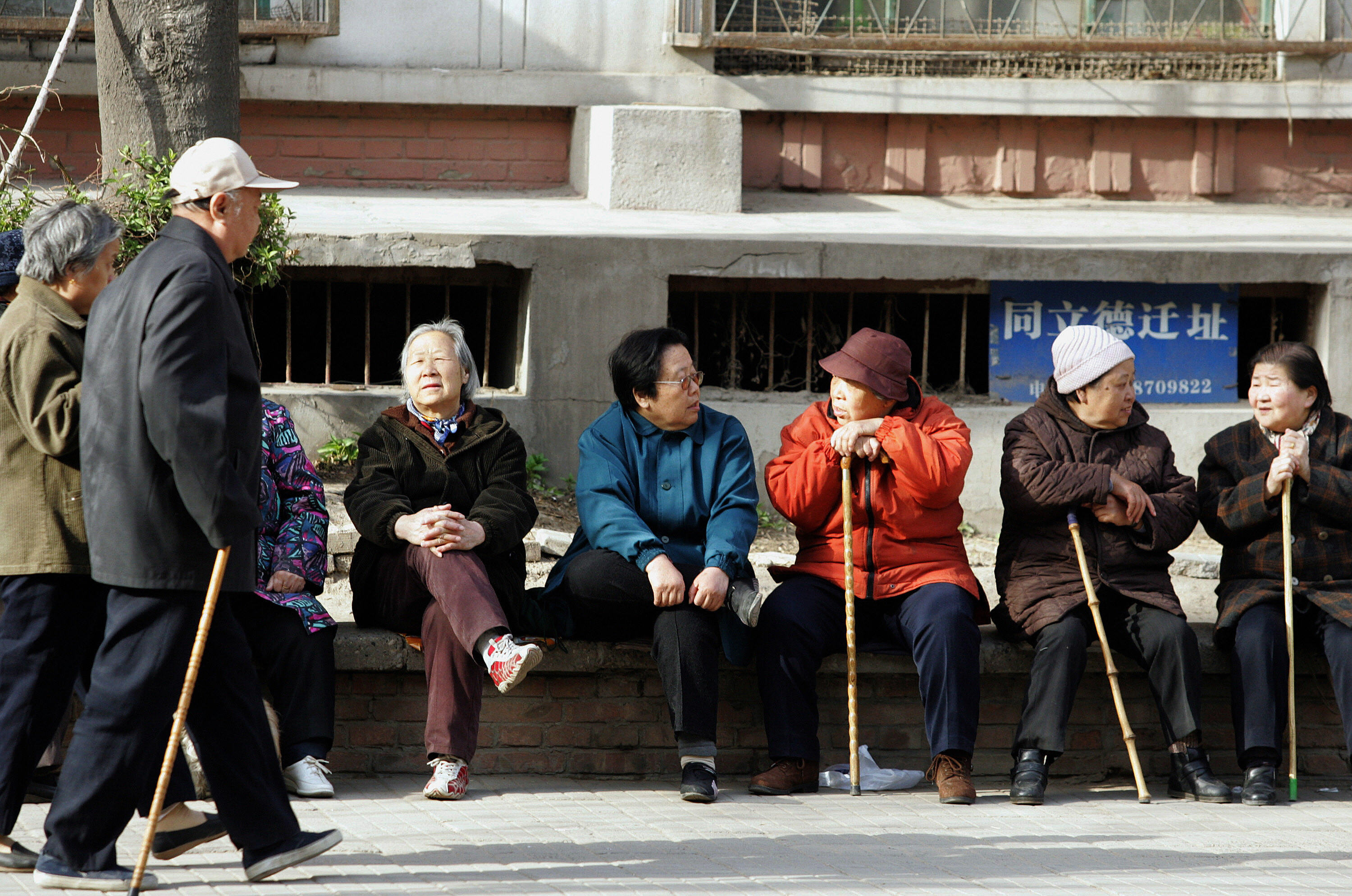
China recently told its retirees they will get only a 2 percent boost in 2025—the smallest adjustment since Beijing began annual pension hikes two decades ago.
The announcement on July 10 set off a wave of online complaints: rural pensioners on Weibo mocked the extra coins as enough to buy “a few more eggs,” while city dwellers wondered why their living costs keep climbing yet their benefits do not.
Analysts say the nominal increase highlights a pension system strained by a shrinking workforce, provinces raiding retirement funds to cover day-to-day expenses, and a leadership that now prioritizes industrial policy and debt control over social welfare.
Annual pension hikes have been shrinking for a decade: from 6.5 percent in 2016 to 5 percent through 2020, 4 percent in 2022, 3 percent last year, and now just 2 percent.
“The downturn has eaten into government revenues across the board,” said Xu Zhen, a capital-markets specialist with two decades in China’s financial sector. “That headline number is linked to shrinking tax collections.”
Xu told The Epoch Times that even Beijing—normally buffered by the tax flows from big state-owned companies—can now offer retirees only a minor pension increase.
In theory, those adjustments should track inflation, wage growth, and the health of the pension pool. But in practice, they hinge on “political discretion, not fiscal transparency,” U.S.-based economist Davy J. Wong told The Epoch Times.
This year’s bump, he noted, sits below headline inflation and even farther below soaring cost of medical care—a “strategic signal that public welfare no longer sits at the center of fiscal planning.”
Two Systems, Widening Gap
China runs a dual-track pension scheme. Urban employees—whether in private firms or state agencies—pay mandatory payroll taxes into a pooled fund. Farmers, migrants, and the self-employed rely on a separate “resident” plan financed by flat contributions and government subsidies.
Percentage-based hikes deepen the gulf: a rural pension of 300 yuan (about $42) a month rises by six yuan (about $0.84), while a retired Shanghai teacher receiving 9,000 yuan (about $1,250) gains around 180 yuan (about $25), Wong explained.
In some households, working children now bring home less each month than their retired parents, he added.
The gap is deliberate, Wong argued. China’s welfare ladder has three rungs: At the top, the ruling elite enjoy generous, fully subsidized benefits; below them, the “enforcer class” of civil servants and state-sector staff receive above-average pensions; and at the bottom, the governed masses get symbolic increases with shrinking real value.
“The pension one receives,” he said, “reflects not only earnings history but one’s role in the political hierarchy.”
Raiding the Cookie Jar
Even that nominal 2 percent raise strains the fund’s cash flow.
A June 24 National Audit Office (NAO) report found that 13 provinces illegally diverted 40.62 billion yuan (about $8.45 billion) out of residents’ pension and welfare accounts to cover routine government expenditures such as payroll, operational expenses, and interest on outstanding loans.
The scramble for cash accelerated when China’s real-estate boom buckled in late 2021. As land sales and home purchases dried up, local governments lost their richest income stream.
For years, they had bankrolled subways, airports, and industrial parks through local government financing vehicles (LGFVs), shell companies that borrow off the public books.
Those shell companies are now struggling to roll over what analysts with BBVA Research estimate is about 78 trillion yuan (roughly $10 trillion) in liabilities, more than half the size of China’s entire economy.
Each quarter, at least 1 trillion yuan (about $137 billion) in LGFV bonds are due, forcing officials into a nonstop scramble for fresh cash, according to S&P Global Ratings.
“Officials are juggling seven pots with six lids,” Xu said. “Borrowing from the pension account is already a breach of the rules and tells you the economy is on the edge.”
In 25 provinces, more than 28,000 provincial staffers falsified records to pocket an extra 519 million yuan (about $73 million) in pension and welfare funds, an NAO investigation found.
Such leaks, Wong added, “drain liquidity from resident accounts and force Beijing to hold the headline increase down.”
How Long Before the Money Runs Out?
The state-backed think tank Chinese Academy of Social Sciences warned in 2019 that China’s main state pension fund would run dry by 2035, because the workforce contributing to it is steadily shrinking.
Yet Wong thinks the cliff will arrive sooner in aging, slow-growth provinces such as Heilongjiang and Jilin—perhaps as early as 2027.
When the crunch comes, he adds, it will not be felt equally: Elite accounts can count on emergency transfers, while ordinary pensions may be capped, quietly devalued, or even delayed.
“Soon they may not even manage a 1 percent hike,” Xu predicts. “If payments slip from twelve months to ten, social tensions will explode.”
Technically, China can shore up the system by raising retirement ages, expanding contribution rates, or merging provincial pools into a true national fund, Wong said. But none of those levers are applied evenly: cadres retire early and receive top-tier medical coverage, while private-sector workers are already being told to work longer and pay more into the pool.
Xu argues the only credible path is to plug the “empty” individual accounts by transferring about ten percent of state-owned enterprise equity into the fund and letting dividends flow—an idea floated in the 1990s but never enacted.
Without such a move, every extra yuan in benefits collides with weakening payroll inflows and eroding public trust, he adds.
“The question is no longer how to sustain the system,” Wong said, “but which parts of the population Beijing intends to sustain.”
A Contrast With the United States
U.S. Social Security’s cost-of-living adjustments are automatic and tied to inflation, while China’s are discretionary and opaque, Wong said.
American benefits follow a single federal formula; Chinese payouts vary by region, employer type, and political rank. There is no U.S. equivalent of a cadre-only carve-out, he adds.
The tiny 2025 pension adjustment lands as Beijing channels cash into semiconductors, artificial intelligence, and defense technology—and as it orders provinces to rein in debt.
Wong said Beijing has moved from keeping citizens content with rising welfare to deliberately tightening benefits and using scarcity itself to keep people in line.
For a society aging faster than any major economy, Wong adds, the 2 percent adjustment is less an economic measure than a calibrated message: The state will protect its strategic ambitions first, its bureaucracy second, and its ordinary retirees only as far as resources allow.
Fang Xiao and Gu Xiaohua contributed to this report.