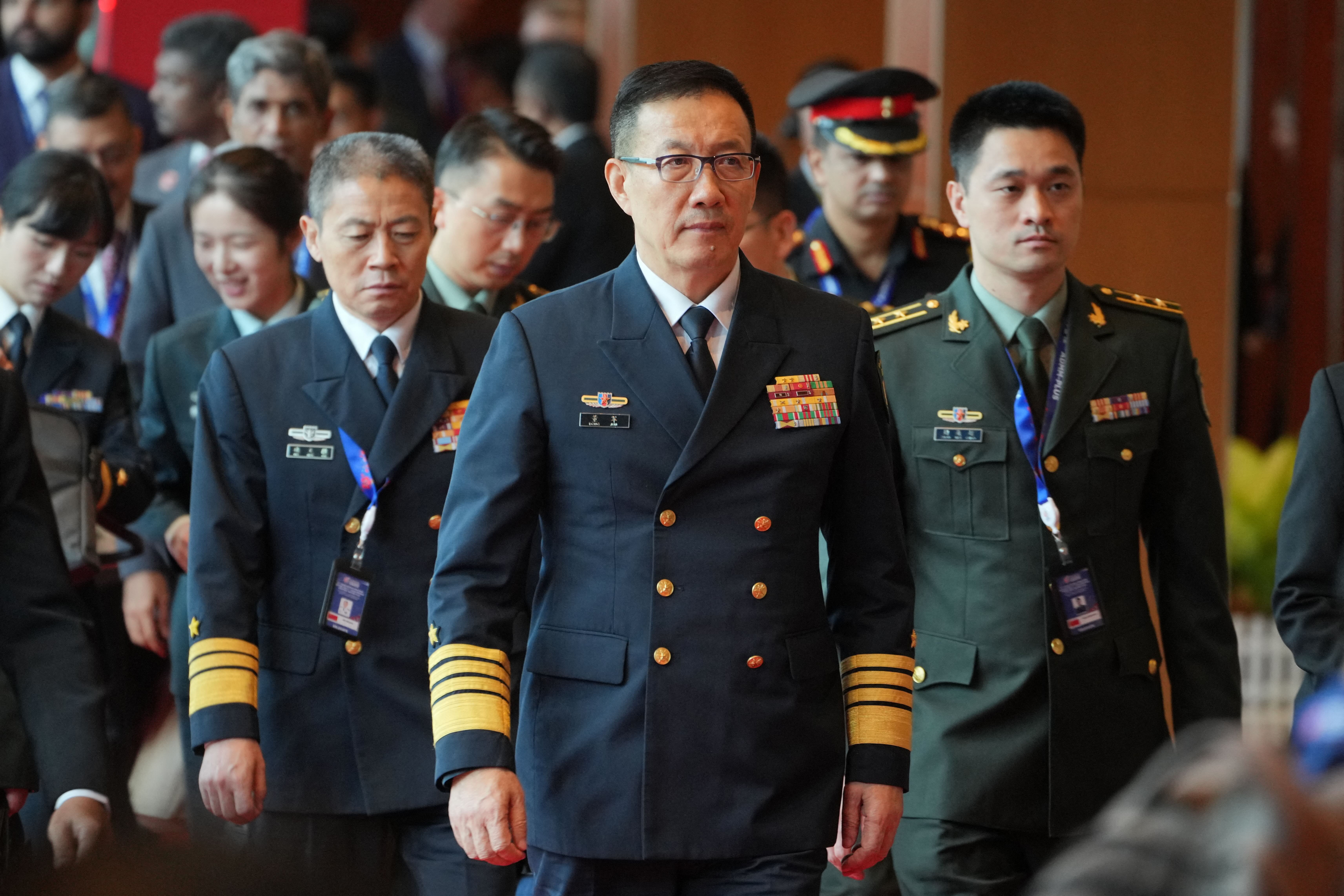

The Chinese military’s top diplomat will not attend Asia’s premier defense forum in Singapore this week, the defense ministry said on May 28, as questions swirl about the armed forces’ combat readiness amid the ongoing political cleansing.
China will send a delegation led by Maj. Gen. Meng Xiangqing, a professor at the People’s Liberation Army National Defense University, to join the Shangri-La Dialogue in Singapore from May 29 to 31, a defense ministry spokesperson said at a monthly briefing in Beijing.
It marks the second consecutive year that China’s defense minister, Adm. Dong Jun, will be absent from the event, which will bring together regional defense chiefs from dozens of countries, including U.S. Secretary of War Pete Hegseth.
The forum remains a rare platform for high-level military communication between the two superpowers amid ongoing tensions.
In 2024, Dong had a face-to-face meeting with then-U.S. Secretary of Defense Lloyd Austin at the forum’s sidelines, during which they discussed a range of global and regional security issues, such as Taiwan and the South China Sea.
At last year’s event, Hegseth issued a stark warning that any attempts by the Chinese regime to seize control of Taiwan would have “devastating consequences” for not only the Indo-Pacific but the entire world.
“There’s no reason to sugarcoat it. The threat China poses is real, and it could be imminent,” Hegseth said in his speech in May 2025.
His comments sparked protests from the Chinese regime, which accused the United States of sowing discord and stoking tensions. Taiwan is a democratically governed island that the communist regime claims as its own territory to be taken by force if necessary.
Hegseth, who left for Singapore on May 27, is set to speak at a plenary session on May 30.
According to the Pentagon, his speech will focus on the department’s “forward-looking, common-sense approach to safeguarding U.S. vital national interests in the Indo-Pacific.”
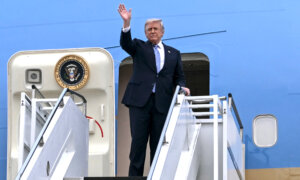
When U.S. President Donald Trump visited China earlier this month, Hegseth was spotted talking with Dong via interpreters at a state banquet in Beijing.
When asked for details of the exchange at the briefing on May 28, China’s defense ministry spokesperson Jiang Bin said they discussed “relations between the two militaries and issues of common concern” during Trump’s state visit, without elaborating.
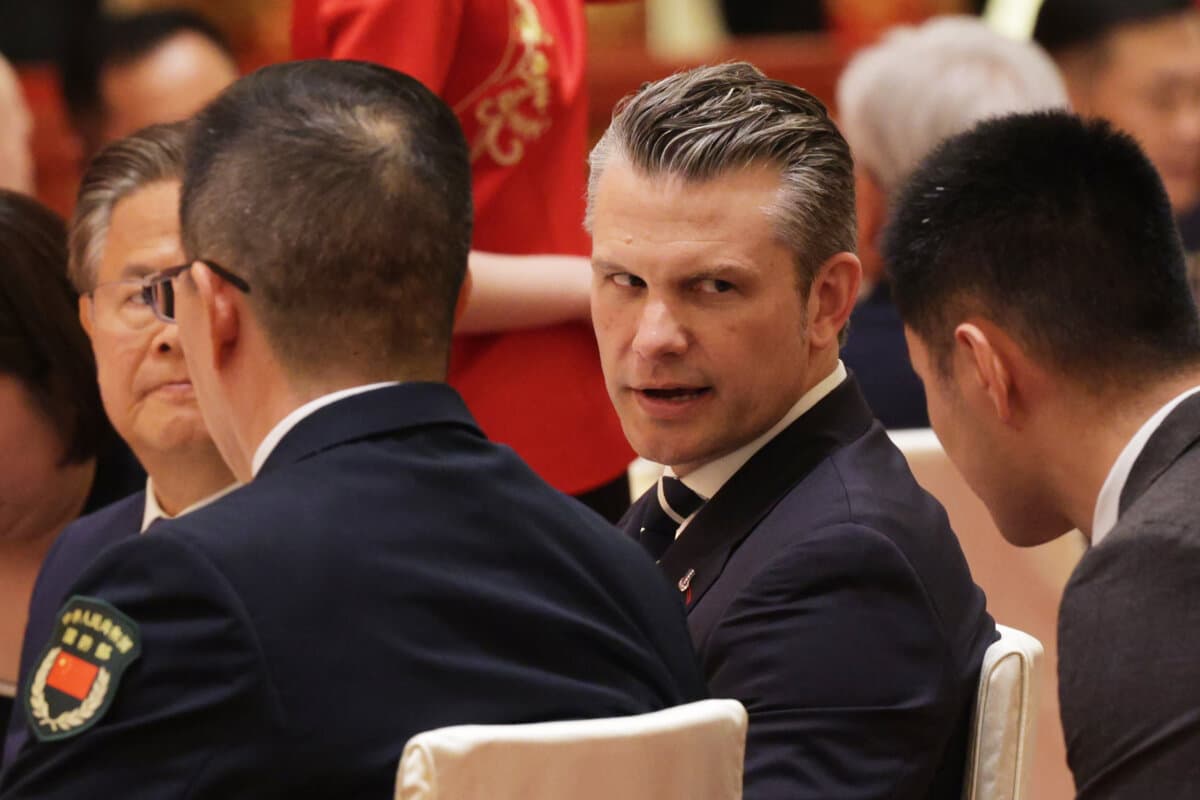
U.S. Secretary of War Pete Hegseth and Chinese defense minister Dong Jun (L) attend a state banquet in Beijing on May 14, 2026. (Alex Wong/Getty Images)
This year’s gathering also comes amid mounting speculation about the Chinese military’s capabilities, following unprecedented waves of purges that have swept through every branch of the People’s Liberation Army.
More than 100 senior military commanders—holding general or lieutenant general ranks—have likely been purged since 2022, according to a recent tally by the Center for Strategic and International Studies.
In the top decision-making body, the Central Military Commission, five of its six members have been effectively removed. The only remaining figure is the military’s chief anti-graft enforcer.
Unlike his predecessors, Dong has yet to be promoted to the elite body, despite more than two years in his role.
In China’s ruling system, the defense minister plays a ceremonial role, focused on handling diplomatic relations with foreign armed forces. The real power lies in the hands of the Central Military Commission, which is led by Xi Jinping, the Communist Party’s top leader.
Earlier this month, Beijing handed down a suspended death sentence to Dong’s two predecessors, Li Shangfu and Wei Fenghe—the harshest punishment in the regime’s 13-year anti-corruption campaign.