
When Western allies reacted to the U.S.–Israeli strikes on Iran, Beijing’s response was measured.
The Chinese foreign ministry statement came seven hours after the operation began and contained slightly more than 80 words. The spokesperson said Beijing is “highly concerned” and called for “an immediate stop to the military actions.”
There was no mention of either the United States or Israel.
The statement was a “downgraded version” after multiple revisions, according to one insider close to individuals in Beijing’s diplomatic system. The muted tone was a reflection of shock, according to the source, which was confirmed by a separate source close to the Chinese foreign affairs system.
They said China’s authorities had misjudged the situation and dismissed the possibility of a U.S. military offensive, believing that any conflicts would stay on a rhetorical level and not touch Iran’s key power structure.
“Only [once] the missiles hit the ground and shook Tehran did Beijing hastily make adjustments, exposing how the decision makers had underestimated the risks,” one of them told The Epoch Times.
The initial draft contained wording that directly criticized Israel and the United States, but that was “deleted line by line during the internal meeting deliberations,” the source said, and the eventual principle they reached was “not to touch the United States and Israel.”
Mao Ning, a spokesperson for China’s foreign ministry, confirmed on March 1 that they got no advance notice of the strikes.
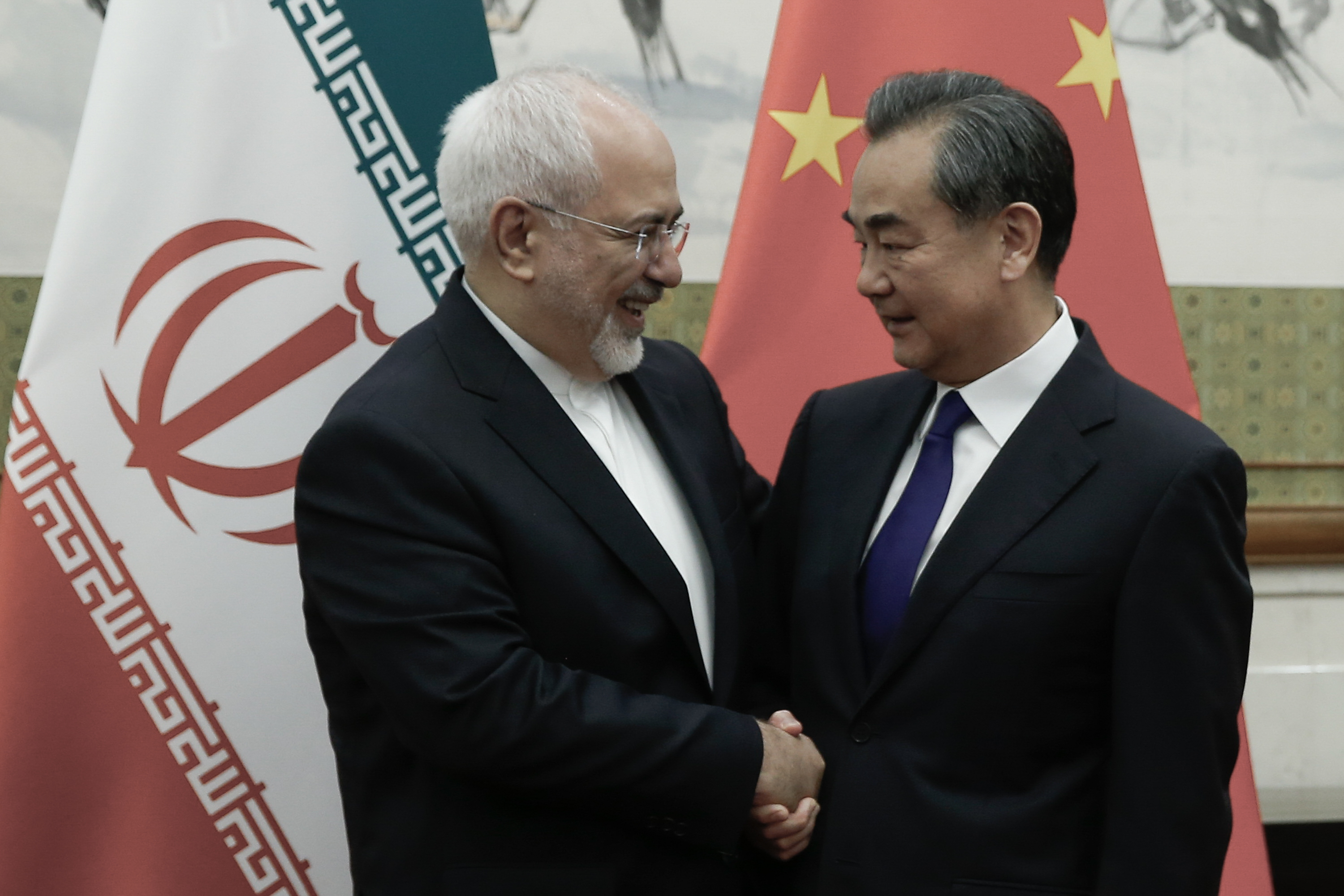
Iran has been a strategic partner for China, providing discounted oil while helping Beijing expand its influence in the Middle East. The two signed a 25-year economic and security partnership in 2021, just as China became Iran’s top trading partner for both import and export.
China’s diplomatic officials had conducted a comprehensive assessment of Iran before the strikes, but part of that relied on the framework used in the past few decades, according to another insider.
The logic was that a large-scale military operation was unlikely because Iran had never faced full-sized kinetic attacks from the United States despite consistent military threats, he said. And because of that, he said, Beijing has evacuated fewer diplomatic personnel than from Venezuela around the time of the Caracas raid.
“This is a serious strategic miscalculation,” he told The Epoch Times. “And no one right now dares to bring it up.”
The news of Iranian leader Ali Khamenei’s death a day later prompted Beijing’s condemnation. Mao called the killing of Khamenei a violation of international law.
“From the view of the Chinese Communist Party, to have an ‘old friend’ disappearing in this world in such a fashion naturally leads to fears,” China affairs analyst Li Linyi told The Epoch Times. “The Chinese officials would be wondering if such a thing could happen to them.”
For the most part, Beijing is still taking a wait-and-see approach, analysts said.
“What the Chinese Communist Party actually cares about here is not the survival of the Iranian regime. It’s about how to avoid a direct confrontation with the United States,” said a Chinese scholar, who asked for anonymity because of safety fears.
U.S. President Donald Trump is meeting with Chinese leader Xi Jinping soon. Their talks will involve issues concerning Beijing’s core interests, such as trade, technology restrictions, and economic sanctions, the source said, and Beijing would not want to jeopardize the relationship beforehand.
“Under this calculus, a so-called strategic partner can be set aside anytime,” the source said.
Shao Rong contributed to this report.