
[RUSH TRANSCRIPT BELOW]Katharine Birbalsingh has been deemed “Britain’s Strictest Headmistress”—and she wears the title proudly. Founder of Michaela Community School in London, Birbalsingh has built one of the UK’s top-performing schools by rejecting the educational fads of the last generation and returning to older principles: discipline, personal responsibility, and patriotism.
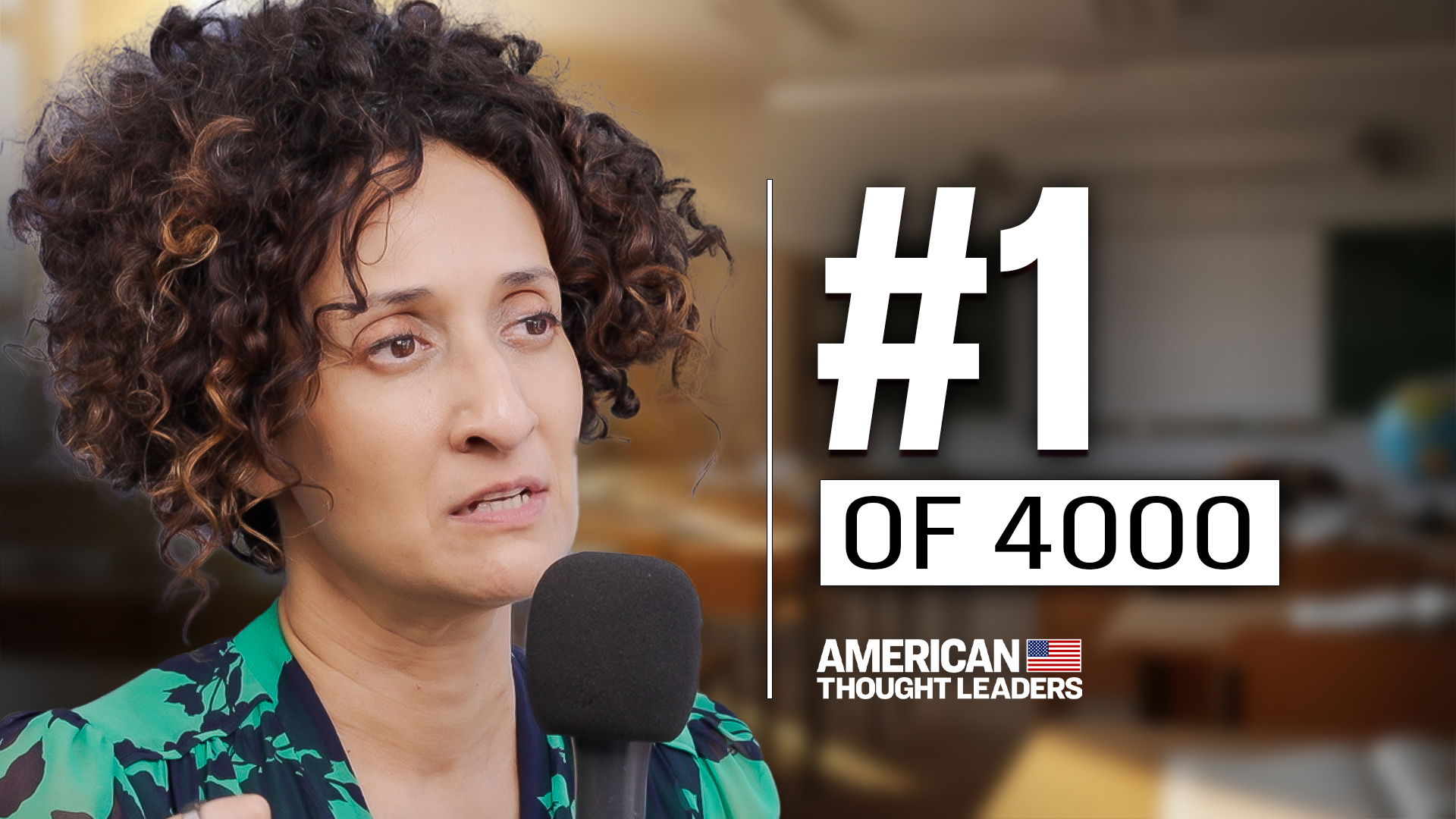
The Michaela Community School is an inner-city, non-selective charter school. Despite three and a half years of opposition from unions and councils, Birbalsingh fought to be able to provide a good schooling alternative for London’s poorer communities. And she’s succeeded. Her school has repeatedly ranked No. 1 in student progress in the entire country, and thousands of visitors from around the world have come to study and learn from her model.
In this episode, Birbalsingh reveals how Western institutions have quietly abandoned the moral formation of children. This, she argues, has driven civilizational decline more than any policy failure. Birbalsingh argues that many of today’s schools immerse children in a culture of grievance and victimhood rather than agency and duty.
Birbalsingh details the three pillars of Michaela’s educational approach: discipline, teacher-led instruction, and what she calls “small-c conservative values,” such as self-sacrifice, ownership, and accountability.
Views expressed in this video are opinions of the host and the guest, and do not necessarily reflect the views of The Epoch Times.
RUSH TRANSCRIPT
Jan Jekielek:
Katherine Birbalsingh, such a pleasure to have you on American Thought Leaders.
Katherine Birbalsingh:
Thanks for having me.
Mr. Jekielek:
Tell me about your book, The Battle Hymn of the Tiger Teachers.
Ms. Birbalsingh:
Yes. All of us teachers at Michaela Community School love Amy Chua. That’s where we got that title. That was our first book that we created, all written in different chapters by the teachers. Our second book is called The Power of Culture. We took that from Amy Chua because she very much believes in high standards, discipline, the adult being the authority, whether you’re the parent or a teacher. We believe in the same sorts of things.
Mr. Jekielek:
How has that manifested in your work?
Ms. Birbalsingh:
Michaela is the school that I set up in 2014. It opened, and we’ve been going for 12 years. Across the globe, many American teachers actually come. But it’s not just teachers; it’s a whole variety of people. I find parents these days are a bit lost when it comes to thinking where they should find traditional advice on how to raise their children. And this could be from toddlers right through to teenagers.
It’s really hard in the age of gentle parenting, where if you go into a bookshop, that’s basically all you‘ll find. It’s hard to know what our grandmothers knew, what our grandmothers knew that works. I’ve demonstrated that many times over with the school, Michaela, that I set up in 2014. I’d say three things make us different.
I’m called Britain’s strictest headmistress because I believe in discipline for children. I think, you know, you need to hold the line with them, and you need to punish them when they’re naughty. You need to praise them when they’re good. And these days, the word punishment really is a bad word: detention. I mean, schools obviously give children detentions, but there’s a real sense of shame around it as opposed to there being shame around what the child did in order to get the detention. So that’s the first thing, the discipline that makes us different.
The second thing is the teaching methods, and that really is all rooted in the idea of the adult being the authority in the room. The adult is in charge. The adult is able to lead the learning in the classroom, and the children are not the ones leading the learning around a piece of sugar paper with desk screens. They group together, and the children sort of talk and chat as they do their work as opposed to facing the teacher and being led. So our teaching methods are different.
Then the third thing I'd say, which is foundational to everything, are the values at the school, which I always called small-c conservative. They’re the sorts of values that our grandmothers all knew. If you haven’t done your homework, that’s on you. You’re responsible. You have agency. You could do things differently if you wanted, and you didn’t. Making excuses for children nowadays, and there’s no sense of personal responsibility.
Another thing I'd say is a sense of duty towards others. You might put others before yourself. You might sacrifice something that’s important to you for the sake of others. Again, that is a small-c conservative value that I think has almost disappeared from young people. They just don’t think like that. It’s very much me, me, me, you do you, and live your best life. It’s about how you feel nowadays.
The way young people often feel is to be victims. A sense of victimhood, whatever identity politics lens they see the world through, that’s my victim card, and this is how I identify, as opposed to I’m a being with agency. I’ve got one set of cards that I’ve been dealt, and I’m going to deal those cards.
And sure, life isn’t fair. Sometimes things don’t go your way. Sometimes you’re born with less than someone else. But who cares? I mean, you’ve got one life. You’ve got to live it. And you should live it in the best way possible with those.
But you’ve got to have a completely different attitude and believe in agency and believe in personal responsibility, whatever your circumstances. So, really, very much rejecting grievance, rejecting victimhood, believing in ownership, believing in personal responsibility. And those values we very much instill in our children at Michaela Community School.
Mr. Jekielek:
So, you’re really talking about a moral formation as being a centerpiece of the education. From what I understand, how education often works, certainly in the United States, which I’m most familiar with, they’re not even thinking about a moral education.
Ms. Birbalsingh:
It’s not just the United States. No one’s thinking about moral education at all. Children know what we teach them, children know the culture that we’ve immersed them in. Do you know what this old man in Florida said to me? Children make up 15 per cent of the population, but they make up 100 per cent of the future. Our second book is called The Power of Culture, because culture is the most important thing. It eats strategy for breakfast 100 times over.
So I spend all my time at school forming the culture at the school and looking after it, you know, because it’s so important. And the culture that you’re going to have tomorrow is the culture that you immerse children in today, essentially. And I don’t think we think of ourselves as immersing children in culture and we don’t think of ourselves as giving them habits. The things that you do on repeat become your habits and your destiny. That’s what happens.If you’re somebody who never does your homework, you’re somebody who doesn’t deliver every single day.
So when you’re an adult, you also don’t do your homework. When you’re an adult, we all have homework to do. I gave a speech today. I had homework to prepare that speech. All of us have homework. You’ve got a whole load of questions to ask me. You did your homework. The fact is that if children learn not to do their homework ever, then they’re not going to be able to live meaningful and successful lives as adults.
So yes, moral formation is so important. We haven’t understood what our own parents did for us. I don’t think we’re doing it for our children, not anywhere near enough. And certainly the schools are not doing it for our children.
Mr. Jekielek:
In terms of children that have a victimhood narrative that they’ve been inculcated with by the popular culture, is it possible, from your experience—you’ve been at this for quite a few years now—is it possible to help a child who’s been deeply immersed and views themselves that way to change?
Ms. Birbalsingh:
It depends on how old you catch them. So we catch them at 11, and it is possible at that age. You catch somebody at 22. My own teachers, I actually move them in terms of their thinking, and they come to me at age 25-plus. So it is possible, but you really do need to spend a lot of time with somebody. It needs to be one-on-one kind of explanations of things, them being able to ask questions and so on.
Actually, I’m starting a podcast. It’s going to be launching in mid-August, but there’s a teaser out there. It’s on YouTube at the moment. It’s called Strictly Education. The reason I’m doing this podcast is precisely because I want to try and persuade people of what children need, because I think we’ve completely lost our way in terms of what children need. We don’t get it. Because it’s a podcast, I’m hoping I can influence parents and teachers in Britain, but also in America and all across the West, really, because I don’t think we understand just how much our civilizational collapse in the West is due to what we are teaching our children.
Mr. Jekielek:
Of parents coming to you asking questions to start your podcast with, right?
Ms. Birbalsingh:
Yes. I’ve got my staff. I’m not so much persuading parents because I don’t see the parents very often, but I’m persuading the children, and I’m persuading my staff because it requires constant connection. So I’m not saying the parents necessarily don’t like it, but obviously the parents like what we’re doing, but they send us their children every day. And it’s the children I’m connecting with, really.
Mr. Jekielek:
And tell me a little bit about your school—part of your operation and not the school next door?
Ms. Birbalsingh:
It’s just a normal public school, in a way. I mean, it’s a free school, so it’s a charter school, but charter schools in America are independent of the normal public school system. That’s not the case with us. Free schools are just part of the normal system. We go through the same admissions process as every other school. We just get kids from the normal admissions system that happens in London. In that sense, we’re just a normal public school. We do not have a choice over who comes to the school is the point.
Mr. Jekielek:
How do your results compare to the many other schools in London?
Ms. Birbalsingh:
That’s one of the things that sort of makes us famous because we’ve topped the progress eight charts for years where we get the best progress. It just shows that what we’re doing is right, you know. And that’s out of 4,000 secondary schools. We’re getting the best progress in England; meaning where they join us at 11, the progress that they make until they leave. Until those national exams are taken at 16, we do the best.
We get 1,000 visitors every year, teachers mainly, but everyone from across the world, lots of Americans who come. For all of your viewers, all they have to do is go on the Michaela website. You just book in. You say, I’m going to be in London on the 25th of June or whatever it is. Then you just book in for that date and you can come and see the school. People say it’s a real experience. Most people ask, well, why would I want to visit a school?
People say it’s transformational. If any of your viewers are feeling, oh gosh, what’s happening to the West at the moment? What’s happening to America? We’re worried. I tell you, if you see the school, you'll see what the solution is. And it will lift your heart and soul just by walking around and talking to our children and seeing what’s possible, really.
Mr. Jekielek:
So, you know, given your astonishing results here, are all these schools in the UK or perhaps just in London scrambling to try to adopt your curriculum?
Ms. Birbalsingh:
Yes, that’s a good question. I think the curriculum is part of it. It’s true that we will teach more British history than, say, other schools. But it’s also, people often say, well, all you need is plug and play. Take the curriculum and then put it in, and it will be fine. But that’s why I have my podcast, and I need to persuade people, because the thing about it—you could teach Churchill, and Churchill’s on the curriculum. Great.
But you could teach Churchill as being a very evil man who hated Bengalis, for instance, or him as somebody who’s quite complex and nuanced, as we all are, and that actually he saved Britain. You know, you can teach it in different ways. The point is, the curriculum plug-and-play idea isn’t enough. It’s good to have a good curriculum, and that’s true, it’s necessary, but there’s just so much more that’s needed for schools to be actualized.
Mr. Jekielek:
You’re talking about a culture. You already started talking about this earlier, a culture among the teachers. How is that culture different? Can you kind of spell that out a little bit?
Ms. Birbalsingh:
I would say that most teachers lean to the left these days. You know, 50, 60 years ago, you could be Left-wing or Right-wing. All of the values that I spoke about were commonplace, both on the Right and the Left. They might have disagreed about the economic policy of the country. But in terms of who you should be as a person, they didn’t disagree about that. Nowadays, the Left and the Right are very, very different. So if you lean to the left as a teacher, then you are teaching children very different values to the ones that you will teach them if you lean to the right.
Mr. Jekielek:
Maybe elucidate that a little more.
Ms. Birbalsingh:
What do I mean? In a school, because most teachers lean to the Left, you will find in most schools, they‘ll have lots of pride flags, for instance. And they’ll be celebrating the different identity groups that are in the school. They might have BLM signs, and then they‘ll have the black kids, and they’ll have the gay kids, and they'll have the trans kids, and they might have the Muslim kids. And everybody’s part of a different sort of victim group. And everybody knows this is my victim card. And it’s not that the teachers are going around saying, victim, victim, victim, all of these different characteristics of the different children, rather than as an alternative.
One flag flies at Michaela Community School. That’s the British flag, and we are all British under that flag. And while there are different children of different races and different sexualities and so on, it’s not the sort of thing that we’re going around talking about. That’s your own private business, and who cares? What matters is what we share together and the umbrella under which we can all belong together, belong to Britain, belong to the country, and sing God Save the King.
To Americans, that doesn’t sound that unusual, singing the national anthem. In this country, honestly, no one would ever sing the national anthem. Your American president will say, God bless America, at the end of his speech. That would never happen; our prime minister would never say any such thing about Britain. There’s a real kind of awkwardness around patriotism here. There’s an awkwardness around being proud of your country.
It’s so interesting here at the ARC [Alliance for Responsible Citizenship] conference, anytime any one of the speakers says, my son is in the American army, the audience claps. No one would ever even say that their son was in the army if it was a British thing. They just wouldn’t say it. No one would be going, hooray, your child is in the army. Culturally, we’re very different.
Mr. Jekielek:
Fascinating. I mean, and so I admire these aspects of America that you’re just describing. I’m actually from across the border myself. And I think in Canada, we share a lot of the characteristics that you’re describing. It’s interesting. I wonder if we inherited that from the UK, or we just did it in opposition because the Canadian identity is a little bit of a we’re not American identity.
Ms. Birbalsingh:
I know because I grew up in Canada to the age of 15.
Mr. Jekielek:
Oh, really? I didn’t realize that.
Ms. Birbalsingh:
I grew up in Toronto. Where are you from?
Mr. Jekielek:
From Toronto. The Annex.
Ms. Birbalsingh:
Right. That’s so funny. So I went to Victoria Park High School for a year before I moved to England when I was 15 with my family. My parents moved there. Before that, I was at Cliffwood Public School, which was by Steeles and Young. That was my elementary school. I remember singing O Canada, the national anthem. Every day at school we sang it. I don’t know if that’s the case now.
Mr. Jekielek:
In the 80s. In the 80s, it was, to give away my age.
Ms. Birbalsingh:
Yes, indeed. So does that not happen anymore, you think?
Mr. Jekielek:
That’s a good question. I don’t know. But I know that you don’t. There certainly isn’t a standard aspect of singing the national anthem that I’m aware of.
Ms. Birbalsingh:
Well, America is very much, look at our flag. I went to Texas once and you came out of the airport and the size of the flag that was flying out wherever, just in the land. It was so huge. I thought, gosh, I’m in America. I’m in Texas. I knew that it just doesn’t happen here.
In fact, there are various councils here that are currently seeking to ban the flag from being able to be posted. People are going around posting. At first, it was the St. George’s flag, which is the English flag. Then it’s the British flag, which is the Union flag. Now, councils are trying to get legal injunctions to stop people from flying the flag, which is crazy. It is just crazy.
Mr. Jekielek:
Since you mentioned your roots in Canada and so forth, tell me a little bit about how you got to the point that you wanted to create this different approach to education in Britain? Like me, there were a few steps along the way here, I think.
Ms. Birbalsingh:
I went to school in Canada, and I left at 15. Then I came here, and I’ve been here all my life. It’s really just my career in teaching here in London and inner London, being in the inner-city schools and seeing the terrible fights and the awful time that teachers are given, the rudeness from the children, the fact that they’re learning very little. I thought, well, it could be better.
I gave a speech at the Conservative Party conference in 2010. I’m not a member of the Conservative Party, but I happened to give this speech. It’s a very short speech. It was only five or six minutes, but it totally changed my life because I was then basically booted out of teaching. You’re not allowed to be a conservative. You think, how is that possible? Look, it’s too long a story, but the fact is…
Mr. Jekielek:
Someone found out that you gave this speech.
Ms. Birbalsingh:
Yes, it was everywhere. It went viral. It ended up everywhere. Everyone knew. In the end, I was told by various people, you'll never teach in public schools again. I had to set up my own school, you see. The Conservative government at that time in 2010 had come out with this idea of free schools, which was copied off your charter school system. So suddenly, while I wasn’t going to be able to work in a normal public school, I had the opportunity of being able to set up my own school.
So then it took three-and-a-half years, with lots of people trying to stop us. I would hand out flyers in the street to mums in black areas, handing out all these flyers for information events to black mums. Then outsiders would come and sit in the audience. White middle-class people from outside of London would be bussed in by the unions in order to sit amongst the black mums in the audience to shout at us and drown us out when we were trying to explain to the mums what was offered, because they wanted another choice of school for their child. These white middle-class people from outside of London would come and stop those mums from being able to hear what I was saying.
Mr. Jekielek:
How did you react to this?
Ms. Birbalsingh:
Well, you just keep going, don’t you? That is why it took us three-and-a-half years. We should have been able to open within six to nine months. But it took us three-and-a-half years, where we had to go from South London to another part of South London, to eventually Northwest London, to find a building because all the councils owned the buildings. The councils that we were trying to open up in were all Left-wing, because the more conservative councils tend to be in the richer areas. We wanted to be in the poorer areas where the inner city kids were, and that meant they were all Left-leaning.
Mr. Jekielek:
It was a tough combination to find.
Ms. Birbalsingh:
Exactly. They were Left-leaning; therefore, they were trying to stop us at every turn, and they did stop us for three-and-a-half years. But eventually, we found a building that didn’t have anything to do with the council, and we were able to open. We’re now in Wembley Park, right down from Wembley Stadium.
Your listeners are very welcome to come and visit. Whenever they’re in London, they just go on the website, tell us when they’re coming, and come and visit because it is an experience. It’s just great to see children. You just see what’s possible. Children are so polite and so interested. They’re happy to meet the guests. They can have conversations. Then they can tell you all that you want about British history.
Mr. Jekielek:
I mean, give me the website quickly for those watching right now.
Ms. Birbalsingh:
Michaela.education. And Michaela is just Michael with an A.
Mr. Jekielek:
Wonderful. Something I’ve been thinking a lot about. I mean, we grew up in Canada amidst multiculturalism. Tell me about what you think about multiculturalism.
Ms. Birbalsingh:
Multiculturalism can only succeed if we’re able to belong together to our country under one umbrella of a shared set of values. Now, where I disagree with the right is when they say, no, multiculturalism can never work. Well, then we’re all dead. If multiculturalism can’t work, we’re dead because we all have multicultural countries. And then people say, no, but what we mean is multiracialism can work. But I'll tell you what multiracialism is.
Have you ever seen the program Bridgerton? Bridgerton is multiracialism, where everybody speaks in the same way, dresses in exactly the same way, and has all the same habits. They just have different skin colors, right? That’s not the case here. We’re allowing people to have different faiths. We’re allowing people to dress differently. We’re allowing people to eat different foods. So that means we have multiple cultures, right?
We’ve got to find a way to allow multiple cultures to exist and to thrive. The only way you can do that is through school and making sure that everyone is inculcated under the same values. So that’s what we’ve got at Michaela. There are Muslim kids, there are Hindu kids, there are brown and black kids, and white kids and all kinds of kids. It doesn’t matter. We’re all living under the same umbrella of values.
Mr. Jekielek:
But the culture and the values go together somewhat, don’t they? Like, tease that apart for me a little bit, yes.
Ms. Birbalsingh:
Look, I’ve got Muslim kids, I’ve got Hindu kids. There are some kids who eat pork, some kids who don’t eat pork, some kids who don’t eat beef. Some kids who cover their heads, some kids who don’t cover their heads. Different skin colors. They all eat different foods at home. So, they obviously have different cultures.They understand the values of the school, which they all partake in and accept, and those are the overarching values.
That doesn’t mean that they can’t have different gods. It doesn’t mean that they can’t believe different ideas about what happens to you when you die. They can. Those are different cultures. But the overarching values and culture, because culture eats strategy for breakfast, those overarching ideas are what bind us together. To be the case for the country as well.
Mr. Jekielek:
But is that really traditional Judeo-Christian values? Is that what you’re talking about?
Ms. Birbalsingh:
Yes, they are traditional. That’s what they are. And that’s because we are a traditional Judeo-Christian country. I mean, that’s what we are. And the thing is, there are lots of people who don’t go to church. Well, that’s fine. But we all tend to have those values because we were brought up with those values. So it’s important that we keep living those values and that we insist that everyone who’s here embraces those values.
Mr. Jekielek:
Yes, I mean, just as an example, we have the Ten Commandments, right? That obviously are the Judeo-Christian. We kind of assume some of those things are self-evident.
Ms. Birbalsingh:
That’s it.
Mr. Jekielek:
They’re not necessarily self-evident.
Ms. Birbalsingh:
That’s it. What did I say about children? If you don’t teach them this stuff, they will think very differently. And so many of those values have gone by the wayside because we haven’t taught it to our children. And we’ve assumed that you just think like that.
People don’t think like that. You’re immersed in it. And the culture that we’ve immersed our children in is one of grievance. It’s one of vengeance. It’s really quite distasteful what we’re teaching our children.
Mr. Jekielek:
Tell me about winning the Contrarian Prize.
Ms. Birbalsingh:
It was a silly little prize. I am contrarian, apparently. But I would say the thing is that people who are contrarian really are people who are just wanting to be contrary just to be silly and, you know, cause trouble. I’m not trying to cause trouble. I just say things that are perfectly common sense, as far as I’m concerned, and then suddenly I cause trouble.
Mr. Jekielek:
This is, you know, what I want to get at here is you’re talking about moral formation.
Ms. Birbalsingh:
Yes.
Mr. Jekielek:
Right? And I think in our culture, it has been conditioned to try not to impose things. Does that ring right?
Ms. Birbalsingh:
I would encourage all your viewers to take a look at my ARC speech today, which I think a lot of people found. A lot of people have come up to me and said that, because I’m trying to explain that people of our age have taken for granted the cultures that we were brought up in. We think it’s just normal. We think it’s just normal to think, agency, personal responsibility, duty, sacrifice, serving others, and all of these Judeo-Christian values. We think it’s normal.
They were normal for our parents and our grandparents. And our parents and our grandparents immersed us as children in those values, and we grew up with them. But we haven’t immersed our own children in those values. Then we wonder why our children are so different from us. It’s because we didn’t teach them the right sorts of values.
Mr. Jekielek:
Can you make a difference with one school?
Ms. Birbalsingh:
I have made a massive difference, haven’t I? Here I am talking to you. I get a thousand visitors from all over the world. People are copying lots of what’s that?
Mr. Jekielek:
A thousand annually.
Ms. Birbalsingh:
Yes. And they take the ideas. So I’ve had dozens and hundreds of letters from people, teachers from all over the world, saying to me they’ve changed their classrooms, had principals changing their schools. I’ve been doing work with Ian’s school in the Bronx, for instance. I’ve been doing work in the Bronx with his school. I’m like a traveling salesman. I go around the world just trying to persuade people of the kinds of things that work. Then people take those ideas and implement them in their schools.
I’ve won the fight on some of the more practical ideas of how to organize your classroom, how to organize the yard, and all of that. I haven’t yet won the cultural fight. That is my next fight, which has to be won, which is the cultural one. Because if we are to allow multiculturalism to succeed, we have got to win the fight on culture in our schools and in our families.
That means understanding that culture must be taught and that we need children. You look at them and you think, I don’t really recognize you anymore. Why are you so different from the way that I am? It’s because you didn’t teach them the right values when they were small.
Mr. Jekielek:
How does Shakespeare fit in?
Ms. Birbalsingh:
Shakespeare has all the right values. Shakespeare is a man of small-c conservatism. And it’s not just his values; he’s English. He’s foundational to the great history of English literature, and he has been influencing English literature for 400 years. So when people say to me, well, why should we prioritize Shakespeare? It is because he’s been influencing literature for 400 years.
So, yes, we can have a female author, a black author, and all of that later on. But to begin with, you need to start with the foundations. It’s as if to say, you’re learning math, and you say, well, why don’t we do really complicated math? Why do times tables? Well, you’ve got to do times tables because otherwise you can’t get to the complicated math.
Mr. Jekielek:
Wait, a lot of people think Shakespeare is really complicated, though, I remember thinking that, as much as I liked it.
Ms. Birbalsingh:
I’m not saying he’s not complicated. I’m just saying he’s foundational in the way that times tables are foundational.
Mr. Jekielek:
Gotcha. How many schools would you say, you know, based on these thousand people that visit you annually, how many schools have really started to use your method beyond curriculum now that you’ve?
Ms. Birbalsingh:
I wouldn’t say schools so much, but to be honest, I have no idea. But there are classrooms, there are whole schools, and there are departments. If a head of the English department comes to a school, then she transforms her English department. If it’s a classroom teacher, he transforms his classroom. If it’s a principal, then he’s transforming his whole school.
There are a lot of people who follow me and like what I’m saying. There are lots of parents as well. It’s not just schools. Lots of parents who are really desperate for more traditional advice, which again, my podcast, Strictly Education, you know, is going to be all about that. You know, advice to people who deal with children. It’s not just teachers.
I think people need a lot of inspiration these days. It’s really hard because you’re made to feel like a bad person for disciplining your children. You’re made to feel, if you put your child in his cot and leave him to cry himself to sleep, people say, how evil! How can you leave your child to cry?
Fifty years ago, everyone did that. It was normal. So I try to be a support to parents and to teachers in helping them do the right thing. I don’t know the numbers who have followed me, but it doesn’t matter, does it? It’s that I’m making a difference.
Mr. Jekielek:
Okay, so you’ve got your podcast. What else is next?
Ms. Birbalsingh:
That’s next, and it hasn’t started yet. That’s happening in mid-August. But right now, there is a teaser on YouTube, which people can see and subscribe to. Then, as I say, people can come and visit the school because people find it’s a transformational experience coming to the school. You get to see what’s possible. And not just teachers, parents, whoever, anyone who’s interested in children. It’s like we’re a show pony, you know?I’m just showing you.
Mr. Jekielek:
So you have three people a day on average, roughly, coming. That’s a lot.
Ms. Birbalsingh:
It’s more than that because there are holidays, so they don’t come during the holidays. I’m often speaking to a group of 10 or 15 people at once who arrive. And every day I speak to all of the guests for 10, 15 minutes just to welcome them and so on.
Mr. Jekielek:
So you have a whole infrastructure for doing this, yes.
Ms. Birbalsingh:
That’s right. And the children take you around. I don’t take you around. The children take you around. The children take you in for lunch. And the children love it. You know, they love it because they know how special they are.
Mr. Jekielek:
I’m going to have to come visit you.
Ms. Birbalsingh:
You really must, if you’re in London, or for anyone who’s in London. Obviously, you can write to me. But for all your viewers, you just go on the website and fill out the form. Then, you can come and see us for whatever day you want.
Mr. Jekielek:
Fantastic. Katharine, a final thought as we finish up?
Ms. Birbalsingh:
My final thought: children matter. That was the end of my speech at ARC here this morning, right? Schools matter, families matter, children matter. Save our children, and we will save the West.
Mr. Jekielek:
Well, okay, so that wasn’t the final thought because I want to ask about this. Isn’t it unbelievably obvious that children matter? It’s like, isn’t the entire future?
Ms. Birbalsingh:
It’s the future. It’s what I just said. They make up 15 percent of the population. They make up 100 percent of the future. Nobody understands this. They want to talk about geopolitics. They want to talk about net zero. They want to talk about Ukraine. Look, I have no problem with that. Please talk about that to your heart’s content. But can we please have a seat at the table for children?
Mr. Jekielek:
You value children nearly enough, basically. Is that what you’re saying?
Ms. Birbalsingh:
Yes, that is what I’m saying. We don’t understand how important they are.
Mr. Jekielek:
Well, what would a society that does that look like? This is what I’m trying to understand.
Ms. Birbalsingh:
That’s a very good question. I think we had it before. You know, it’s interesting. Obviously, I’m pro-women in the workplace. Obviously, I am one of those women. But it used to be the domain of women, and it was their sole domain. So the children had a real voice.
The women could say to their husbands, you know, no, no, hang on, actually, we have to prioritize the children. No, actually, darling, you need to come home at six o'clock tonight, spend time with the children. No, darling, we’re not going to that school because I’ve been researching all the schools, and we’re going to go to that school instead, and so on. You know, when both parents are working and they’re both very busy, children tend to be a bit of an add-on. It’s not as much of a focus, you know.
I do think it has to do with women in the workplace, saying women shouldn’t be in the workplace. I am one of those women. But it’s harder. It’s much harder to prioritize children. And children don’t have a voice anymore. They can’t be their own voice. Somebody has to speak for them. And I just think we’ve lost our way on that.
Mr. Jekielek:
We have. And that’s reflected in many ways, including birth rates.
Ms. Birbalsingh:
Yes, exactly.
Mr. Jekielek:
And it’s sort of, I mean, my own view, and there are others, of course, that share this, is it’s kind of a nihilistic society. If your birth rate’s even below replacement, which it is in many countries in the West.
Ms. Birbalsingh:
Absolutely. Yes, it’s a problem, that’s what I say. Save our children, and we'll save the West.
Mr. Jekielek:
But, you know, perhaps providing that moral foundation, classical moral foundation, can contribute to that. I guess that’s what you’re thinking.
Ms. Birbalsingh:
Exactly. All children need that. And I’m just trying to spread the word like a traveling salesman, trying to persuade people into doing that.
Mr. Jekielek:
Well, Katherine Birbalsingh, such a pleasure to have had you on.
Ms. Birbalsingh:
Thank you. Really great. You’re a fellow Canadian, so I’m even more excited to be speaking to you. Thank you for having me.
This interview was partially edited for clarity and brevity.