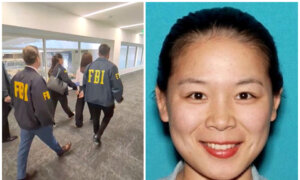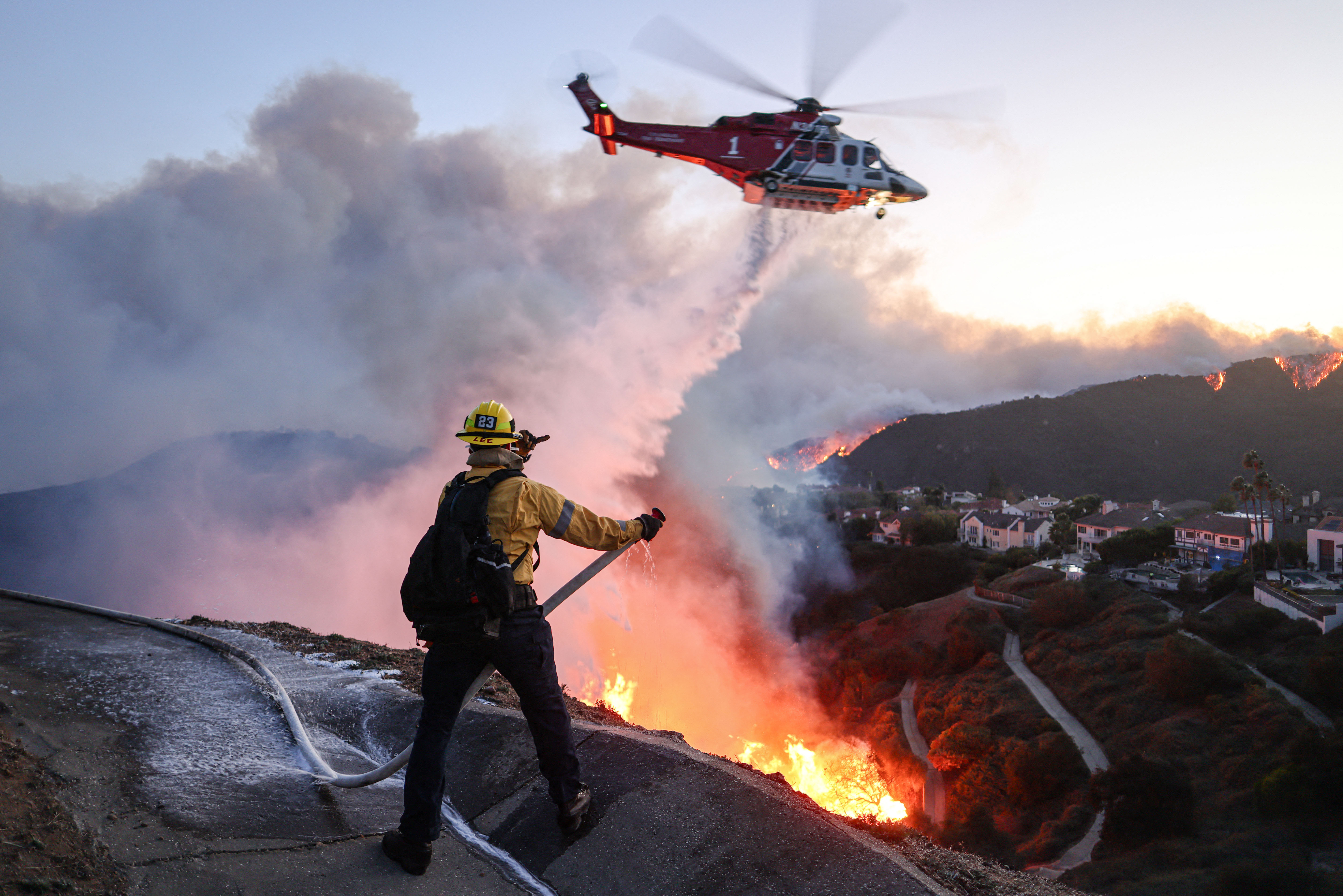

Federal authorities announced on Oct. 8 the arrest of a 29-year-old Melbourne, Florida, man, accusing him of deliberately igniting a New Year’s Day fire that later erupted into the devastating Palisades wildfire in Los Angeles, which burned for weeks and killed 12 people.
“A former Pacific Palisades resident now living in Florida has been arrested on a federal criminal complaint charging him with maliciously starting what eventually became ... one of the most destructive wildfires in Los Angeles history,” the Justice Department said in a statement.
Jonathan Rinderknecht, an Uber driver, faces charges of maliciously starting the fire near a popular hiking trail. The blaze, set shortly after midnight on New Year’s Day, was a “holdover fire” that smoldered underground and then rekindled days later on Jan. 7, scorching 23,400 acres and destroying more than 6,800 structures in Pacific Palisades and Malibu, prosecutors said.
“While we cannot reverse the devastation, we hope this arrest brings some justice to those impacted by this tragedy,” acting U.S. Attorney Bill Essayli said at a news conference on Wednesday morning.
The charges follow a nine-month investigation into the fire’s origins.
Federal prosecutors unsealed a complaint accusing Rinderknecht of setting the initial flames near the Skull Rock trailhead in the early hours of New Year’s Day. What began as the Lachman Fire—a contained eight-acre burn—lay dormant underground amid dense chaparral roots until Santa Ana winds reignited the blaze on Jan. 7, overwhelming firefighters and devouring neighborhoods from Malibu to Brentwood.
“This single individual’s actions unleashed devastation on a scale we haven’t witnessed in generations,” Essayli told reporters gathered outside the U.S. Courthouse in downtown Los Angeles on Oct. 8.
Essayli said Rinderknecht was working as an Uber driver when he dropped off a passenger in the Palisades area around midnight. Witnesses from separate rides described him as visibly agitated and angry, with one passenger describing his behavior as “erratic” during the drive. After parking his vehicle near the trailhead, he hiked uphill and captured footage with his phone from just 30 feet from where sensors first pinged heat at 12:12 a.m.
“The evidence paints a clear picture: While the Lachman Fire burned, the defendant walked up the same trail from earlier that night to watch the fire and firefighters responding to the blaze he had started,” Essayli said.
Rinderknecht, originally from Melbourne, Florida, surrendered peacefully on Oct. 7 outside his current residence there. He made his initial appearance in Orlando federal court the same day, where a judge ordered him held without bond pending transfer to California. Conviction on the destruction-of-property-by-fire count carries a five-year mandatory minimum and up to two decades behind bars.
An attorney for Rinderknecht could not be reached.
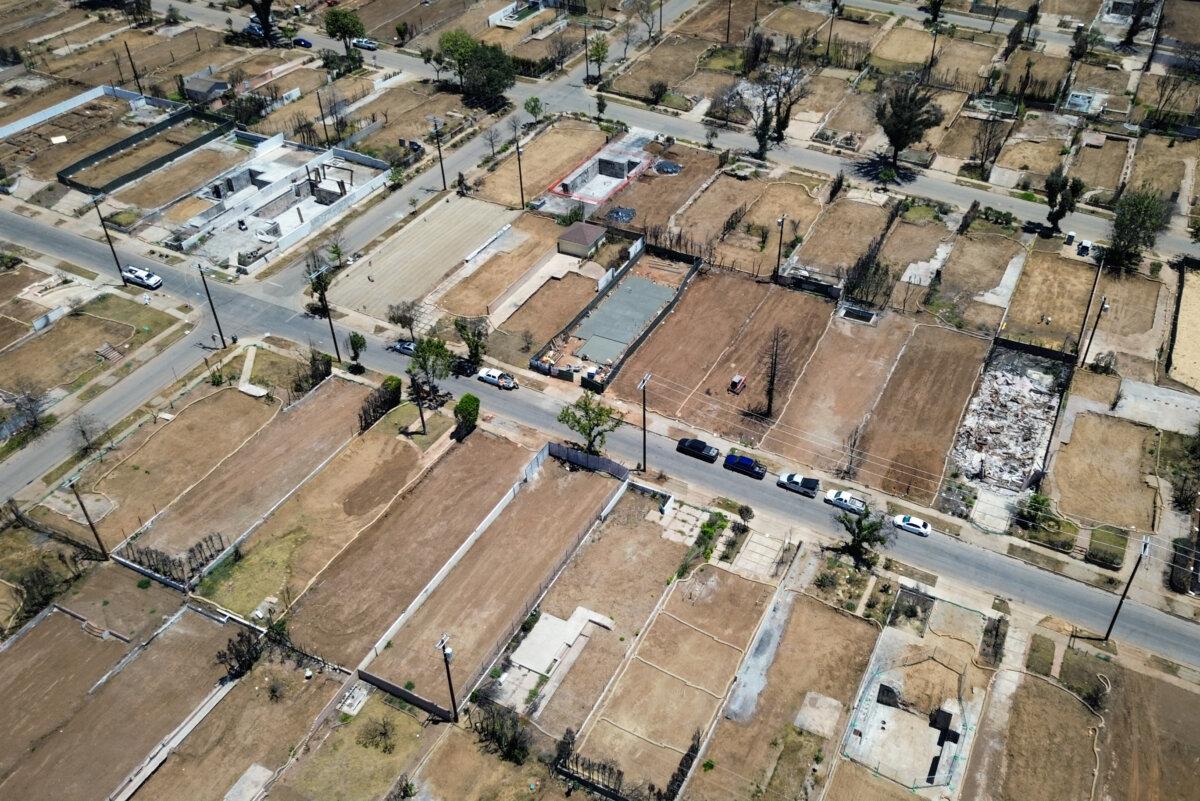
The property lines of homes burned during the Palisades Fire still sit visible in the Pacific Palisades neighborhood of Los Angeles on June 9, 2025. (John Fredricks/The Epoch Times)
Geolocation data from Rinderknecht’s iPhone placed him at the origin site, corroborated by videos he recorded of the emerging glow. A barbecue-style lighter, discovered in his car during a search, matched those on his phone, according to prosecutors.
Call logs showed he attempted to call 911 minutes after the fire was set, but failed three times due to poor signal before finally connecting with police from the trail’s base. While he attempted to call police, he asked ChatGPT “Are you at fault if a fire is lift [sic] because of your cigarettes?” according to the complaint.
He allegedly sped away as firefighters arrived, only to loop back, tailing responders at high speed before hiking up the path again to watch as firefighters attempted to put out the blaze.
“Although firefighters suppressed the blaze that night, it continued to smolder underground within the root structure of the thick vegetation,” Essayli said. “It lay hidden for about a week until Jan. 7, when heavy winds caused this underground fire to surface and spread above ground, causing what became known as the Palisades Fire—one of the most destructive fires in Los Angeles City history.”
Investigators ruled out natural or accidental triggers early on. No fireworks residue, lightning strikes, or downed power lines. Instead, traces pointed to deliberate application of flame to dry foliage or tinder, possibly using the recovered lighter.
Days before allegedly setting the fire, he streamed a French rap song, “Un Zder, Un The” by Josman, looping its video depicting fiery scenes, according to prosecutors. Months earlier, he asked ChatGPT to generate an image of a forest ablaze with panicked crowds scattering.
During a Jan. 24 interview with agents, he disclosed the precise ignition spot, but gave shifting accounts of his whereabouts. Agents described him as showing signs of being “extremely anxious as to that issue.”
Bureau of Alcohol, Tobacco, Firearms and Explosives Special Agent in Charge Christopher Downes highlighted the collaborative effort behind the breakthrough.
“Our task force poured over thousands of hours of footage, witness statements and forensic samples to connect these dots,” Downes said. “This wasn’t just about chasing leads; it was about delivering closure to a community still sifting through ashes.”
The investigation drew in the Los Angeles Police Department, Los Angeles Fire Department, and a federal strike team, pooling resources amid a “fire siege” that also birthed the Eaton blaze nearby. Combined, the events tallied insured damages nearing $75 billion, with total costs potentially topping $130 billion, according to early estimates from risk modelers.
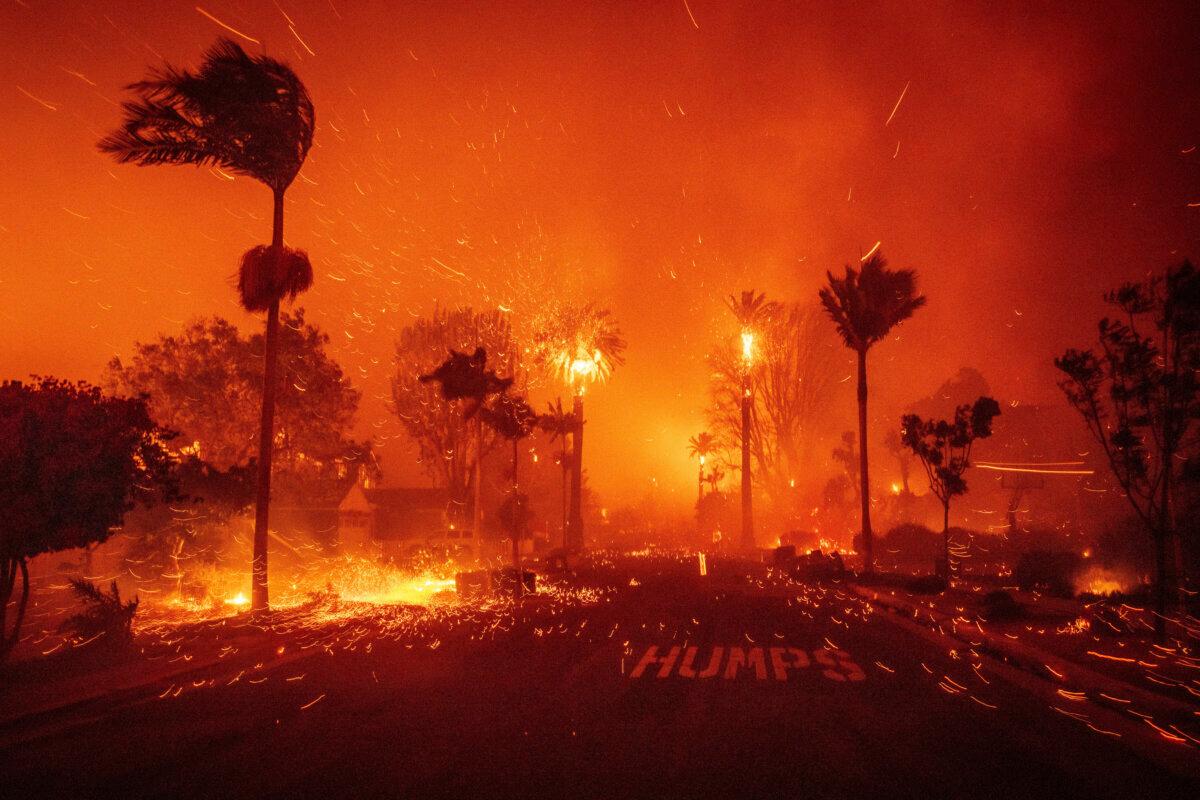
The Palisades Fire ravages a neighborhood amid high winds in the Pacific Palisades neighborhood of Los Angeles on Jan. 7, 2025. (AP Photo/Ethan Swope)
Mayor Karen Bass, in prepared remarks read by a deputy, extended gratitude to the multi-agency coalition that led to the arrest.
“More than 9 months ago, our city faced one of the most devastating periods our region had ever seen,” she wrote. “Lives were tragically lost. Thousands of homes were destroyed. Our heroic firefighters fought the blaze valiantly with no rest. Each day that families are displaced is a day too long and as we are working tirelessly to bring Angelenos home, we are also working towards closure and towards justice – and today is a step forward in that process.”
The Los Angeles Fire Department echoed that sentiment, saying that the outcome is a step toward communal mending.
“We are forever grateful to our frontline responders, law enforcement partners, and the people of Los Angeles for their vigilance and support for one another during this incredibly challenging year,” said a department spokesperson in a statement.
“Although the flames have been extinguished, the impact of these fires will linger for years to come. Our hearts are with the families and neighborhoods who faced tremendous loss,” the department stated. “This arrest is a critical step toward ensuring accountability, justice, and healing for our city.”
The Palisades Fire displaced 150,000 residents and strained mutual aid networks to their limits. Finally contained in late January, the fire ultimately destroyed 6,800 structures, scorched 23,000 acres, and killed 12 people.