
The U.S. Department of Health and Human Services (HHS) said on May 10 that one American evacuated from the MV Hondius tested positive for the Andes strain of the hantavirus, which can spread between humans, while another American showing mild symptoms.
The two individuals are among 17 American passengers evacuated from the Dutch-flagged cruise ship, which has been at the center of a hantavirus outbreak.
“All 17 are currently en route via @StateDept airlift to the United States, with two of the passengers traveling in the plane’s biocontainment units out of an abundance of caution.
“One passenger currently has mild symptoms and another passenger tested mildly PCR positive for the Andes virus,” HHS said in a post on X.
The department said the passengers will be transported to the Regional Emerging Special Pathogen Treatment Center at the University of Nebraska Medical Center in Omaha, while the passenger with mild symptoms will be taken to another facility.
“Upon arrival at each facility, each individual will undergo clinical assessment and receive appropriate care and support based on their condition,” it stated.
Nebraska Medicine, the clinical partner of the University of Nebraska Medical Center, said on May 10 that its biocontainment unit had been activated ahead of the arrival of U.S. passengers from the MV Hondius.
All the U.S. passengers are expected to arrive in Omaha early Monday, according to the health center.
It stated that one passenger being transported to the biocontainment unit has tested positive for hantavirus but “does not have symptoms.” The remaining passengers will be transferred to the national quarantine unit for assessment and monitoring, the health center added.
“They were managed separately from other passengers during transport using appropriate biocontainment measures. They will be monitored in the Biocontainment Unit out of an abundance of caution and follow-up testing will be performed,” it stated.
The MV Hondius was anchored off Cape Verde, Africa, when infections onboard were declared as an outbreak. The World Health Organization (WHO) said on May 8 that there are eight suspected or confirmed hantavirus cases from the ship, including three deaths—a Dutch couple and a German national. Six of the cases were confirmed as Andes virus infections, which is endemic to southern South America, including Argentina, from where the first victims, the Dutch couple, boarded the ship.
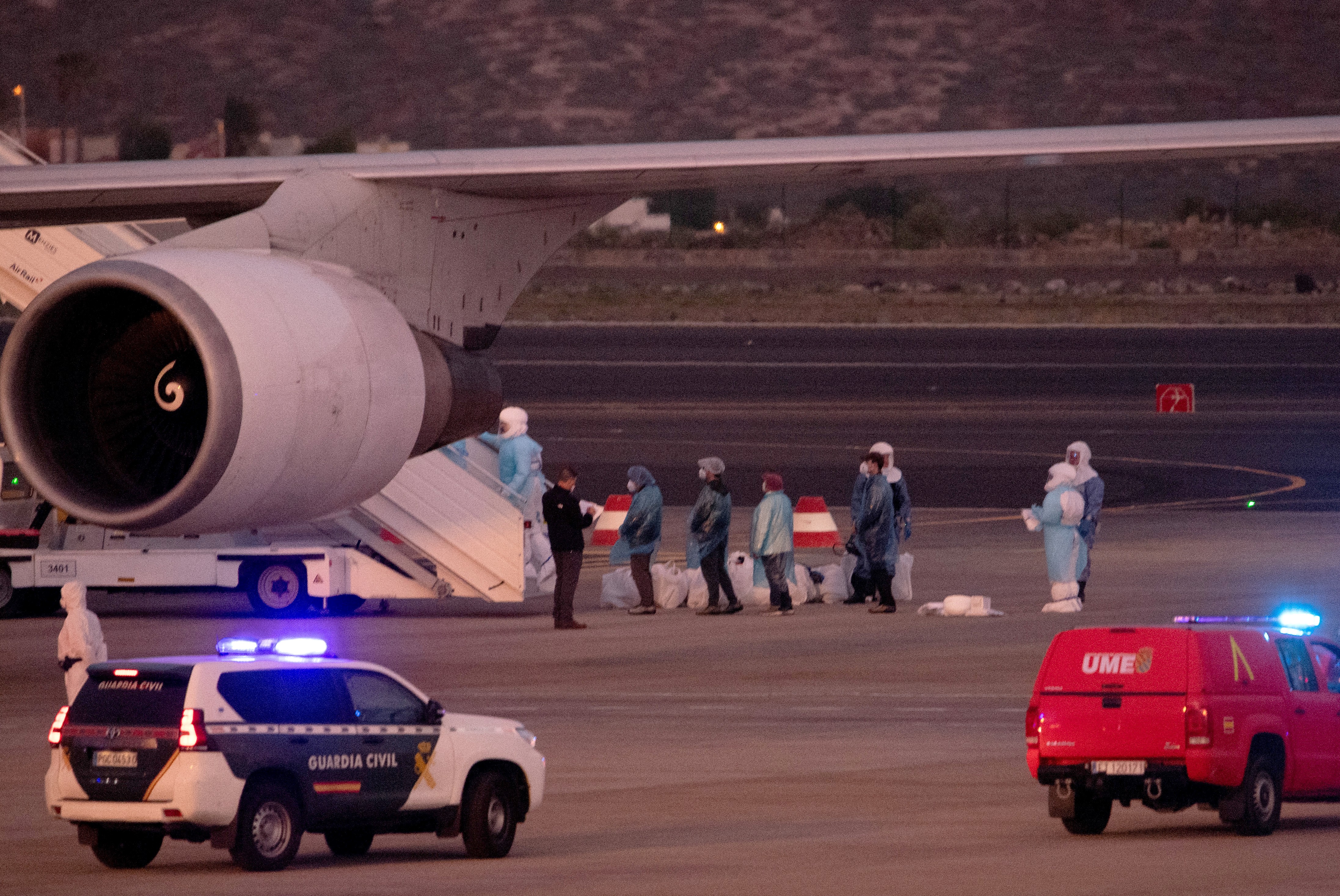
On May 10, the ship arrived in Tenerife, Canary Islands, where more than 140 remaining passengers and crew members still onboard were expected to disembark and be airlifted to their respective countries for isolation.
“As outlined by the WHO, in partnership with several international organizations and governments, guests will be transported by air to their respective countries, where they will enter quarantine procedures,” tour operator Oceanwide Expeditions said on May 10.
One French passenger showed symptoms during the repatriation flight, French Prime Minister Sebastien Lecornu said in an update on X.
Hantavirus is a viral disease most often transmitted through contact with the urine, feces, or saliva of infected rodents, and carries a mortality rate of 30 to 50 percent.
The Andes strain can spread through human-to-human transmission, though it is rare and occurs only through “close and prolonged contact,” according to the WHO.
Hantavirus symptoms start with flu-like symptoms such as fever, fatigue, and muscle aches around one to eight weeks after exposure. Within four to 10 days, the pulmonary form of the disease can rapidly progress to severe symptoms such as coughing, shortness of breath, and fluid buildup in the lungs.