
President Donald Trump and Chinese Communist Party (CCP) leader Xi Jinping began talks on Sept. 19 about a deal that would allow China-based ByteDance to sell TikTok to an American buyer. Chinese media reported that the call began around 8:12 p.m. in Beijing, which is 12 hours ahead of Washington.
Trump said on Truth Social that China had approved the sale of TikTok, but he did not share finalized terms of a deal.
“The call was a very good one, we will be speaking again by phone, appreciate the TikTok approval,” he wrote.
He said the call was “very productive” and spanned several issues, including the Russia–Ukraine war.
“We made progress on many very important issues including Trade, Fentanyl, the need to bring the War between Russia and Ukraine to an end, and the approval of the TikTok Deal,” Trump wrote.
He also announced multiple upcoming meetings.
“I also agreed with President Xi that we would meet at the APEC Summit in South Korea, that I would go to China in the early part of next year, and that President Xi would, likewise, come to the United States at an appropriate time.”
A readout of the call published by Chinese state-run media Xinhua said that the position of the Chinese regime is that companies can conduct “commercial negotiations based on market rules and reach solutions that comply with Chinese laws and regulations and balance interests.” It also did not include details of a deal.
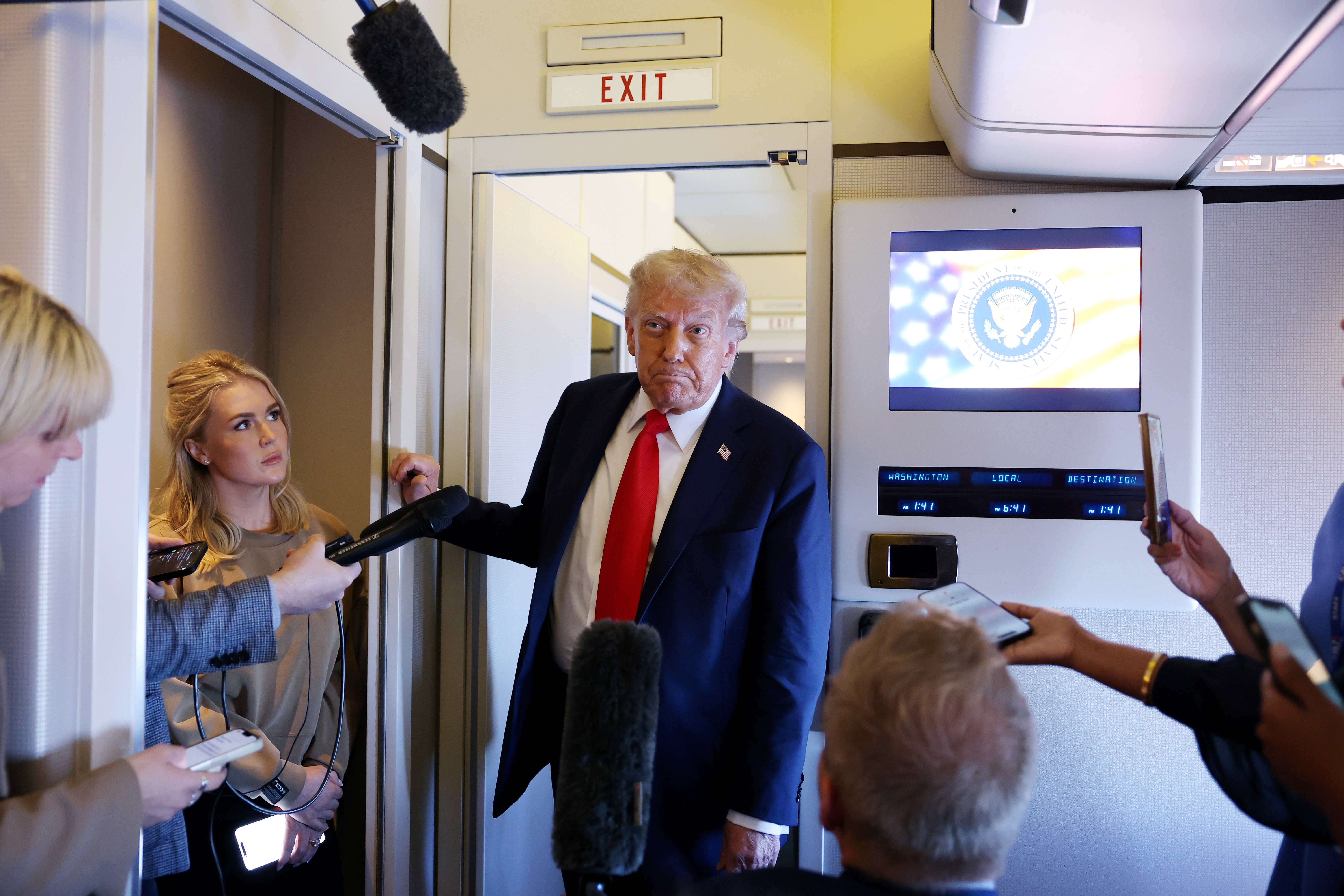
At a press briefing, Trump was asked whether he would accept a deal that required Chinese control of the algorithm. He said, “It’s all being worked out, we’re going to have very good control.”
“These are American investors, all of them, and they all love our country,” he said.
Trump had outlined the terms of the deal earlier this week as trade negotiators from the United States and China met in Madrid.
U.S. Trade Representative Jamieson Greer and Treasury Secretary Scott Bessent told reporters that, after two days of talks, a framework for a deal had been reached, in large part thanks to Trump calling in to lay out terms.
“President Trump played a role in this. We had a call with him last night. We had specific guidance from him. We shared it with our Chinese counterparts,” Greer said on Sept. 16.
“Without his leadership and the leverage he provides, we would not have been able to conclude the deal today.”
Bessent told reporters on Sept. 15 that the Chinese came with an “aggressive” list of asks, including significant trade and tech concessions. He also said that they were firm on needing to retain “Chinese characteristics” of TikTok in the event of a sale.
“They’re interested in Chinese characteristics of the app, which they think are soft power. We don’t care about Chinese characteristics. We care about national security,” Bessent told reporters.
“We are not willing to sacrifice national security for a social media app.”
Congress last year delivered legislation that would prohibit foreign adversary control of apps in the United States. President Joe Biden signed the legislation in time for the deadline for ByteDance to divest of TikTok at the end of his term.
ByteDance and TikTok sued, and a federal court paused the deadline to give Trump, as the incoming president, time to decide how his administration would handle the issue.
Trump has already delayed the divestiture deadline several times, including this week amid talks of a deal, as ByteDance has said Chinese law will not allow for a sale.
Chinese authorities had updated export control laws to cover recommendation algorithms such as the one used by TikTok amid U.S. federal government scrutiny over the app, giving Beijing control over potential sales of such code.
Earlier this week, Trump announced that there are already American buyers lined up, but terms needed to be finalized in talks with Xi.
“We have a deal on TikTok. ... We have a group of very big companies that want to buy it,” Trump said at a press conference on Sept. 16.
Questions arose over whether Chinese entities would retain a stake in the company, and whether ByteDance would retain control of TikTok’s algorithm, which Chinese negotiators had said in Madrid that they wanted to license to the U.S. buyer.
Chinese trade negotiator Wang Jingtao had told reporters that the parties had reached a consensus regarding licensing TikTok’s algorithm and other intellectual property rights.
China hawks in Congress expressed some concern and a need for Congress to review the terms of the deal to see whether it satisfies the divestiture law.
Rep. John Moolenaar (R-Mich.) said on CNBC’s “Squawk Box” that he was “hopeful” they would strike a deal, but had concerns.
“When it comes to control, Xi Jinping has control, and if there’s any question that ByteDance is controlled by the Chinese Communist Party, look no further than the fact that their leader is actually negotiating a divestment with ByteDance,” Moolenaar said.
“At the end of the day, the algorithm is a huge issue and we don’t want to make allowances for China to continue to influence, control what 170 million Americans see and their outlook on the world. We look forward to what the president’s conversation is like with Xi Jinping.”
Dorothy Li contributed to this report.