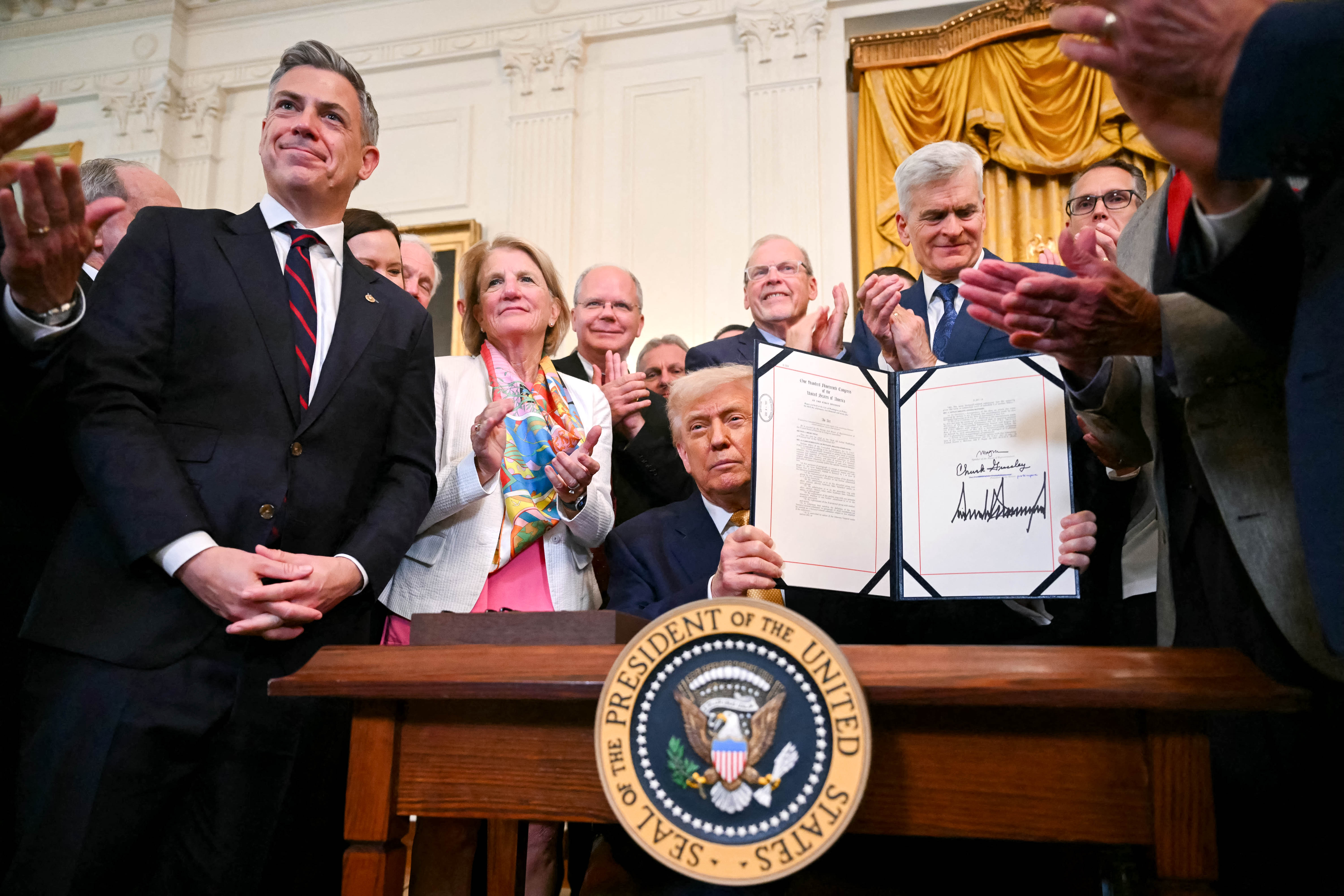
WASHINGTON—President Donald Trump signed the Halt All Lethal Trafficking of Fentanyl Act on Wednesday during a ceremony in the East Room of the White House.
Also known as the HALT Fentanyl Act, the bill, which passed with bipartisan support, reclassifies substances related to the deadly opioid as Schedule 1 narcotics, the strictest designation established by the Controlled Substances Act.
Such drugs are deemed to have no acceptable medical value and are subject to the nation’s most punitive criminal penalties.
The bill also mandates 10-year minimum prison sentences for those convicted of distributing 100 grams or more of any fentanyl-related or derived drugs.
“It’s a big deal,” Trump said. “We'll be getting the drug dealers, pushers, and peddlers off our streets, and we will not rest until we have ended the drug overdose epidemic ... we’re going to end it once and for all.”
A deadly dose is equal to approximately two-one-hundredths of a gram or smaller, depending on the user’s tolerance, according to the U.S. Drug Enforcement Agency (DEA).
Trump has targeted fentanyl distribution with several policy decisions since taking office for a second term, including designating cartel syndicates as foreign terrorist organizations and imposing tariffs against China, Canada, and Mexico for facilitating production or failing to prevent the precursor chemicals from reaching the United States.
The new law will help close loopholes that have allowed cartels and other criminal syndicates to create closely related substances, including carfentanyl, which is 100 times more potent than fentanyl, according to the DEA.
“For years, the monsters who manufacture illicit fentanyl have sought to skirt legal restrictions by making minor variations of the chemical compound, and in the process, they’ve developed even more toxic versions of the drug,” Trump said.
Anne Funder—who lost her 15-year-old son, Weston, to fentanyl poisoning—thanked lawmakers for work she said would help save lives. Dozens of family members and friends of fentanyl-related drug victims, holding photos of their loved ones, stood behind the president while he signed the law.
“President Trump, for four years we felt ignored, but you changed that, and we appreciate it so much,” Funder said. “Thank you for keeping our children safe.”
More than 100,000 overdose deaths occurred annually in the United States over the past three years, according to DEA statistics. While the number of deaths is declining, according to Centers for Disease Control and Prevention data, fentanyl overdose remains the number one cause of death for those aged 18 to 44.
Some of those who succumbed to the drug, including Funder’s son and Drew Swan, the young son of Greg Swan, who spoke at the event, were unaware they were consuming fentanyl or a related substance, with many counterfeit pharmaceutical products laced with opioids sold to individuals who believed they were purchasing Adderall, Xanax, or another name brand pill.
State governments across the country, including in California, where the bulk of overdose deaths occurred, are passing similar legislation meant to mitigate the flow of dangerous drugs by increasing penalties and spreading awareness about the risks associated with fentanyl exposure.
Critics argue that increasing penalties for selling drugs could negatively impact marginalized communities by leading to increased rates of incarceration.