From the fourth Thursday of November through Jan. 1, the 8.3 percent of Americans who deal with major depression must add to their daily challenges a new demand: to show some holiday cheer.
Mental health professionals say that celebrations, birthdays, anniversaries, or similar life events can be difficult for those struggling with depression. To be inundated by calls for constant joy can plunge them even deeper into despair.
“If you’re already having a hard time, it’s going to feel even more pronounced,” Ciara Bogdanovic, a licensed marriage and family therapist in Los Angeles, told The Epoch Times.
Clinical depression is more than sadness, the experts say. Symptoms include isolating oneself; loss of interest in work, hobbies, recreational activities, or relationships; loss of appetite; lethargy, insomnia, or excessive sleeping; and persistent sadness.
“The symptoms range from mild to severe and can disrupt a person’s ability to carry out everyday activities. It is linked to increased health care costs and other health conditions like heart disease and diabetes. It is also a risk factor for suicidal thoughts and behaviors,” the National Institute for Mental Health states on its website.
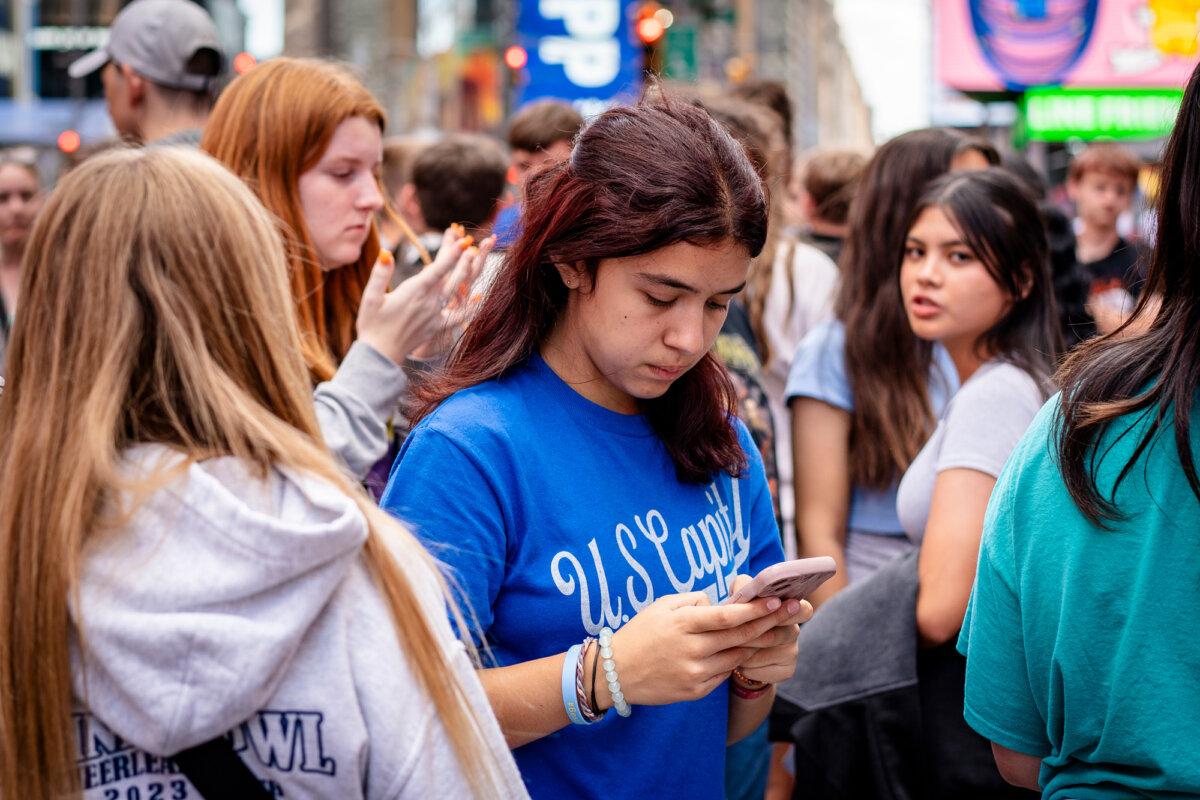
A young woman uses a cellphone in New York City on June 10, 2024. Experts warn that social media is distorting young people's view of the world. (Samira Bouaou/The Epoch Times)
If people experience symptoms for two weeks or more, the institute recommends they seek help.
According to a report released in April by the U.S. Centers for Disease Control and Prevention, depression is a common but treatable mood disorder. Data from the National Health and Nutrition Examination Survey were used to gauge the prevalence of depression and to determine differences among demographic groups.
The report states that 87.9 percent of adolescents and adults with depression reported that their symptoms caused some difficulty with work, home, or social activities.
Those aged 12 to 19 reported the highest rate of depression at 13.1 percent. The rate decreased among older groups and those with higher incomes.
Dr. Emily Aron, an associate professor of psychiatry at MedStar Georgetown University Hospital in Washington, specializes in child and adolescent psychiatry. She said today’s adolescents face some unique challenges.
New Tech, Old Issues
Aron said the 24-hour news cycle, smartphones, and the perceived demands of social media exact a toll on youth. These factors, combined with more traditional pressures, such as family conflict, financial concerns, and health issues, leave today’s youth particularly stressed.
Whatever triggers the depression, Aron said, the holiday season can intensify existing symptoms.
“The holidays really act like a spotlight,” Aron told The Epoch Times. “Whatever is underneath the surface and hard or painful, like loneliness, financial stress, grief, family tension, that all, I think, really gets turned up.”
In what could become a vicious cycle, the depressed person can find themselves feeling guilty over their condition. To be depressed while the entire world is celebrating can make one question his or her sanity.
Misplaced Guilt
“In Western society, there’s so much joy and happiness around the holidays, at least, that’s the message,“ said Houston Hough, a licensed professional counselor from Scottsdale, Arizona. ”‘I’m supposed to be experiencing this, and then I’m not. So, what’s wrong with me?’”
The counselors say the first step in dealing with holiday depression is to set realistic expectations. While holidays are important, the messaging isn’t always conducive to mental health.
Popular entertainment, social media, and advertising all focus on what a person doesn’t already have. The message is that true happiness can be found in the latest phone, car, jewelry, toy, beverage, or activity.

Black Friday shoppers at a mall in Hanover, Md., on Nov. 29, 2024. (Madalina Vasiliu/The Epoch Times)
To combat this, Aron recommends limiting “screen time,” especially for teens and preteens. Instead, she said, time should be spent working on in-person relationships. This is especially important for those already dealing with depression.
She said that it’s important to develop a strategy that focuses on positive mental health, seeking out people you love and trust, and avoiding situations that may trigger depression.
“A lot of people first will reach out to family, to friends, to clergy, because that feels safe. So, whoever makes you feel safe in talking about it, your doctor, your primary care doctor, absolutely that is a great person to talk to,” Aron said.
You’re Not Alone
They added that friends and family should be ready to reach out to those they know are struggling.
The object is not to solve their problems or to “cure” them. The aim should be to ensure they know they are not alone. It can be something as formal as a holiday party, or as simple as a cup of coffee and a chat.
The important thing is to help the person stay grounded in reality and know that they are not alone.
No One’s Perfect
“Sometimes we get caught up in the fantasy and the storyline of it,” Bogdanovic said. “We’ve been inundated with all of this from childhood. Just remember, we get to create what’s meaningful for us. We don’t have to have this picture-perfect life.”
Hough agreed. He said that of all the holiday values, in his opinion, the most important value is gratitude. He said that at the most basic level, there is nothing wrong with a sappy holiday movie. But it’s important to realize that there is life after the holidays, and it has its good points as well.
“It’s fun to escape with that. But then after it’s done, realize nobody’s life actually looks like that, and what I do have is what I get to be grateful for,” he said.