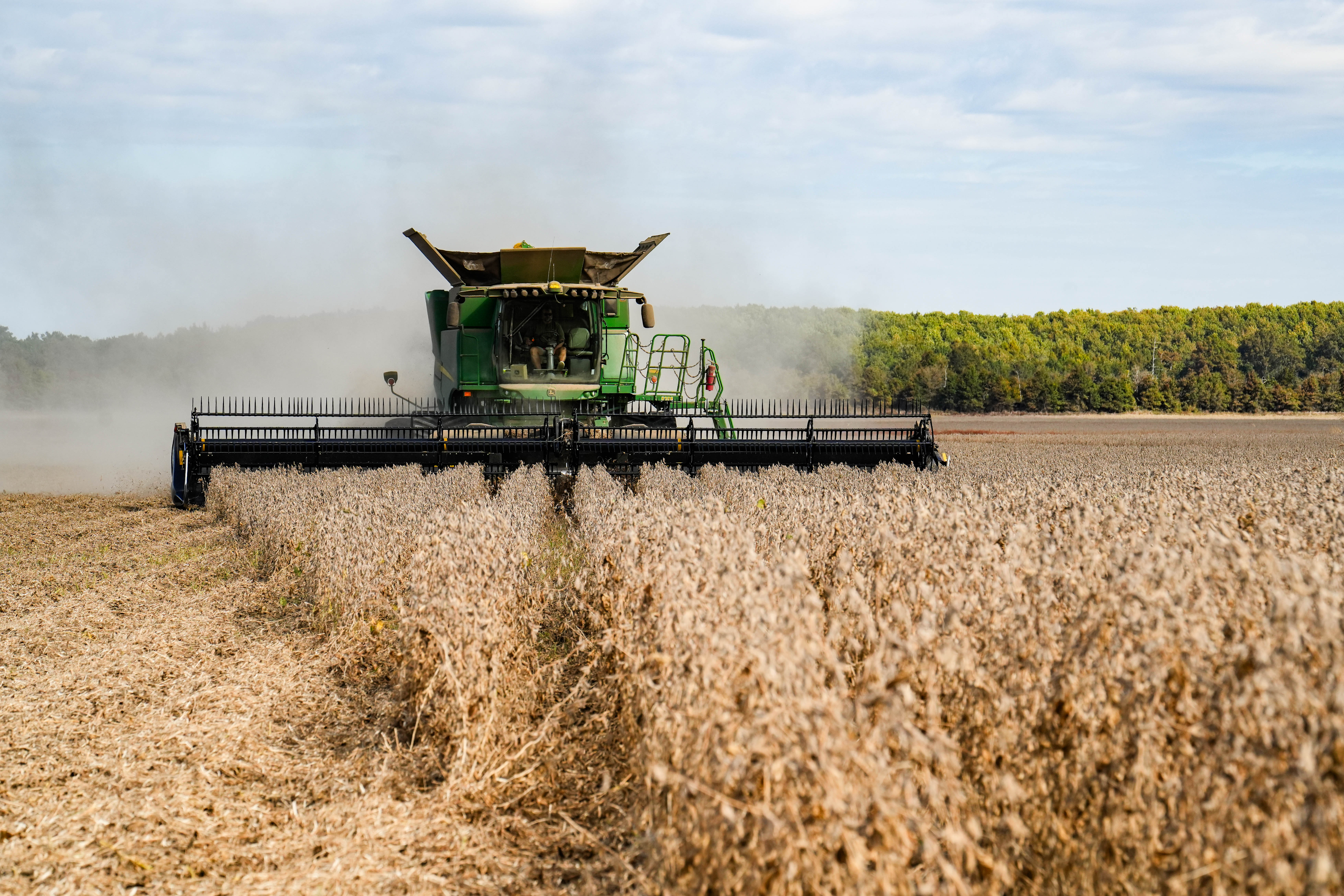

Farmers are celebrating the announcement of $12 billion in assistance for producers impacted by tariffs imposed during U.S. trade disputes with China and other countries.
During a roundtable discussion on Dec. 8, President Donald Trump said that the money will come from those tariffs imposed to mitigate unfair trade policies.
Payments from the Farmers Bridge Assistance Program (FBA) should be made by the end of February 2026, Trump said.
Jim Bowen, general manager of Tallahatchie Farm Supply in Tallahatchie County, Mississippi, said the announcement is a spot of good news in what has been a difficult season.
“Everybody came up short this year. That’ll help,” he told The Epoch Times.
Most of Bowen’s customers are soybean farmers. China, traditionally the largest buyer of U.S. soybeans, had taken its business to South America. This tanked the U.S. price, leaving farmers with an almost worthless crop.
While there is still some uncertainty as the program is rolled out, Bowen said the promise of support is smoothing the path to the next growing season.
“Nobody knows what they’re going to get,” Bowen said. “It is helping with the banks.”
A statement on the American Soybean Association’s website reads that farmers “faced a perfect storm of low crop prices, high production costs, and loss of markets.” Association President Caleb Ragland, a Kentucky soybean farmer, said the assistance will help farmers get through to the 2026 growing season.
“We look forward to working with Congress and the administration on broader support for the farm economy, including long-term, market-driven solutions that strengthen demand for U.S. soy and allow farmers to compete and thrive in the global market,” Ragland wrote in the online statement.
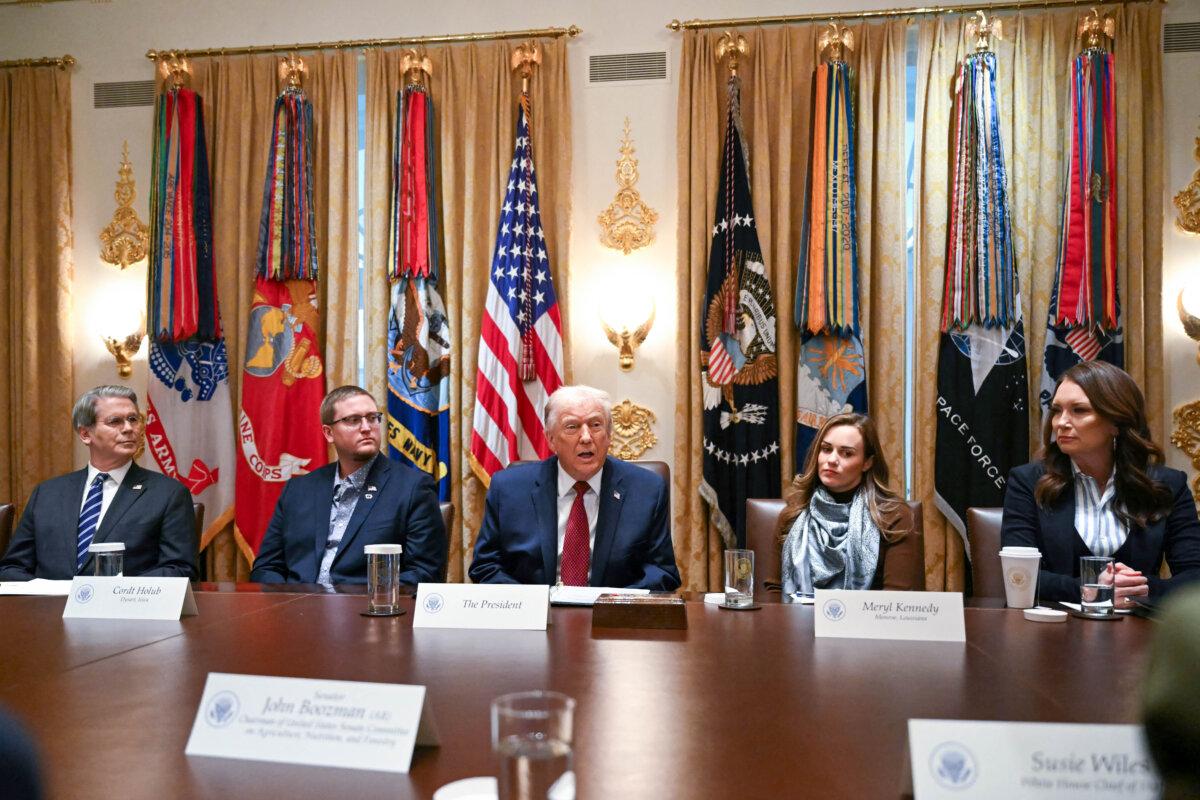
President Donald Trump speaks during a roundtable on aid for farmers in the Cabinet Room of the White House on Dec. 8, 2025. (Andrew Caballero-Reynolds / AFP via Getty Images)
Soybean farmers were not the only ones dealing with tariff-based uncertainty.
Texas’s corn growers say they can now see some light at the end of what was a pretty dark tunnel, according to an email from Texas Corn Producers Association.
David Gibson, executive vice president of the association, wrote that as farmers around the state prepare for the next season, the payment encourages lenders to see Texas corn as a good investment.
“This assistance may be just the thing to offer the optimism they and their bankers need to know their farm can make it another year,” Gibson wrote to The Epoch Times.
Hagen Hunt, the association’s president, agreed. He said he expects the Trump administration to follow through on promises to address the farmers’ concerns when it comes to equipment, fuel, fertilizer, and other overhead expenses.
“Texas Corn Producers Association appreciates the administration’s efforts on behalf of farmers and looks forward to continuing to work toward solutions that address the root causes of financial hardship on the farm – not just the symptoms,” Hunt wrote.
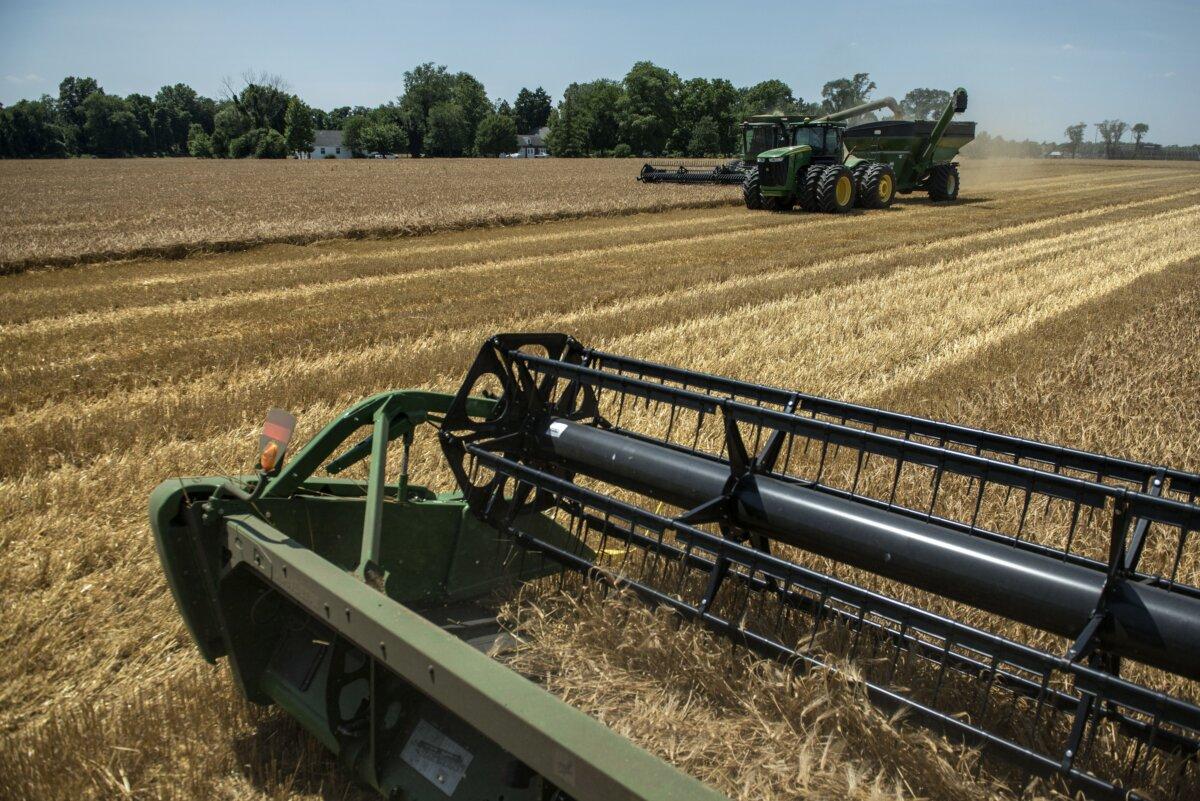
A barley harvest in Milford, Del., on June 17, 2014. (Brendan Smialowski/AFP via Getty Images)
The National Association of Wheat Growers (NAWG) also hailed the assistance on its website.
“NAWG is encouraged to see the Trump administration delivering much-needed assistance to farmers through a simple program for FSA to implement,” NAWG President Pat Clements stated. “Right now, timely assistance is critical for farms to make it to 2026.”
But not everyone is on board with the idea.
The Environmental Working Group (EWG), a Washington-based environmental and public health nonprofit, posted a statement on its website calling the plan a farm bailout that will benefit corporate farms while leaving small, independent operations in the cold.
The EWG claimed that the Trump administration has a history of providing aid to wealthy producers, and that the FBA is following that precedent, the group said.
“Farm policies have long supported the largest and wealthiest farms,” said Anne Schechinger, the Environmental Working Group’s Midwest director. “The Trump administration had an important opportunity to change that but instead chose to send even more money to large and corporate farms and further disadvantage small farms, which are struggling the most under the president’s trade policies.”
Secretary of Agriculture Brooke Rollins said that $11 billion will be disbursed through the FBA to producers of barley, chickpeas, corn, cotton, lentils, oats, peanuts, peas, rice, sorghum, soybeans, wheat, canola, crambe, flax, mustard, rapeseed, safflower, sesame, and sunflower.
The remaining $1 billion will be held for producers of specialty crops not covered by the FBA program, she said.
Farmers can expect payments by Feb. 28, 2026, Rollins said on Monday.
Trump told the roundtable gathering that the tariffs that were the source of concern were also the solution for the farmers.
“This money would not be possible without tariffs,” Trump said.