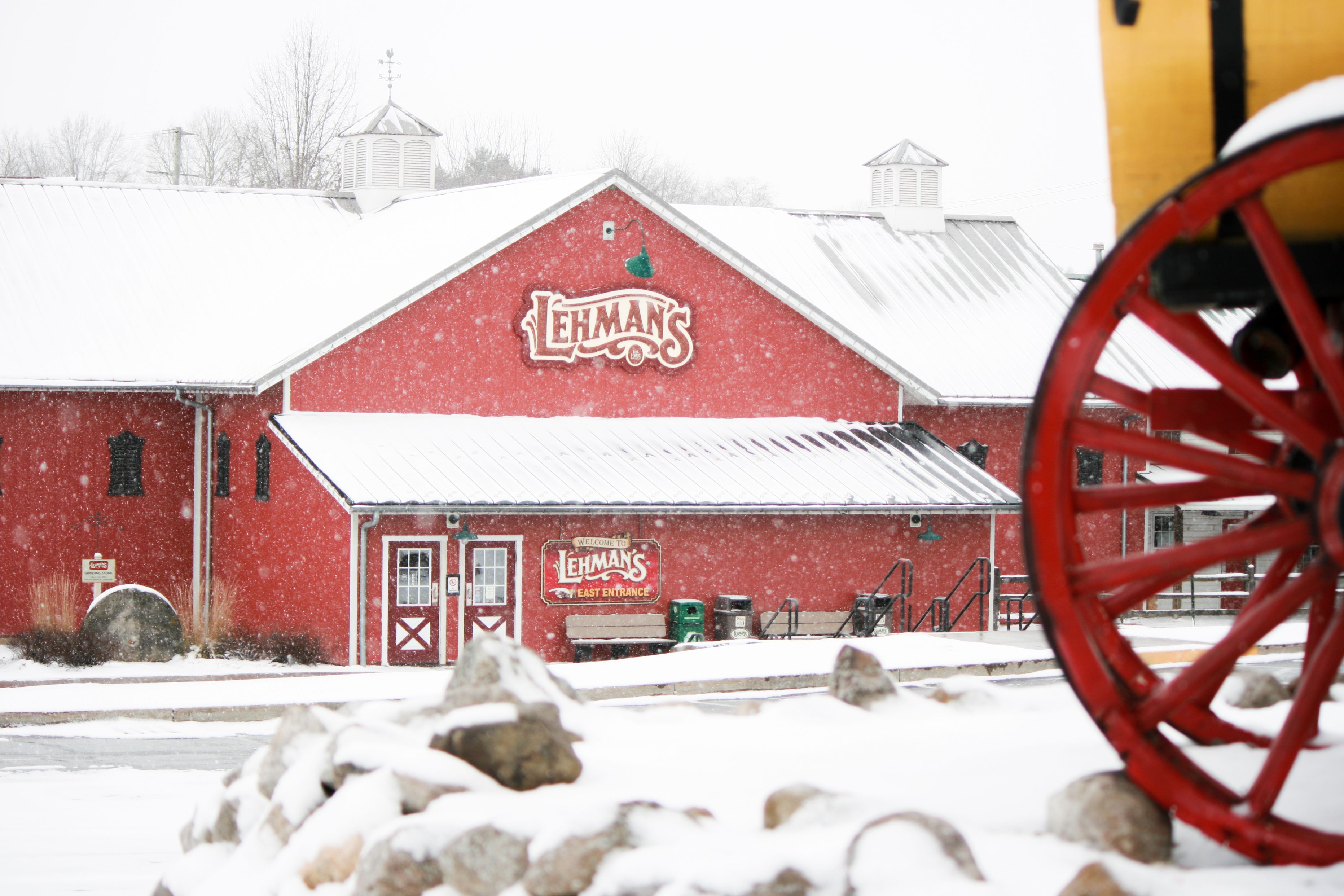

KIDRON, Ohio—Surrounded by rows of shelves lined with lanterns, Kim Ashton contemplates what to buy.
She drove for more than an hour from her northeast Ohio home to Lehman’s, a time capsule store in Kidron that can best be described as a low-tech superstore where customers can purchase non-electric items that are otherwise difficult to find.
“I was here a few weeks [ago] to get a sprout grower, and then the snowstorm hit, our power went out, and we didn’t have a light source, so here I am again,” Ashton told The Epoch Times.
“If you want to learn how to do it yourself, and if you want to be able to live without electricity, chances are Lehman’s has what you need.”
Settled in 1819 by Swiss Mennonites, Kidron is a village of about 1,000 people in Holmes County, which has the highest concentration of Amish people in any U.S. county. Half the county’s population is Amish, and many members of closely related denominations—such as the Mennonites—reside here as well.
Amish Country is one of Ohio’s most visited tourist areas. Visitors flock to experience farm attractions and museums and to buy a wide assortment of handmade goods and artisan products.
Bed and breakfasts and historic inns dot the landscape amid meticulously maintained and sprawling farms. Horse-drawn buggies are just as common as automobiles on some roads.
Since 1955
Located on Kidron’s town square since 1955, Lehman’s started as a hardware store serving Amish and Mennonite customers.
Today, more than 70 years later, non-electric appliances, hand tools, hand-cranked housewares, and oil lamps pack the store, along with one of the country’s largest displays of wood cooking and heating stoves.
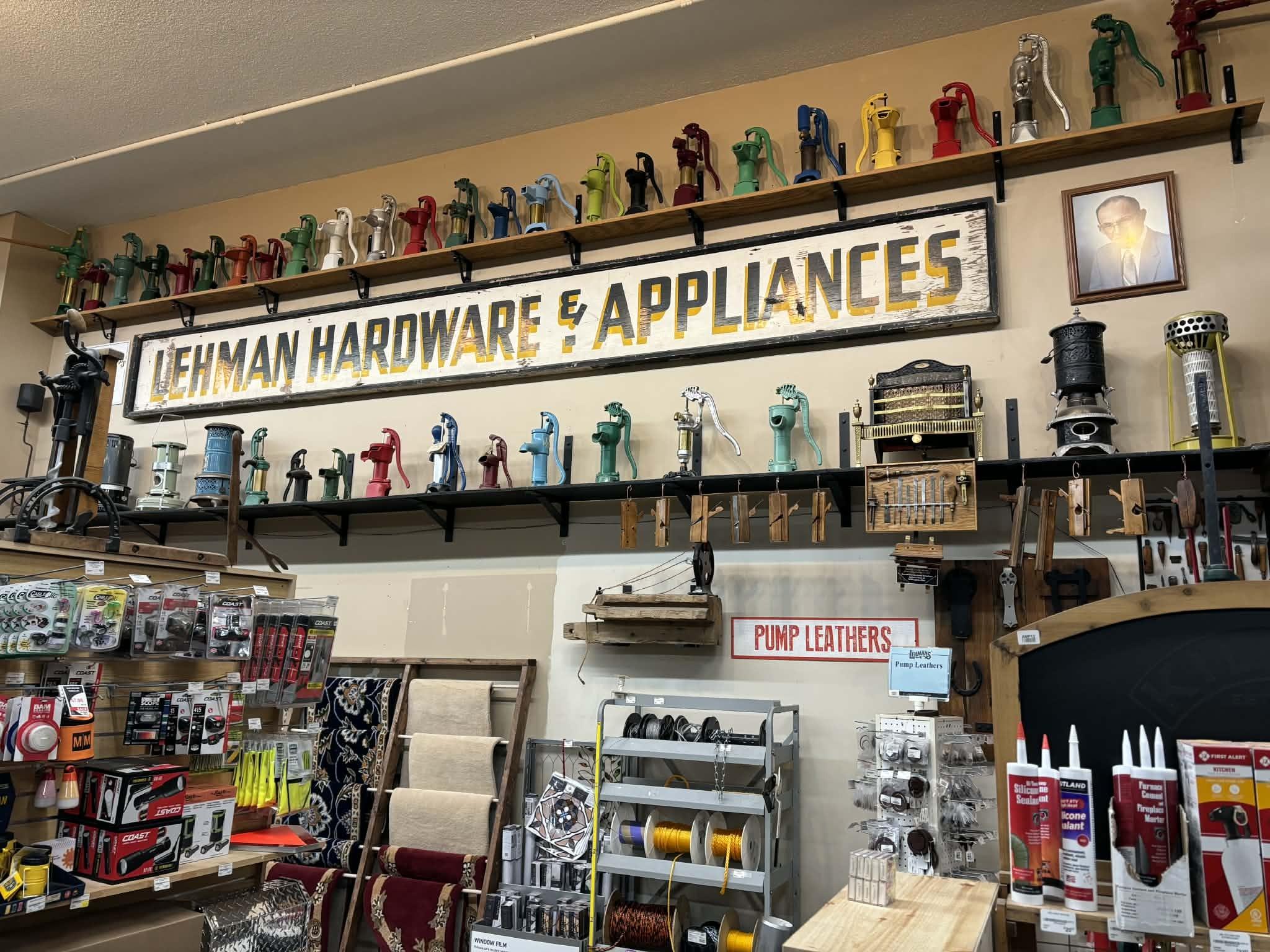
Antiques line the walls of Lehman's in Kidron, Ohio, on Feb. 11, 2026. (Jeff Louderback/Epoch Times)
Here, amid nostalgic novelty items such as old-fashioned soda pop and Amish Country souvenirs, visitors explore the maze of rooms in four reconstructed pre-Civil War era buildings lined with everything from stoneware and cast-iron cookware, hand-cranked and electric grain mills, Amish-made gardening tools, and supplies for making cheese, soap, sauerkraut, and candles.
Amish and Mennonite customers account for about 20 percent of the store’s retail sales. Lehman’s has customers across the United States and Canada who order through its website and a thick printed catalog.
“A lot of these products are becoming harder to keep because they are no longer being made, or they are hard to find,” said Cameron O’Neill, who is the merchandising manager and buyer for Lehman’s.
“Some people come here for specific items while others like to browse and take in the nostalgia of what they remember, or what they remember from their grandparents and great-grandparents,” he said.
The Namesake
Jay Lehman, who began life as a farm kid with Mennonite roots, was born and raised in Kidron. He worked as a farmer and a mechanic before buying a small hardware store in 1955.
The previous owner carried products for the Amish, so Lehman continued that tradition, even driving around the countryside at night in a pickup truck delivering items that were too large to fit into customers’ buggies.
Lehman moved to Africa in 1961 to arrange travel for missionaries. His brother, David, operated the store until Lehman returned in the mid-1970s.
As the oil crisis hit the United States, sales soared at Lehman’s.
“They said, ‘What do we do?’“ Lehman once said. ”Well, what do the Amish do? They get along without these things. If the Amish can do this, we can do it, too.”
Once Lehman’s debuted a print catalog, it gained a widespread following across the country. Business gradually increased, and a new market beyond the Amish and Mennonites, missionaries, and homesteaders developed as Ohio’s Amish Country became one of the Midwest’s most visited tourist destinations.
Jay Lehman died in 2020, and his son, Galen Lehman, recently retired. HRM Enterprises—a family business with Mennonite roots that operates Hartville Hardware, among other stores, in a village an hour away—purchased Lehman’s in 2021.
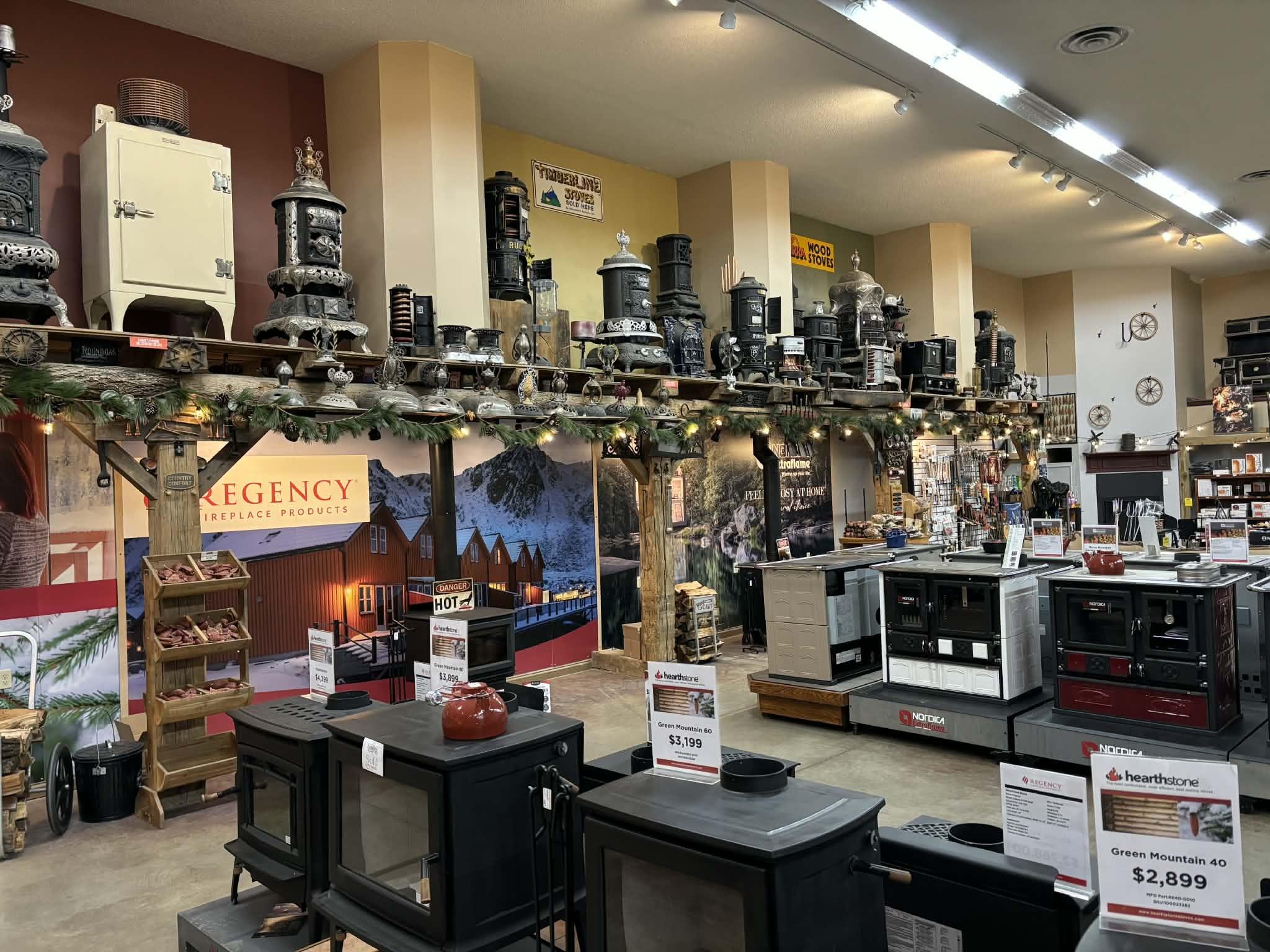
Wood-burning stoves are a draw at Lehman's in Kidron, Ohio. (Jeff Louderback/Epoch Times)
Hard-to-Find Items
In the store’s early days, Jay Lehman decided to focus on products that would be difficult to find anywhere else. Customers would visit the store for oil lamps, knowing that Lehman’s also carried reflectors, lamp oil, and accessories. Employees knew how to use them.
Lehman’s traditions have remained, said Zach Coblentz, chief operating officer of HRM Enterprises and president of Lehman’s.
Coblentz and O’Neill shared their enthusiasm for the store’s wide range of items as they walked around the rooms.
“This is a hand-powered washing machine, so it requires no electricity,“ O’Neill said in an area of the store stocked with non-electric washing machines, hand-cranked laundry spinners, drying racks, and washboards. ”This is made actually about 30 minutes from here.”
“Around 70 percent of the customers we surveyed hadn’t even taken this out of the box,“ he said. ”They’re keeping it in case of an emergency situation where they don’t have electricity and need to wash clothes.”
A few steps away, Coblentz picked up a corn broom and stood it upright.
“You know you have a good corn broom when you stand it up straight,” he said with a grin.
The corn brooms are just one of many products that are made and supplied by local Amish vendors. Gardening tools, beehives, rocking chairs, cherry baskets, soaps, candles, and leather belts and clothing are among the offerings.
Other products are more unusual, such as a water-powered sausage stuffer made by a regional Amish casting company.
“When I first saw this, I wondered who would use it, but they sell,“ O’Neill said. ”There is a market for them, especially hunters who process their own meat.”
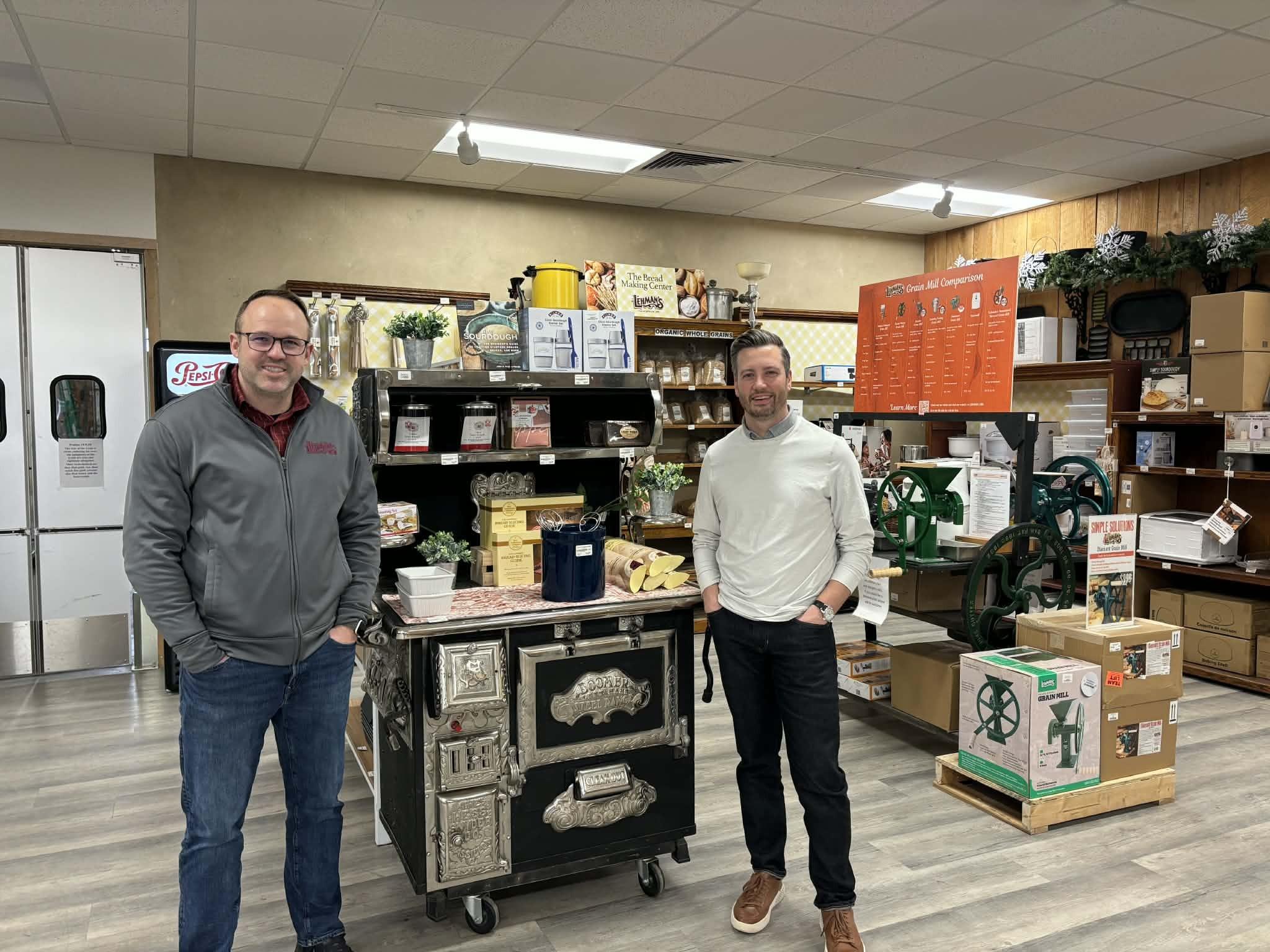
Zach Coblentz (L) and Cameron O'Neill (R) stand next to grain mills and breadmaking items at Lehman's in Kidron, Ohio, on Feb. 11, 2026. (Jeff Louderback/Epoch Times)
Interest in Homemade
Coblentz and O’Neill said there has been an increased demand for hand-powered and electric grain mills as interest has grown in homemade bread.
“You can’t have more ultimate control than making sourdough bread or milling your own, right?“ O’Neill asked, noting that Lehman’s even sells wheat berries. ”Yeah, there is something also that’s satisfactory about doing it yourself and from scratch.”
Online sales for Lehman’s especially spike when there is instability, the two men noted.
Concerns about Y2K—or Year 2000, when computers were expected to experience problems as digital calendars switched from “99” to “00”—made for a busy time at the store, Coblentz said.
Since the COVID-19 pandemic, when supply chains were disrupted and grocery store shelves were sometimes barren, more Americans have developed an interest in growing their own food and being more prepared, Coblentz and O’Neill have discovered.
“We saw an increase when the Russia–Ukraine war started, and after Hurricane Helene, as two examples,” O’Neill said. “Even during the recent winter storm, we saw a large increase in demand for lantern fuel.”
“Wood-burning cookstoves and fireplaces, lanterns, water filtration, refrigerators, and freezers that run on propane gas, canned goods and food preservation items—we get an increased demand for it all when an event happens that causes concern about security,” he said.
A Living Museum
Lehman’s serves as a living museum to many visitors—from the products for sale on the shelves, to the hundreds of antiques on display, to Paul Weaver’s showcase of wood-carved art.
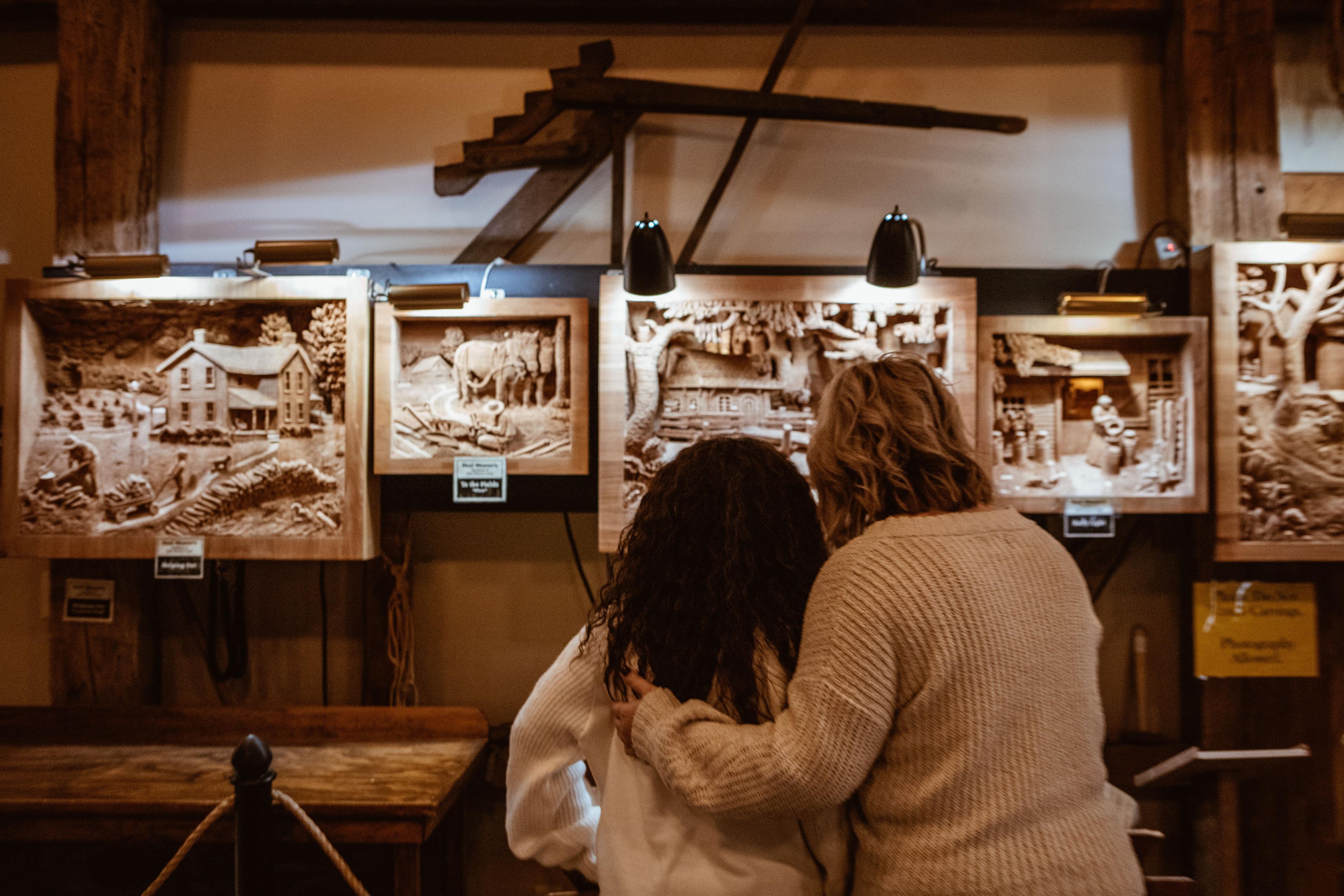
Amish furniture maker and wood-carver Paul Weaver displays 23 of his pieces at Lehman's in Kidron, Ohio. (Courtesy of Lehman's)
Weaver, who is 74, was born and raised in western Pennsylvania. His Amish family moved to Holmes County when he was 18. A furniture maker by trade, he has created 3D dioramas out of wood for 35 years.
Many of the pieces depict farms and rural scenes. His favorites are the crucifixion of Jesus and a swamp scene.
Currently, 23 of Weaver’s carvings are housed at Lehman’s. He gives tours at his home, where more than 40 are on display. Eventually, Weaver envisions a museum at Lehman’s for all of his pieces.
“We appreciate and value simpler living, hard work, and family,” Weaver said. “Lehman’s is a gathering spot for families and I can’t think of a better setting for people to see the carvings and what they represent.”
Heritage Skill Classes
Karen Geiser, 57, said she appreciates Weaver’s carvings and the entire ambience of Lehman’s, which has been part of her life for as long as she can remember. She lives outside Kidron on a 78-acre homestead, which was a dairy farm operated by her parents when she was a child.
The family now raises grass-fed beef and pasture-raised chickens and tends expansive gardens and greenhouses. Geiser sells cut flowers and teaches how to make sauerkraut and fermented vegetables at Lehman’s.
The store offers classes in candle making, beekeeping, canning and preserving, and soap making, among other things.
The classes that teach heritage skills long forgotten are part of the draw of the store, Coblentz said.
Geiser said, with a laugh: “Our great-grandparents made sauerkraut, and then we forgot about it. That’s the class I’ve taught the most there. I teach adult classes and kids classes. It’s fun to let the kids all stomp the cabbage.”
More Americans want to know where their food comes from and to grow their own food, which has heightened interest in classes, according to Geiser.
“More people are realizing that being convenient and eating out of boxes and cans is making us sick,“ she said. ”They are figuring out that what grandma and great-grandma did was healthier and better. There is a return to that, which is why Lehman’s is so popular—in person and buying online.”