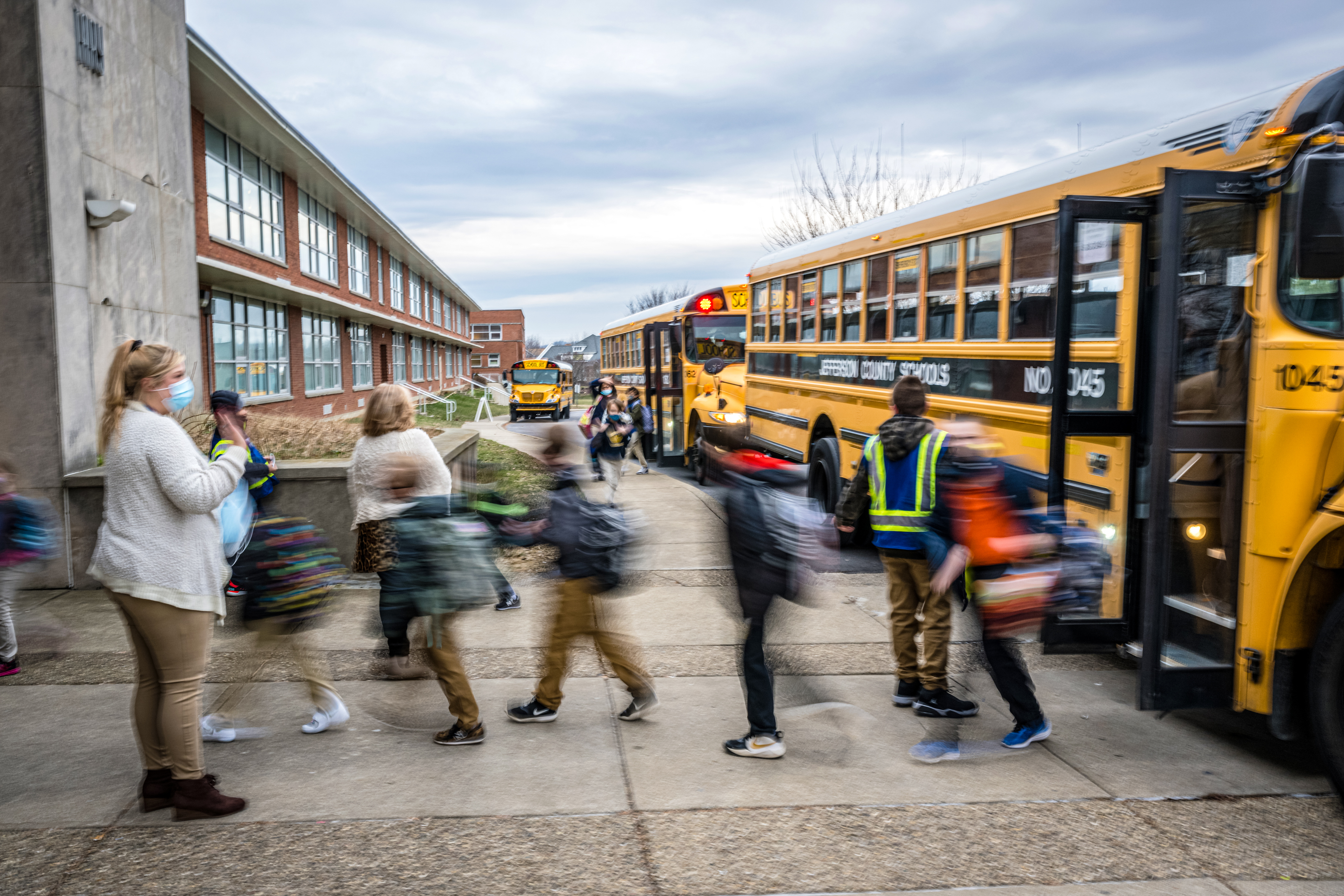

David Rein presumed that punishment would follow after a bully on the school bus shoved his middle school-aged son around, ordered him where to sit, and broke his glasses.
Months later, after learning that three other students had received the same treatment at the school in upstate New York, Rein was told that the tormentor got a free pass under the school’s “restorative justice” policies.
According to Rein, his son never received an apology.
“They swept it under the rug,” he said.
The school district in Newburgh, New York, is among more than 1,450 districts—serving about 19 million students across all 50 states—that use restorative justice practices. Those numbers are drawn from district websites and Defending Education, an organization that tracks left-leaning policies in public education.
A primary goal of the restorative justice approach is to reduce suspension rates for black and Hispanic students; an article on restorative justice in the journal of the National Education Association states that traditional disciplinary policies “often are nourished by implicit biases and institutionalized racism.”
Like many parents, Rein was not even aware that his son’s school had such policies, much less that they have been adopted widely throughout the country.
“I can understand a get-out-of-jail-free for a first offense, but if it happens over and over and over again, it’s not restorative,” Rein told The Epoch Times. “It’s abusive to society.”
President Donald Trump targeted such policies earlier this year in an executive order that states that the government will no longer tolerate risks to children from school discipline “based on discriminatory and unlawful ‘equity ideology.’”
The practices found their way into school policies almost two decades ago, and became tied to federal funding during the Obama administration.
Chris Ognibene, a high school social studies teacher in New York state’s Schenectady City School District, said he sees minimal communication with parents about the disciplinary approach and little proof that it has helped decrease school violence or improve academic performance.
“It’s a permanent part of the district now that’s overused and under-delivered,” he told The Epoch Times. “They don’t think long term about modifying behavior.”
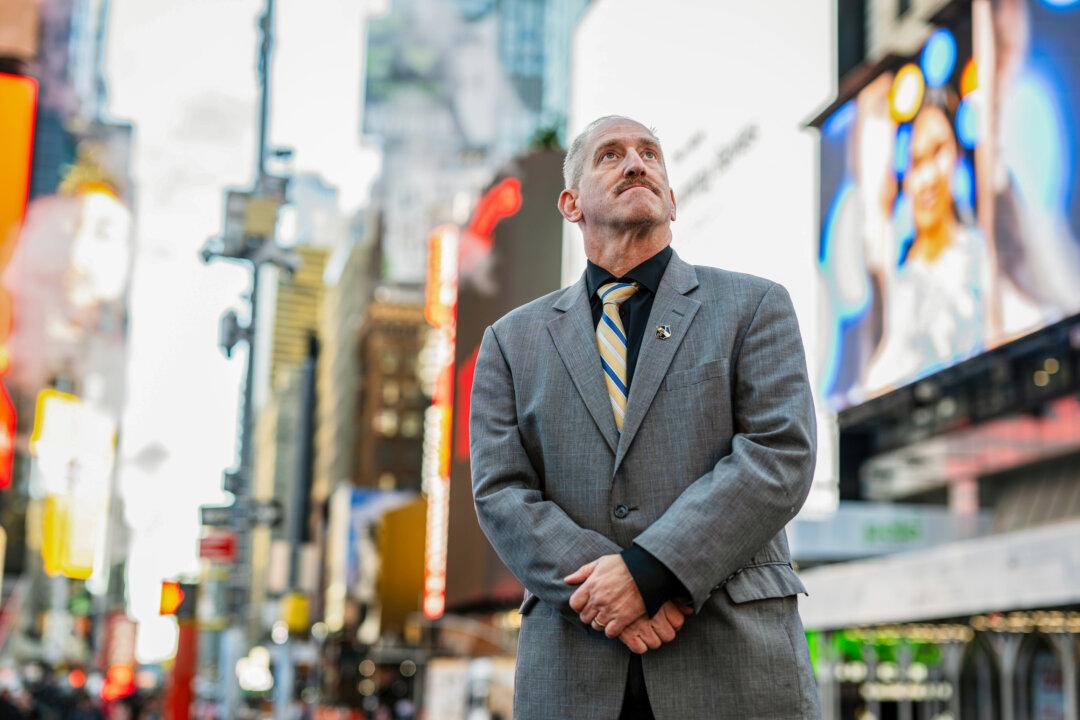
David Rein in New York City on Oct. 9, 2025. Rein said his middle school-aged son was bullied on the school bus, but under the school’s “restorative justice” policies, the bully never apologized and faced no consequences. (Adhiraj Chakrabarti/The Epoch Times)
Restorative Approach
The concept of restorative justice began in the criminal justice system and was retrofitted to public education, following recommendations from civil rights activists concerned about the school-to-prison pipeline.
The Encyclopedia Britannica defines restorative justice as an approach that “focuses on resolving the issues, or repairing the harm, caused by criminal behavior.” Typically, that means focusing on empathy and understanding rather than on punishment and focusing on harm done to relationships rather than on laws broken.
We Are Teachers, a national organization that provides free resources to schools, defines restorative justice as a practice based on empathy, respect, and accountability “that encourages students to understand the impact of their actions, take responsibility, and actively participate in the healing process.”
A comparison of school disciplinary approaches on the We Are Teachers website depicts a student who “had an intense morning at home” and is late to school.
It presents one scenario, in which the student’s teacher reprimands him for being late. He then gets into a fight in the cafeteria, upon which “school security intervenes ... [and he] ends up in juvenile detention for the day, missing valuable class time and gaining a record.”
In contrast to that “traditional discipline” scenario, We Are Teachers presents the restorative discipline approach, in which the student arrives late to school but is “greeted warmly by staff who notice his distress.” After “a small incident with a peer,” he is helped to dialogue with the other student, then “helps in a community project, which improves his mood” and enables him to bond with peers.
The Newburgh Enlarged City School District website outlines a typical district policy that emphasizes the use of “restorative circles,” in which everyone involved in an incident or situation comes together to hear others and be heard.
Teachers, counselors, and administrators can be trained to participate in the circles.
Many districts maintain full-time restorative justice staff; the Newburgh Board of Education recently voted to pay its program director more than $121,000 annually.
The New York City public school district spent about $97 million on restorative justice employees in the past decade, according to a July report from the conservative Manhattan Institute think tank.
Most parents are not aware of restorative justice policies, which may be downplayed to maintain low suspension rates and high graduation rates, said Bob Capano, a retired teacher in New York state.
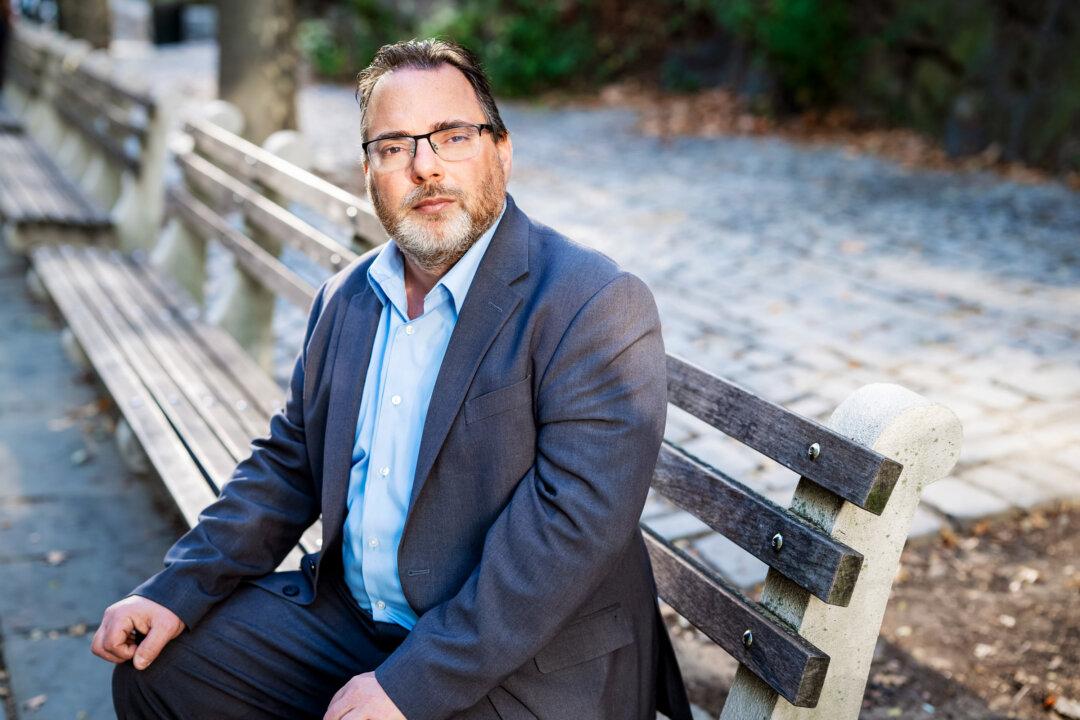
Bob Capano in New York City on Oct. 7, 2025. Capano said many parents are unaware of restorative justice policies, which he said may be downplayed to keep suspension rates low and graduation rates high. (Adhiraj Chakrabarti/The Epoch Times)
Capano told The Epoch Times that there was no public discussion earlier this year when a large school fight spilled off a Newburgh campus, with gunshots fired, nor when a teacher was attacked at a Newburgh school.
“Any information [on how the disruptive students were dealt with] is kept behind closed doors,” he said. “Anyone with common sense would see something is wrong.”
In Newburgh, several parents have expressed frustration on Facebook about district discipline policies.
The mother of a middle school student said she had complained about her son getting punched in the face after accidentally bumping into a fellow student, and was told that if her son “didn’t bump him, he wouldn’t [have] gotten punched in [the] face.”
The New York City, Newburgh, and Schenectady school districts did not respond to requests for comment.
Race ‘Risk Ratios’
In early 2014, the Department of Education and Department of Justice issued a “Dear Colleague” letter, announcing that K–12 public schools could lose federal funding in accordance with civil rights laws if they disproportionately suspended black students.
As an alternative to suspension, the departments wrote, “successful programs may incorporate a wide range of strategies to reduce misbehavior and maintain a safe learning environment, including conflict resolution, restorative practices, counseling, and structured systems of positive interventions.”
The policy required districts to track and report suspension rates by race and ordered them to lower “disparate impact” ratios for non-white students, regardless of the individual district’s demographics.
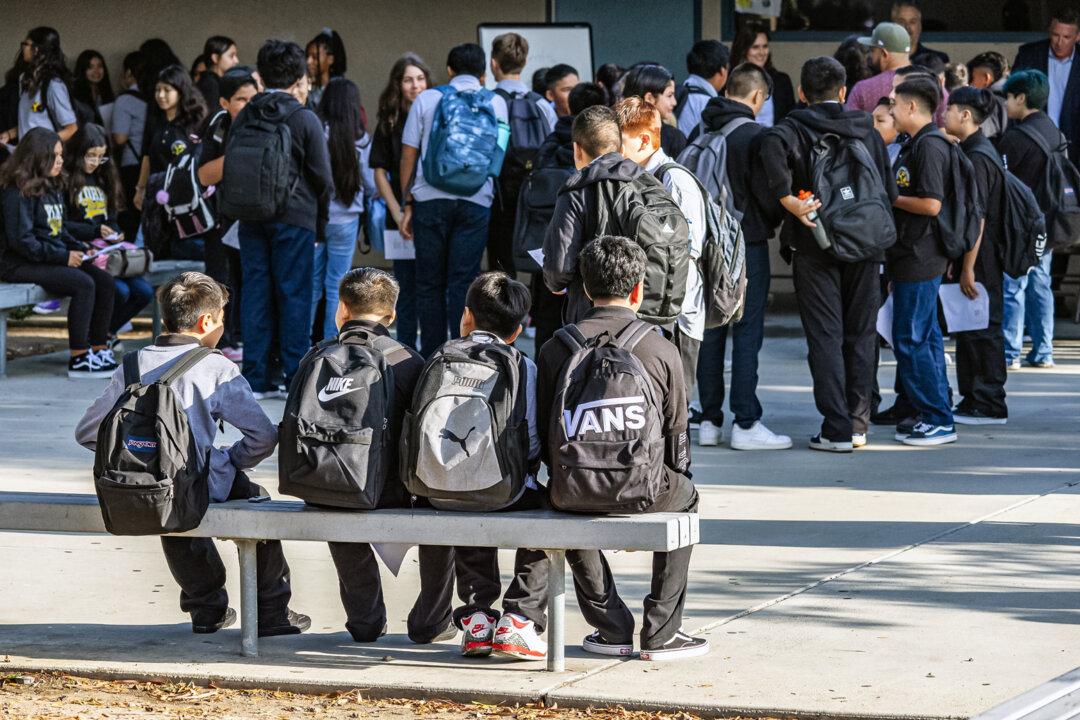
Students prepare for the first day of classes at Yorba Middle School in Orange, Calif., on Aug. 16, 2023. (John Fredricks/The Epoch Times)
According to the letter, black students without disabilities were more than three times more likely than their white peers to be suspended or expelled, and even though they made up only 15 percent of the public school population, they accounted for 35 percent of students who were suspended.
Following the Obama administration guidance, the Education Department in 2016 required states to set a “risk ratio” by which to gauge disproportionality in discipline.
That ratio is calculated by dividing the suspension rate for black pupils by the suspension rate for white pupils.
For example, if 50 out of 200 black students were suspended (a rate of 0.25), and 25 out of 500 white students were suspended (a rate of 0.05), the risk ratio would be five for the district.
The Wisconsin Institute for Law & Liberty monitored the effects of restorative justice quotas in the state’s public schools. It concluded in a 2017 report that as school suspension rates declined because of restorative justice policies, “concerns over school climate and school safety” rose, with teachers becoming “unsatisfied and even fearful.”
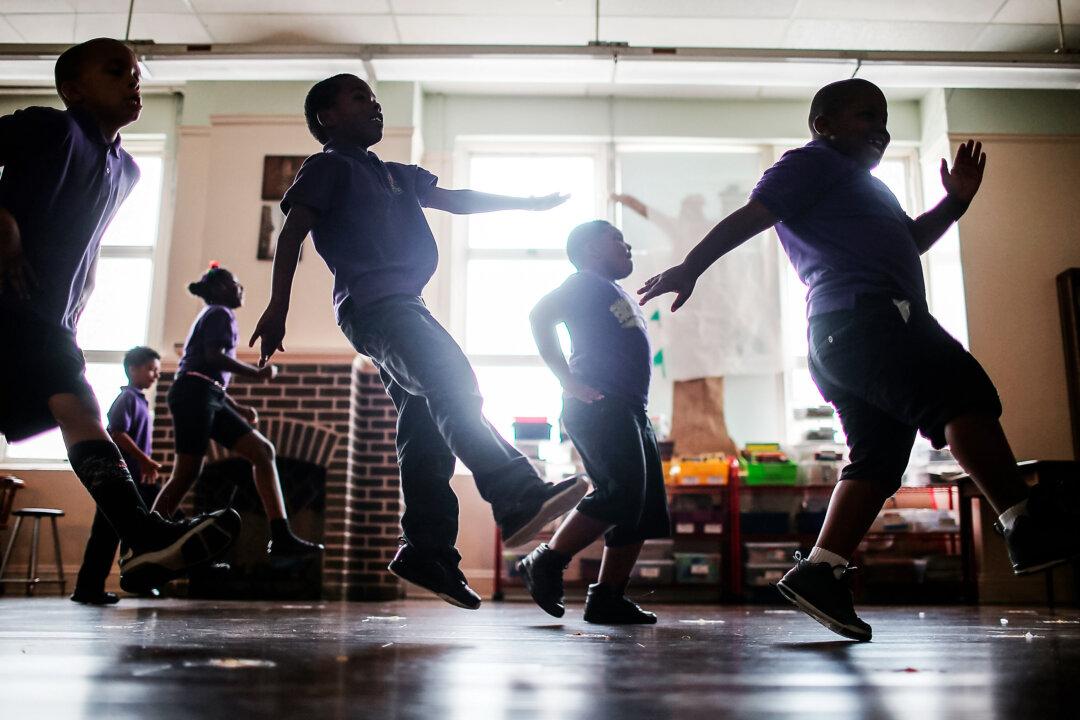
Students attend dance class at the Encore Academy charter school in New Orleans on May 13, 2015. President Donald Trump in April directed the Education Department to outline how it would tackle racial discrimination in schools, including in disciplinary actions. (Mario Tama/Getty Images)
In 2018, under the first Trump administration, the Obama-era letter was rescinded, following the recommendations of a Federal Commission on School Safety report stating that the policy harmed school safety.
Nonetheless, many school districts continued to use practices intrinsic to the restorative justice approach, including complex flow charts for disciplinary procedures, therapy speak, and group conversations, as an alternative to punitive methods such as detention, suspension, and expulsion.
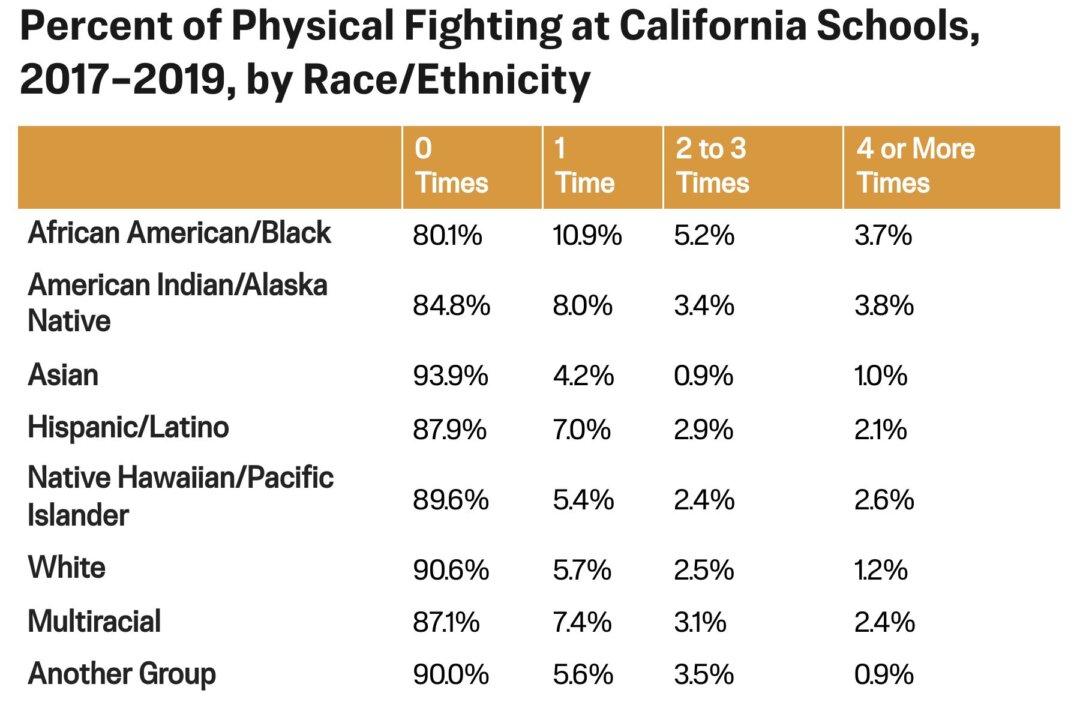
In California, 10.9 percent of black students got into at least one fight during middle school or high school between 2017 and 2019, compared with 7 percent of Hispanic students and 5.7 percent of white students, according to California Department of Education data summarized by the nonprofit Population Reference Bureau’s KidsData project.
Correspondence sent by the Florida Department of Education to the Alachua County public school district in the Gainesville area exemplifies how the federal policy was enforced, even after the Obama administration’s letter was rescinded.
The state agency, in a June 6, 2022, email obtained by The Epoch Times, told the district that its quarterly suspension rate of black students was above the state-determined ratio of 3.0, and therefore 15 percent of its special education grant for the approaching school year must be spent on reducing the ratio.
This determination was based on the racial breakdown of the entire district, regardless of whether there was a higher percentage of black students in the schools where most of the suspensions occurred than in the district as a whole.
In 2023, the Obama administration policy was effectively reinstated under President Joe Biden via a joint letter from the Education Department’s Office for Civil Rights and the Justice Department’s Civil Rights Division, released to “confront the issue of race discrimination in student discipline.”
In Florida, the Alachua district’s website does not currently indicate a restorative justice policy, and the district, like most in the state, is not among those listed by Defending Education. The district did not respond to a request for comment.
Making the Case for Restorative Justice
Gherian Foster, community activist and cofounder of the Black Abolitionist Directive in Albany, New York, said restorative justice practices in her state and across the country can be effective if metrics for success are not limited to quarterly suspension rates.
Schools need to highlight the increased confidence, growth, and maturity of those students who learned from mistakes and were not excluded from the classroom, she said.
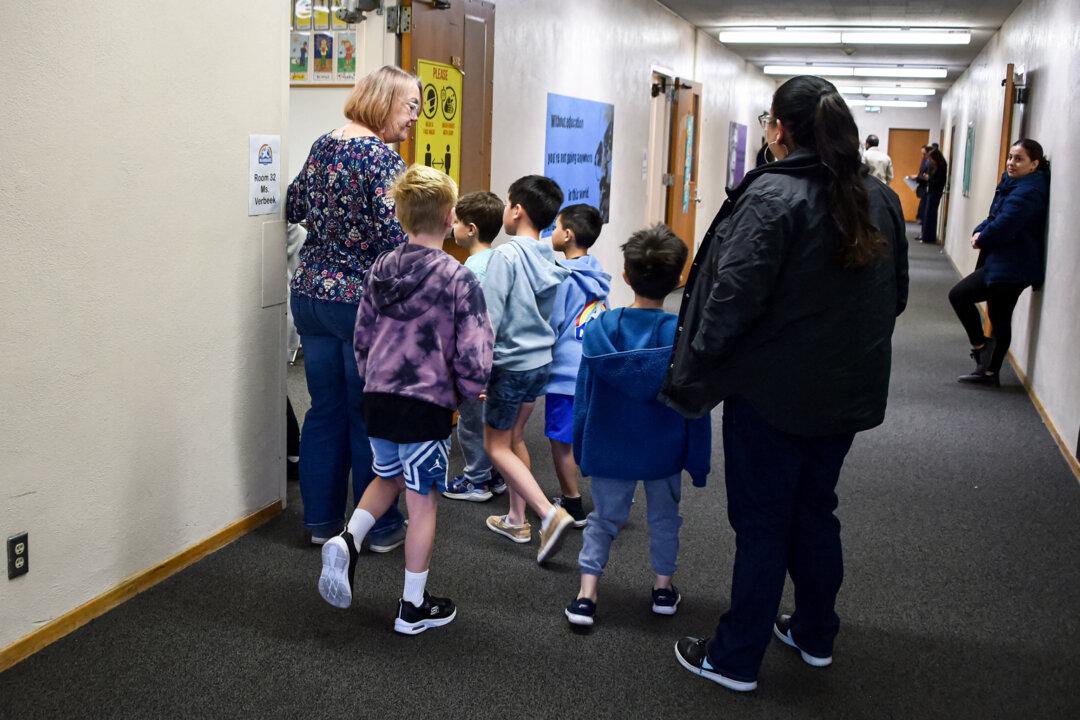
A teacher gives a tour of Nora Sterry Elementary School to displaced students from Marquez Elementary School, which was destroyed in the Pacific Palisades fire, in Los Angeles on Jan. 15, 2025. (Chris Delmas/AFP via Getty Images)
Restorative justice practices will not succeed if teachers and administrators view them as a “parallel track,” Foster told The Epoch Times.
“There’s a list of very specific ideas to follow,” she said. “They can give students more chances and meet the state (risk ratio) rate, but suspensions still happen eventually. We need to remove suspensions from the school code of conduct, exhaust the process, and work harder so students learn from this.”
In a 2022 report, The People’s Think Tank for Education Justice said black and Hispanic families have welcomed the progressive practices in large school districts in North Carolina, California, and Illinois. The organization advocates the “peace center” model used in Chicago public schools, where parents, not school staff, are the mediators in the restorative circles.
The People’s Think Tank promotes restorative justice as a tool for changing school culture, not just the behavior of individual students.
“For that to happen, educators need to find ways to create authentic partnerships with black and brown parents and students who can anchor transformation in a clear understanding of systemic racism and a vision to reimagine safety in holistic and empowering ways,” its website states.
Behavior Overlooked
In practice, according to the Manhattan Institute report, restorative justice practices “often amounted to scripted conversations that did little to address repeated misbehavior.” The report notes one incident in which students who tormented a Jewish teacher with Nazi salutes spent time in a “mediation room” but were not removed from class, prompting a lawsuit from the victim.
In a Texas Senate special committee hearing in June 2022, state Sen. Paul Bettencourt, a Republican, described the “abhorrent” behavior of a student who was observed walking around school with a bag of dead cats. Because of the school’s restorative justice policy, the high school student was not reported to the police for felony animal abuse, The Epoch Times previously reported.
That teenager later murdered 19 students and two teachers in a school shooting in Uvalde, Texas.
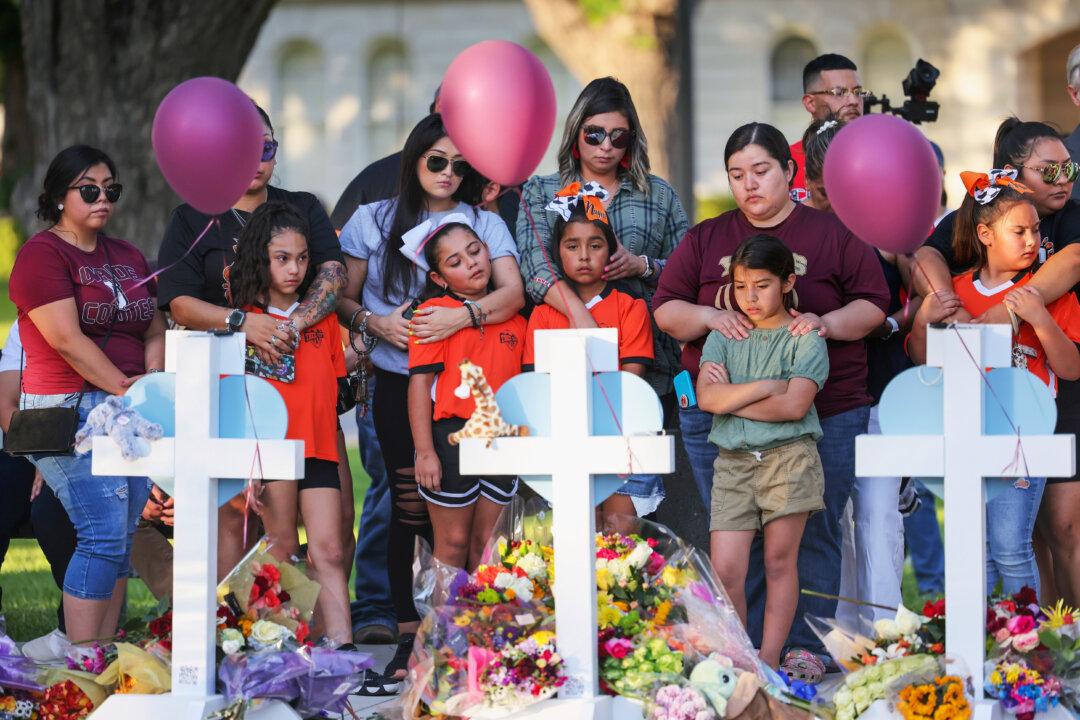
People visit memorials for victims of a mass shooting at Robb Elementary School in Uvalde, Texas, on May 26, 2022. Nineteen children and two teachers were killed in one of the deadliest school shootings in U.S. history. (Michael M. Santiago/Getty Images)
At a public school in the New York City borough of Staten Island in May, an 8-year-old was sent to a mediation room but was not punished after allegedly stabbing a staff member with a pencil and threatening classmates, the Manhattan Institute reported.
In San Diego, a middle school student was not disciplined for repeatedly groping students because school staff were concerned that actions taken against him would violate a school policy protecting special education students, according to a 2024 complaint filed with the Department of Education’s Office for Civil Rights.
“Restorative justice has been horrible,” Moms for Liberty cofounder Tiffany Justice said during the Teacher Freedom Alliance annual summit in Washington in July. “Kids have to sit in a kumbaya circle with their abuser and talk about what role they played as the victim.”
Meanwhile, suspension rates in Wisconsin have noticeably increased since the beginning of 2025 because “the pressure is off now,” said Will Flanders, research director for the Wisconsin Institute for Law & Liberty.
“Softer, woke discipline policies are not a positive force,” he told The Epoch Times.

Will Flanders, research director of the Wisconsin Institute for Law & Liberty, discusses the ineffectiveness of restorative justice practices during the Teacher Freedom Summit event in Washington in July 2025. (Courtesy of the Teacher Freedom Alliance)
Aside from suspension rates, meanwhile, other indicators of behavior problems continue to rise.
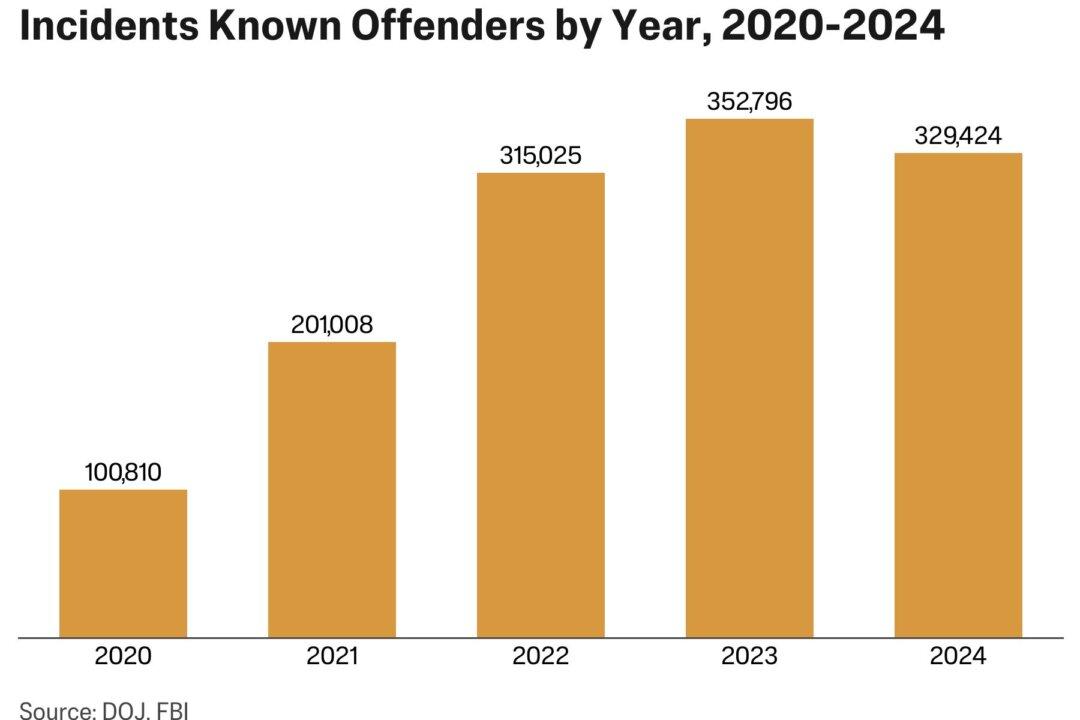
The most recent FBI report regarding crime in schools notes that the number of criminal incidents in learning facilities has more than tripled, from 100,810 in 2020 to nearly 330,000 in 2024. Assault was the most common incident type (538,778 total), followed by larceny/theft (234,601). These are totals for both K–12 and higher education over the five-year period.
Additionally, the National Center for Education Statistics reported 857,500 violent incidents at public K–12 schools during the 2021 to 2022 academic year.
States Respond
Trump’s executive order issued in April tasked the Department of Education (which is currently being dismantled) with providing a status report within 120 days on how it would tackle what it described as racial discrimination, including its use in school discipline.
The White House did not provide a progress report on Trump’s order to end restorative justice practices, but did respond to an Epoch Times request for an update.
“The Trump Administration is committed to restoring safety and order in American classrooms by ensuring school discipline policies are based on objective behavior, not [diversity, equity, and inclusion],” White House spokesperson Liz Huston said in a Nov. 25 email. “President Trump is promoting academic excellence and prioritizing the needs of students, parents, and teachers. ”
At the state level, within the past two years 11 Republican-led states passed laws or have pending legislation promoting traditional disciplinary measures and teacher control, while 10 Democrat-led states have passed or have pending legislation promoting progressive alternatives for punishing disruptive students. Rhode Island passed laws on both sides of that issue, according to the National Conference of State Legislatures.
According to educational policy leaders and organizations, meanwhile, discipline reform should start with the adults closest to the classrooms: teachers and principals.
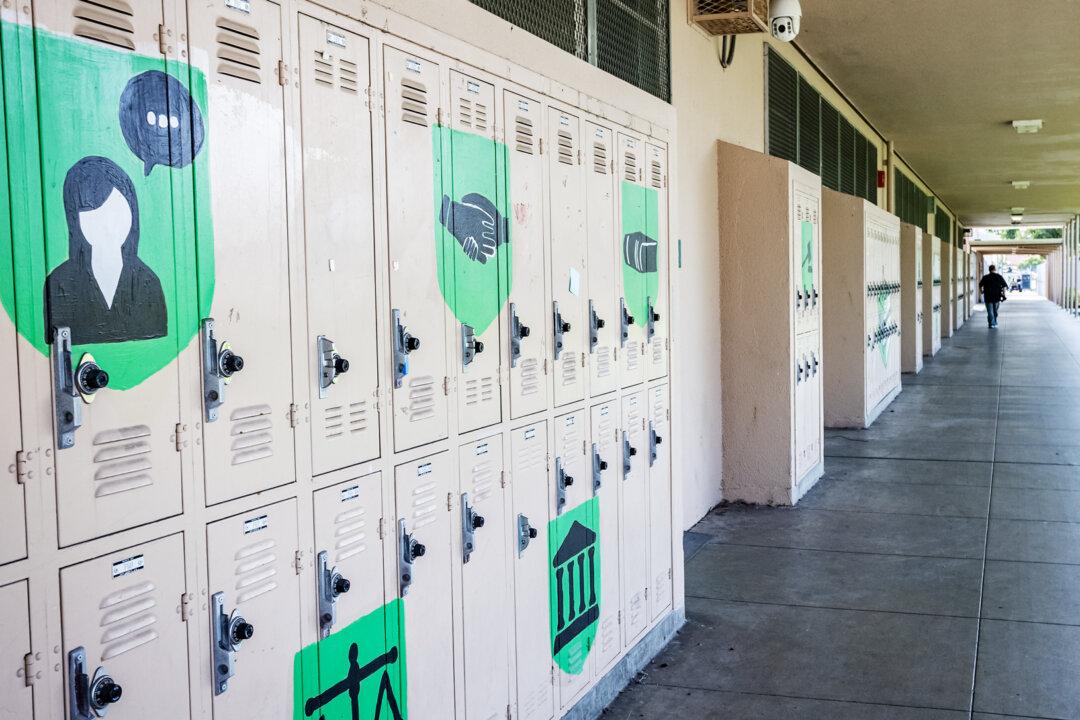
Lockers at Gardena High School within the Los Angeles Unified School District in Gardena, Calif., on Aug. 14, 2025. (John Fredricks/The Epoch Times)
“These schools need immediate, structured support to reset expectations, restore order, and protect instructional time,” the Manhattan Institute report reads.
During a recent discussion on classroom management, panel members of the American Enterprise Institute highlighted other challenges for educators, including the rise of therapeutic culture and the loss of respect for teachers stripped of authority. In the resulting chaotic environment, they said, teachers get burned out and students who want to learn fall behind because of constant disruptions.
“If children don’t behave, then nothing else is going to be achieved,” Tom Bennett, founder of the nonprofit researchED organization, said during the event.
“No child flourishes in chaos,” he said.
Emel Akan contributed to the report.