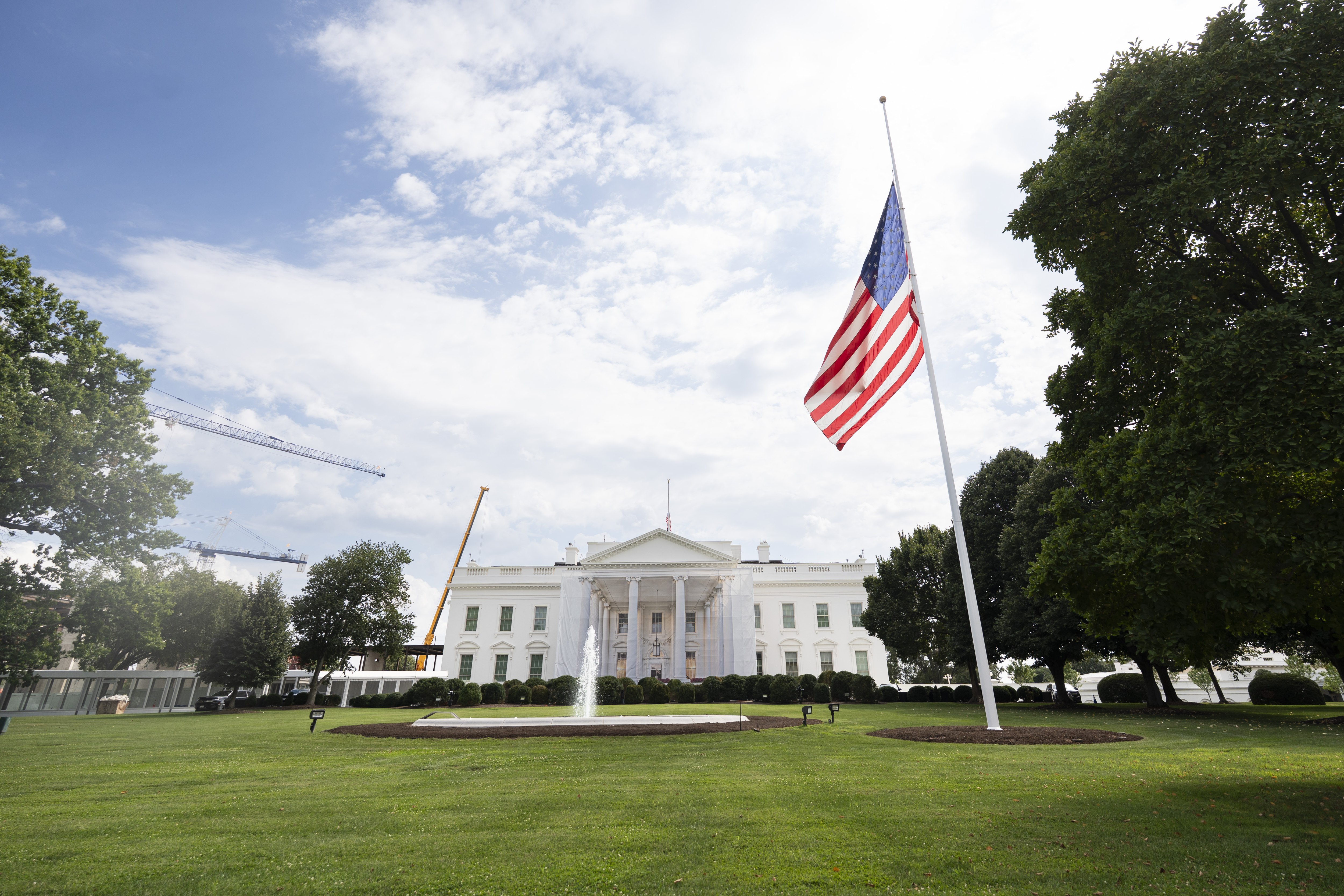

Media outlets on Sept. 21 sued President Donald Trump and other officials over their ban from the White House.
The lawsuit says that Trump is targeting the outlets based on their viewpoints, which violates the U.S. Constitution’s First Amendment.
“As the Supreme Court has recognized, the First Amendment, including its guarantee of a free press, reflects ‘a profound national commitment to the principle that debate on public issues should be uninhibited, robust, and wide-open, and that it may well include vehement, caustic, and sometimes unpleasantly sharp attacks on government and public officials,’” the suit says.
“And the Constitution protects the liberty and property interests that news organizations and White House reporters have in their press credentials and the access those credentials afford them to cover the White House for the benefit of the public. No official can deprive Plaintiffs of those interests on a whim—with no notice, no process, and no warning—as the President did here.”
“This morning, we notified the government that we are filing a lawsuit today to protect our First Amendment rights and defend the principle that the government does not decide what the press reports or publishes,” Politico, CNN, and MS NOW said in a joint statement.
“Without notice or process, the White House revoked our journalists’ credentials because it objected to our reporting. Left unchallenged, this threatens press freedom and the public’s right to independent journalism free from government interference.”
The plaintiffs asked the federal court in Washington to declare the ban unconstitutional and immediately block officials from enforcing it.
The White House, in response to a request for comment, shared a link to a Sept. 21 social media post from the president.
Trump wrote on Truth Social that the White House “is not instituting an assault on the Free Press, something which I cherish” but “is instituting an assault on the FAKE NEWS, something that has grown like Cancer in our beloved United States of America.”
He later suggested that the judge assigned to the case would rule in favor of the outlets, and said that in that case, the administration would appeal.
Trump announced the ban on Sept. 18, accusing the outlets of constantly reporting fake news.
The ban came into force on Saturday. The White House then removed CNN as the scheduled television representative for the pool, or group of reporters that follows Trump, for Sept. 21.
In response, other networks said they would not carry Trump’s comments, starting Monday.
Trump’s previous ban of The Associated Press was partially upheld by an appeals court in 2025.
The court said certain spaces, such as the Oval Office, are “restricted presidential spaces,” so the White House “retains discretion to determine, including on the basis of viewpoint, which journalists will be admitted.” Judges, though, said the administration could not ban the outlet from the White House’s East Room, at least for now.
Aldgra Fredly contributed to this report.