

Israel has said that after the destruction of three Iranian nuclear sites by the United States and Israel during the Twelve Day War in June 2025, Iran continued clandestine efforts to restore its nuclear weapons program.
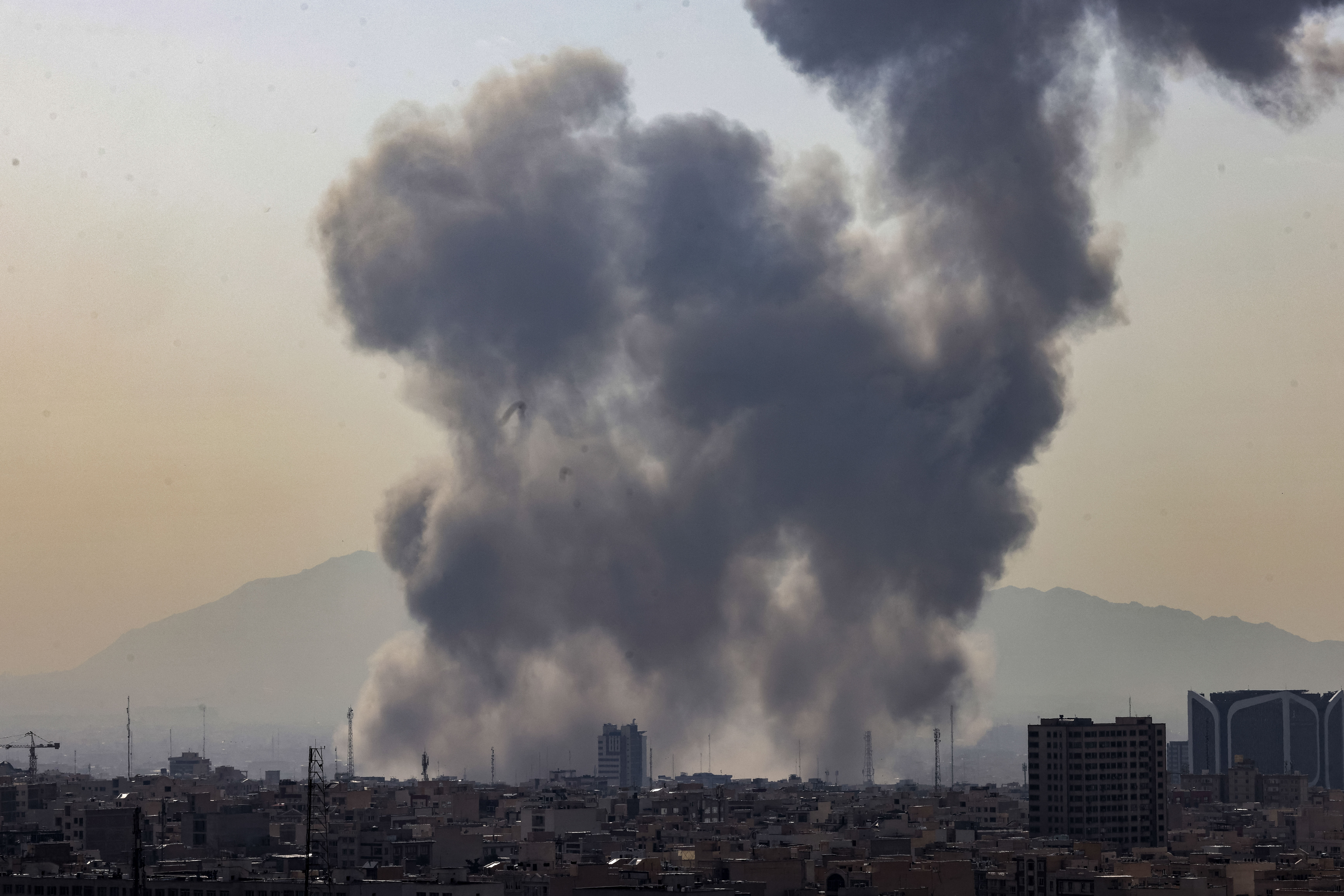
On March 3, the Israel Defense Forces (IDF) said that it “struck and destroyed the secret nuclear headquarters in Minzadehei, located partly underground in the city of Tehran. A team of nuclear scientists was operating covertly at this headquarters.”
The Israeli military added that during the June 2025 strikes, “the Iranian regime transferred some of its capabilities to secret bunkers and attempted to restore its efforts and conceal them.”
Senior Israeli security officials told Epoch Magazine in Israel that at the Minzadehei site that was struck, a team of nuclear scientists—reassembled by Iran from among those who had survived the bombing last year—was working to accelerate the country’s “Weapon Group” project. The purpose of the project is to develop the nuclear bomb’s fusing system–the component responsible for triggering the detonation mechanism—and adapt the weapon for delivery by ballistic missile.
The officials spoke on condition of anonymity because they were not authorized to publicly discuss the details.
The Weapon Group is the body responsible for developing the nuclear detonation mechanism within Iran’s nuclear program. In the process of developing a nuclear bomb intended for mounting on a ballistic missile, the bomb’s components are developed and built separately until the weapon’s final assembly. The scientists operating at the site were working on the fuse.
The same sources said the Iranian leadership recovered from the blow that it suffered to its nuclear sites from the United States and Israel in June 2025, and that Supreme Leader Ali Khamenei ordered an accelerated push to produce a nuclear bomb.
In 2024, Kamal Kharrazi, an adviser to Khamenei, said in an interview with Al Jazeera: “We have no decision to build a nuclear bomb but should Iran’s existence be threatened, there will be no choice but to change our military doctrine.”
In 2025, Ali Shamkhani, a former defense minister and then an adviser to Khamenei, said if he returned to the defense portfolio, he would “move toward building an atomic bomb.” Shamkhani was among the Iranian leaders killed in the U.S.–Israeli strikes on the first day of the latest military operation on Iran.
Israeli security officials say those remarks reflected growing recognition at the top of the Iranian leadership that the absence of nuclear capability was a strategic disadvantage—one that weakens the Iranian regime’s ability to deter its enemies and defend against military strikes or attempts at regime change. For that reason, achieving the ability to produce a nuclear bomb quickly became a top priority for Tehran.
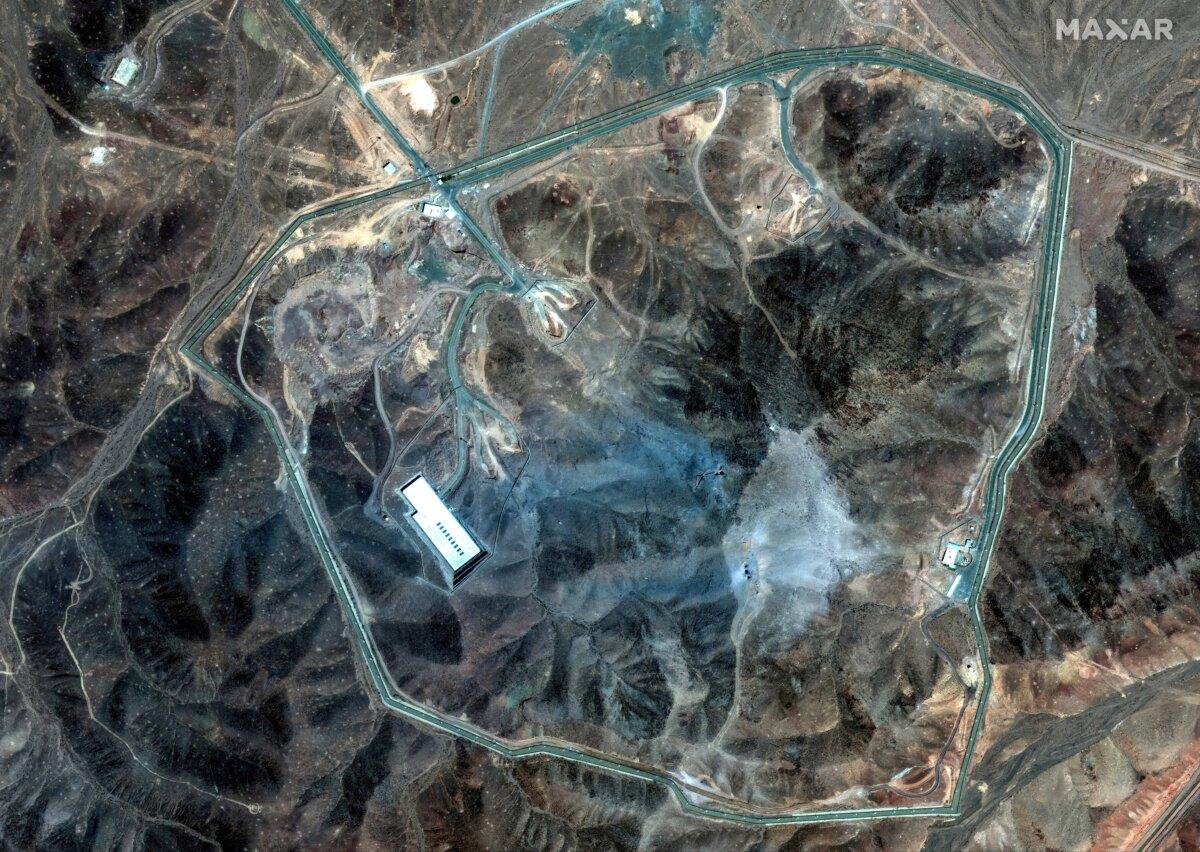
A satellite view shows an overview of Fordow underground complex, after the United States struck the nuclear facility, near Qom, Iran, on June 22, 2025. (Maxar Technologies/Handout via Reuters)
Iran’s Nuclear Program
For decades, Iran pursued a policy of nuclear ambiguity, combining the development of civilian nuclear technology with an official commitment to refrain from producing nuclear weapons, in accordance with the 1968 Non-Proliferation of Nuclear Weapons Treaty.
In 2002, in response to U.S. congressional reports that the Iranian regime had built nuclear-related facilities that it had not disclosed, the International Atomic Energy Agency (IAEA) demanded access to certain sites, key personnel, and relevant documents to investigate.
“About three years later, the Americans began to understand that Iran had an active nuclear weapons development program, but they became convinced that the program had been halted,” David Albright, a leading expert on nuclear proliferation and founder and president of the Institute for Science and International Security, told Epoch Magazine Israel.
In November 2011, the IAEA published findings that outlined “possible military dimensions” to Iran’s nuclear program. The agency said that based on information that it received from member states, this was pursued under Iran’s initiative dubbed the AMAD Plan headed by Mohsen Fakhrizadeh. The program began to take shape in the late 1990s or early 2000s, according to the report.
Additionally, based on intelligence provided by member states, the plan included work on explosives, uranium enrichment, and the development of a warhead that could be fitted onto a Shahab-3 missile, according to the report.
The IAEA reported that based on intelligence that it has reviewed and its own investigation, Iran had worked on the development of a nuclear explosive device and tested advanced systems for initiating explosives from multiple points simultaneously in order to create a uniform blast, something required for an effective nuclear explosion.
It added that based on intelligence provided by member states, Iran conducted a test involving the detonation of a powerful hemispherical high-explosive charge. It noted that the materials and dimensions used in the test resembled what would be required to develop a nuclear warhead for the Shahab-3 missile.
“You can produce a nuclear explosive device with a mock core, which can be uranium, but not enriched uranium,” Ephraim Asculai, who worked at the Israel Atomic Energy Commission for more than 40 years, told Epoch Magazine.
“I’m not even sure the term ’mock core' is good enough, because it is a full-fledged nuclear explosive device in every respect, except that the uranium inside is not enriched to weapons grade,” Asculai said.
“What is called a ‘cold test’ is carried out with this device—you measure all the parameters and examine them in order to confirm that it will work one day. Then, one day, you simply remove the non-enriched uranium core and insert an enriched uranium core, and the device will work.”

Iranian technicians at at the Isfahan Uranium Conversion Facilities, about 261 miles south of Tehran, on Aug. 8, 2005. (Behrouz Mehri/AFP via Getty Images)
Documents from the Iran Nuclear Archive—a collection of documents, photos, and videos obtained during a Mossad operation inside Iran and made public in April 2018 by Israeli Prime Minister Benjamin Netanyahu—showed that under the AMAD Plan, extensive planning had been conducted for the construction of an underground test site where nuclear explosions would be carried out.
According to the documents, Iran referred to it as Project Midan. As part of the project, five potential sites were examined, and methods were developed for measuring the power of a nuclear explosion, including the use of seismic and other technologies. One of the documents deals with the depth of the shaft required for an explosion of a certain yield, the behavior of the ground during the explosion, methods for refilling the shaft after placement of the nuclear device, and the development of software to monitor the entire process.
The IAEA report stated that based on intelligence from member states, Iran ultimately halted the AMAD Plan and began cleaning equipment and work areas in order to conceal the activities that had taken place there. However, the report added that based on the same intelligence sources, some of those activities continued under different organizations.
According to Albright, the Iranians continued to advance the AMAD Plan, but in a different format.
“They shifted from trying to build a nuclear weapon to trying to solve bottlenecks in the various parts of the program, so that when the time came, they could connect all the components quickly and efficiently and assemble the weapon,” he said.
A former senior Mossad official who was involved in bringing the Iran Nuclear Archive to Israel told Epoch Magazine Israel, “To illustrate, think about the structure of a newspaper.”
“You have reporters covering different beats, and you have an editor who integrates all the content that comes in and creates a complete product,” said the former official, whose name is being withheld because he is not authorized to speak publicly. “Now imagine that you decide not to publish the newspaper for the next three years for various reasons. You don’t shut it down. Instead, you decide that each reporter will sit at home, at his university, or at the research institute where he works, and continue researching and developing his area of expertise.
“You pay the reporters so they keep their skills sharp and continue writing drafts until the day the newspaper resumes operations and calls them back to assemble a finished product. The same thing happened in Iran—the nuclear program was operational, people met together to develop, produce, and assemble weapons, but then they were dispersed.”
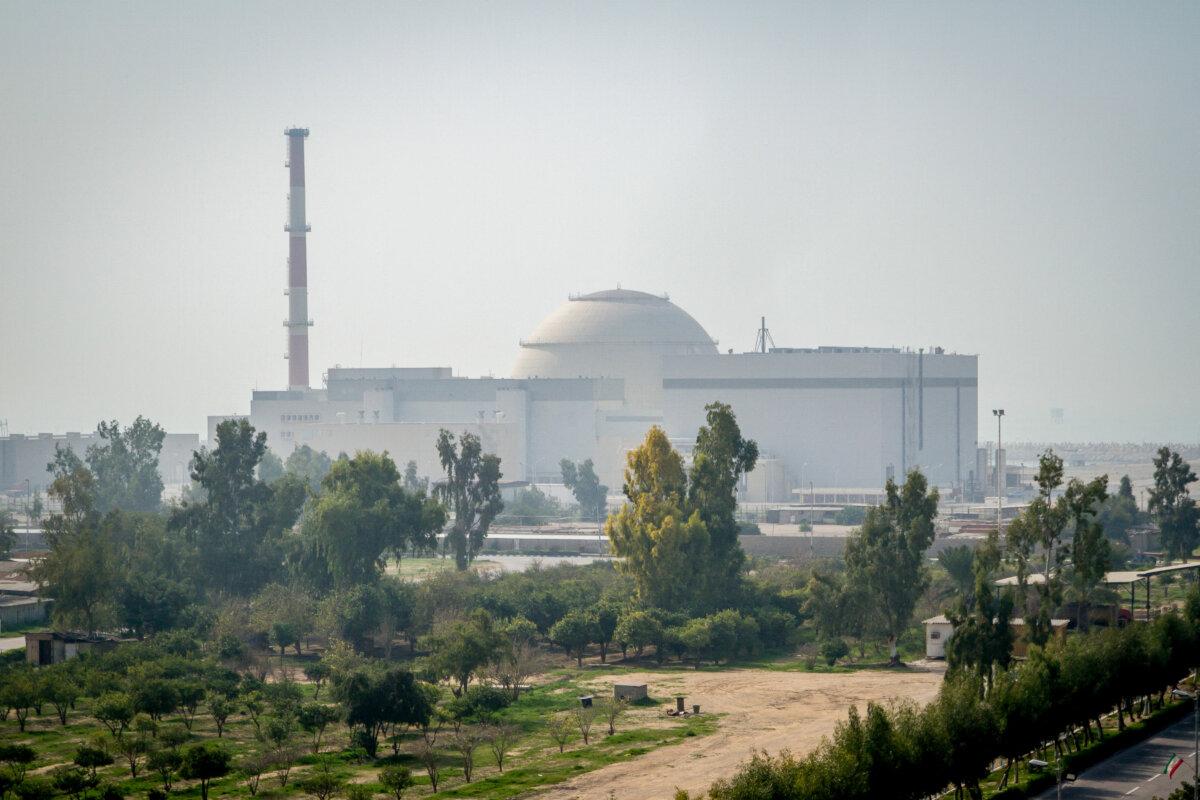
The Bushehr Nuclear Power Plant, located on the Persian Gulf about 746 miles south of Tehran, in Iran on Jan. 26, 2014. (Mohamad Ali Najib/Middle East Images/AFP via Getty Images)
The AMAD Plan was initially run under a body called SADAT, but moved under the management of the Organization of Defensive Innovation and Research (SPND), which began operations in 2011, according to the IAEA report.
“The work in the SADAT Centres drew on resources at Iranian universities which had laboratories available to them and students to do the research,” the IAEA stated in its report.
Fakhrizadeh, who headed the AMAD Plan and then SADAT, also led SPND until he was assassinated in late 2020.
“As a successor body, SPND inherited a substantial portion of the manpower that had been involved in the nuclear program in the early 2000s,” Albright said. “It has a network of subordinate groups, as well as front companies, through which it conducts research and procurement related to nuclear weapons and their delivery systems. The structure of the network makes it possible to incorporate many of the employees who worked in the AMAD Plan and who today work in private companies and universities in Iran.”
During the Twelve Day War in June 2025, the Israeli military said that SPND headquarters in Tehran had also been struck, along with attacks on nuclear sites and other critical infrastructure.