BROOKFIELD, Vt.—Six generations of John Klar’s family farmed in the Green Mountains of Vermont, yet he had never baled hay or raised animals.
But in the late 1990s, spurred by chronic illness, he left his law firm, returned with his wife and children to the countryside of his youth, and bought a family farm.
Fast-forward a couple of decades, and his life took another unanticipated turn, this time spurred by a run-in with a meat inspector over a Craigslist posting. Drawing on his legal background, the former tax attorney became an advocate for small farms and regenerative agriculture, and he is now heavily involved in the Make America Healthy Again (MAHA) movement.
“I didn’t plan to be a farmer, but the more I farmed, the more I saw that something was really smelling rotten in this industry,” Klar told The Epoch Times.
“Big Ag and the federal government pump a lot of money into processed food, most of which is made from the same base products: ingredients from corn and soy. They’re devoid of nutritional value, and they are filled with toxins.”
Klar said those entities have made farmers dependent on chemicals.
“[The chemicals] are destroying our soils, our water, and our health,” he said.
Today, Klar raises grass-fed organic beef and raises lamb using regenerative farming practices. That means rotational grazing, less reliance on conventional livestock feed methods, reduced tillable acreage, manure in place of synthetic fertilizers, and reduced soil erosion and water waste.
Klar is the author of “Small Farm Republic” and an upcoming book, “The War on Farmers: How Corporations, Activists, and Climate Alarmists Are Fueling a Global Food Crisis.” He works with the nonprofit MAHA Action, and he ran for governor as a Republican in 2020.

As a boy, Klar was surrounded by family members who operated dairy farms. He had no plans to enter the profession until he developed disabling pain in 1998. He later realized his fibromyalgia symptoms were triggered by chronic Lyme disease.
“It crippled me. When the muscle flares [from fibromyalgia] hit me, I couldn’t get off the floor, let alone go to the gym or hike mountains,” Klar said.
The stress and long hours of operating a law practice escalated his discomfort, Klar said.
“I found the less I moved, the more I hurt,” he said.
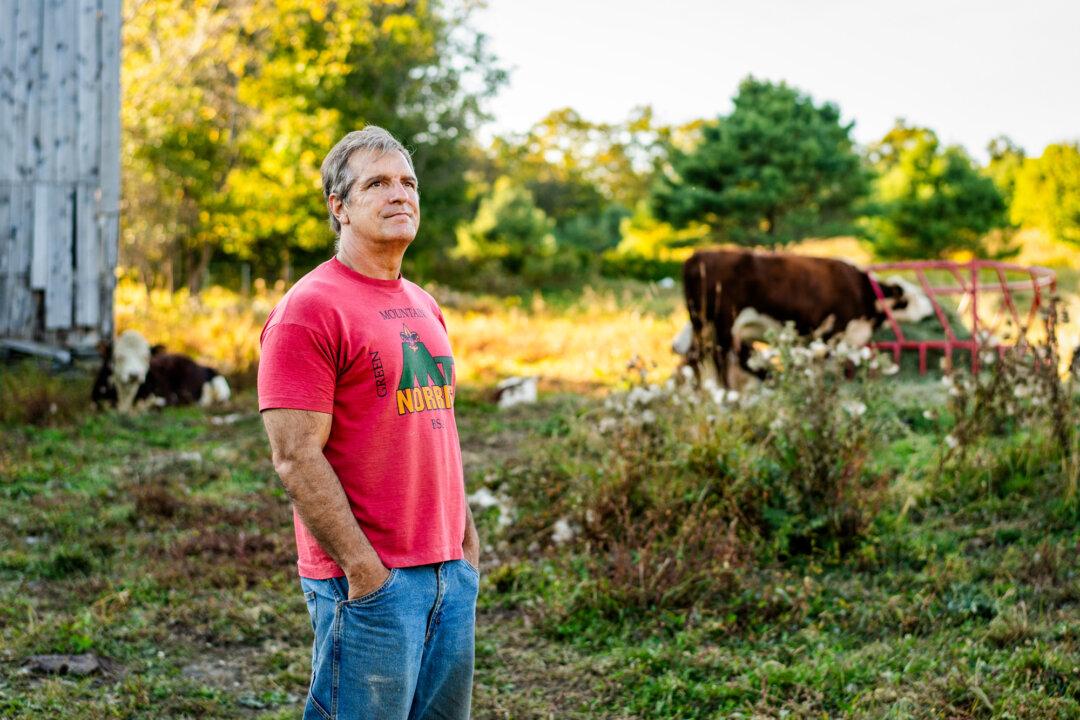
Farmer and lawyer John Klar at his homestead in Brookfield, Vt., on Sept. 12, 2025. Concerned about the impact of big agriculture and federal policy on U.S. farming and food supplies, the former tax attorney has become an advocate for small farms and regenerative agriculture. (Samira Bouaou/The Epoch Times)
He and his wife, Jacqui, were already raising two children, and a third was on the way.
“I said to my wife, ‘You know, my whole life, I’ve been living where the money is,’” Klar said.
“‘Whatever else happens, if I’m going to be sick, at least let’s go to Vermont. That’s where my heart is.’”
The couple bought a former dairy farm in Barton, Vermont, and built an artisanal raw milk and cheese facility.
“It might seem strange that a man who was suffering from debilitating pain would leave a sedentary job for a strenuous one, but I felt that I needed to be active to better deal with the pain,” he said.
Klar started with chickens, then added on—ultimately tending four draft horses, 40 pigs, 70 milking goats, 100 sheep, and 20-odd beef and dairy cows. To locals, he became known as “Old McDonald.”
Self-sufficiency became a pursuit of its own, he said.
“Jacqui and I would play a game of seeing how many weeks we could go without visiting the grocery store, a tradition we learned was practiced by many Vermont farmers for generations,” he said.
After a couple of relocations, in 2016, they settled on their current property in Brookfield, where Klar is surrounded by farmland that his mother’s family worked for generations.
That’s also when Klar began his journey into advocacy.
Halves of Beef and a Victory
At the time, he was advertising halves of beef on Craigslist.
One day, he recalled, a car pulled into his driveway and out stepped a Vermont Agency of Agriculture, Food, and Markets meat inspector.
“He lectured me how selling this meat was illegal; that I could only sell whole animals and not halves. He said I could sell by live weight and not by hanging weight,” Klar said.
Klar had never had a customer who wanted to buy an entire cow, he said, because of the cost and storage required.
The encounter left Klar furious and motivated.
“I told Jacqui that most small farmers can’t afford to hire a lawyer to fight something like this, and most lawyers wouldn’t understand farming like a farmer himself,” he said.
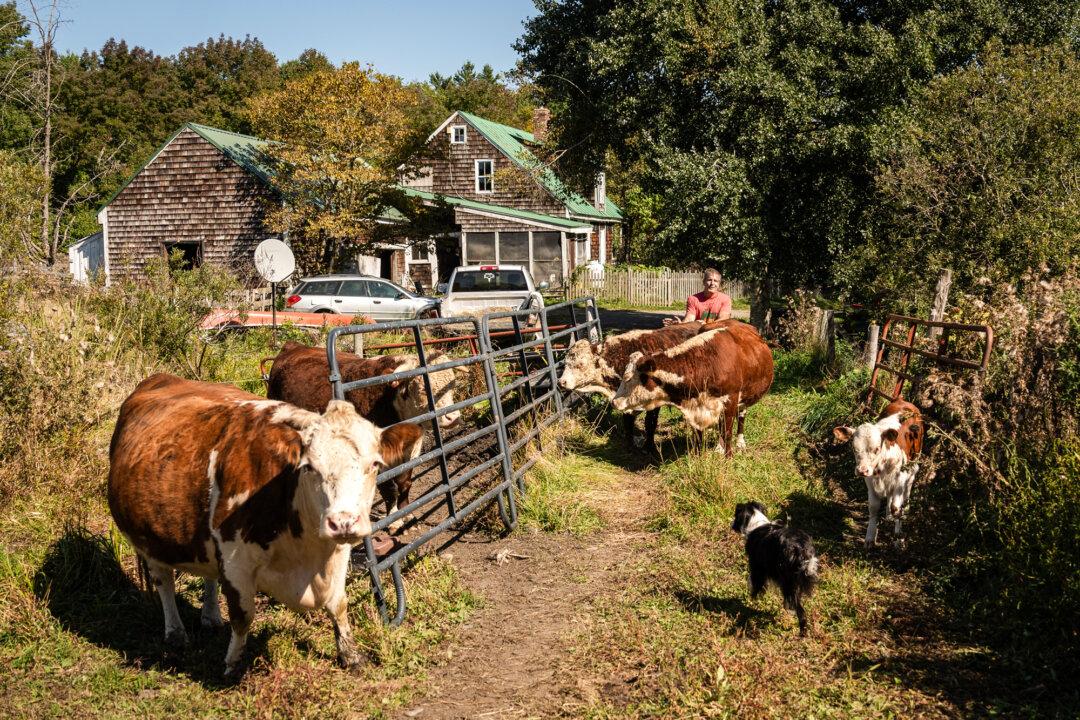
Farmer and lawyer John Klar with his Hereford cows at his homestead in Brookfield, Vt., on Sept. 12, 2025. Klar raises grass-fed organic beef and lamb using regenerative farming practices. (Samira Bouaou/The Epoch Times)
He refused to comply.
Instead, he called a news conference on the farm and announced that he was going to keep selling halves of beef. He said that proposed health and safety laws “were an unconstitutional farce.”
“I challenged them to arrest me so I could prove in court the laws were unconstitutional,” he said.
Klar then gathered a group of farmers, slaughterhouse operators, and custom processors to attend a Vermont state Senate agriculture committee hearing and testify against proposed legislation on farm slaughter restrictions.
They won, securing a repeal that meant farmers were able to sell halves and quarters legally.

That was the beginning of his fight for small farmers, he said, and it also gave him a clearer purpose in his own farming.
“I now sell my own animals so that I can fight for other people to keep theirs and to make it more economically viable for them,” he said.
“It’s not just the right to have an animal, but it’s also to work on removing regulations and subsidies that favor the big guys and put the small farms out of operation.”
When Klar ran for governor in 2020, farming was the center of his campaign against incumbent Gov. Phil Scott.
He touted a plan to cut taxes and regulations for farmers, which he said would have far-reaching benefits for the rest of the state’s economy. Klar detailed his plan in a document that he called the Vermont Farming Manifesto.
He eventually dropped out of the race but continued his advocacy.
In “The War on Farmers,” to be published early next year, Klar details how every year, more family farms are vanishing, replaced by corporate giants and imported products.
He said he believes that the U.S. food supply is becoming a tool of control.
“If Americans don’t stand up for their farms, they surrender control over their most basic human need,” he said.
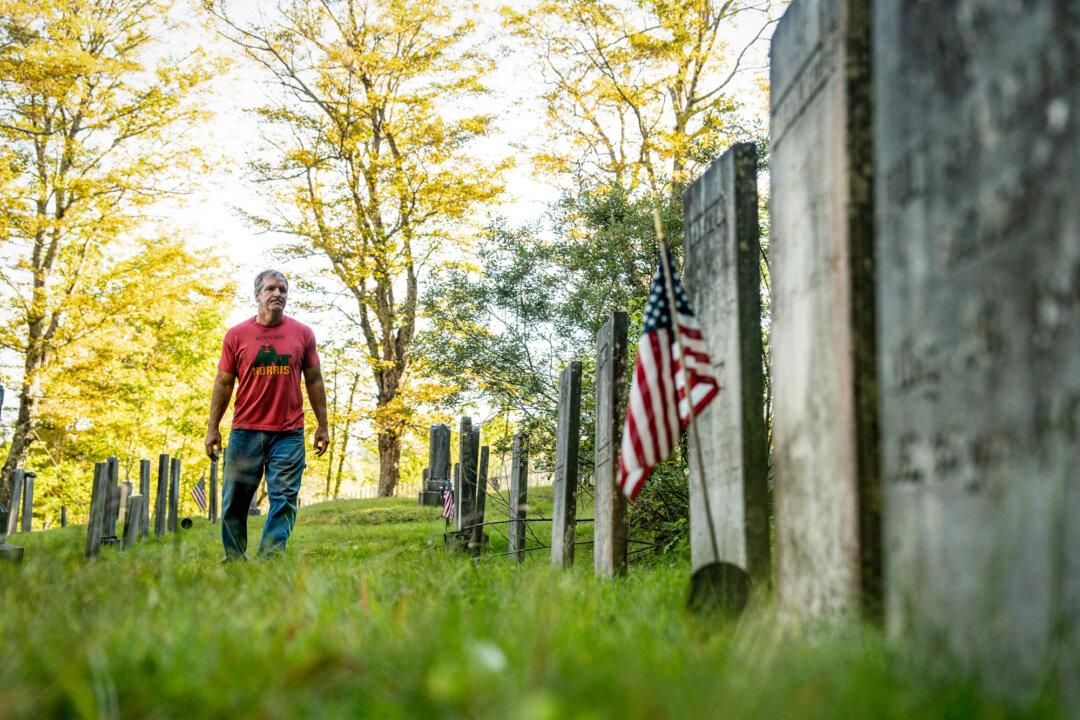
Farmer and lawyer John Klar walks through the family cemetery near his homestead in Brookfield, Vt., on Sept. 12, 2025. Klar returned to the Green Mountains of Vermont in the late 1990s to buy a property surrounded by farmland that his mother’s family worked for generations. (Samira Bouaou/The Epoch Times)
Klar’s focus within the MAHA movement is to encourage the sourcing of local foods, build the volume of local farmers, and support healthier foods in hospitals and public schools.
Earlier this year, he joined other MAHA advocates in sending a letter to Agriculture Secretary Brooke Rollins, imploring her to adopt policies that support organic and regenerative farming, restore soil and food quality, and help struggling small farms nationwide.
He was also appointed to the MAHA Action advocacy group’s Strategic Health Initiative team.
Klar said MAHA Action has been supporting governors across the country with rural health initiatives designed to secure federal subsidies under the Rural Health Transformation Program, which was authorized by the One Big Beautiful Bill Act.

The program allocates $50 billion over five years with the aim of transforming rural health care in the United States by improving quality, access, and health care delivery ecosystems.
In October, Klar was part of a group of MAHA movement representatives who met with the Environmental Protection Agency to discuss concerns about pesticides and other agricultural pollutants.
They reinforced their opposition to ongoing efforts that would grant legal immunity to chemical manufacturers, and they talked about the risks of the herbicides glyphosate and atrazine, among other issues.
The group, however, left disappointed.
“We were dismayed to learn that they were not prepared to make any statements on MAHA initiatives,” Zen Honeycutt, founder and executive director of Moms Across America, posted on social media on behalf of the group after the meeting.
“At a time when our children and American loved ones are exposed to tens of thousands of chemical exposures a day, and are therefore in the midst of a health crisis.”
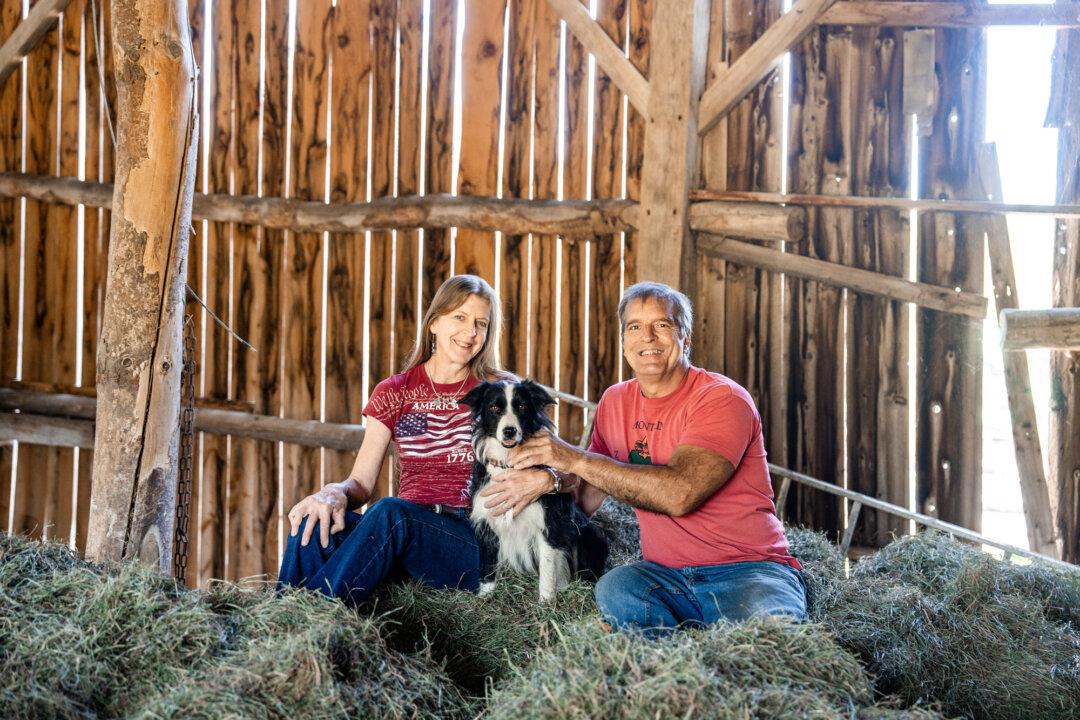
Farmer and lawyer John Klar and his wife, Jacqui, sit with their dog Bea in their barn in Brookfield, Vt., on Sept. 12, 2025. (Samira Bouaou/The Epoch Times)
Historical Roots
The United States’ farming problems trace back to just after World War II, according to Klar. It was a time when farmers acquired numerous new tools to care for cows more efficiently. Instead of raising them in pastures, many opted for large factory-style farms known as concentrated animal feeding operations.
Animals at these farms are housed indoors and fed grain crops that mostly include corn and soybeans.
They grow faster, gain more fat, and reach maturity earlier. But these changes come at a cost.
“The livestock rarely, if ever, walk around in the sunshine or munch grass,” Klar said. “They spend most of their lives on concrete pads with machines to haul away their manure, and they drink from steel bowls, not streams.”
To counteract the health compromises of being confined in large populations, the livestock are often given growth hormones and antibiotics.
Klar said growing corn and soy causes its own environmental problems, because they are mostly produced using genetically modified organism technologies that rely on glyphosate, synthetic fertilizers, and “a plethora of herbicides, pesticides, and fungicides that kill soil microbes and pollute drinking water through field runoff.”
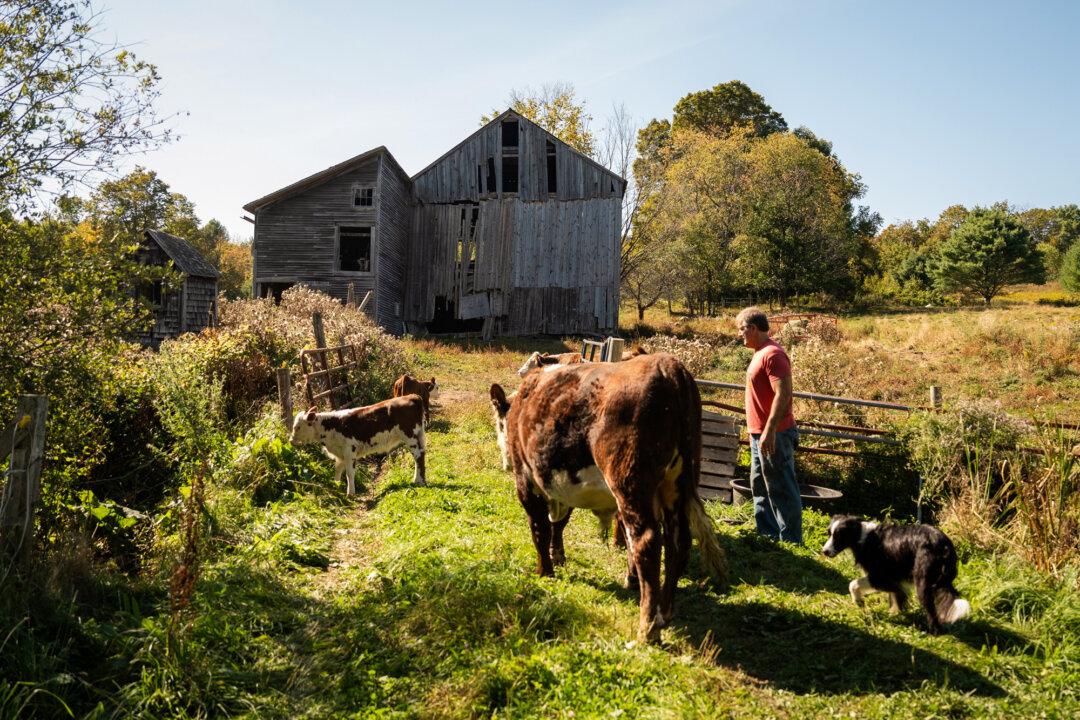
Farmer and lawyer John Klar with his Hereford cows at his homestead in Brookfield, Vt., on Sept. 12, 2025. Klar said many of America’s farming problems began after World War II, when new technologies pushed farmers toward large factory-style operations. (Samira Bouaou/The Epoch Times)
Igniting the Fire
Klar said his involvement with MAHA Action has “ignited an even stronger fire” to maintain his farm and dive deeper into advocacy.
“Corporations keep gaslighting the American public and claiming their chemicals are harmless, while agencies like the EPA are not responsive to making changes,” he said.
“More Americans are waking up to what’s happening. They’re reading labels, becoming more aware, and demanding change.”
Klar is writing his next book, titled “Welcome to the Revolution,” in which he is detailing the story of his evolution from practicing law to being a farmer and regenerative agriculture activist.
“It’s my purpose to do all I can to help small farms, grow our rural economy, and encourage a local farm-to-consumer mindset,” he said.
“That’s a win-win-win, and I’m all in.”