For Heidi Diestel, carving a golden-roasted turkey is not solely reserved for Thanksgiving Day.
“I never get tired of eating turkey because the way we raise it is healthy and has a lot of flavor,” she said.
A fourth-generation farmer, Diestel said her great uncle, Ernest, farmed turkeys in the 1920s and taught her grandfather the “family secrets.”
Her grandfather started Diestel Family Ranch in Sonora, California, in 1949, and the family began pasture-raising turkeys in 2010.
They use regenerative farming to raise the birds—a method that harkens back to a more traditional use of the land—eschewing chemicals in favour of actively nourishing the soil.
“Simply put, regenerative agriculture is a farming approach that focuses on improving soil health by using practices that mimic nature,” Diestel told The Epoch Times.
“This includes things like planting diverse crops, reducing soil disturbance, and avoiding harmful chemicals, which helps the soil store more carbon, water, and nutrients.”
The growth of the Make America Healthy Again (MAHA) movement has helped boost the profile of regenerative farming as a whole, and Americans increasingly want to know where their food comes from and how it is raised.
The family business only raises turkeys, producing around 350,000 birds in the run-up to Thanksgiving each year, Diestel said. She runs the farm with her brother, Jason, and her husband, Jared, who serves as president.
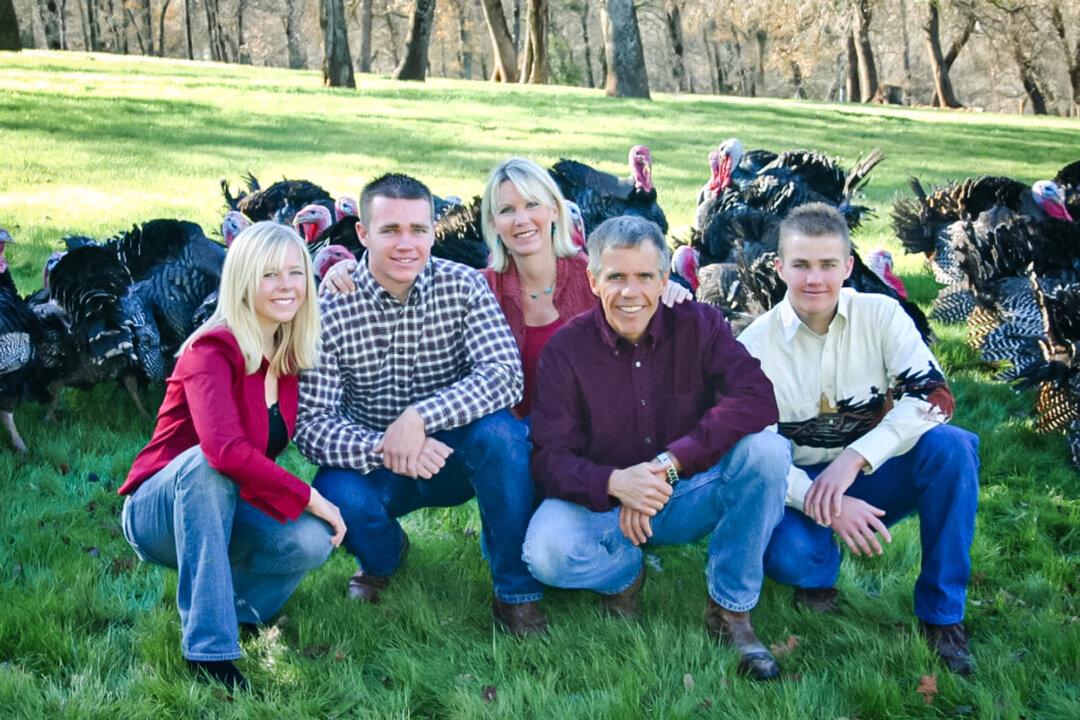
(L–R) Heidi, Jason, their parents Tim, and Joan Diestel and their younger brother at Diestel Family Ranch in Sonora, Calif. Heidi said her great-uncle Ernest raised turkeys in the 1920s and passed the “family secrets” to her grandfather, who founded Diestel Family Ranch in 1949. (Courtesy of the Diestel family)
She said Thanksgiving is their primary holiday, although Christmas and Easter also serve as busy times.
Diestel Family Ranch processes the turkeys on the farm for a customer base that includes Whole Foods Markets across the country, west coast-based retailers, and online consumers.
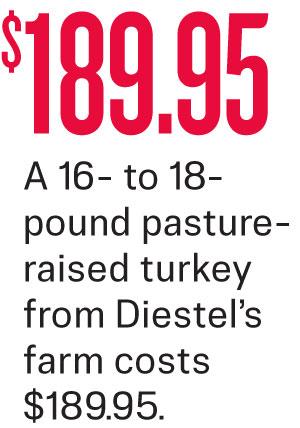
Regeneratively raised turkeys are more expensive than conventionally raised birds found in the grocery store. For example, a 16- to 18-pound pasture-raised turkey from Diestel’s farm is $189.95. The average price for a 16-pound frozen turkey is $21.50, according to the Farm Bureau.
Diestel points out that their products are free of gluten, dairy, artificial ingredients, preservatives, fillers, hormones, antibiotics, growth stimulants, casein, carrageenan, phosphates, and monosodium glutamate (MSG). The farm does not use chemicals, fertilizers, or pesticides.
The Diestel farm uses rotational grazing for its turkeys. They move the turkeys across different pasture areas, allowing the land to recover between grazing. The technique promotes soil health, reduces the risk of overgrazing, and enhances the biodiversity of the pastureland, Diestel said
Across the country, in western Ohio, John Filbrun operates his 88-acre farm, The Maker’s Meadow, much the same way.
When the Filbrun family farm started in the late 1960s, they raised dairy cows and grew corn, soybeans, and other crops using conventional farming methods. They transitioned to regenerative farming methods in 2002.
It took several years to restore the land and rebuild the soil, which had been depleted by conventional farming practices, Filbrun said.
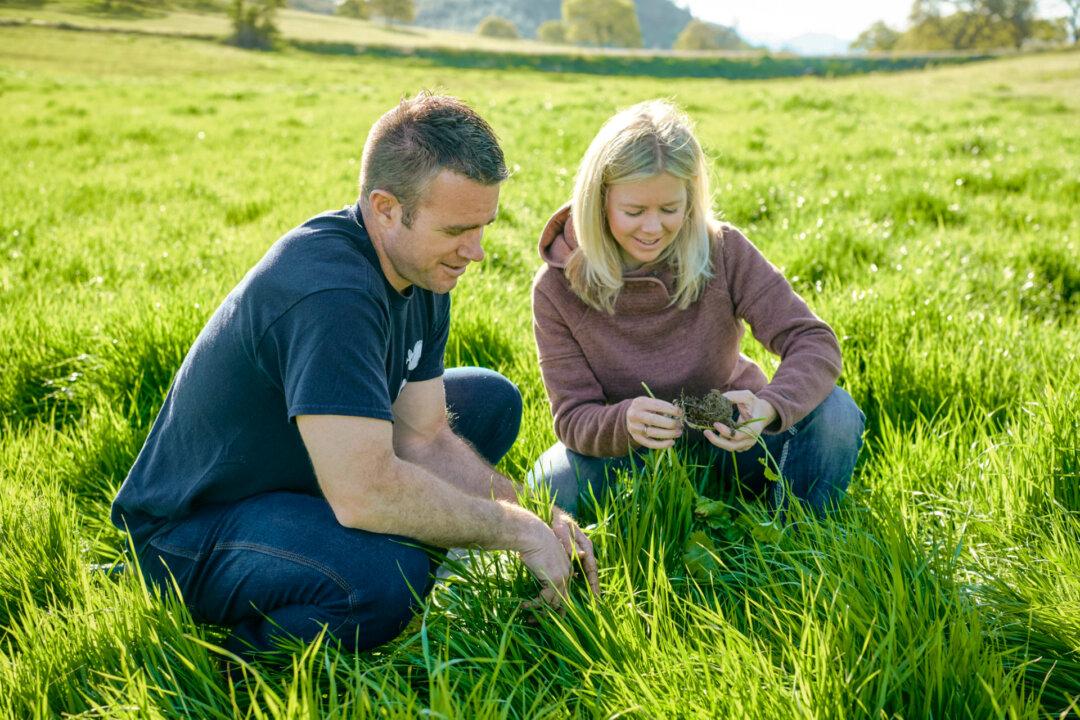
Siblings Jason and Heidi Diestel are fourth generation farmers who help operate Diestel Family Ranch in Sonora, Calif. Regenerative farming has up to five times more organic matter and seven times higher soil heath scores, according to a study published in 2022. (Courtesy Diestel family)
They accomplished this, Filbrun said, by incorporating five principles: reducing disturbance of the land (without tilling and chemicals); keeping the soil covered, preserving the living root in the soil; increasing plant diversity; and incorporating livestock for animal diversity.
Now, Maker’s Meadow raises 100 percent grass-fed beef and lamb, along with pasture-raised chicken, turkey, and pork that is supplemented with organic seeds and grains. They raise their meat without pesticides or herbicides.
He calls turkeys “land healers” because “their light feet don’t compact the soil.”
“Their natural curiosity keeps them constantly scratching and pecking, helping to aerate the ground and spread nutrients. They reduce pest pressure, cycle nutrients, and add diversity to the farm ecosystem,” Filbrun told The Epoch Times.
Filbrun said regenerative livestock farming is built on respect—"for the animal, the soil, the ecosystem, and ultimately, the eater.”
Under the regenerative farming model, animals are not “confined to small spaces and force-fed grains their bodies were never designed to digest,” he said.
Rotational grazing mimics the natural movement patterns of wild herds, Filbrun explained. That improves the soil and gives livestock the freedom to express their instincts.
Regenerative practices result in “prairie effects” that encourage taller grasses, healthier soil and animals, and abundant wildlife, Filbrun said.
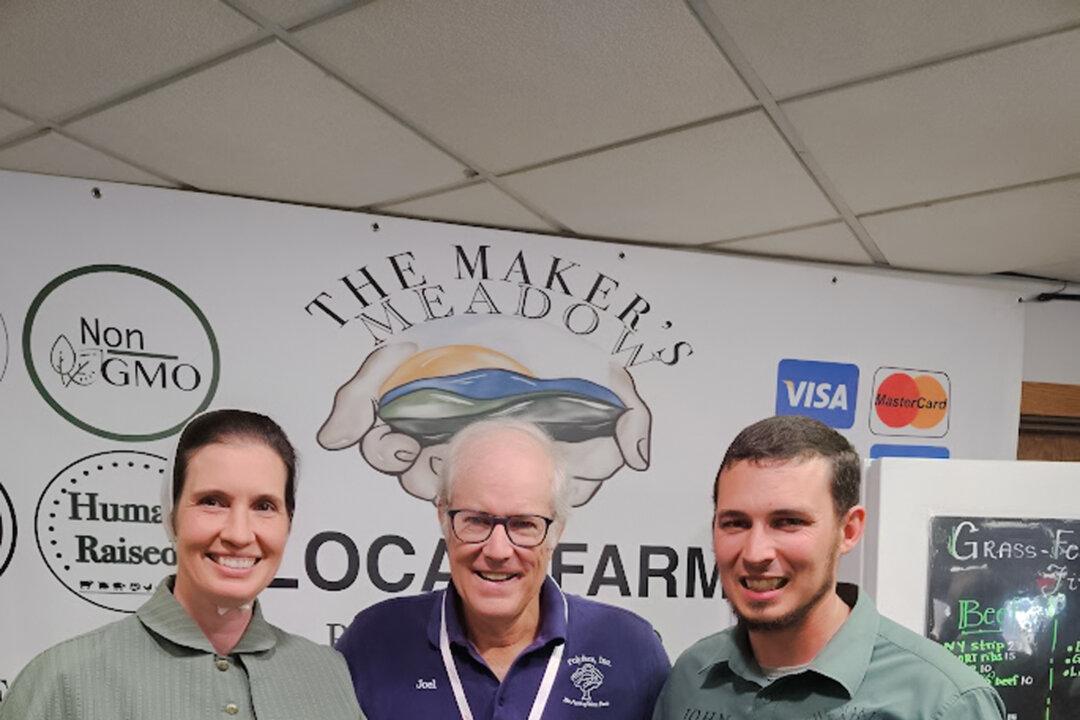
John and Jaima Filbrun, who run Maker’s Meadow, a regenerative farm in West Alexandria, Ohio, pose with regenerative farming expert Joel Salatin. The Filbrun family has owned the farm since the late 1960s, evolving from dairy cows and row crops to 100 percent grass-fed beef and lamb, plus pasture-raised chicken, turkey, and pork, supplemented with organic feed. (Courtesy of the Filbrun family)
Diestal Family Farms supercharges its rotational grazing by bringing other animals onto its 2,000 acres.
“We work with farmers who have cows, goats, and sheep,” Diestel said.
“Each animal interacts with the soil and grazing practice. You need all the animals to work the ground and contribute manure into the soil.”
Diestel added that the farm continues to incorporate regenerative practices such as “planting almost two miles of trees, grasses, and flowering shrubs on our farms.”

“Choosing regeneratively raised turkey isn’t just a nod to sustainability—it’s a science-backed way to nourish your family with more nutrient-rich food while supporting farming systems that protect the planet for future generations,” Diestel said.
Regenerative livestock don’t need antibiotics to stay healthy, because they are “not crammed together in stress-filled environments,” Filbrun said.
“This kind of freedom creates resilience. Animals raised regeneratively—on diverse, living landscapes—can adapt and thrive. And that resilience ripples through the food system, from the soil microbes to the family dinner table,” he said.
Healthy turkeys start with healthy soil, he says.
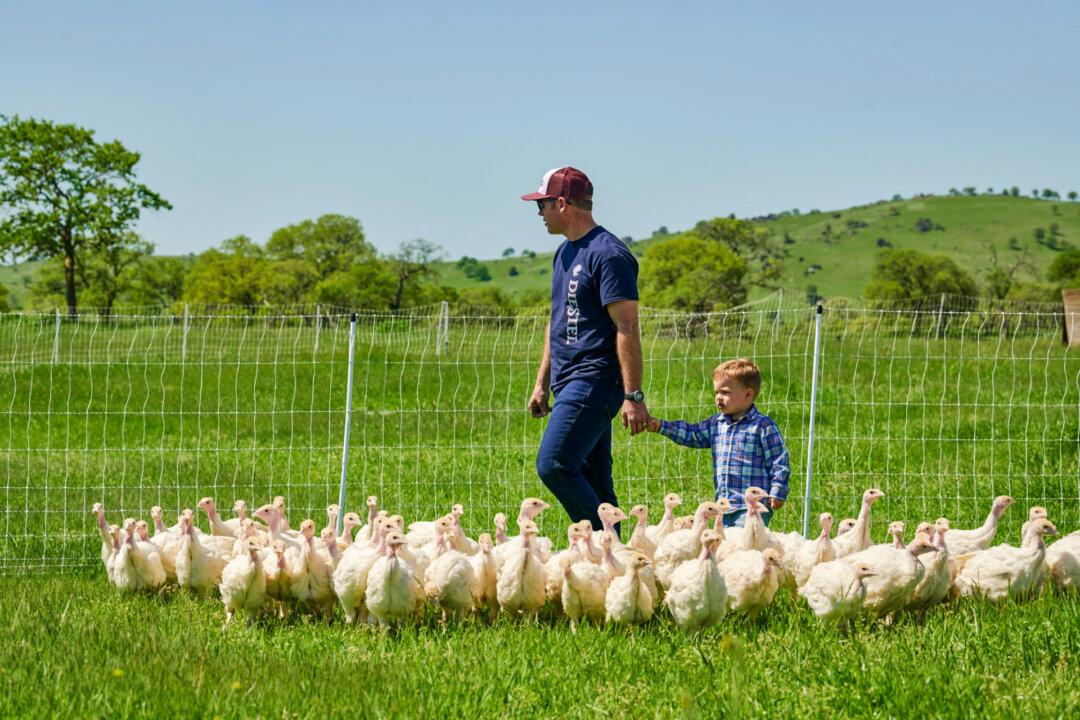
Jason Diestel walks a pasture with his son, Baren, at Diestel Family Ranch in Sonora, Calif., a fourth-generation turkey farm that uses regenerative methods. (Courtesy of the Diestel family)
“Before the first turkey poult (baby turkey) arrives on the farm, we’ve spent years building the foundation under their feet: rotating animals across pastures, planting diverse cover crops, and allowing the land to rest and recover. This soil is full of life—worms, microbes, mycorrhizal fungi—all working together to create rich, living ground,” Filbrun said.
“This isn’t just good for plants. It’s good for turkeys. Because when birds live on healthy pasture, they get to express their natural behaviors: foraging, scratching, chasing bugs, and soaking up the sunshine.”
A turkey poult’s life begins in a cozy brooder. They are fed an organic, non-GMO starter feed. When they are about four to six weeks old, Filbrun said, the birds transition to the pastures.

“Every day or two, we move their shelter to a fresh patch of grass. They eat greens, insects, and seeds. The constant rotation means they’re never living in their own waste, and the land beneath them gets fertilized in return,” Filbrun said.
“It’s a symbiotic relationship: the turkeys get what they need from the land, and the land gets what it needs from the turkeys.”
Diestel Family Ranch has connected with third-party-certified regenerative corn and soy farms to source feed for its turkeys.
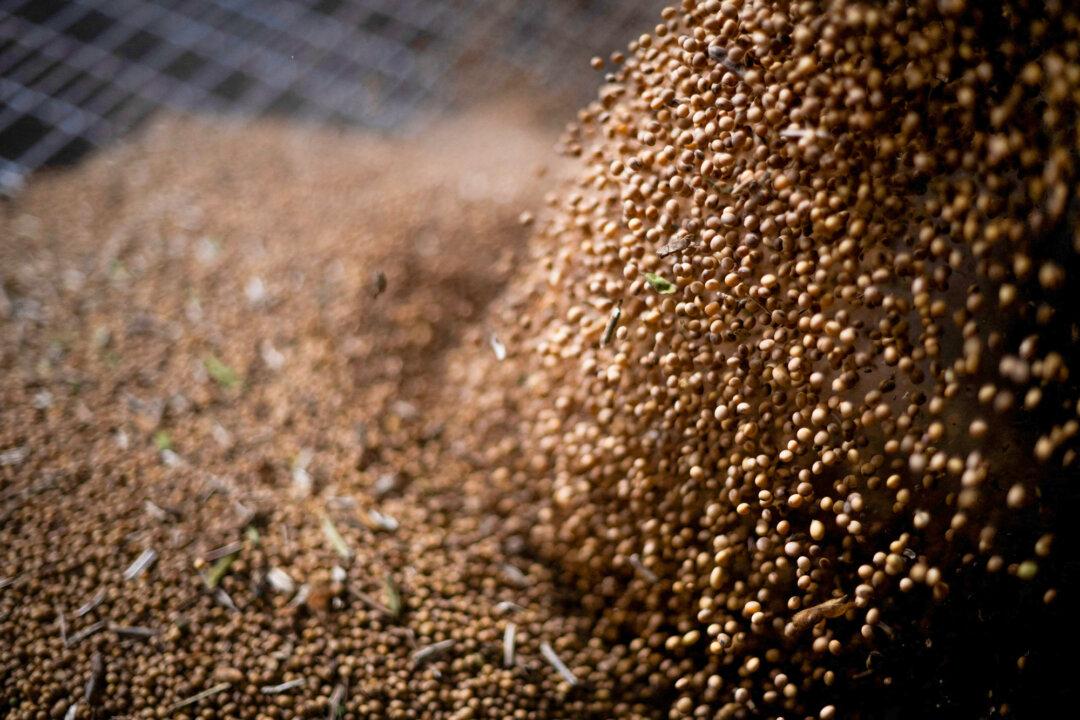
Soybeans are unloaded from a truck at a local grain dealer in Queen Anne, Md., on Oct. 10, 2025. (Roberto Schmidt/AFP via Getty Images)
“We provide a higher quality product to the consumer, and they can taste a difference,” Diestel said. “We’re seeing a cultural shift where people want to know where their food comes from and how it’s raised, and that’s a benefit for farms that use regenerative practices.”
The first year farms were able to label turkeys as certified organic was in 1999, and Diestel said her family helped set the standards
In 2024, the Diestel Family Ranch became the first turkey producer to receive Regenified certification, the industry gold standard of regenerative practices and ecological health.
Regenified’s seal is the first third-party regenerative program to be recognized and accepted by U.S. Department of Agriculture’s Food Safety and Inspection Services for single and multi-ingredient products.
Filbrun’s birds are similarly priced to those on the Diestel farm—and people are willing to pay.
“We’re finding that more people want quality and taste because they are aware of what chemicals have done to soil and feed at conventional farms,” Filbrun said. “More customers are changing the way they eat their turkey and other meats.”