
Hiring momentum continued in May as the economy added 172,000 new jobs—much more than expected—and some economists are optimistic about June’s employment data.
Indicators over the past few months suggest that the labor market is far stronger than it was last year, despite a three-month-old war in Iran and renewed inflation risks.
The jobless rate remains low, vacancies have accelerated, and payroll gains have broadened.
“If the economy can continue to create jobs and the unemployment rate can stay low ... all while keeping inflation under control, we could be in the sweet spot,” Chris Zaccarelli, chief investment officer for Northlight Asset Management, said in a note emailed to The Epoch Times.
But while the headline numbers surprised market watchers, the under-the-hood numbers might have also presented a more complete outlook for employment conditions.
World Cup Fever
Over the past year, healthcare has been the dominant sector for job creation. The latest tranche of figures suggests growth could be widening to other sectors.
Seventy thousand jobs were added in the leisure and hospitality sector, accounting for 41 percent of last month’s gains. This is up from 30,000 in April and 44,000 in March.
World Cup fever was the likely driver for the big reading, according to economists at RBC Economics.
“While there appears to be some broadening of job gains and cyclical momentum, leisure and hospitality likely saw a temporary boost from the upcoming World Cup,” RBC Economics said in a June 5 note. “This could be a story of one-off hiring ahead of major World Cup events in the U.S.”
Estimates suggest that the World Cup—running from June 11 to July 19—could generate as much as $76 billion in U.S. gross domestic product gains.
The bureau reported that 70 percent of jobs were from the private sector, including healthcare and social assistance (47,200), construction (17,000), manufacturing (7,000), and professional and business services (6,000).
Government payrolls also registered the third consecutive monthly gain, climbing by 52,000. This was largely reflected by employment growth in local government.
The Unemployment Situation
Economists have frequently described the labor market as being stuck in a “low-fire, low-hire” climate, meaning that companies are neither laying off employees nor expanding personnel.
May’s jobs report shed light on the overall unemployment situation.
The main headline was the unemployment rate holding steady at 4.3 percent, continuing to hover around historically low levels.
Economic observers say that the jobless rate should remain low as the breakeven rate—the number of new jobs needed to keep the unemployment figure steady—could be close to zero.
Short-term unemployment—the number of people out of work for fewer than five weeks—declined by 286,000 to 2.2 million in May.
Conversely, more people are staying unemployed for an extended period. The long-term unemployment rate—jobless for 27 weeks or longer as a percent of total unemployed—was 27.5 percent, the highest since December 2021.
“The situation for many unemployed job seekers is grim, even in the midst of impressive monthly job gains,” Laura Ullrich, director of economic research at Indeed Hiring Lab, said in a June 5 research note.
The continuing jobless claims—a weekly gauge of unemployed individuals currently receiving benefits—have been on a downward trend since late last year. This statistic can be used as a proxy for either determining the difficulty out-of-work individuals may have in finding work or more people exhausting unemployment benefits, which many states cap at 26 weeks.
Revisions
Revisions to previous months’ employment data have captured sizable attention in recent years, mainly because of how large the downward adjustments have been in these reports.
New bureau data suggest that changes could be heading in the opposite direction.
Employment for March was revised up by 29,000, to 214,000 from 185,000. April’s print was adjusted up by 64,000, to 179,000 from 115,000.
The two-month total was 93,000.
Statisticians make routine revisions to the data after they receive information or additional reports from businesses and government agencies, as well as recalculate seasonal factors.
While the Bureau of Labor Statistics has not overhauled how it collects data, they have made modest changes, particularly to the birth-death model.
Officials updated the birth-death model—new businesses that open and existing firms that close—to rely more on current sample data rather than estimates to obtain a more accurate reading.
Still, challenges remain for the federal agency, mainly the low response rate.
President Donald Trump fired the Bureau of Labor Statistics commissioner and appointed William Wiatrowski as the acting chief. The administration had chosen top economist E.J. Antoni for the job before the White House withdrew its nomination.
Inflation and Wages
Wage growth was mixed in May.
Average hourly earnings rose by 0.3 percent—in line with economists’ expectations—up from 0.2 percent in April.
On a year-over-year basis, average hourly earnings eased to 3.4 percent, from 3.6 percent, marking the lowest rate of earnings growth since 2021.
Real (inflation-adjusted) earnings have contracted, according to the Bureau of Labor Statistics.
From March to April, real average hourly earnings fell by 0.5 percent, and real average weekly earnings dipped by 0.2 percent.
On a 12-month basis, real average hourly earnings have slipped by 0.3 percent.
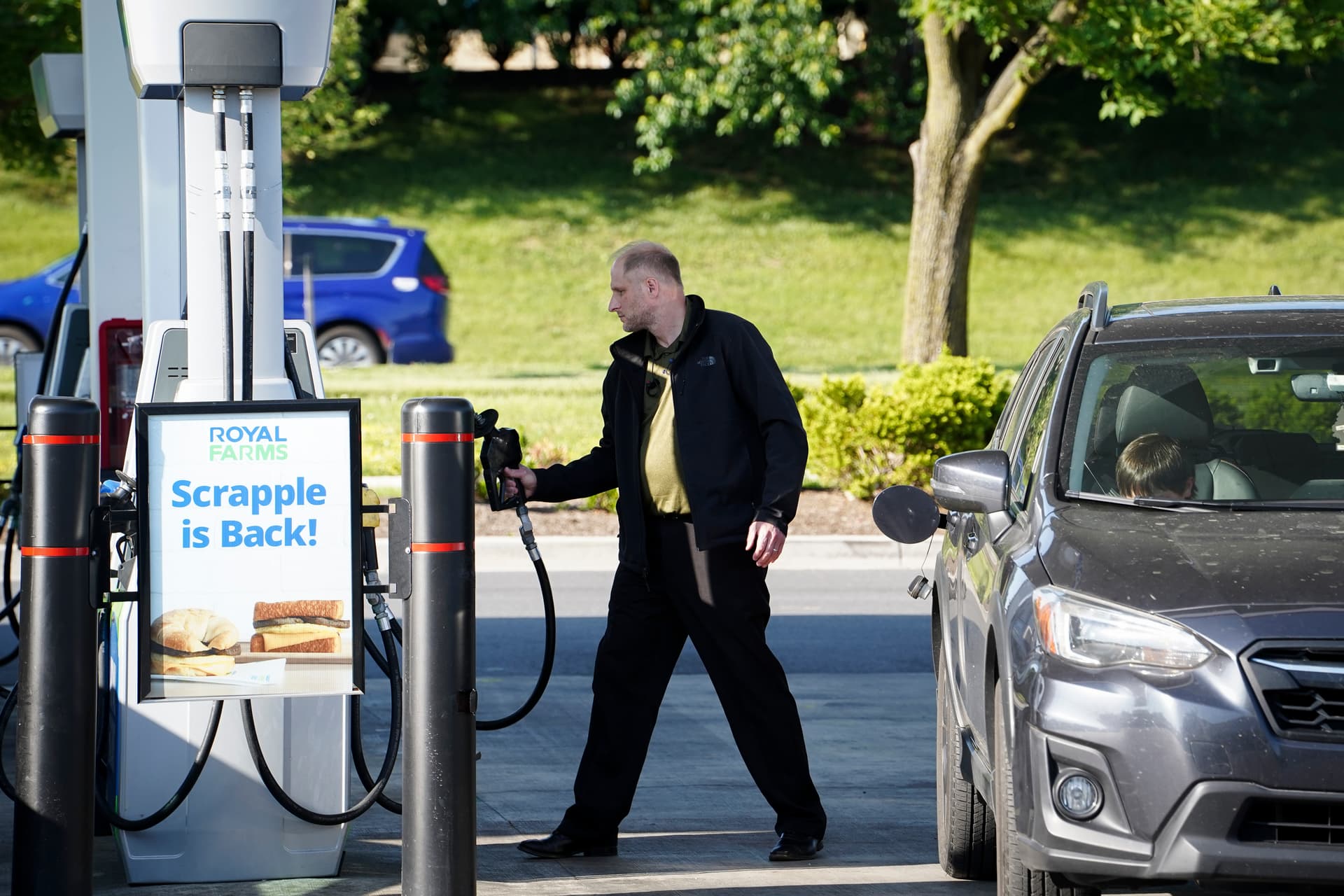
With war-driven price pressures intensifying, earnings could fall further behind as the year goes on, said Bill Adams, chief U.S. economist at Fifth Third Commercial Bank.
“Earnings growth lagged the cost of living for a second month in a row in May,” Adams told The Epoch Times in an emailed note.
“The longer the conflict drags on, the bigger its headwind will be for the cost of living, the job market, and the economy.”
The Cleveland Federal Reserve’s Nowcasting Model forecasts that May’s consumer inflation rose by 0.5 percent.
No Room for Error
Since the severe winter storm that triggered an abysmal February jobs report, the labor market has been navigating through a series of headwinds, from the Iranian conflict to the energy price shock.
While some might argue that something has to give, others believe that it would take a lot for job losses.
One measure that RBC economists are monitoring is the Sahm Rule, named after former Federal Reserve economist Claudia Sahm.
The core concept is that a recession could be triggered when the three-month moving average of the unemployment rate climbs by 0.5 percentage points or more above its lowest point in the previous 12 months.
“We estimated that it would take nearly 1 million job losses to trigger the Sahm Rule, and if May data is any indication, we are not heading down that path,” they wrote.
At the same time, U.S. firms are facing higher input costs, whether from tariffs or higher energy prices.
The Fed’s latest Beige Book—a summary of economic conditions across the central bank’s 12 districts—suggests that businesses are employing various “inflation mitigation strategies.” This can include absorbing or cutting costs through layoffs.
Based on the recent producer price index—a gauge of prices paid for goods and services by companies and passed onto customers—firms are choosing to raise prices rather than lay off staff.
“If pricing power is limited, however, cracks could form in the labor market as collateral damage,” RBC economists noted.