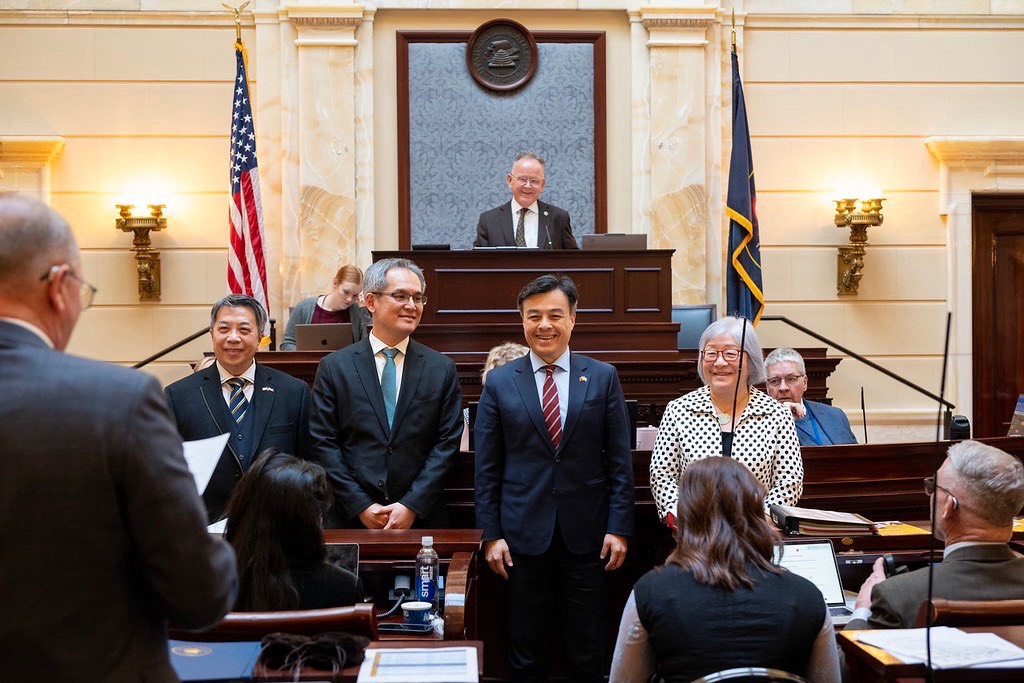
The Utah State Senate passed a pro-Taiwan resolution on Feb. 19, expressing support for Taiwan’s meaningful participation in international organizations.
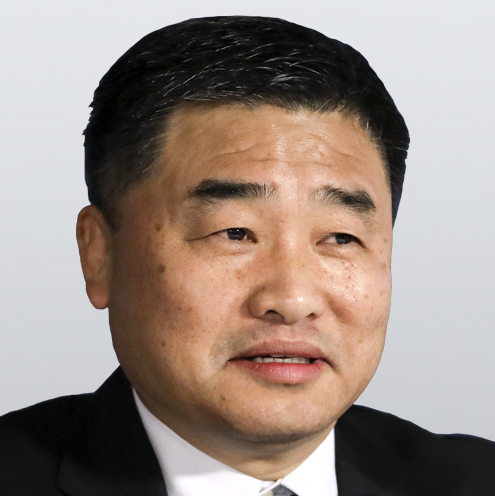
Director General Wu Chih-hsiang of the Taipei Economic and Cultural Office (TECO) in San Francisco attended the session in person to witness the passage and received a warm welcome from the state senators present.
TECO serves as Taiwan’s de facto embassy in the United States.
The Utah resolution was introduced by state Sen. Scott Sandall and was unanimously approved by the senators in attendance, according to TECO. It was subsequently signed by Senate President Stuart Adams.
The resolution states that this year marks the 47th anniversary of the enactment of the Taiwan Relations Act. Based on this legal foundation, the Utah State Senate will continue to strengthen and deepen exchanges between Taiwan and Utah in areas such as religion, economics, and culture, the resolution adds.
It also mentions the importance of cooperation among Taiwan, the United States, and Utah in technology, higher education, and other fields.
The resolution states that Utah and Taiwan share core values such as religious freedom, democracy, human rights, the rule of law, and a free-market economy. Since 1956, the Church of Jesus Christ of Latter-day Saints, headquartered in Utah, has sent more than 43,000 missionaries to Taiwan, it states.
Utah and Taiwan established an official sister-state relationship in 1980, followed by more than four decades of friendly ties. Over the years, this relationship has expanded beyond the state level to include sister-city and sister-county partnerships.
Salt Lake City and Taiwan’s Keelung City established a sister-city relationship in 1979, focusing on cultural exchange, education, and municipal cooperation. Provo has also maintained long-standing exchanges with Taiwanese counterparts, particularly in connection with academic and cultural programs linked to Brigham Young University.
In addition, Utah’s Murray City, West Valley City, and Salt Lake County have sister-city or sister-county relationships with Taiwan’s Chiayi City, Nantou City, and Nantou County, respectively. Over the years, these relationships between local governments in Utah and Taiwan have facilitated exchanges in agriculture, local governance, and community development.
These partnerships have been sustained through regular official visits, student exchange programs, business delegations, and cultural initiatives.
The resolution also notes that Taiwan was the first country to enter a reciprocal driver license agreement with Utah, allowing those with a Taiwanese driver license to drive in Utah and vice versa and making it easier for Taiwanese foreigners to do business in the state.
Director General Wu, representing the Taiwanese government, expressed gratitude to the Utah State Senate for its support of the Taiwan-Utah partnership. He said this initiative will help Taiwan advance its participation in international organizations, further strengthen Taiwan–U.S. cooperation, promote global well-being, and jointly safeguard Taiwan’s democracy and freedom.