
The Environmental Protection Agency (EPA) has partially disapproved a California regulation that imposes stringent vehicle emission standards on heavy-duty vehicles running in the state irrespective of where these vehicles were registered, the agency said in a Jan. 27 statement.
At issue is California’s Heavy-Duty Inspection and Maintenance (I/M) Regulation under the Clean Air Act (CAA). The regulation mandates heavy-duty vehicles undergo periodic testing and meet other compliance requirements to ensure their emission control components are not malfunctioning, according to the California Air Resources Board (CARB).
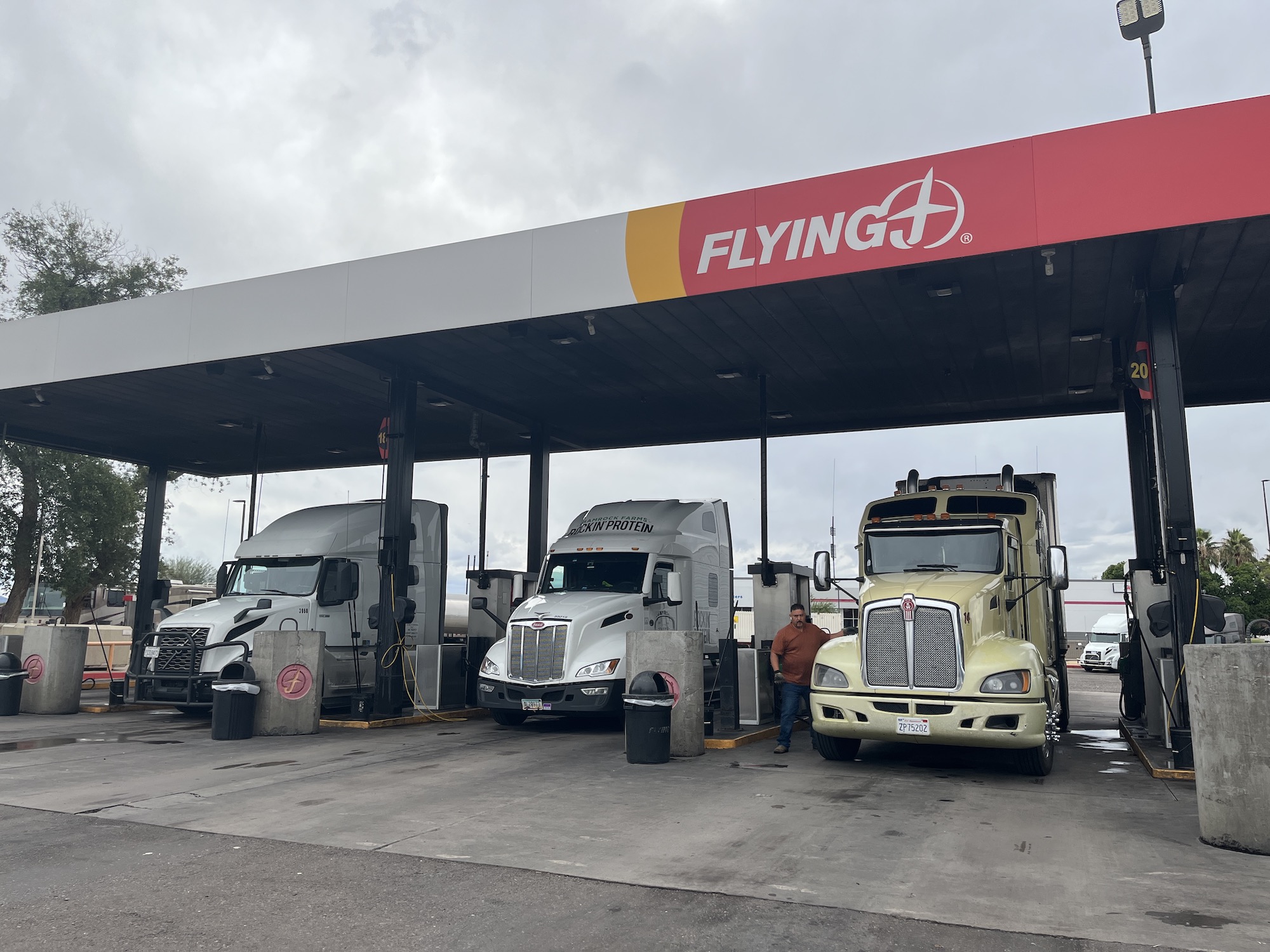
The rule applies to almost all non-gasoline vehicles with a gross vehicle weight rating of more than 14,000 pounds, except for zero-emission ones. All vehicles that operate on California’s public roads and highways are subject to these regulations “even if they are not registered in California,” CARB said. The regulation began to be phased in from 2023.
CARB submitted the I/M regulation for review by the EPA in December 2022 as a revision to its State Implementation Plan (SIP), according to a policy document from the EPA. SIP is a collection of documents and regulations used by a state to fulfill the requirements under CAA. The EPA is required to review and approve SIPs under CAA.
In its latest statement, EPA said it determined that California’s “unprecedented attempt” to establish an I/M program in its SIP for all heavy-duty vehicles that pass through the state may violate federal law.
“Specifically, EPA determined that California failed to provide necessary assurances as required by Section 110 of the CAA, that implementing the Regulation would be consistent with the U.S. Constitution’s Commerce Clause, which prevents states from interfering with interstate and international trade.”
EPA partially approved the I/M program for only vehicles registered within California, disapproving the law’s applicability on vehicles registered out of state.
CARB argues that under the CAA, the board is responsible for developing statewide programs aimed at cutting down toxic pollutants emitted by mobile sources. Heavy-duty diesel vehicles with more than 14,000 pounds in weight are “major contributors” to the state’s air quality issues.
The board projected that I/M regulations, when fully implemented, would cut nitrogen oxide emissions statewide by more than 81 tons per day, and particulate matter emissions by 0.7 tons per day in 2037. “Together, these emissions reductions will result in over 7,500 avoided premature deaths,” it said.
In its policy document, EPA highlighted that, unlike all prior CARB regulations, the I/M rule would apply to vehicles registered out-of-state and out-of-country that operate in California “for almost any length of time.”
As such, the cost of additional emissions reduction in California is borne by vehicles registered outside the state, with California achieving “localized benefits” from this measure, the document said.
EPA clarified that the Clean Air Act does not permit states to outsource the costs of emissions reductions within their borders onto other states, unless expressly authorized.
“The Trump EPA will never back down from holding California accountable and stopping them from imposing unnecessary regulations on the entire nation. If California had its way, prices would skyrocket for truckers and businesses across America. Affordable trucks are vital for keeping food and goods moving and prices low for families,” EPA Administrator Lee Zeldin said.
“Americans didn’t vote for California’s policies to be imposed nationwide. They voted for President Trump’s policies that put working families first.”
The Epoch Times reached out to CARB for comment but did not receive a response by publication time.
Meanwhile, the EPA is looking at a wider crackdown on nationwide emissions regulations.
In July, the agency released a proposal to rescind its 2009 Endangerment Finding that regulates greenhouse gas emissions from vehicles. The Endangerment Finding provided the legal foundation for many climate rules.
EPA argued that climate regulations impose major costs on America’s traditional manufacturing industry and limit people from having affordable car options.
“With this proposal, the Trump EPA is proposing to end 16 years of uncertainty for automakers and American consumers,” Zeldin said at the time.
This month, EPA’s proposal to reconsider the Endangerment Finding was submitted to the Office of Management and Budget for review.