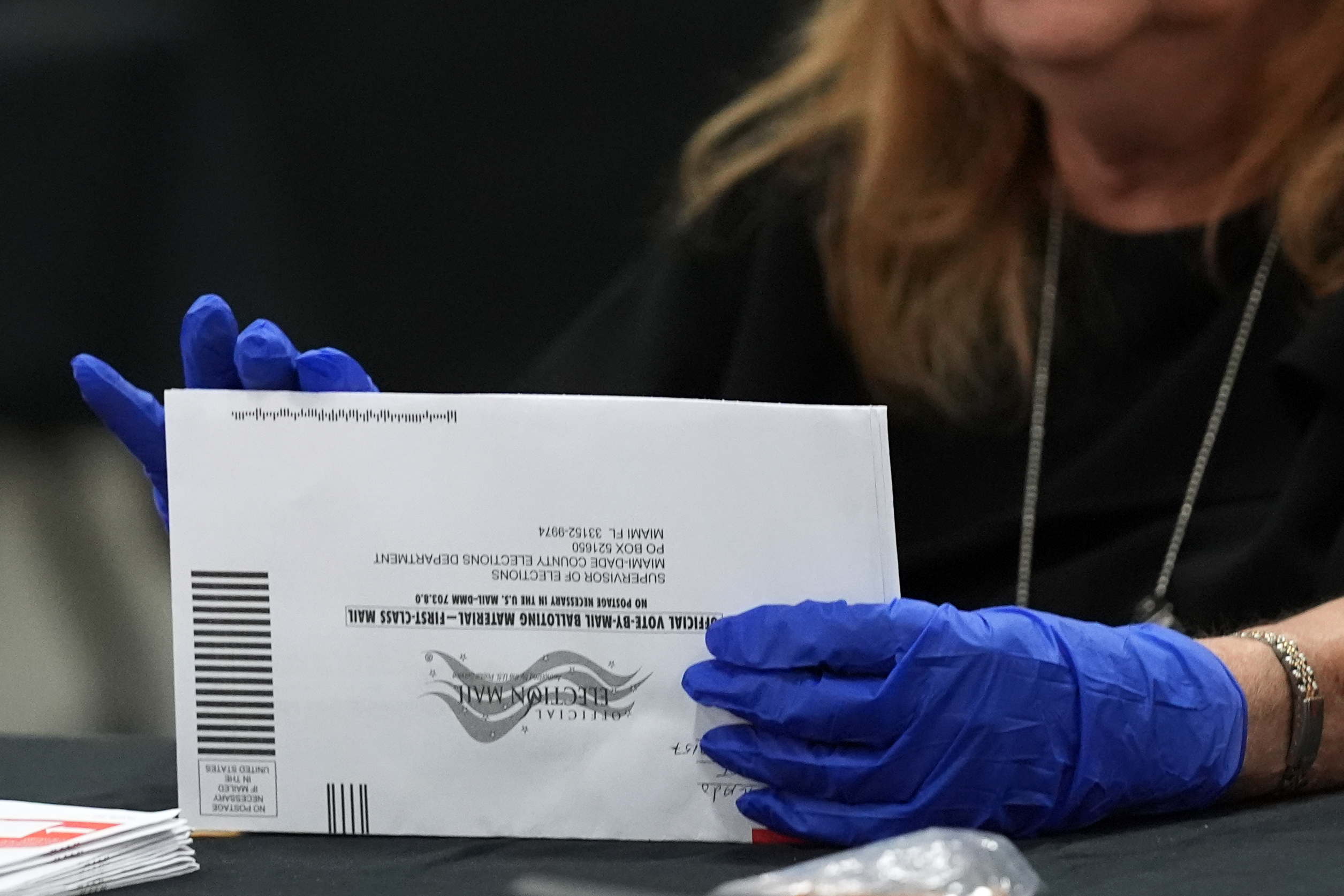

A group of attorneys general for 24 Democrat-led states and the District of Columbia filed a new lawsuit on Aug. 26 to block the U.S. Postal Service (USPS) from implementing a set of rules that restrict mail-in voting.
The rules, stemming from an executive order by President Donald Trump, require states to share a list of eligible mail-in voters with the USPS.
If a voter’s name is not on the list, USPS will not deliver a mail-in ballot to that voter.
The rules also say states need pre-approval from USPS for their mail-in ballot designs.
“This mail-in voting rule is an unlawful overreach that shows just how far President Trump will go to control elections,” California Attorney General Rob Bonta said in a statement on Aug. 26. “But as I’ve said before, this fight is far from over, and we are confident that the facts and the law are on our side.”
The states argue that USPS is violating its constitutional authority by attempting to control elections, and the order forces the states to expend time and resources on implementing a presidential program.
Massachusetts Judge Indira Talwani had blocked portions of Trump’s executive order in June, writing that “no law enacted by Congress delegates authority to control mail-in voting to USPS.”
But the U.S. Supreme Court ruled on Aug. 24 that Talwani’s block against the executive order was premature, since the postal service’s plans had not been finalized and states could not show they had been harmed.
The filing comes on the same day Talwani opted to lift an injunction against parts of the executive order, which she implemented earlier this month in a separate case brought by the League of Women Voters.
Although those plaintiffs have “substantial arguments that might persuade the Supreme Court to reach a different result,” she said their ruling “compelled” her to agree to the government’s motion to reconsider that block.
Talwani said on Aug. 25 that USPS had violated that injunction by choosing to finalize its new mail-in voting rule the week prior. USPS officials argued they didn’t violate her order since they agreed not to implement the new policy as long as her injunction was in place.
“These arguments ignore the court’s explicit directive not to ‘initiat[e] or complet[e]’ rulemaking,” Talwani countered. “And Defendants cannot contend that they misunderstood the scope of the court’s order.”
However, she declined to act on the violation, rejecting a request by plaintiffs to declare the new USPS policy “has no force or effect with respect to any federal election on or before November 3, 2026.”
She was merely “identifying the violation,” she said.
Matthew Vadum contributed to this report.