
Commentary
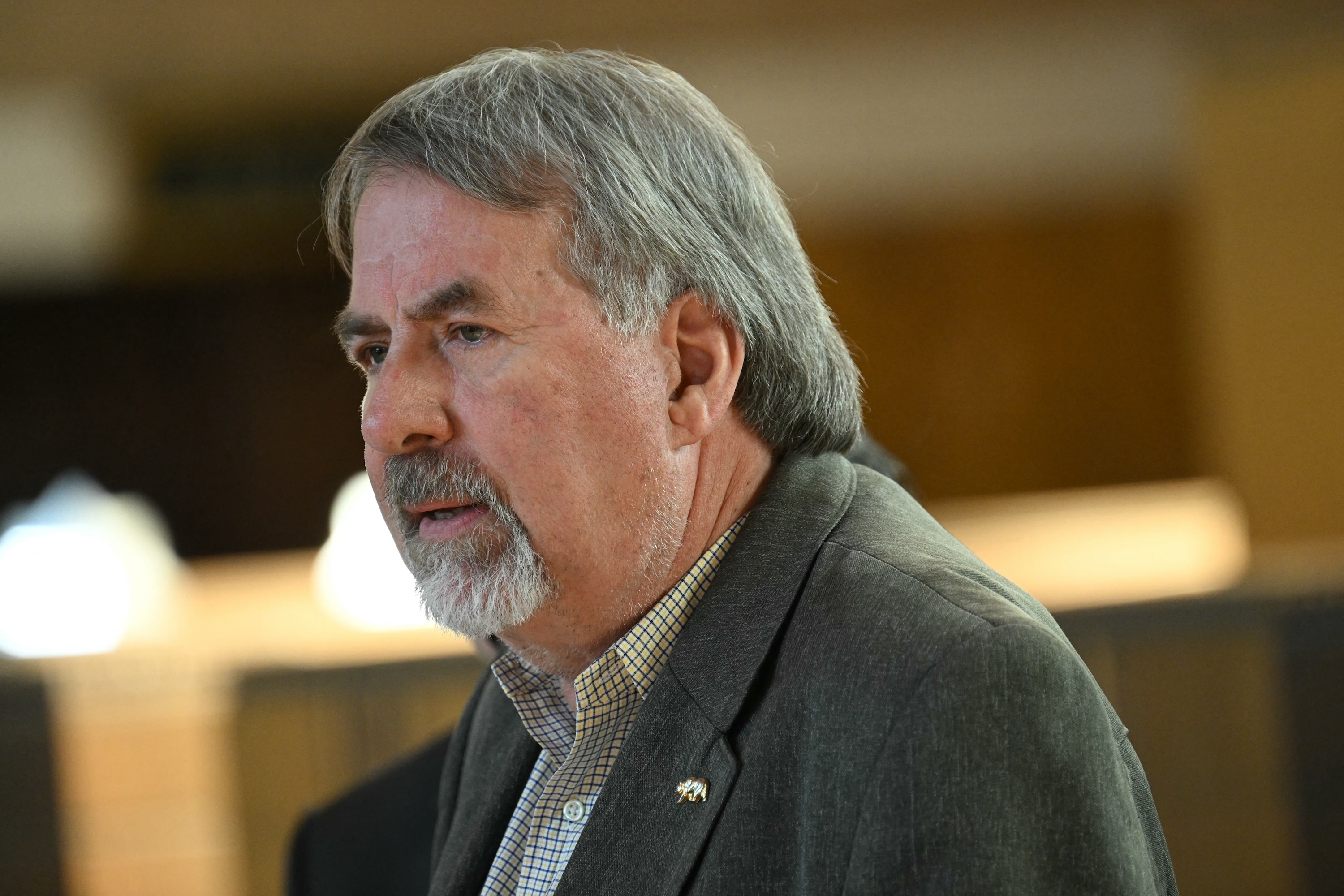
The last time I saw Rep. Doug LaMalfa (R-Calif.) alive, he was pointing at a map.
It was last October in Washington, D.C., during the federal shutdown. The Capitol was closed, but LaMalfa was in his Congressional office, working, as always, when I stopped by his office hoping to find a way to give my sister and aging mother a tour of the Capitol. His staff were already doing their best to help when LaMalfa spotted me through the open door and waved me into his office with that unmistakable warmth. “Lance, come on in! How are you?”
I didn’t want to interrupt the lively conversation he was having about some recent meeting. He was in between appointments and had every reason to shoo me out or retreat into his private office. But that wasn’t his style. Instead, he easily integrated me into the discussion and we shared some memories together.
After we had exhausted options of getting a tour of the Capitol, he walked me over to the large map on his wall showing his congressional district. We talked about the communities he had known for years, the people whose livelihoods depended on someone in that building who understood what it meant to work the land, and, of course, the newly redrawn Proposition 50 gerrymandering meant to pry him from office.
I presumed he might be anxious about the 2026 elections ahead. He wasn’t. He turned to me with quiet confidence and said simply, “We’re going to win this race.” And I believed him.
A few minutes later, I left appreciative of LaMalfa’s genuine kindness, not knowing that would be the last time I would see him alive.
Doug LaMalfa of Richvale, California, was a rice farmer, state legislator, and seven-term United States Congressman before he passed away unexpectedly in early January 2026. The outpouring of grief that followed, culminating in a funeral at the Silver Dollar Fairgrounds in Chico that drew thousands, told you everything you needed to know about the kind of man he was. This was not a gathering summoned by obligation. These were his people—neighbors, constituents, friends, family—and they came because they loved him, not the political power he held.
He was neither pretentious nor trafficked in self-importance. He was far more comfortable in boots and jeans than in a suit, and he had a gift for making the person in front of him feel like the most important one in the room. He stacked chairs after events. He stayed until he had shaken every person’s hand. He drove hours to attend the smallest town hall because he believed his constituents deserved to be heard.
Speaker after speaker at his funeral talked about LaMalfa as if he were their best friend. And the truth is, they probably were. His wife paid tribute to their posterity, calling them “legacy carriers.” It’s no wonder where LaMalfa found his strength and purpose after listening to his wife memorialize the love of her life.
LaMalfa approached political life the old-fashioned way, practicing what he understood as simple civic duty. His entrance into public service was never about ambition for its own sake. It was about stewardship. Of the land. Of the law. Of the people who depended on both.
I first worked alongside LaMalfa not long after the United State Supreme Court’s 2005 Kelo decision, which significantly weakened private property protections for American homeowners. My boss at the time, then-state Senator Tom McClintock sent me to join then-Assemblyman LaMalfa for a meeting with Governor Schwarzenegger, who wanted to understand how California could do better by its landowners than Connecticut had.
What I remember most about that meeting with the governor is how completely dialed in LaMalfa was. For him, this wasn’t an abstract legal debate; it was personal. He was a man who owned land, who understood what it meant to build something and fight to keep it, and he spoke about his constituents with the urgency and conviction of someone who had everything at stake.
That passion never left him.
Abraham Lincoln, in his famous 1838 address to the Young Men’s Lyceum of Springfield, warned of what happens when a republic loses its faithful stewards, when disregard for law and respect for institutions begins to erode the foundation our forebears sacrificed to build. Lincoln’s answer was to find men and women of honest character and put them to work.
Doug LaMalfa was that kind of man. Everyone in his orbit knew he was honest and of impeccable integrity. He worked hard every day and his faith in God showed through his wife Jill, their four children and grandchild, and the stretch of Northern California he was honored to represent. His marriage was, by every account, a partnership of remarkable depth, and the sacrifices his family made so that he could serve were never lost on him.
The question Lincoln posed is still ours to answer: how do we preserve what has been entrusted to us? The answer begins the same way it always has, by finding more faithful statesmen like LaMalfa who saw what Washington and Lincoln established and sought to preserve, the greatest country in the history of the world.
Rest in peace, my friend. We will work to carry your legacy bright and unburnished.