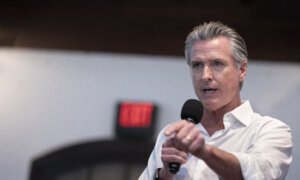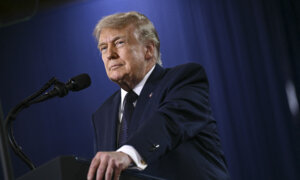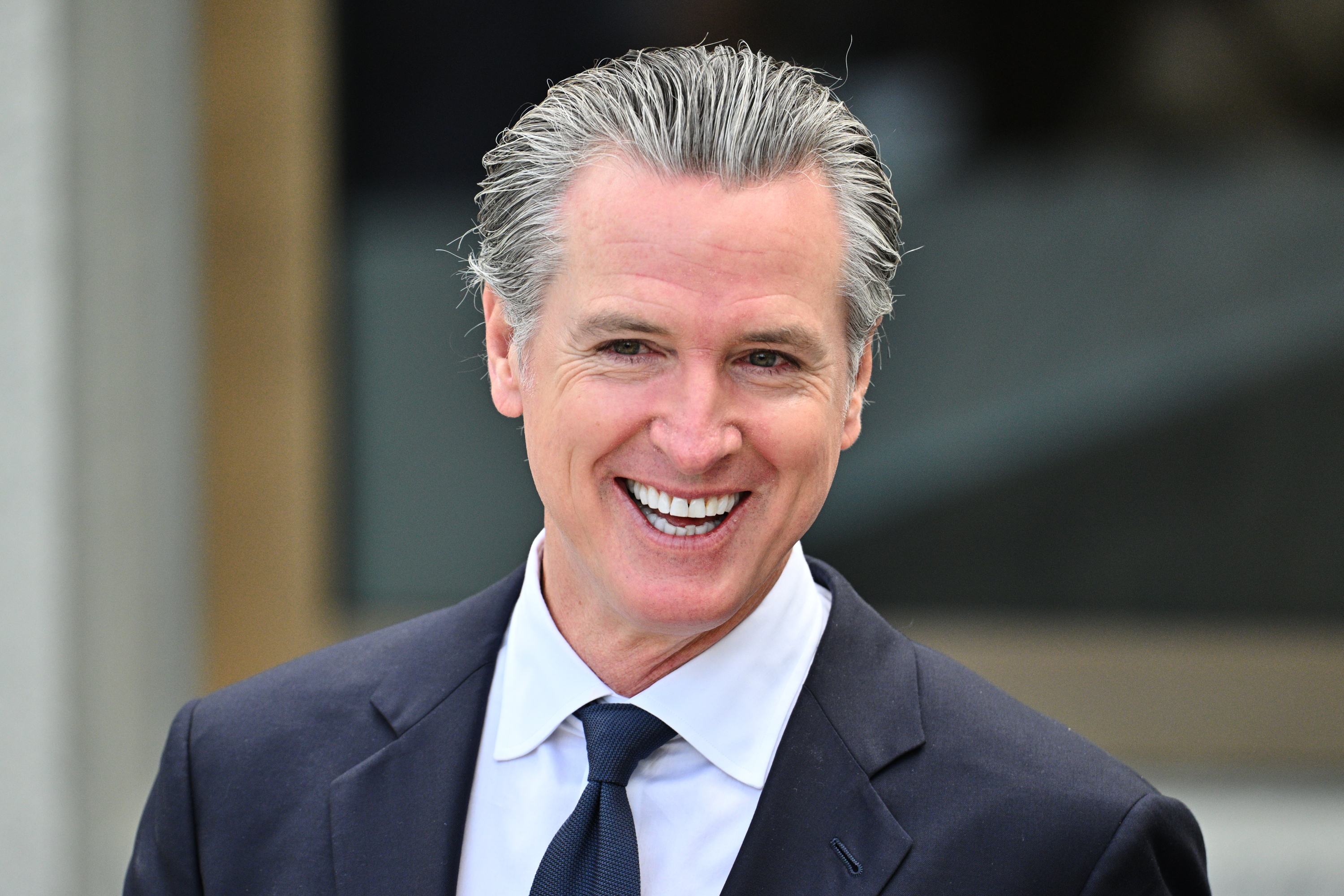

California Gov. Gavin Newsom on Sept. 30 ordered state agencies to keep using the term “artificial intelligence,” one day after President Donald Trump directed the federal executive branch to replace it with “super intelligence.”
Newsom signed an executive order saying all agencies and departments under his authority “shall refer to Artificial Intelligence and AI as ‘Artificial Intelligence’ and ‘AI,’ notwithstanding any rebranded or different terminology used by the federal government, unless inconsistent with the law.”
The order says that while terminology can have significance, “purporting to change something’s name cannot distract a person of normal intelligence from recognizing the impotent and craven failure to take action to address well-documented emerging security and safety risks posed by that thing.”
The order does not name Trump or the White House—however, an accompanying statement by Newsom does reference the president.
“Super intelligence is clearly not coming from the White House—that’s why California continues to lead,” Newsom said in a statement.
He said AI should expand opportunity rather than come at the expense of workers and families.
In response to a request for comment on Newsom’s order, the White House pointed to recent public remarks by Trump.
“We don’t call it artificial intelligence because it’s not artificial. It’s real. It’s a terrible word,” Trump said. “It’s amazing it lived on so long, actually.”
“We looked at ‘superior intelligence.’ We looked at ‘supreme intelligence,’ but I didn’t want to mix it up with the Supreme Court—get myself in trouble,” he said. “Artificial means it’s fake or it’s false, and this is not. This is real.”
Trump added the United States and China are the only two countries competing in the field, and that the United States is “leading them by a lot.”
“Whoever wins super intelligence wins,” he said.
Trump’s order, signed on Sept. 29, directs agencies, “to the maximum extent permitted by law,” to use “Super Intelligence” and “SI” in place of “Artificial Intelligence” and “AI.”
It says the executive branch “will not acknowledge the usage of ‘Artificial Intelligence’ and ‘AI’ in any applicable setting.”
That covers official correspondence, public communications, websites, reports, policy documents, and other non-statutory documents.
It does not require changes to previously issued regulations, contracts, grants, or other historical documents.
The order says the new term “more appropriately captures the promise, potential, and rapidly advancing capabilities of these technologies.”
A White House fact sheet says the order also directs the president’s science adviser to propose a federal definition of “Super Intelligence” within 60 days.
Newsom signed 13 bills on Sept. 30 addressing AI in the workplace, health care, digital watermarks, deepfakes and digital replicas, legal work, and gene synthesis companies, his office said.
It described the workplace measures as the nation’s first.
They prohibit employers from relying only on AI when making a disciplinary or termination decision; require employers to disclose when an AI system causes a mass layoff, relocation, or termination; and ban workplace surveillance tools in bathrooms, according to the governor’s office.
“Workers across California have demanded that our state lead the way in regulating AI in our workplaces. And today, we see that begin to happen,” California Federation of Labor Unions President Lorena Gonzalez said of four of the bills.
She said the bills show how to “put guardrails on AI at work” and “put workers first.”