“A fairy tale city,” “the city of a hundred churches,” “a hidden gem”—these are phrases used to describe the enchanting town of Lucca, nestled in the soft hills of Italy’s Tuscany region.
While less-known and celebrated than Florence and Pisa, behind its Renaissance walls, Lucca beams with multifaceted beauty, deep history, exquisite art, and religious heritage. A little off the beaten track, it offers many delights with less of the bustle found in nearby towns. It’s a peaceful and culturally rich city that would be inundated with tourists, were they not distracted by the bigger names in the Tuscany region. The fame of Florence and Pisa works to the advantage of the savvy traveler who can find sanctuary in Lucca.
Streets Where Time Stands Still
Rich with Roman, medieval, and Renaissance architecture, the winding, interlaced streets of Lucca whisk visitors away to a world in which the past becomes vividly present in a cityscape largely unchanged for hundreds of years. In a striking blend of old and new, mopeds, posh storefronts, and cafe tables intermingle with the well-preserved architecture of another age: medieval archways, engraved bricks, lanterns, columns, and profusely ornamented church facades and frescoes.
Strolling through the maze of cobblestoned streets and plazas, I seemed to have slipped outside of time. Century upon century of structures, streets, and sculptures piled on top of each other until they mingled into a single moment, a single identity breathing a timeless beauty in which the best of all ages intermixes.
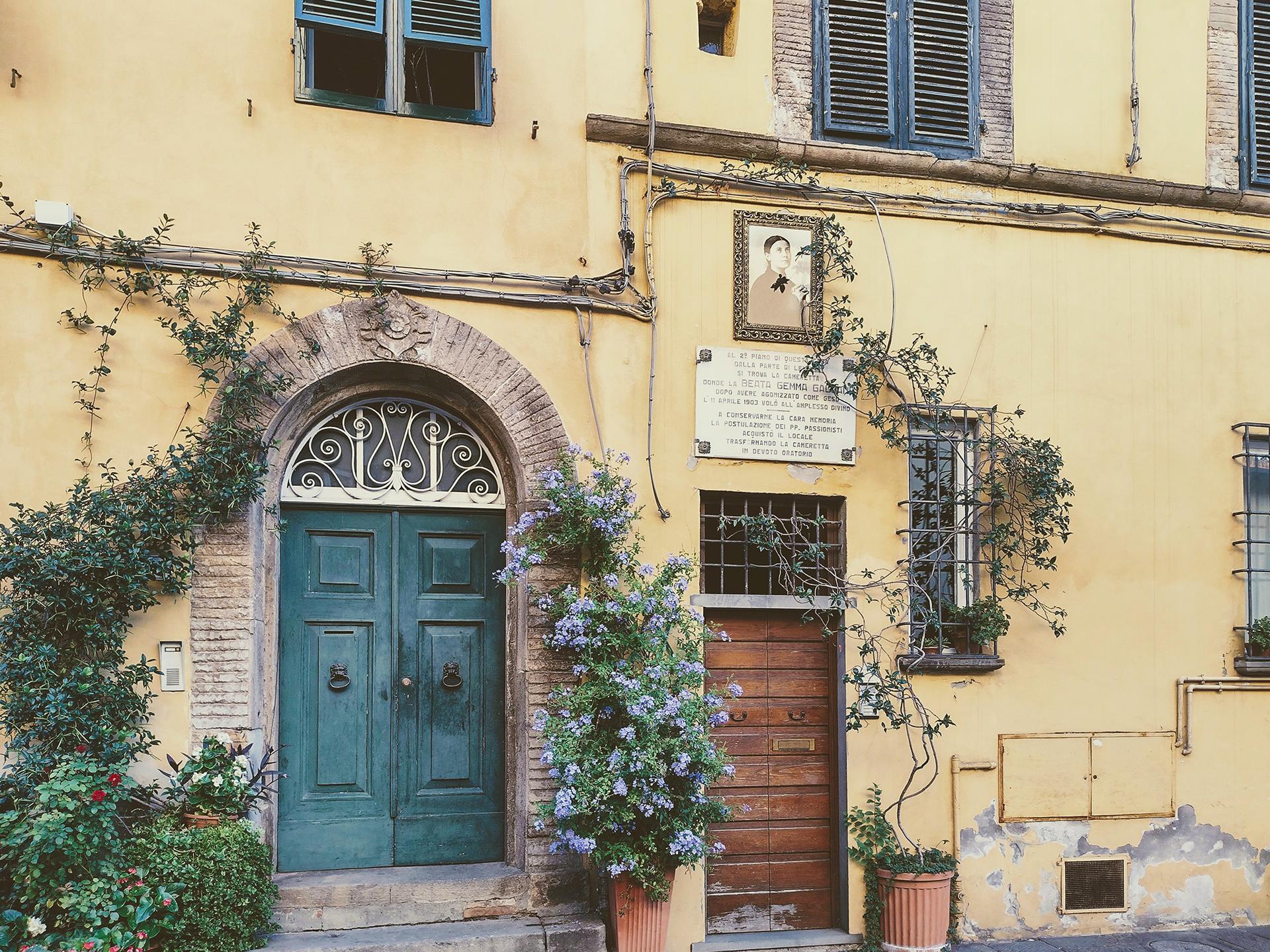
Modern life in Lucca unfolds against the backdrop of centuries-old architecture and tradition. (Walker Larson)
In a place in which the remnants of Roman houses and amphitheaters, medieval cathedrals, and Renaissance fortifications merge with chic bistros and boutique stores, it’s easy to lose track of time. In Lucca, various ages have been molded together into a foreshortened vision of history. Its modern residents continue to respect and protect that history and the culture it produced. That environment makes for an enchanting escape during which the hours melt away as one wanders the intricate network of alleys, piazzas, and old stone steps.
Layers of History
In the case of Lucca, there’s a lot of history to preserve. As Brian R. Lindquist explains in “The Wanderer’s Guide to Lucca,” Etruscans were the first known inhabitants of the region. The settlement that became Lucca lay on the border between the Etruscans and Ligurians. It was situated on a rocky sandbar surrounded by the swamps created by the intersection of the Serchio River with the Lucchese plain. The Romans took over the area in the mid 3rd century B.C., and the settlement played a role in the famous Punic Wars. When the Romans lost the Battle of the Trebia, they retreated to Lucca.
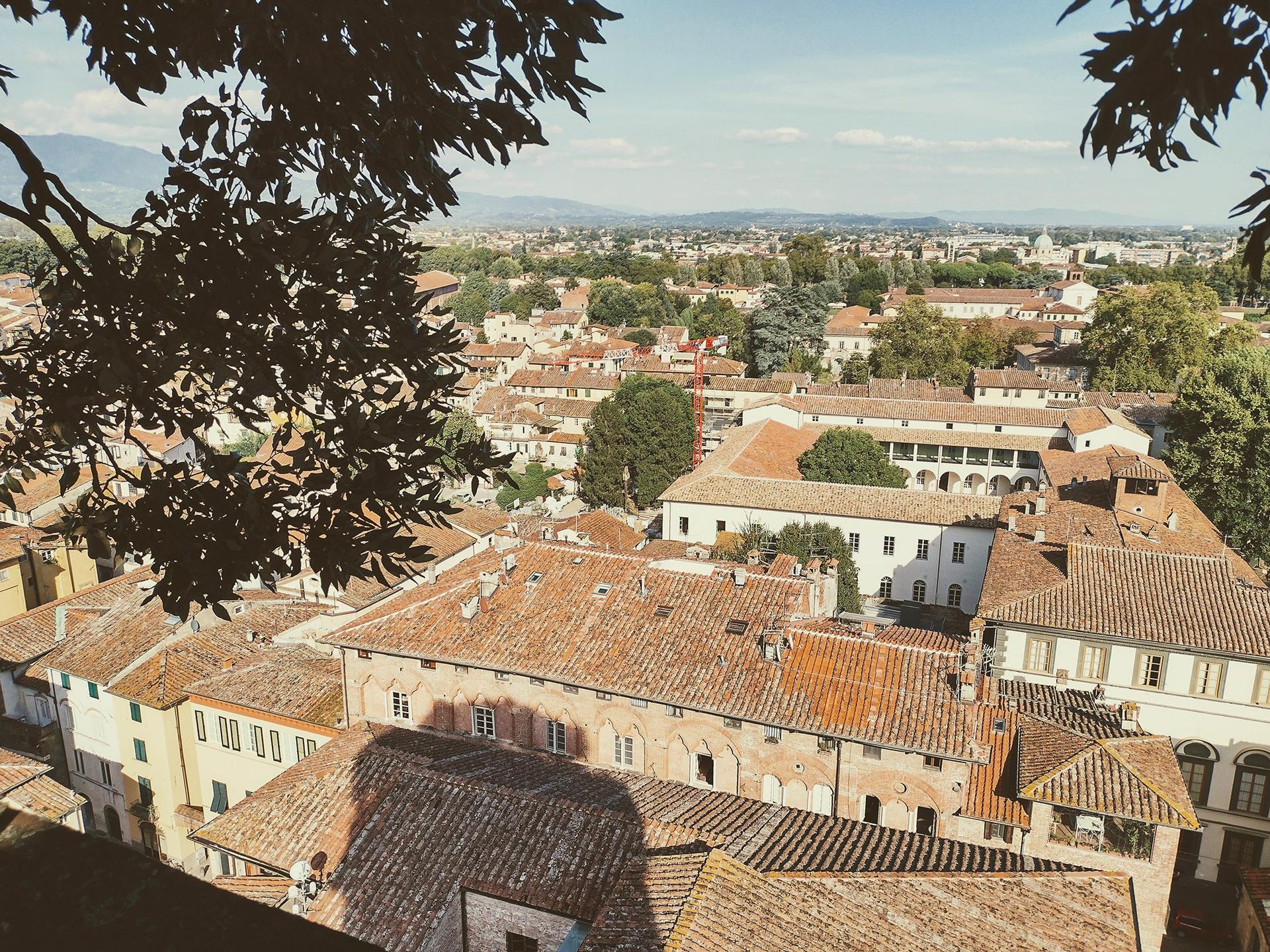
Lucca's red-roofed buildings are still preserved by its Renaissance-era walls. (Walker Larson)
After the fall of the Roman Empire, the Lombards took over much of Italy, including Lucca. They were converted from Arian Christianity to Catholicism, and Lucca’s long history as a pious and religiously fervent city began in earnest. Although Charlemagne later defeated the Lombards, he allowed Lombard nobility to continue to rule. Lucca eventually evolved into an independent city-state. It would remain a self-governed republic, more or less, until the time of Napoleon.
When Napoleon took the city, he gifted it to his sister Elisa, who cleared an area around her palace, which is still known as the Piazza Napoleone. My wife and I had the privilege of staying right on the edge of this charming plaza, which today features extensive eating and shopping options as well as a beautiful statue of Elisa’s successor, the Italian-Austrian Maria Luisa di Borbone, who governed the city after Napoleon’s fall. Finally, in the early 1860s, Lucca formally joined the new, unified nation of Italy.
Merchants and Pilgrims
For much of Lucca’s history, it was a major merchant city that specialized in world-famous silk. It also became a notable pilgrimage site, with people visiting its basilica, San Frediano, and cathedral, San Martino. The proliferation of saints in the city over the centuries only increased its appeal as a site of religious devotion and visitation. Even today, people from around the world come to visit the incorrupt remains of the medieval maidservant St. Zita or the house of the mystic St. Gemma Galgani.
Lucca’s location along the Via Francigena, a major medieval pilgrimage route between Rome and Western Europe, ensured a steady stream of travelers, pilgrims, and merchants. Despite periods of invasion and economic decline, Lucca flourished over the centuries. The rich palaces, churches, and art installations attest to the wealth of its families. The banking interests that emerged in the city continue to this day.
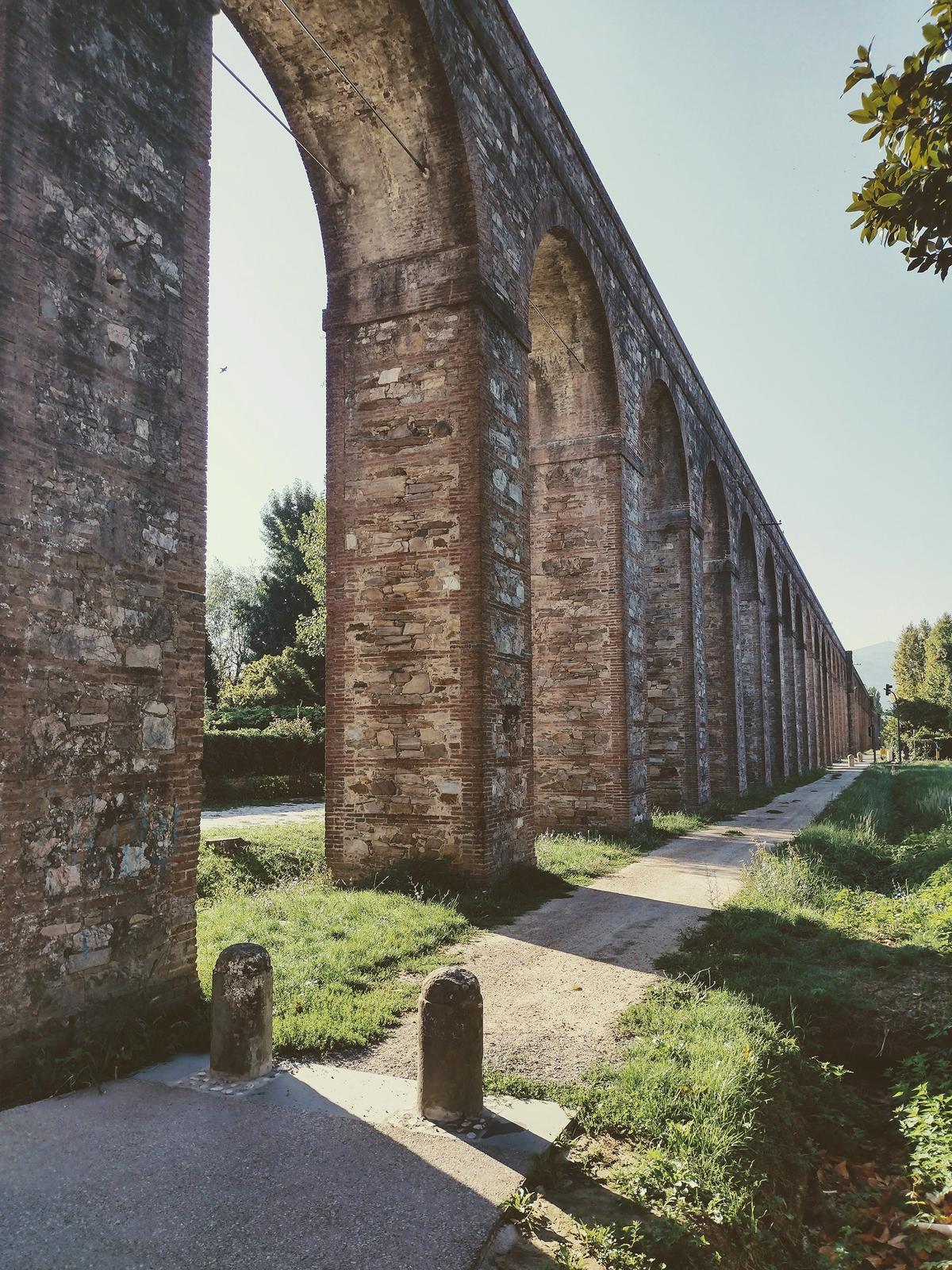
From Roman amphitheaters to Renaissance fortifications, Lucca's cityscape reflects layers of history. (Walker Larson)
An Enchanting Destination
With so much history and such a strong artistic and religious tradition in Lucca, the modern-day visitor will suffer no lack of things to do. Lucca is steeped in art, history, and religion. Its most defining architectural feature is its walls, which surround the heart of the city, its most ancient section. Walls protected the city as far back as medieval and Roman times; the existing bulwarks were erected during the Renaissance—built especially thick in order to withstand the new technology of gunpowder and cannon fire. Tourists can walk or bike the entire circumference of these walls, enjoying a panoramic view of the stucco buildings and their red, sun-baked roofs.
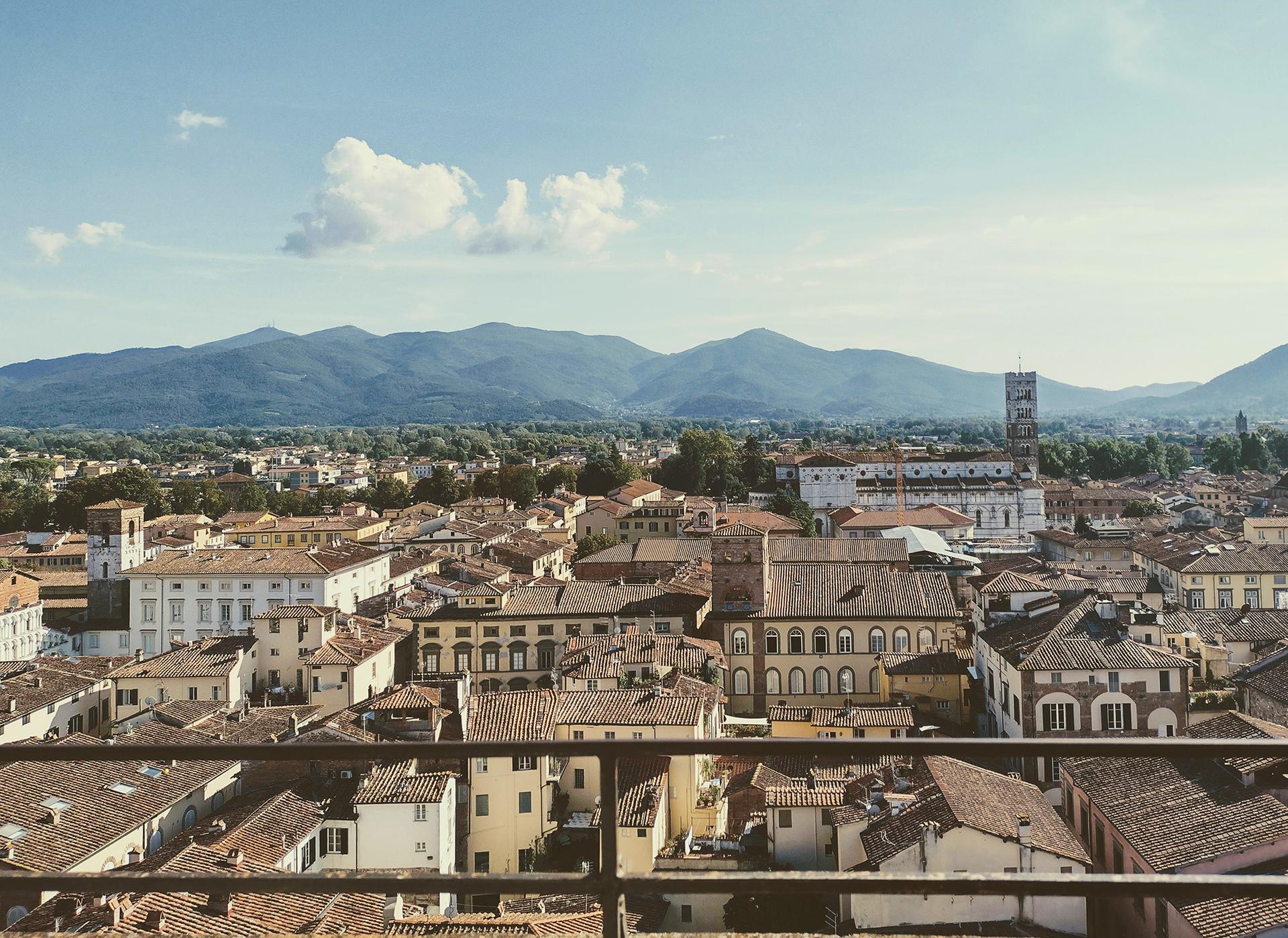
In past centuries, Lucca's skyline was characterized by towers built by its wealthiest families. Today, most of those towers are gone. (Walker Larson)
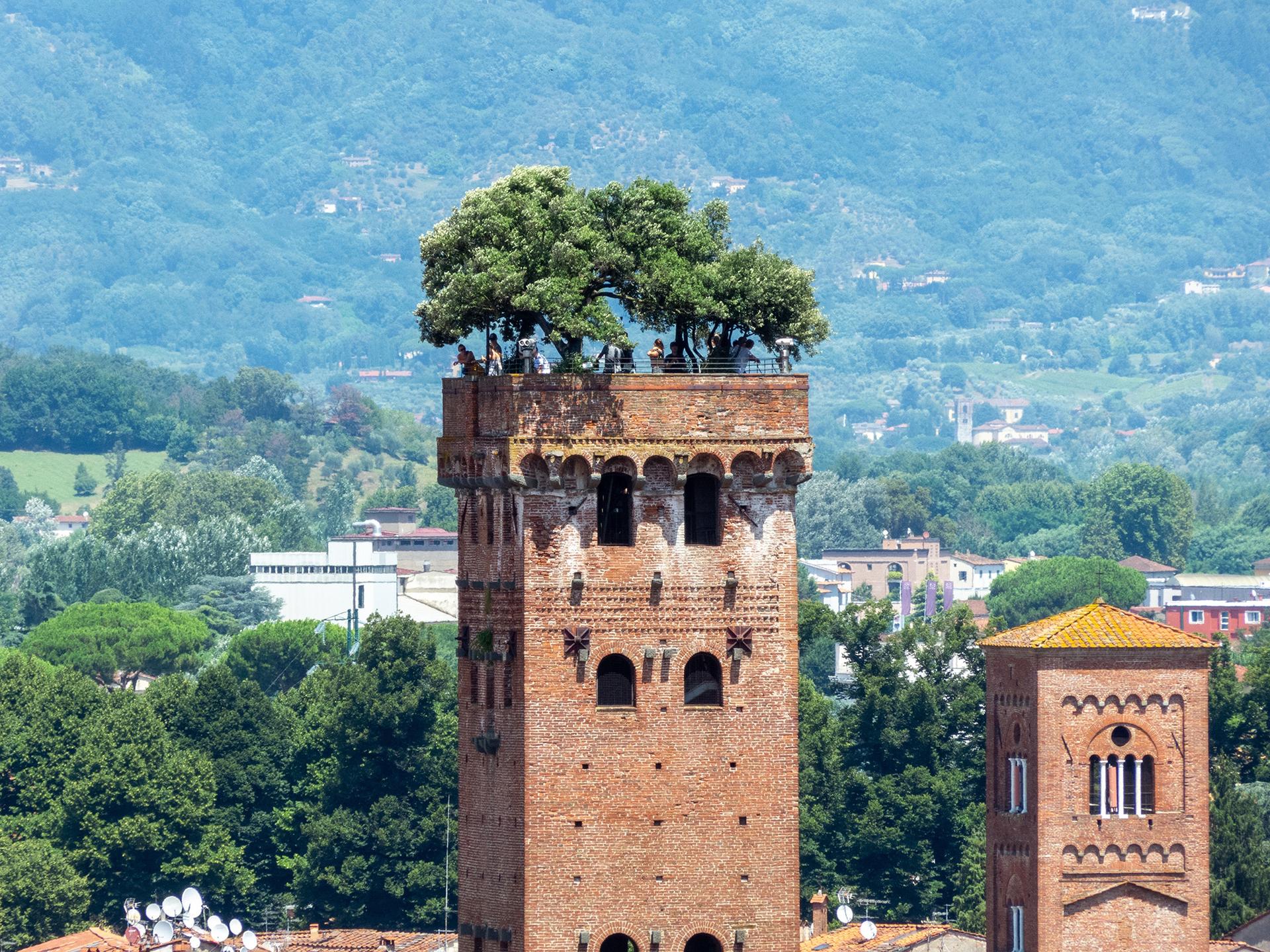
One of Lucca's few remaining towers, Guinigi Tower, was built in the latter half of the 14th century. Holm oaks were planted at its summit to represent rebirth and renewal. (Animaflora PicsStock/Shutterstock)
An even more dramatic view opens up from the pinnacle of Torre Guinigi (Guinigi Tower), an impressive tower in Romanesque-Gothic style, distinctively adorned at the top with trees that sway in the strong breezes blown from the mountains. Torre Guinigi is one of the few towers left from the days when Lucca boasted a host of such towers built by merchants and nobility as status symbols. Some medieval illustrations of the city depict dozens of these spires, a veritable forest of stone, the medieval equivalent of today’s skyscraper-studded skylines.
While many buildings—such as Torre Gunigi—are themselves a kind of museum, there are also several actual museums, such as the Puccini Museum, dedicated to the native composer, or the National Museum of Villa Guinigi, which houses art and artifacts from the Etruscan age through the Renaissance. These are well worth a visit, too.
Another unusual architectural feature of Lucca is the circular plaza near the city’s center, the Piazza dell'Anfiteatro, built on the ruins of a Roman amphitheater. Even the buildings surrounding this circular piazza are curved. When we visited it, the piazza featured vendors selling clothing and artwork, along with a ring of elegant and delicious restaurants. From the wares and savory food at street level, the visitor’s gaze naturally moves up the curved surfaces of the buildings to the great disc of sky above. Open-air spaces are everywhere in the city, and almost every restaurant offers open-air seating—with umbrellas to provide shelter from sun and rain.
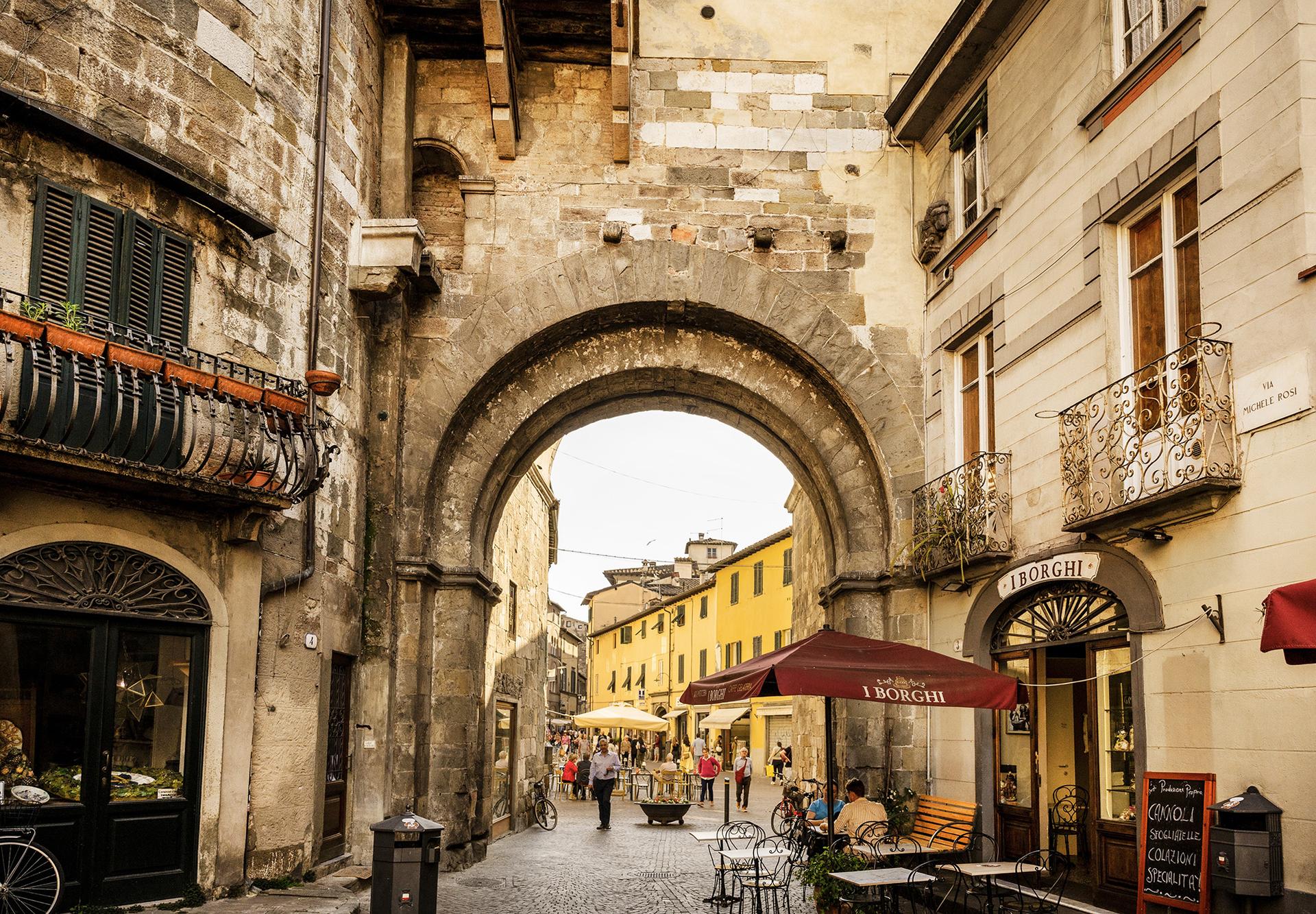
The historic center of Lucca abounds with Roman, medieval, and Renaissance elements. (Giannis Papanikos/Shuttertock)
A Feast for the Senses
The reputation of Italian food needs no boost from me—suffice it to say that the restaurants, bistros, bars, and cafes that line virtually every street or plaza in Lucca live up to that reputation. Through fresh ingredients and simple, traditional recipes, the flavors of the food sing sweet tunes on the tongue. They are intense without being overwhelming and rich without being decadent.
The desserts deserve special attention: Visitors should keep an eye out for food trucks selling a traditional local delicacy: the Lucca frati, which I can best describe as a warm, freshly fried, lemon-flavored doughnut covered in powdered sugar and smothered in chocolate.
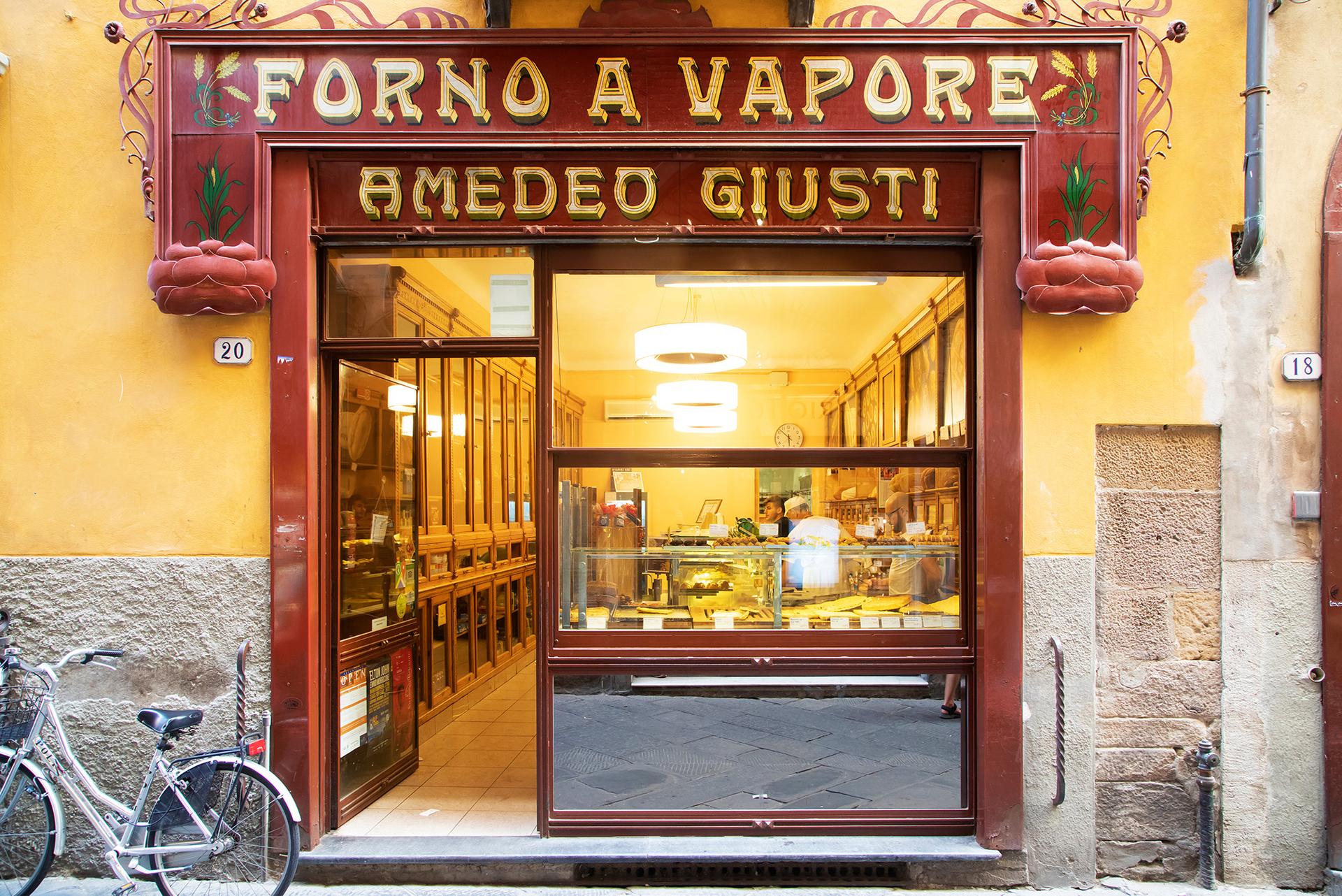
Forno a Vapore Amedeo Giusti is a historic steam bakery that was established in 1830. Focaccia, schiacciata (a Tuscan flatbread), and other breads are baked using traditional methods. (spatuletail/Shutterstock)
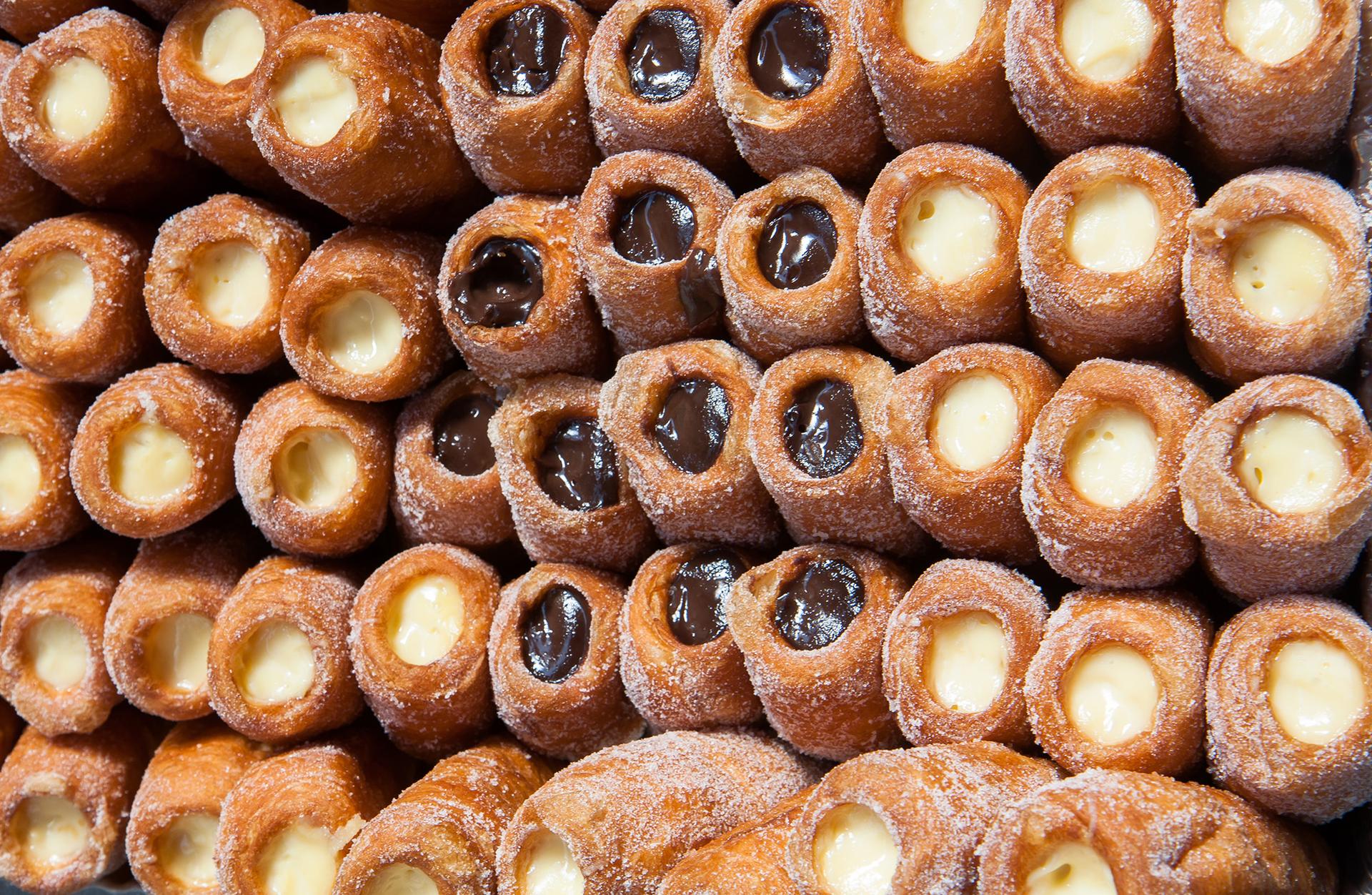
Cannoli from a Lucca bakery. This type of cannoli is a deep-fried, tube-shaped pastry with a sweet filling. (Patrick Civello/Shutterstock)
The City of a Hundred Churches
Lucca has been nicknamed “the city of a hundred churches.” Although that number isn’t literally accurate—at least anymore—dozens of churches and chapels are the jewels of the city. Featuring elements of Romanesque, Gothic, and distinctively Tuscan architecture, these structures rise up around every corner, often flanked by a piazza. In the cold, dark interiors, stone and marble columns vault heavenward and richly inlaid altars occupy every corner and alcove.
Many churches include immense post-reformation paintings, with dramatic poses of saints, their bodies twisted, their faces upturned in ecstasy toward heavenly figures emblazoned in light. In some of these churches, the sheer amplitude and exuberance of decorations—with each century’s work encrusted on top of the previous, complementing and developing it—simply overwhelms, leaving the visitor with a sense of quiet awe and wonder.
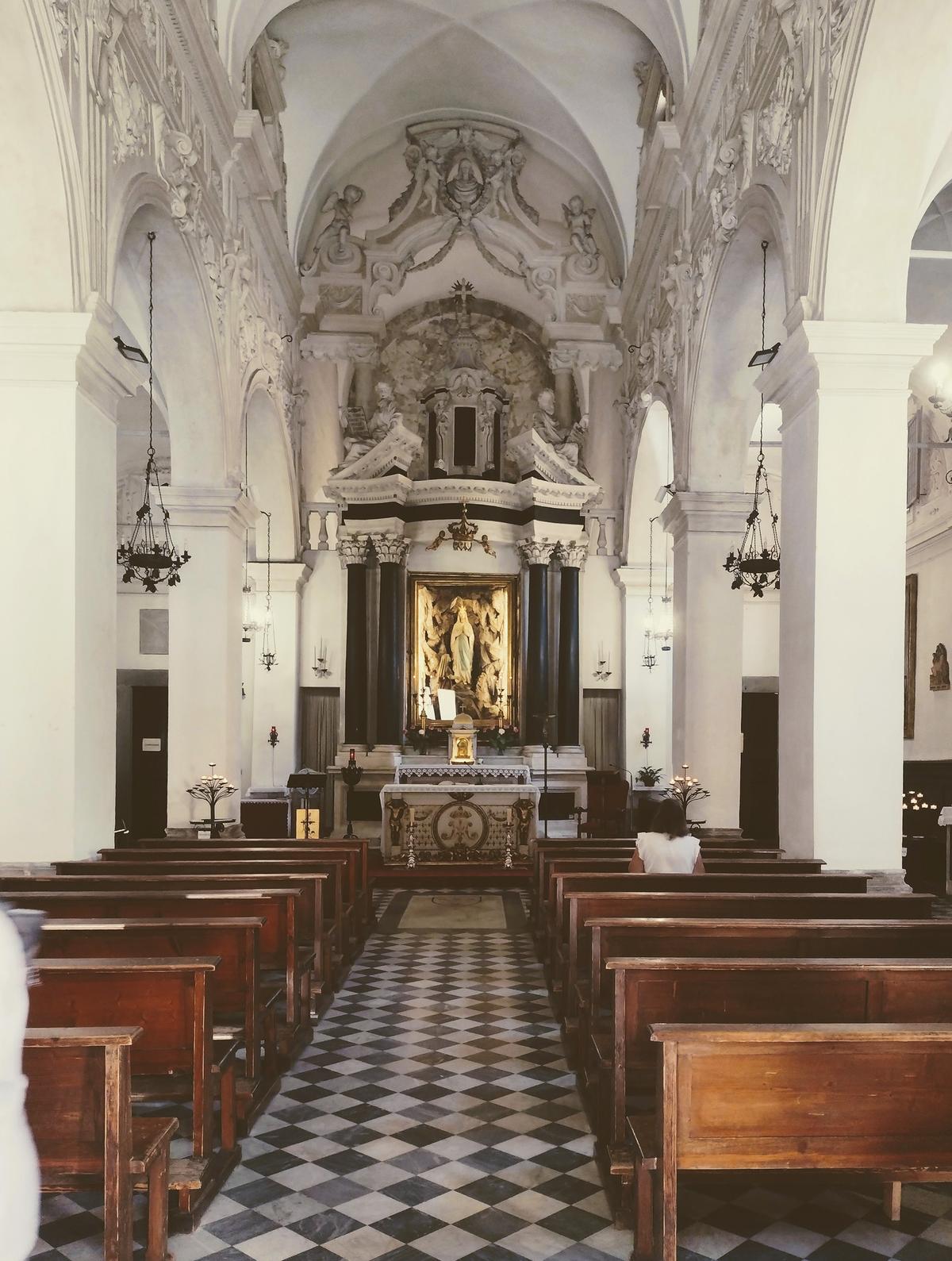
Known as the "city of a hundred churches," Lucca's sacred spaces preserve both its architectural legacy and centuries of devotion. (Walker Larson)
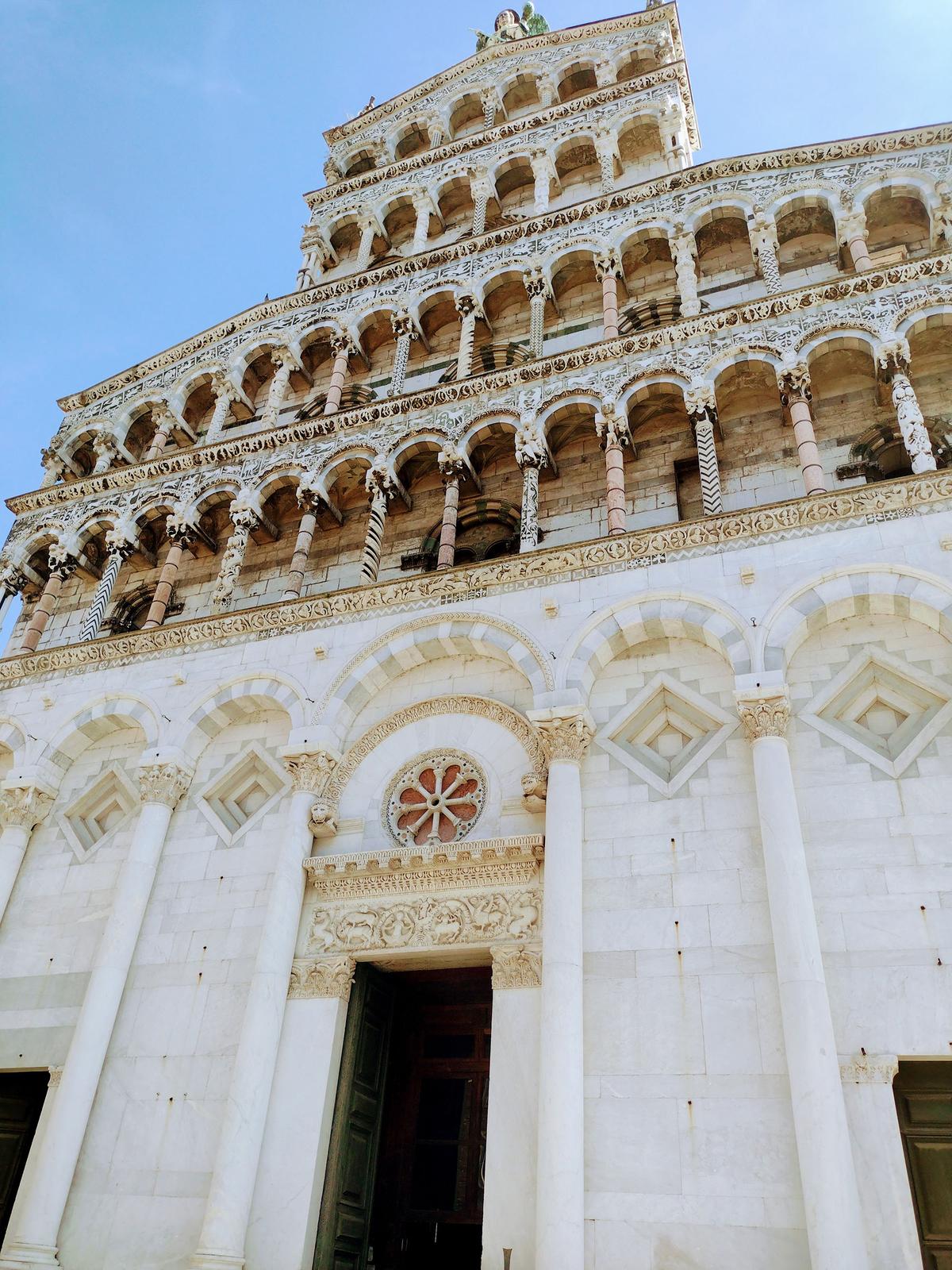
San Martino, Lucca's cathedral, is located in the old city center. It dates back to the 6th century, although additional elaborations were added over the years. (Walker Larson)
That sense of reverence deepens when you spy, in some gilded side chapel or under some marble altar, the glass-encased body of a saint or martyr who, for centuries, has been the object of quiet contemplations and petitions of countless pilgrims kneeling before him or her.
From its early days of wars with neighboring Pisa through its growth as a center of silk trade and production to its careful and successful negotiation with Napoleon, Lucca has long been a city of quiet confidence—confidence in itself and confidence in God, as reflected in the historical and religious monuments adorning every street. This walkable, family-friendly city inspires not just through its remarkable beauty and the history it gives access to, but also through the spirit of faith, hope, and perseverance that so clearly made it what it is today.