
The Centers for Disease Control and Prevention now says that infants born to women who test negative for hepatitis B do not need a dose of the hepatitis B vaccine within hours of birth.
Families can still decide, after consulting with doctors, to have a dose administered to their newborn, the CDC says. If they opt to wait, then they’re advised not to start the hepatitis B vaccine series until their child is at least 2 months of age.
Here’s what to know about the updated posture.
Most Infants Born to Mothers Who Test Negative
The change was driven in part by the “high reliability of prenatal hepatitis B screening, which identifies nearly all hepatitis B infections during pregnancy,” the Department of Health and Human Services, the CDC’s parent agency, said in a fact sheet.
Hepatitis B is a virus contracted through contact with the bodily fluids of an infected person or during birth from an infected mother.
Pre-birth hepatitis B screening has been recommended by the CDC for women in the United States since 1988. About 85 percent of women are tested for hepatitis B during pregnancy, according to studies.
The CDC’s National Center for Health Statistics estimated that in 2021, the most recent year for which estimates are available, 7,827 children were born to mothers who tested positive for hepatitis B before birth. That represented nearly 0.5 percent of total births.
Most people inside the United States with chronic hepatitis B were born outside the United States, in countries with a higher prevalence of hepatitis B, according to the CDC. Those people primarily became infected at birth or when they were children.
In 2021, women born in other countries gave birth to 20 percent of newborns in the United States. Those women accounted for 53 percent of the positive hepatitis B tests during pregnancy.
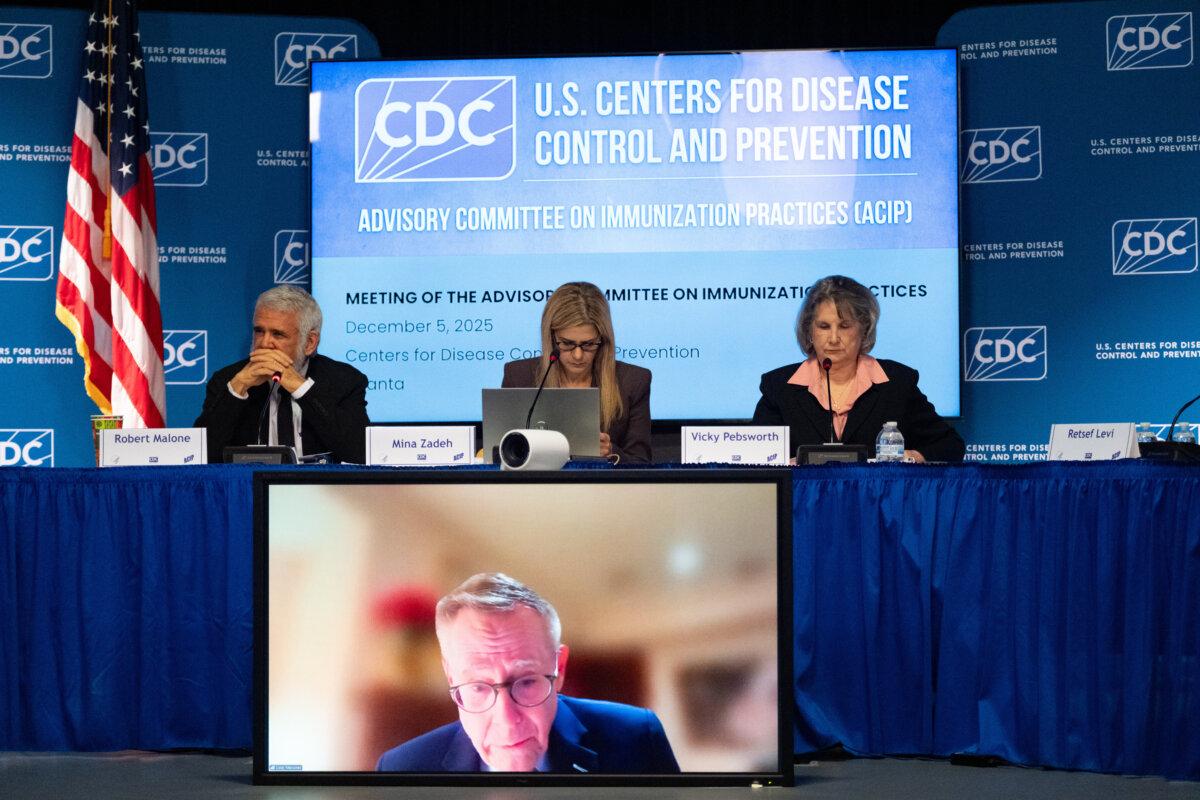
The CDC Advisory Committee on Immunization Practices meets to consider changes in hepatitis B vaccine recommendations for infants, in Atlanta, Ga., on Dec. 5, 2025. (Ben Gray/AP Photo)
The risk of perinatal transmission of hepatitis B is “isolated to about 0.5 percent of pregnancies, mainly from immigrants from high-endemicity countries,” Cynthia Nevison, a CDC contractor, told the Advisory Committee on Immunization Practices (ACIP), which advises the CDC on vaccines, earlier in December.
ACIP members said they wanted officials to take steps to raise the percentage of women who receive pre-birth testing. Adam Langer, a CDC official, told them that closing the gap is already a CDC priority.
The panel later advised the CDC to end the universal birth dose. That advice was accepted on Dec. 16. The early dose recommendation is still in place for infants born to women with positive or unknown hepatitis B status.
Start of Universal Birth Dose Recommendation
In 1984, the CDC began recommending early hepatitis B vaccination for babies born to women with hepatitis B. Officials said the dose should be administered within 12 hours of birth.
The CDC also tried to target preexposure vaccination to high-risk groups, including men who have sex with men and people who have multiple sexual partners, but those people “were not being vaccinated in substantial numbers,” the CDC says in a summary of the evolving strategy against hepatitis B.
In a 1991 update, the agency introduced the universal birth dose, or recommended that all infants born to women with unknown hepatitis B status, and nearly all infants born to women who tested negative, receive a vaccine dose within hours of delivery.
Motivated by “the difficulty of vaccinating high-risk adults and the substantial burden of [hepatitis B]-related disease acquired from infections in childhood,” the revamped strategy also reemphasized vaccinating high-risk adults and said older children deemed at high-risk should quickly receive the full vaccine series. That has since expanded to all children.
The universal coverage “provides a critical safety net for infants who may have unrecognized exposure(s) to [hepatitis B] infection during pregnancy or early childhood due to a multitude of reasons resulting in gaps in protection against perinatal infection,” including some women not being tested for hepatitis B before giving birth, the CDC said in a briefing document this year.
“The way I look at a neonatal birth dose is that it is a safety net, and it’s really for chronically infected mothers who for one reason or another do not get tested,” Dr. Cody Meissner, an ACIP member who voted against changing the status quo, said during the recent meeting.
Others took issue with that position.
Dr. Evelyn Griffin, an ACIP member and Louisiana’s new surgeon general, said in the meeting that the CDC’s position was inappropriate, before she voted to change the universal recommendation.
“We are putting millions of babies that are born to hepatitis B-negative mothers, that are low-risk, and we are charging those babies with this program, the ’safety net,' and expecting them to save us,” she said.
She added later, after referencing the high proportion of hepatitis B-positive immigrants, and how some children contract hepatitis B later in childhood, that “we have other problems that adults need to solve with our resources ... rather than asking babies to solve this problem for us.”
What Universal Recommendation Accomplished
Hepatitis B cases have plummeted since peaking in the 1980s. Acute cases reported in the United States fell from 23,177 in 1988 to 2,214 in 2023. The drop has been among all age groups.
Nevison, the CDC contractor, presented CDC data to ACIP that showed acute hepatitis B cases dropped 33 percent from the peak in 1985 to 1991, primarily among older age groups. It also showed that large declines occurred in older age groups, such as 20- to 24-year-olds, in the years just after the introduction of the universal birth dose, before the dosed infants would have reached those ages.
Nevison said that data indicate other sources, such as more people engaging in safer sexual practices and improved screening of pregnant women, were likely behind much of the reduction in hepatitis B cases.
“The universal birth dose contribution to acute case decline is likely very small,” she said.
Some members of ACIP agreed.

Retsef Levi, a member of the CDC's Advisory Committee on Immunization Practices, at CDC headquarters in Atlanta, Ga., on Dec. 4, 2025. (Elijah Nouvelage/Getty Images)
“You see that once you started to address the high-risk populations—the populations that are most active in spreading the disease and are most active in experiencing the serious outcomes—you see rapid decrease—well before the uniform dose [at] birth,” Retsef Levi, a professor at the Massachusetts Institute of Technology, told the meeting. “What you see after that policy was in place, the decrease is not happening among the babies that were subject to that policy. The decrease is happening in the older ages.”
Other members, and some outside experts, say the birth dose had a big impact.
The increase in hepatitis B vaccinations at birth “has largely been responsible for the reduction in [hepatitis B] burden among infants and the general US population over the past three decades,” former CDC Director Rochelle Walensky and other experts with the Vaccine Integrity Project at the University of Minnesota, which is funded by the Alumbra Innovations Foundation, said in a Dec. 2 report on the safety and effectiveness of the vaccine.
Other Reasons the Recommendation Changed
About one in five infants does not receive the birth dose, according to CDC data from 2021. In a recent survey, 9 percent of parents said they skipped or delayed the hepatitis B vaccine for their children, citing concerns about safety and believing the CDC recommends too many vaccines.
ACIP’s hepatitis B workgroup said that concerns from parents and other stakeholders motivated them to reanalyze the existing recommendation for the hepatitis B vaccine. The workgroup also pointed to the fact that many other developed nations only recommend the birth dose to infants born to hepatitis B-positive women—if at all—and what they said were concerns over safety data.
A review of safety studies on the vaccine identified papers that found some infants suffered from problems such as fatigue, fever, or diarrhea following vaccination. Mark Blaxill, a new CDC employee who once authored a retracted article on autism with Nevison, conducted the review.
Blaxill also pointed out that the Institute of Medicine, a nonprofit that advises the government, has concluded that evidence establishes that the hepatitis B vaccine can result in anaphylaxis and severe allergic shock that can be fatal, and said clinical trial data for the vaccine is lacking.
“The safety evidence is limited, and it’s often concerning,” he told ACIP.
Side effects of the vaccines include headache, and possible side effects include Guillain-Barré syndrome, according to Food and Drug Administration labels.
That position was backed by Dr. Tracy Hoeg, an official with the regulatory agency.
“From a regulatory perspective ... we have a very low level of confidence in saying that we can say that these vaccines, that the benefits outweigh the risks with the amount of data that we currently have,” she said.
Liaisons to the committee said the vaccine is safe and effective.
Stacy Buchanan, representing the National Association of Pediatric Nurse Practitioners, said, “I’m still trying to understand why we are bringing this issue forward without evidence of harm to infants when we know that the risk of harm without them getting protection is great.”
The association has received donations from manufacturers of hepatitis B vaccines.
The ACIP workgroup also said there is uncertainty regarding the true rates of hepatitis B incidence, prevalence, and transmission.
CDC projections of cases have regularly overshot actual numbers that came in later. In 2015, for instance, the CDC projected there would be 952 cases from perinatal transmission, but according to its National Notifiable Diseases Surveillance System, there were only 36.
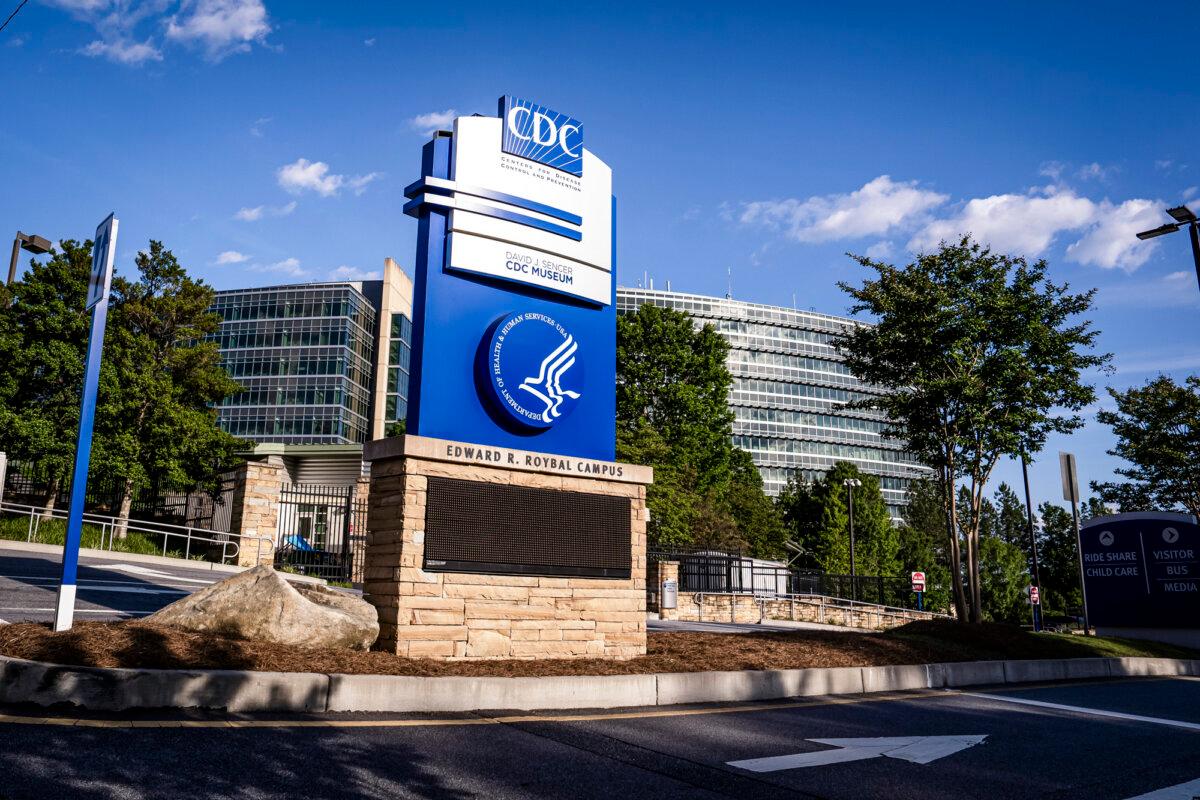
The Centers for Disease Control and Prevention headquarters in Atlanta, Ga., on May 21, 2024. (Madalina Vasiliu/The Epoch Times)
Langer said the difference may stem from difficulty detecting asymptomatic and other undiagnosed cases.
“Sometimes, it’s a relatively mild illness,” he said.
Other Possible Risks
Perinatal transmission is not the only way people can contract hepatitis B. Transmission also happens through exposure to infectious blood or bodily fluids, according to studies such as a 1989 case report from a day care in the United States.
The CDC says that the virus can remain viable for days, citing a 1981 paper, and that children have contracted hepatitis B from infected people living in the same household.
Nevison said the available evidence on transmission to children apart from birth is mainly from immigrant communities.
“The evidence for horizontal transmission among most U.S. children is very sparse,” she said.
“Infants born to mothers who test negative ... have extremely low risk of horizontal infection during childhood and particularly in first months of life and therefore, do not need to be routinely vaccinated,” ACIP’s hepatitis B workgroup concluded.
Langer said that he was unable to provide recent data on such transmission.
“One thing I just want to sort of encourage everybody to be cautious about is if you look at contemporary data, you’re looking at data in the context of a high amount of birth dose vaccination coverage,” he said. “So, looking at recent data and saying, ‘Well, there’s not very much horizontal transmission,’ doesn’t mean that it can’t happen. It means that the vaccine is preventing it.”
Dr. Monique Yohanan, a senior fellow for health policy at the Independent Women’s Forum who was not involved with the meeting, told The Epoch Times that babies face little risk of transmission after birth.
“That doesn’t really happen in the United States in the same way as in other countries, because the amount of blood, the amount of virus that you need to get to actually develop the infection, you really need a combination of basically the amount of virus that you would see in a woman who got this disease in an endemic country, so a really high viral load,” she said. “You also need poor sanitation, and the kind of sanitation we have [in] the United States ... you just don’t see enough virus for babies to get it in the way that they’re talking about.”
Why the Need for Additional Doses
The CDC vaccine schedule includes three doses of the hepatitis B vaccine. Until recently, vaccination was recommended at birth, at 1 month to 2 months of age, and from 6 months to 18 months of age.
After one dose of the hepatitis B vaccine, only 25 percent of infants have levels of antibodies against hepatitis B thought to provide adequate protection, according to the CDC.
The agency says the three-dose series triggers a protective antibody response in nearly all children.
Some CDC advisers said that there are indications one dose is sufficient for some kids, or that the current data does not back a rigid three-dose regimen. They advised the CDC to put into place a recommendation that, before any additional doses, parents and doctors should consider having children tested for at least 10 milli-international units of anti-hepatitis antibodies per 10 milliliters, considered by many a sufficient marker of protection.

In this undated still from a video, Dr. Kirk Milhoan speaks to The Epoch Times. (The Epoch Times)
“There’s a paucity of data,” Dr. Kirk Milhoan, ACIP’s chair, said during the recent meeting. “I prefer ‘do no harm’ to children.”
Langer of the CDC acknowledged the data but said they come from trials for which efficacy was only measured after all three doses.
“So, we would be making a really huge assumption that one dose that just happened to get that particular baby’s titers up above 10 was, in fact, lifetime protective,” he said. “And there really is no reason not to give the full series.”
ACIP’s advice on antibody testing has not been adopted.
“The CDC is reviewing ACIP’s secondary recommendation,” the CDC said in a Dec. 16 statement.
A spokesperson for its parent agency declined to provide more details in an email to The Epoch Times.