
What began nearly 20 years ago as a technical set of federal efficiency standards on light bulbs has evolved into a broader fight over consumer choice and who decides what Americans can buy.
President Donald Trump has sought to reverse nearly two decades of federal efforts to phase out traditional incandescent light bulbs, whose proponents say the familiar warm glow, health benefits, and low upfront cost outweigh any inefficiency that prompted federal oversight.
One of Trump’s first acts of his second administration was to sign an executive order aimed at rolling back stricter lighting standards that trace back to 2007. But the Jan. 20, 2025, order has done little to bring back traditional incandescent light bulbs, and experts say any meaningful change would require action from Congress.
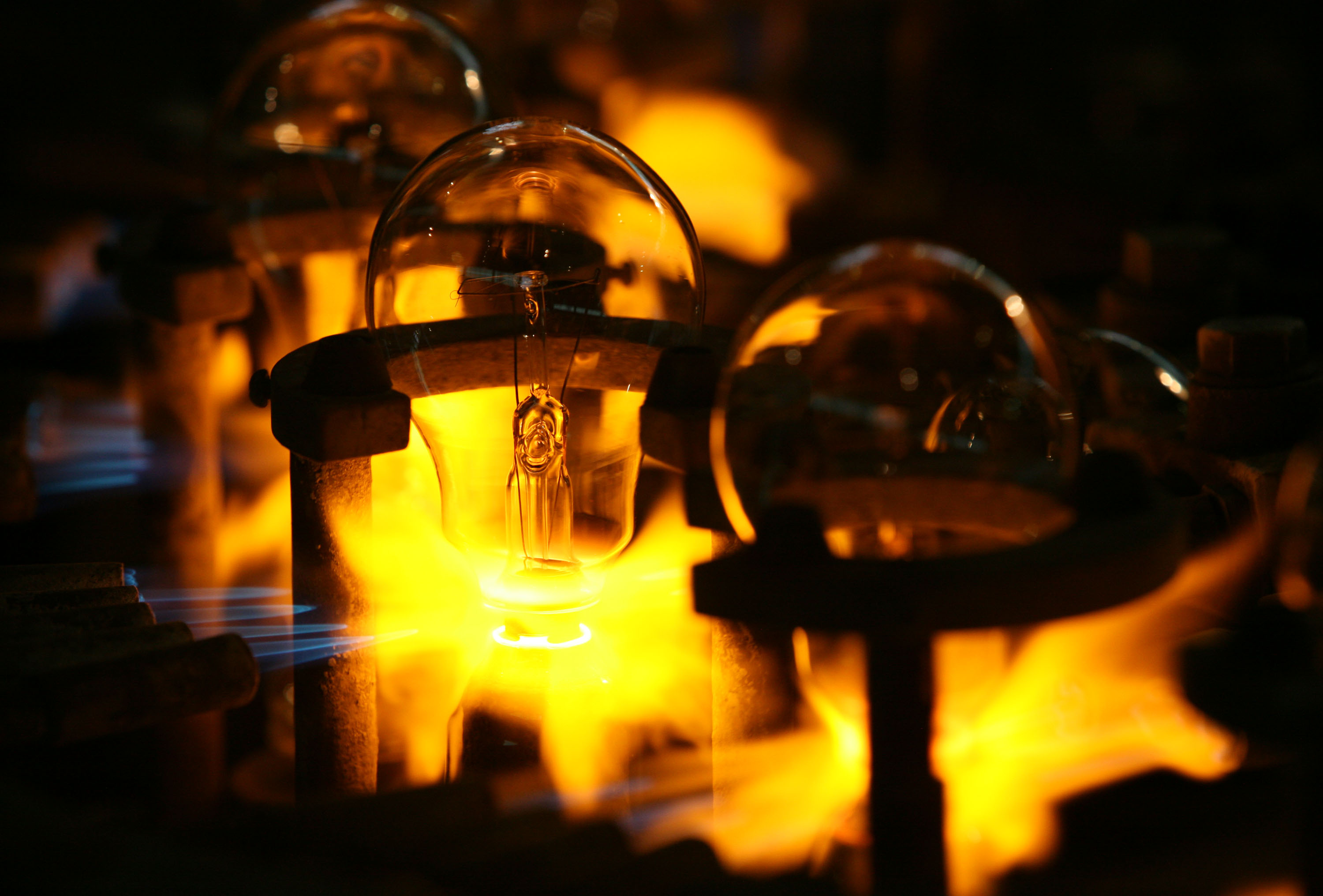
In the Energy Independence and Security Act of 2007, Congress established minimum efficiency standards for general service light bulbs, requiring them to produce more visible light per unit of energy.
Technically, incandescent bulbs were not banned. But GE Lighting said in a statement in 2022 that the federally mandated standards were set high enough that they effectively pushed traditional incandescent bulbs out of production.
Traditional incandescent bulbs are increasingly being priced as specialty items as they become harder to find. A case of six GE Reveal 60-watt halogen bulbs was listed on LightBulbStores.com on April 2 for $64.90—more than $10 per bulb—reflecting a market in which supply has shrunk and production is no longer at mass scale. What was once a cheap, everyday household product is now often sold through niche retailers or leftover inventory, driving up prices.
By contrast, modern LED replacements remain widely available and far less expensive, often selling for less than $20 for a multi-pack while lasting significantly longer.
Mark Baker, president of the Soft Lights Foundation, a nonprofit formed in 2021 to push back against restrictions on incandescent bulbs, told The Epoch Times that federal efforts to replace them with LED lighting prioritized energy efficiency without adequately addressing light quality or potential health effects.
Baker said LED lighting sacrifices light quality and may pose health concerns, citing differences from incandescent bulbs such as the lack of infrared output, increased blue light exposure, directional lighting, and potential flicker. He contends that these factors outweigh claimed energy efficiency benefits and make LEDs an inferior alternative.
“LED lighting is not ‘energy efficient’ as claimed by the government because LED GSLs do not provide the same quality of light as an incandescent,” Baker said, referring to general service lamps, the industry term used to describe common household light bulbs used in everyday fixtures such as lamps and ceiling lights.
Ben Lieberman, senior fellow at the Competitive Enterprise Institute, said federal regulations on translucent light bulbs weren’t necessary.
“My sense is that even without federal regulations, the LED bulbs would be gaining market share,” Lieberman told The Epoch Times. “After all, we didn’t need to ban typewriters for word processors to dominate. We just trusted consumers to pursue their own best interests. And what would be so bad if incandescent bulbs hung around as a market niche?”
Lieberman said there are other factors other than efficiency that matter to consumers.
“For example, the incandescent bulbs are cheaper and thus make the most sense for rarely used light fixtures where efficiency hardly matters,” he said. “And there are those who prefer the light quality of incandescent bulbs—whether they are right or wrong about it, I think it should be the consumer’s choice.”
Trump’s efforts to rescind federal regulations aren’t as simple as an executive order, Lieberman said.
“There are limits on repealing efficiency measures already on the books,” he said. “So big changes would have to come from Congress.”
Sen. Mike Lee (R-Utah), chairman of the Senate Committee on Energy and Natural Resources, introduced legislation in 2025 to repeal Biden-era lightbulb regulations that effectively banned incandescent light bulbs nationwide.
The Liberating Incandescent Technology Act was referred to the Committee on Energy and Natural Resources.
“These regulations have nothing to do with saving the planet—they’re about controlling people,” Lee said in a news release last year. ”If the federal government can dictate the type of lightbulb you use, what can’t it dictate? Americans don’t need Washington to micromanage their light switches.”
Lee’s office didn’t respond to a request for comment.
GE Lighting said that Biden’s energy policies allow states to set their own additional specifications on the availability of incandescent light bulbs.
In January 2024, the Department of Energy finalized energy efficiency standards, including those targeting incandescent light bulbs, that it said would save Americans $1 trillion in energy costs over a 30-year period.
“Making common household appliances more efficient is one of the most effective ways to slash energy costs and cut harmful carbon emissions,” then-Secretary of Energy Jennifer M. Granholm said in an April 12, 2024, statement.
Manufacturers have until July 25, 2028, to become compliant with the new standards.
The Department of Energy did not respond to requests for comment.