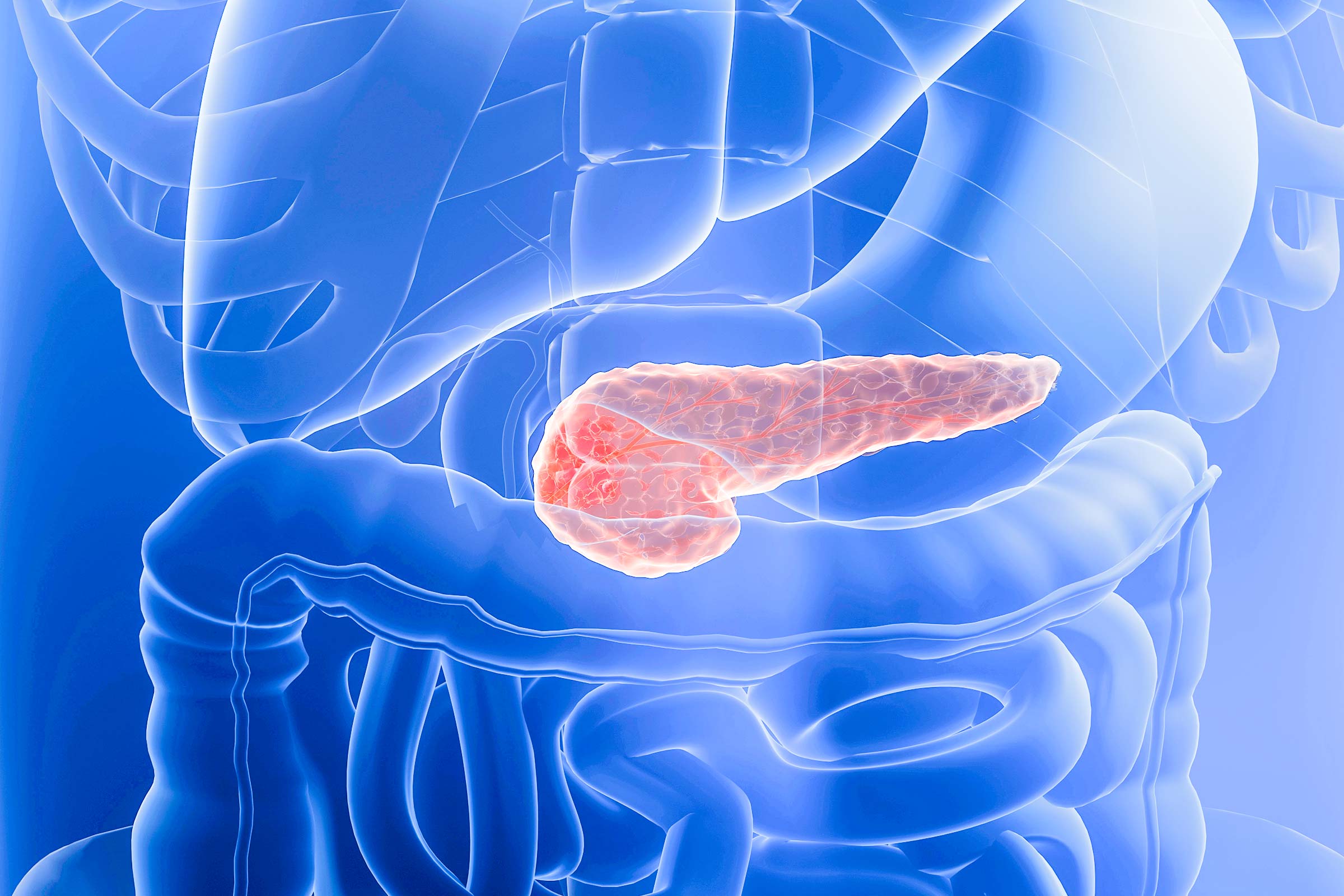

A new drug for one of the deadliest cancers nearly doubled patient survival in a major clinical trial.
The drug, daraxonrasib, developed by Revolution Medicines, targets a genetic mutation called RAS, which drives tumor growth in more than 90 percent of pancreatic cancer cases.
In a global Phase 3 trial, patients with metastatic pancreatic ductal adenocarcinoma (PDAC) who took daraxonrasib once daily by mouth survived an average of 13.2 months, compared to 6.7 months for those receiving standard intravenous chemotherapy.
The promising results could lead to a new treatment option for a disease that is often diagnosed late.
A Disease That Has Resisted Nearly Every Advance
Pancreatic cancer kills approximately 50,000 people in the United States each year and is typically diagnosed late, leaving patients with few treatment options. Unlike many other cancers, it has remained largely resistant to immunotherapy and other modern treatment advances.
Daraxonrasib kills cancer by acting as a “molecular glue” that physically blocks active RAS proteins from sending growth signals to tumors. The RAS gene plays a critical role in regulating whether a cell grows. In people with RAS mutations, the gene can become locked in the “on” state, allowing unchecked cell growth, which can then cause cancer.
The trial enrolled patients with various RAS mutations and others without any identified RAS mutation. The primary focus was on patients with a specific type of RAS mutation also found in non-small cell lung and colorectal cancers, but the study also included a broader group of patients.
According to the manufacturer, patients taking daraxonrasib experienced significantly longer periods without disease progression and improved survival rates compared to those receiving standard intravenous chemotherapy.
Due to the structure of the KRAS protein target and previous limitations in chemistry, KRAS was considered “undruggable” for a long time, Dr. Chaoyuan Kuang, an assistant professor of oncology, medicine, and molecular pharmacology at Montefiore Einstein, who was not involved in the study, told The Epoch Times.
“This all changed over a decade ago, and since then, RAS inhibitors have been appearing in studies and the market,” Kuang said. “This new inhibitor is unique because it targets RAS in a way that is different than the earlier RAS inhibitors.”
If the survival benefit of the daraxonrasib holds up long term, Kuang said that the drug could become a very effective new treatment option for pancreatic cancer.
“The alternative or standard chemotherapy treatments are seen as inferior in many ways, such as chemotherapy toxicity and practical issues such as long infusions,” Kuang said.
However, he cautioned that resistance remains a major challenge with this type of therapy.
“Resistance is highly likely to develop, especially in patients who are taking daraxonrasib monotherapy,” Kuang said. “The resistance mechanisms may be different in different types of cancer, so it will be important to study and understand them all and develop strategies to overcome resistance.”
Dr. Rebecca Miksad, an oncologist and chief medical officer at Color Health, which partners with the American Cancer Society through its screening and prevention program, and who was not involved in the trial, called the results for daraxonrasib “unprecedented.”
Miksad compared the potential effect of daraxonrasib to trastuzumab, the landmark targeted therapy for HER2-positive breast cancer that transformed treatment after its introduction in 1998.
The full results will be presented at the 2026 American Society of Clinical Oncology Annual Meeting on May 31.
The Safety Question
The trial found that 96 percent of patients experienced adverse effects of any severity, while only 30 percent encountered severe side effects classified as grade three or higher. Grade three is considered serious and interferes with a person’s ability to do basic daily activities such as eating or getting dressed.
The most commonly reported side effects included rash, diarrhea, inflammation of the mouth and throat—including stomatitis and mucositis—and fatigue.
At the 300-milligram dose, half of the patients required dose adjustments, yet no one had to stop treatment due to side effects. Researchers also noted that the existing second-line chemotherapy treatments are associated with significant adverse effects of their own.
Dr. Krushangi Patel, medical director of GI Medical Oncology at City of Hope Orange County in California, who was not involved in the trial, cautioned that the findings are based on only one Phase 3 study, and a complete regulatory review is still needed before daraxonrasib can be considered a standard of care.
“While the advancement is real and the excitement is well-deserved, it is important to understand that the prognosis for pancreatic cancer remains poor,” she said.
A Meaningful Step Forward
Patel called the results “encouraging,” especially because they were observed in a cancer for which treatment options have long been limited and in which KRAS mutations are present in the majority of patients.
She noted that there is a strong scientific rationale for why this type of drug could also prove useful in other cancers driven by RAS mutations.
“KRAS is one of the most common oncogenic drivers across solid tumors, particularly in lung and colorectal cancers,” Patel said.
“What is most important is that this study suggests, for the first time in a large randomized Phase 3 trial, that targeting RAS biology may improve survival in pancreatic cancer.”
She also said that the findings represent a “meaningful step forward.”
The company stated that these findings are final based on the initial interim analysis and plans to submit the data to global health authorities, including the Food and Drug Administration (FDA), for potential approval.
The FDA has previously granted daraxonrasib Breakthrough Therapy designations, which would allow patients earlier access to this drug. The agency also granted the drug an orphan drug designation, which incentivizes the company to pursue drug development through tax credits for clinical research, grant funding, assistance with development, and seven years of market exclusivity if approved.
In a statement, Dr. Brian M. Wolpin, a pancreatic cancer researcher at Harvard Medical School, noted the urgent need for new treatments for the deadly disease.
“The results of this study indicate that daraxonrasib offers a significant step forward for patients with pancreatic cancer who have already undergone treatment,” he told The Epoch Times.
Daraxonrasib targets these mutations, making it a promising new approach. It is the first drug in a new class designed to block RAS proteins, which fuel tumor growth in many cancers.
On May 1, just two days after Revolution Medicines submitted its request, the FDA issued a “safe to proceed” letter, allowing the company to initiate an expanded access treatment protocol for daraxonrasib. This means that eligible patients can begin receiving the drug before formal approval.