Join Sina McCullough, PhD in nutrition, on her quest to uncover truths about food and health. A scientist by training and journalist by nature, Sina offers facts and insights about how to live healthy, happy, and free.
I never thought giving birth would show me a glimpse of heaven—until I raced across a bridge to save my daughter’s life.
My eyes were opened to how much we still don’t know about the human experience—and the remarkable tapestry that may exist beyond what science alone can explain.
My Story: Racing Across the Bridge
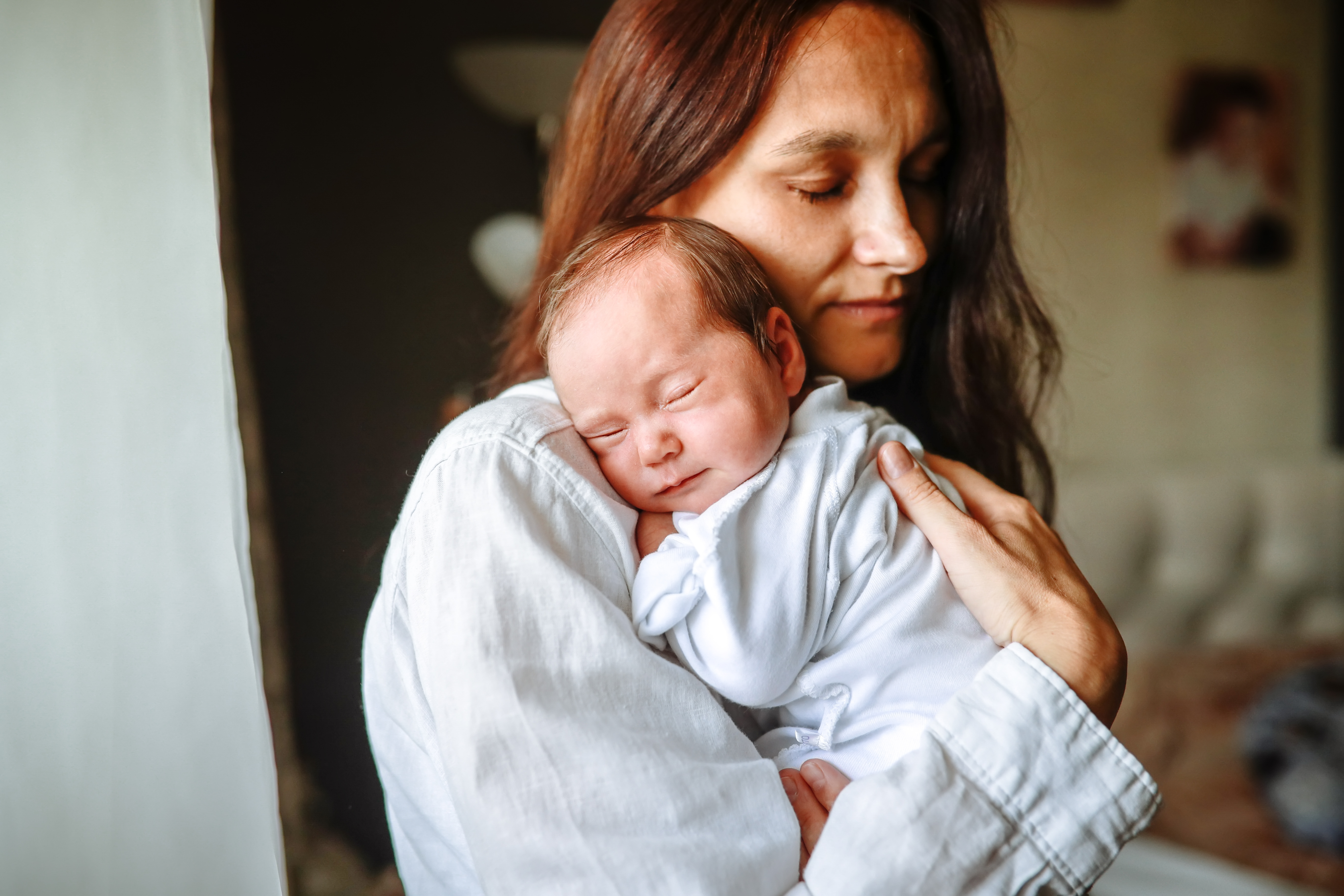
I gave birth to my nine-pound baby girl, Trinity, at home. It was a moment brimming with joy—until I noticed her eyes appeared vacant. She wasn’t crying, blinking, or moving.
Then, a bolt of pain shot through my body—worse than any contraction. In an instant, I lost a dangerous amount of blood and fainted.
What came next defied anything I could have predicted.
I was racing across a bridge toward my mother and stepfather—who had both recently passed away. They stood in a radiant, nature-filled realm unlike anything I’d ever seen—vibrant colors, majestic trees, and golden light. There was no fear. Only calm.
My mom was cradling Trinity, both of them serene, as though waiting for me. Somehow, I knew I had to reach them quickly if my baby was going to survive.
Sprinting across the bridge, I finally reached them and blurted out, “I need my baby right now.” My stepfather smiled. “We know,” he said. My mom handed Trinity to me ever so gently.
I immediately turned around and started to sprint back. But the bridge began to fade in front of me, rapidly disappearing inch by inch. I leaped across the fading path, clutching my baby in my arms, and awoke on the floor—right where I had fainted.
Gasping for air, I choked out, “Where’s the baby?”
From the next room, I heard the doctor pleading: “Come on, come on. You can do it. Breathe.”
Against All Odds
At last, Trinity cried—a glorious, heart-stopping cry that shattered the stillness.
It was her first breath after many minutes of lifelessness.
For the next 18 hours, I drifted in and out of consciousness. My hemoglobin had plummeted to a perilous level of 5 grams per deciliter—dangerously below the normal range for women, which typically falls between 12 and 15. By medical standards, survival was unlikely.
Yet somehow, I recovered without a blood transfusion or any medical intervention.
A week later, when I followed up with my regular doctor—who hadn’t delivered my baby—she reviewed my records, shook her head in disbelief, and called it a miracle. “You should have died,” she said.
Trinity fully recovered as well. Today, she is 4 years old and thriving.
When Science Meets the Unknown
Near-death experiences happen during medical emergencies such as heart attacks, major bleeding, strokes, brain injuries, drowning, and lack of oxygen. About half of adults and up to 85 percent of children who have nearly died
report having these experiences. People often
describe floating outside their bodies, feeling peaceful, seeing dead relatives, noticing tunnels or bright lights, and believing the experience was real, not a dream.
Skeptics could argue that the severe blood loss I experienced triggered an extreme physiological state—perhaps fueling a vivid dream-like phenomenon or a hallucination shaped by my spiritual beliefs. I understand this perspective.
As a scientist, I was taught to view these phenomena as biological artifacts–hallucinations triggered by surging neurochemicals when oxygen levels crash.
But what continues to haunt me isn’t the mechanics—it’s the timing. Trinity took her first breath at the exact moment I jolted back into awareness. What are the odds?
What I know is that it felt every bit as real as the moment I’m living right now. And I’m not alone.
Dr. Bruce Greyson, one of the leading researchers in near-death experiences, reported that people often describe these events as being just as real as everyday life.
Some researchers argue that near-death experiences may be a glimpse into consciousness beyond the physical body.
In 2001, Dutch cardiologist Pim van Lommel published a landmark study tracking 344 cardiac arrest survivors. Eighteen percent reported near-death experiences while their brains registered no activity and their hearts had stopped. These findings challenge the conventional understanding that consciousness ceases when brain function halts—an idea once unthinkable to me, given my Western science training.
The 2014 AWARE-AWAreness during REsuscitation study, the largest of its kind, examined more than 2,000 cardiac arrest cases across multiple countries. Among them was a patient who, despite being clinically dead, accurately described the events and tools used during his resuscitation—details later confirmed by medical staff.
These studies suggest that consciousness might not be confined to brain function alone—a question I never thought I’d consider seriously before my brush with death.
A New Perspective
Whether they stem from altered states of consciousness or biochemical phenomena,
near-death experiences are often described as profoundly
transformative. Many who experience them report a lasting shift in perspective: a reduced fear of death, a renewed sense of purpose, greater compassion, a stronger focus on the present moment, and a deepened appreciation for life.
That’s certainly true for me.
My near-death experience didn’t just save Trinity’s life—it transformed mine.
I no longer fear death because I’ve seen heaven—a realm filled with light, love, and loved ones.
I never feel alone because I know my mother and stepfather are watching over me.
I now live with a heart anchored in gratitude for every breath, every sunrise, every moment of this beautiful life.
There’s no longer space for drama or the relentless pursuit of success. I no longer worry about climbing the corporate ladder or keeping up with the Joneses.
My focus has shifted to relationships—being fully present and letting the people I love know they are cherished and accepted exactly as they are.
Every time I watch Trinity chase butterflies in the backyard, I’m reminded of the miracles that can unfold in a single moment—or 20 minutes of stillness.
Whether my near-death experience was a biochemical hallucination or a momentary crossing into a higher realm, it taught me that science alone cannot—and should not—claim to have all the answers. Faith, intuition, and spiritual inquiry also have a place in our pursuit of truth.
At the end of the day, even though science has yet to build a bridge to “the other side,” we have powerful stories from those who’ve raced across one—and returned to tell the tale.
Join the Conversation
This week’s community question:
Have you or someone you know experienced something that defied scientific explanation? Do you believe consciousness might exist beyond the brain? I’d love to hear your thoughts.