
A medical campaign that helped eliminate river blindness in remote Amazonian villages also did something researchers didn’t expect: It began reshaping the gut microbiome of indigenous communities within just four months—before diet, housing, or lifestyle had changed at all.
The findings, published in Cell Reports, followed 335 indigenous people living in Venezuelan Amazonian villages with varying levels of outside contact. Researchers found that the microbes of these people began shifting within just a few months of repeated medical visits, moving toward patterns more commonly seen in industrialized populations.
What makes this study unusual is the timing, according to Jack A. Gilbert, professor of pediatrics and director of the Microbiome and Metagenomics Center at the University of California–San Diego, who was not involved in the research. Most microbiome research captures the effects of many changes at once, including diet, sanitation, housing, and medications. In this study, researchers were able to track a single new medical intervention in real time.
“We have the Yek'wana and Yanomami-Sanema communities followed as a single new medical intervention and in just a couple of months the gut, oral, and skin microbiomes were already restructuring,” Gilbert told The Epoch Times via email.
The study suggests that medical care itself may come with a biological trade-off, raising questions about how quickly the human microbiome responds to even minimal medical contact.
Gut Microbes Shifted Quickly
Researchers followed indigenous communities in remote Venezuelan villages as they began receiving quarterly medical visits through a World Health Organization-supported program aimed at eliminating onchocerciasis, also known as river blindness, a parasitic disease transmitted by blackfly bites that causes severe skin disease and irreversible blindness. Left untreated, it disables and disfigures entire communities.
During the visits, villagers received the antiparasitic drug ivermectin, which treats river blindness, and other basic medications, including vaccines, antibiotics such as amoxicillin, analgesics, antifungals, nonsteroidal anti-inflammatory drugs, and vitamins.
Researchers collected more than 1,500 samples, including fecal samples and swabs from the mouth, nose, and skin, during visits in October 2015 and February 2016. Within those four months, they observed declines in gut microbial diversity in villages receiving repeated medical contact. The study was observational and not designed to isolate which specific intervention—antiparasitic medication, reduced parasite burden, increased outside contact, or other environmental changes—drove which changes.
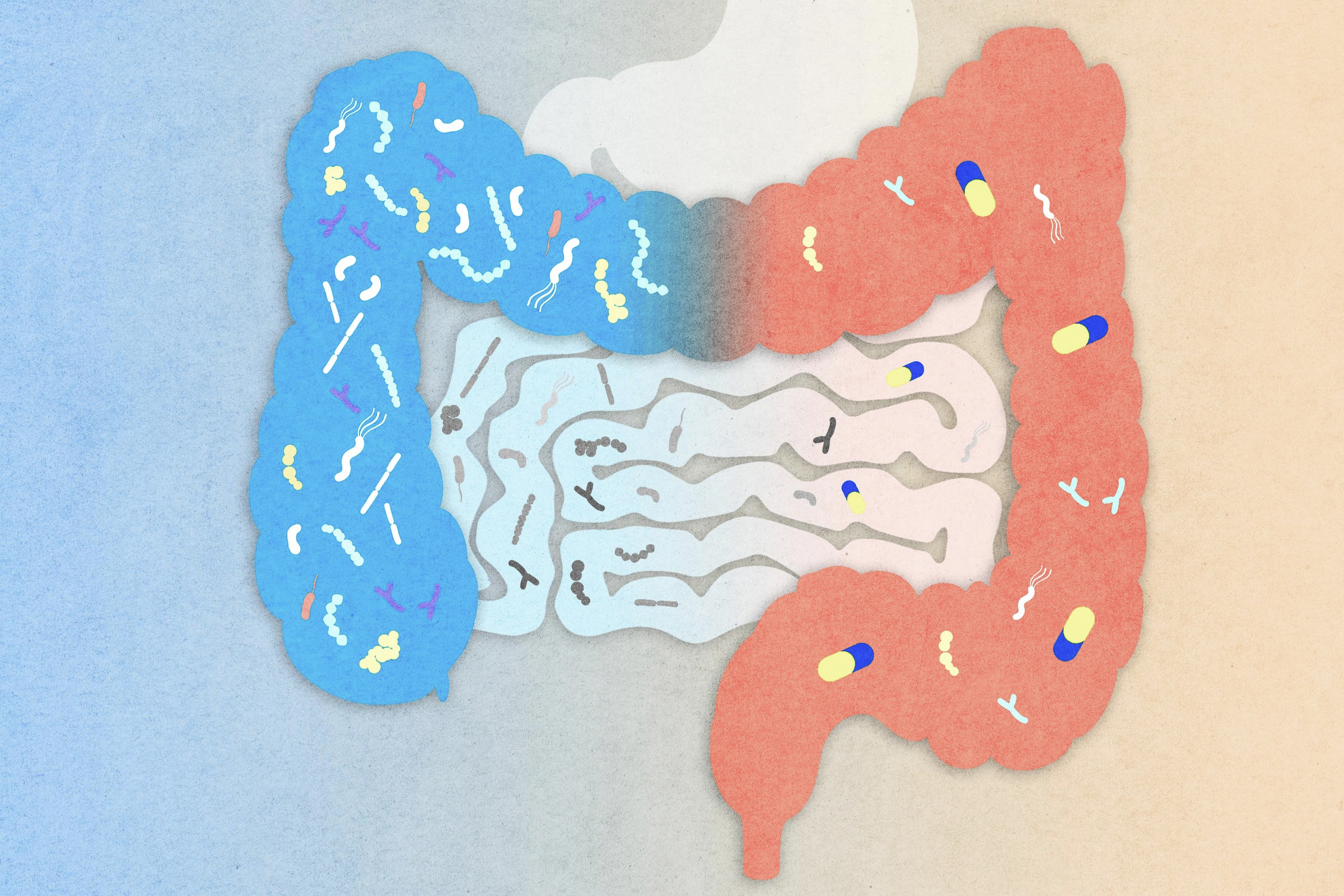
The gut microbiome also shifted in composition: There were declines in bacteria associated with traditional, fiber-rich diets and the fermentation of complex plant carbohydrates, including Prevotella, Treponema, and members of the Ruminococcaceae and Lachnospiraceae families. These microbes help ferment dietary fiber into compounds believed to support gut and immune health.
At the same time, microbes more often seen in industrialized populations became more common, including several Bacteroidota groups and Akkermansia, which are not necessarily harmful on their own. Microbial networks in the gut also became less interconnected, suggesting changes not only in which microbes were present but also in how they interacted.
Children Showed the Strongest Changes
The shifts were especially pronounced in children, who appeared more sensitive than adults to the repeated medical exposure.
That finding, Gilbert said, matters because early-life microbial communities help shape immune and metabolic development, and disruptions during childhood may have long-term consequences.
“The taxa vanishing here in months are the same ones that, in industrialized populations, took generations to lose, and whose absence we now associate with rising allergic, autoimmune, and metabolic disease,” Gilbert said.
The microbiome was not just changing in composition. Researchers also found signs that its function was shifting, with more genes related to processing simple carbohydrates and antimicrobial resistance, and fewer genes associated with fiber fermentation and other core metabolic processes.
Changes were not limited to the gut. Microbial diversity in the mouth and on the skin also fell significantly, while microbial communities in the nose increased.
Although antiparasitics and antibiotics are critical lifesaving treatments, this paper shows that it is important to “be mindful of unintended consequences and develop strategies to mitigate effects on the microbiome,” microbiologist Erica D. Sonnenburg, a research scientist at Stanford University School of Medicine, who was not involved in the study, told The Epoch Times via email.
Medical Interventions Still Necessary
The findings also raise questions about how medical care is introduced into communities with long-standing healing traditions.
“Even minimal, well-intentioned medical contact has measurable ecological consequences for the microbial communities our bodies have co-evolved with,” Gilbert said.
The study is a reminder that these introductions should be managed in partnership with the indigenous communities.
“It draws attention to something that we do not often think about—how Western medicine may affect populations that, for centuries, have relied on traditional healing practices using herbs and rituals,” Iliyan D. Iliev, professor of microbiology and co-director of the Microbiome Core Laboratory at Weill Cornell Medicine, who was not involved in the study, told The Epoch Times in an email.
Researchers said that modern medicine is still necessary, emphasizing that programs treating diseases such as river blindness remain lifesaving.
“The results should not be read as suggesting that medical interventions are harmful or should be withheld,” Iliev said.
Instead, he said, the findings likely reflect a mix of changing exposures—including medication, fewer parasites, and more outside contact—that together may be reshaping the microbiome. Some of the changes may even be beneficial, he said, if they reflect a reduction in pathogens or parasites, even if they also coincide with lower microbial diversity.
The findings fit into a broader pattern of declining microbial diversity worldwide alongside modern medical and environmental change, study coauthor Dr. Martin Blaser, who holds the Henry Rutgers Chair of the Human Microbiome at Rutgers University, told The Epoch Times via email.
“We do not have to choose between having antibiotics and retaining our microbial diversity,” Blaser said.
However, he said that “we must use antibiotics more selectively and plan restorative strategies.”
What Comes Next
Much remains unknown about the relationship among modernization, microbial diversity, and long-term health.
However, the study suggests that microbiome shifts from modern medical care can begin much earlier than scientists once thought—before the larger changes of industrialization take hold.
“None of this argues against antibiotics or antiparasitic drugs,” Sonnenburg said. “The question is whether we can be smarter about how these drugs are used and the care provided after they are used to minimize microbiome disruption.”
Researchers are increasingly exploring whether diet-based interventions, probiotics, or microbiome replacement could one day help restore microbial communities after treatment.
“I believe that in the future,” Blaser said, “we will be giving back some of the ’missing microbes’ to decrease disease risk.”