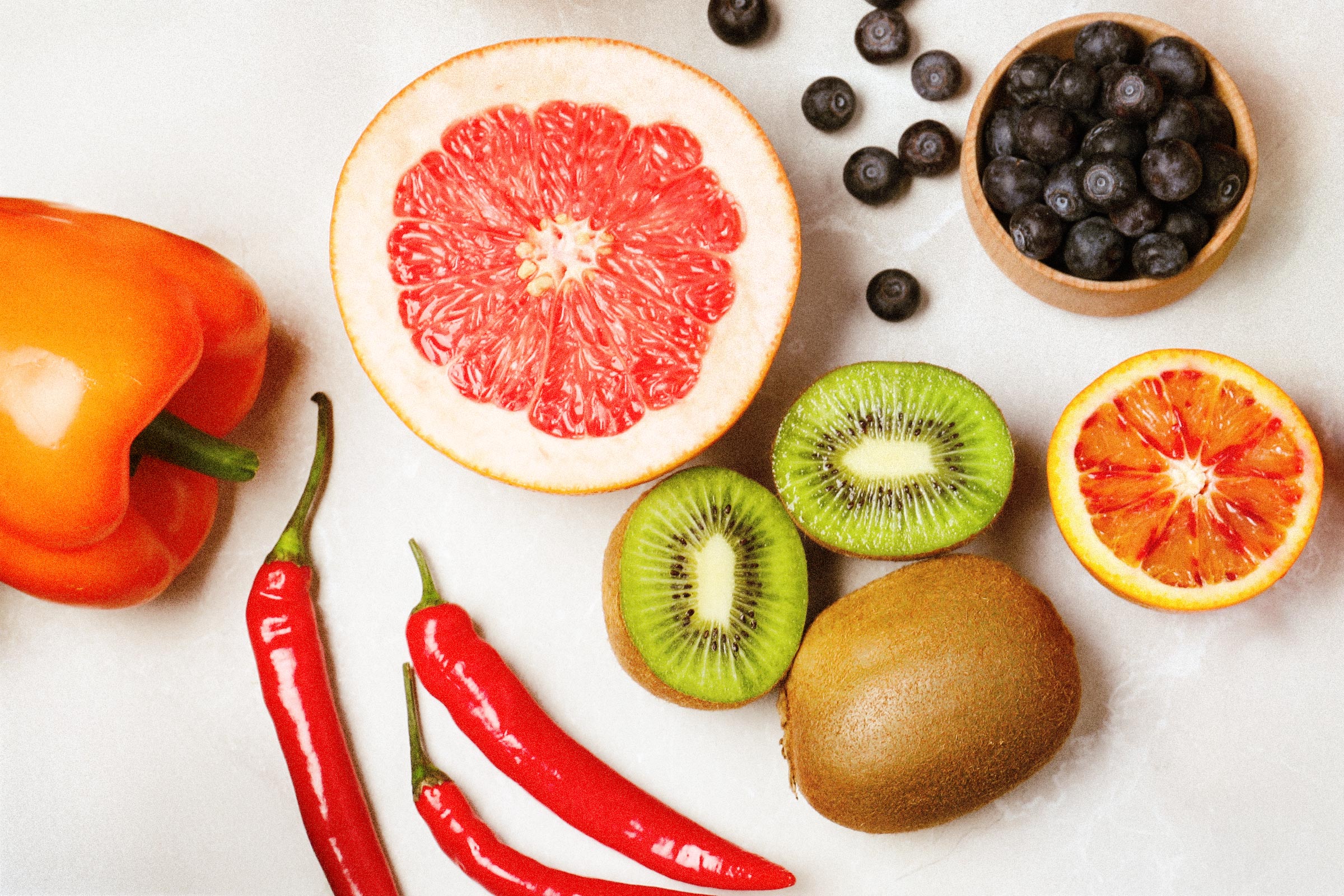
Although beauty brands invest billions of dollars in anti-aging creams, researchers in New Zealand have found something far simpler: Eating foods with vitamin C could boost the anti-aging benefits your skin needs.
People who ate two kiwifruits daily—the equivalent of 250 micrograms of vitamin C—had thicker skin and accelerated skin regeneration after eight weeks.
The discovery, from New Zealand’s University of Otago, reveals that vitamin C absorbed through the bloodstream travels into all layers of the skin, promoting thickness, regeneration, and a more youthful complexion.
“We were surprised by the tight correlation between plasma vitamin C levels and those in the skin—this was much more marked than in any other organ we have investigated,” Margreet Vissers, research professor at the university and lead author, said in a statement.
This discovery underscores a timeless truth: Sometimes, the best remedy is found on your plate.
Improved Collagen and Skin Renewal
The
study, published in the Journal of Investigative Dermatology in October, followed 24 participants in New Zealand and Germany, half of whom were instructed to eat two kiwis daily for eight weeks, providing about 250 micrograms of vitamin C per day.
In all 12 participants, vitamin C levels in the blood rose to saturating levels and increased whole-skin vitamin C, including in both superficial skin layers and inner skin layers.
After eight weeks, participants who ate kiwis daily had thicker skin density and increased skin growth. Vitamin C can help with skin regeneration by boosting collagen production.
“We are the first to demonstrate that vitamin C in the blood circulation penetrates all layers of the skin and is associated with improved skin function,” Vissers said.
Although vitamin C has long been used in skin creams, the research highlights why consuming it through diet may be more effective: It’s water-soluble and poorly absorbed through the skin’s outer barrier.
“Our study shows that the skin is extremely good at absorbing vitamin C from the blood circulation,” Vissers said. “Uptake into the outer epidermal skin layer also seems to be prioritised.”
Why It Matters
Vitamin C is essential because the body cannot produce it on its own. It acts as an antioxidant, supporting the immune system and neutralizing free radicals that can damage cells.
“We absorb and utilize any antioxidant best, including vitamin C, when we consume it with other foods and drinks,” Kathy Feld-Berkowitz, manager of nutrition and dietetics at Northwell Health’s Phelps Hospital in New York state, who was not involved in the study, told The Epoch Times.
The study suggests that other fruits and vegetables high in vitamin C—such as citrus, berries, bell peppers, and broccoli—could have similar benefits for skin health.
Vissers advised maintaining optimal vitamin C levels in the blood by eating about 250 milligrams daily, which most people can achieve through a balanced diet rich in fruits and vegetables.
Most People Get Enough Through Diet
Most people get enough vitamin C in their diets, according to Feld-Berkowitz.
“Primary sources of vitamin C are citrus fruits, tomatoes, potatoes, Brussels sprouts, cauliflower, broccoli, strawberries, cabbage, and spinach,” she told The Epoch Times, noting that it’s very hard to get too much vitamin C, as it passes through the kidneys when we urinate.
Vitamin C supplementation may be needed for people who are deficient because of malnutrition or a health condition that blocks their ability to get enough of it “such as advanced gastrointestinal disease, cancer, or prolonged poor eating,” she said.
The research was funded by New Zealand kiwi grower Zespri International, which had no influence over study design, data analysis, or publication, as well as a University of Otago Research Grant.