
The billboard says $99. A few minutes in a CT scanner, and out comes a number that promises to tell you something a cholesterol test cannot: whether calcium has built up in the arteries of your heart. Your neighbor swears by it. His score came back zero, and he has slept better since. A friend’s high score finally got him to change how he eats.
The coronary artery calcium scan has become the medical test people recommend like a restaurant.
A new study published in JAMA followed thousands of adults for a decade and found a narrower result. For most people, the scan added little to what a doctor could already estimate from a routine checkup and bloodwork. The test is easy to get. The harder question—the one doctors keep returning to—is whether the number would change what you do.
If it would not, Dr. Gregory Katz, a cardiologist at NYU Langone Health, calls it “information theater.” For a smaller group still deciding whether to start a statin, the scan can change the decision.
What the Scan Can See–and What It Can’t
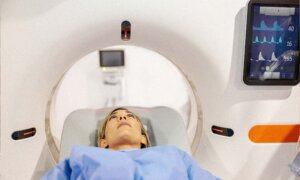
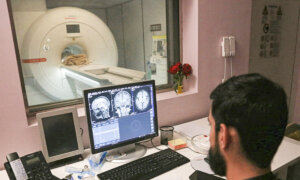
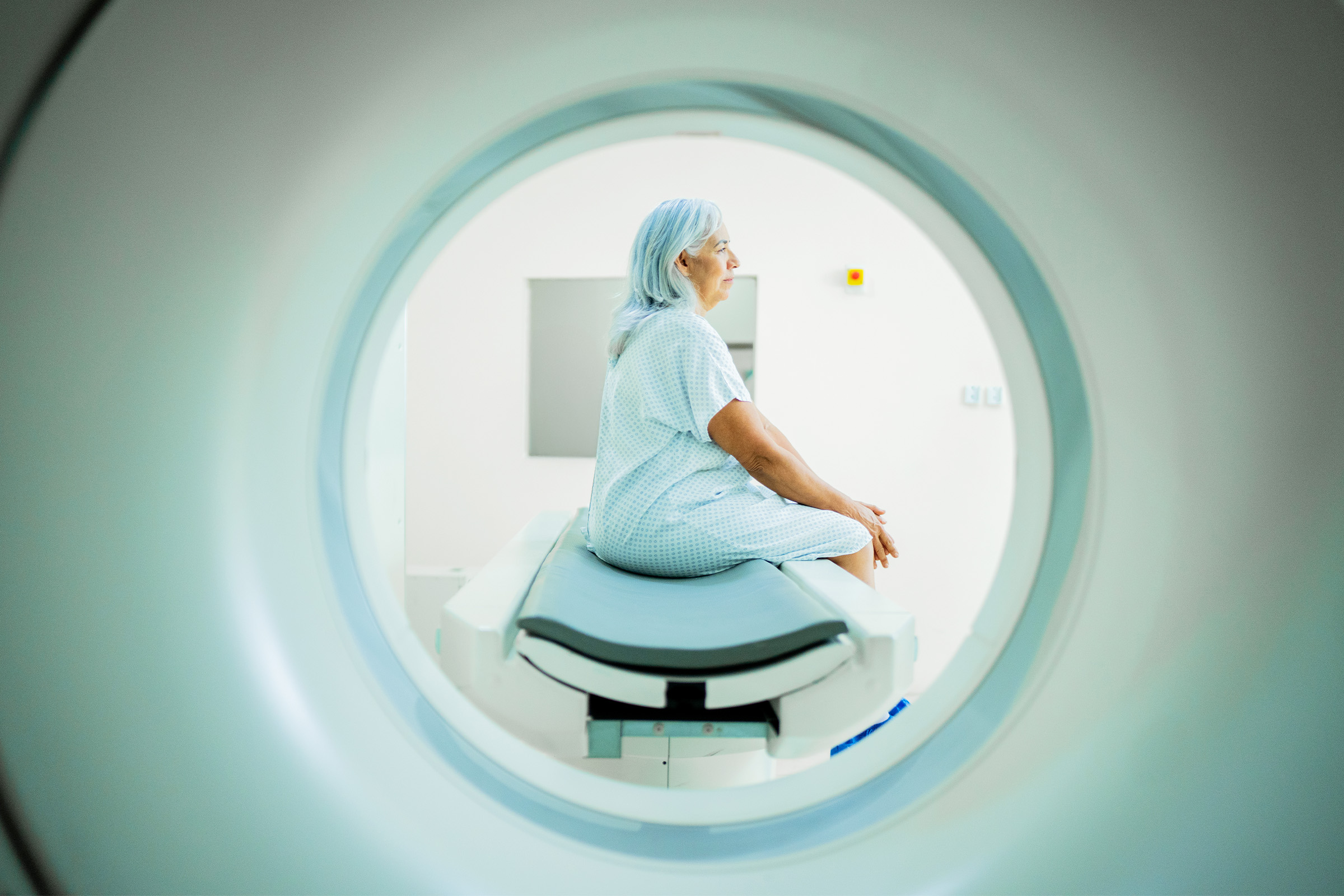
A coronary artery calcium scan is a CT of the heart. It looks for calcium in the arteries that feed the heart. Plaque starts when cholesterol lodges in the artery wall and the body’s immune cells treat it like an injury. Over time, some of that plaque hardens with calcium. Plaque can narrow an artery, and some plaques can rupture and set off a clot that causes a heart attack.
The calcium in the hardened plaque is what the scan can see. It is not from drinking milk or taking calcium supplements. It forms inside diseased plaque. The scan shows where calcium has accumulated. Software measures the deposits and calculates a calcium score based on their size and density.
The score is not a percentage. Zero means none was found. Scores can run into the hundreds or even thousands. At 300, the guidelines classify the burden as severe.
The higher the score, the greater the risk of a future heart attack or stroke. Doctors can see the calcium, but the scan cannot show how blocked an artery is. A high score means there is a lot of hardened plaque—not necessarily a narrowing that needs a stent. The scan also misses soft plaque—plaque with too little calcium to show. That is why a zero is not proof of clean arteries.
“A calcium scan does not show every plaque that could cause a heart attack,” Dr. Michael Shapiro, a cardiologist at Wake Forest University School of Medicine, told The Epoch Times in an email. “Instead, it measures one visible footprint of the overall amount of coronary atherosclerosis.”
Why Get a Calcium Scan?
Most people who book a calcium scan feel fine. The test is meant to estimate future risk—and, sometimes, to help decide whether to start a statin. Doctors already have another way to estimate future risk. PREVENT, the American Heart Association’s risk calculator, uses basic health information such as blood pressure and cholesterol to estimate the chance of a heart attack or stroke over the next 10 years. PREVENT gives its answer as a percentage.
A PREVENT risk of 4 percent means about a four in 100 chance of a heart attack or stroke in the next 10 years. The new JAMA study asked how much a calcium scan adds to that estimate. Researchers studied 6,098 adults ages 45 to 79 with no known cardiovascular disease. They calculated each person’s PREVENT risk, then added the calcium score to see whether the prediction improved.
To Statin or Not to Statin
For most people in the study, the scan changed the estimate only a little. However, for people near the line between starting a statin and waiting, the scan could make the decision clearer. The sharpest split was in people whose PREVENT risk was borderline—3 percent to just under 5 percent—a gray zone where the usual numbers don’t settle the statin question. People in this group looked fairly similar based on the usual risk factors, but their calcium scans told a different story.
Among those with a calcium score of zero, about one in 50 had a heart attack or stroke over the course of 10 years. Among those with a calcium score of 300 or more, one in seven did.
“That is a very meaningful separation for two people who looked quite similar before the scan,” Dr. Khurram Nasir, chief of cardiovascular prevention and wellness at Houston Methodist, who was not involved in the study, told The Epoch Times in an email.
Who lands in that gray zone? Often someone middle-aged with one or two risk factors—high blood pressure or high cholesterol—Dr. Nilay Shah, a cardiologist at Northwestern and the study’s senior author, told The Epoch Times.
No single number settles the question for them. Consider a 52-year-old woman who feels good but has somewhat high cholesterol. PREVENT puts her 10-year risk of a heart attack or stroke at 4 percent. A statin is reasonable to consider, but the answer is not obvious.
Nasir starts with one question: Is she comfortable starting a statin based on what she and her doctor already know?
If the answer is yes, she may not need the scan. If she does not want to take a pill for years unless she knows how much plaque she has, the calcium scan can break the tie. Statins come with trade-offs, including muscle symptoms in some patients and a small increase in diabetes risk. The lower someone’s starting risk, the less a statin has to prevent.
If her score is zero, waiting gets easier to justify. In this borderline group, a zero “can be much more useful in supporting a decision to defer treatment when there is genuine uncertainty,” Shapiro said. How much a zero is worth depends on the risk she had before the scan.
“The power of zero is real, but it is conditional on where you started,” he said.
He draws the line at a PREVENT risk of about 5 percent. Above that, guidelines generally recommend a statin, and he would not use a zero to withhold one.
Not every doctor uses a zero that way. Dr. Andy Lazris, a primary care physician in Maryland, uses the scan mainly to keep patients off statins. He has done so for dozens of patients, including at least five with low-density lipoprotein (LDL) cholesterol higher than 200 as well as a score of zero. That goes further than the guidelines.
Nasir would not keep someone with LDL cholesterol higher than 190 or 200 off a statin because the scan was zero. The worry is not only the next few years, he said, but decades of very high cholesterol.
“[A zero] is not a lifetime passport. Atherosclerosis evolves,” he said.
If the scan finds a lot of calcium, the decision tips the other way. A 200 would not mean a heart attack was around the corner—but it would mean that the disease is already there and that the case for a statin just got stronger.
When a High Number Starts a Cascade
A high score can be alarming. The mistake is treating it as proof that the artery is clogged and something must be opened. Katz has seen the cascade. A high calcium score leads to a stress test. If the stress test is abnormal, the patient goes to the cardiac catheterization lab, and soon there is talk of a stent or bypass—“a whole bunch of unnecessary stuff,” he said.
In someone with no symptoms, even a very high score “should not set off a cascade of looking for a blockage that should be fixed,” he said.
“That’s the absolute wrong way to use the test,” he said.
The scan counts hardened plaque. It does not measure how narrow the artery has become. Lazris watched that gap between plaque and blockage play out in one patient. The man exercised every day and seemed extremely healthy, he said.
He ordered the scan hoping a low score would support stopping the man’s statin. It came back at 1,500. That high number sent the patient to the catheterization lab—an invasive procedure—where no blockage was found. The cascade doesn’t always stop at the heart. The CT can detect a spot on the lung, leading to more imaging, more worry, and higher costs.
For Nasir, the bigger concern is what a calcium-scan result can set in motion.
“The larger potential harm is what happens after a result is interpreted without context,” he said.
So what should a high calcium score lead to?
For Shapiro, the answer is prevention—not a search for a blockage.
“A score of 200 should prompt aggressive attention to cholesterol and other risk factors, but it does not automatically mean aspirin, stress testing, or an angiogram,” he said.
A high number can do one thing a cholesterol result often cannot: make the risk feel real.
Dr. Bret Scher, a cardiologist, said he has seen an elevated score convince people to change how they live, or to take a statin.
“LDL isn’t the disease we are worried about. Heart disease is,” he said. “Seeing the presence of heart disease is more powerful than an elevated LDL.”
Does the Scan Prevent Heart Attacks?
Seeing plaque can change what people do. Changing what they do is not proof that fewer of them have heart attacks. Testing that requires a different study: Give some people the scan, give others the usual calculator, and count who later has a heart attack or stroke.
That distinction is the whole argument for Dr. Rita Redberg, a cardiologist at the University of California–San Francisco, and a former editor-in-chief of JAMA Internal Medicine. For more than 30 years, she noted, no randomized trial had shown that care guided by the scan prevented heart attacks or strokes.
“I cannot recommend CAC scans or any test unless they have evidence that they can lead to improved outcomes,” she told The Epoch Times via email.
She also pointed to potential downsides such as anxiety, extra tests, and radiation. Lifestyle lowers risk with or without the scan, she said.
“You could not pay me to have one,” she said.
Days after she wrote those words, the results of the strongest test yet arrived.
The CorCal Outcomes trial assigned 5,772 adults with a mean age of 64 to have the statin decision guided either by a calcium scan or by an older risk calculator—not PREVENT. After approximately four years, 2.7 percent of each group had died, had had a heart attack or stroke, or had undergone a procedure to restore blood flow. There was no difference in major events between the two groups.
But that result did not settle the question whether the scan prevents heart attacks.
Far fewer events occurred than the researchers expected, making it harder for the trial to detect a true difference. It also failed its own test for showing that the scan-guided strategy was no worse than the calculator. The two strategies changed the treatment in different ways.
The calculator recommended a statin more than three times as often. The scan recommended a statin less often—but when it did, people were much more likely to take it: 62 percent did, compared with 23 percent after the calculator.
Dr. Joseph Muhlestein, the principal investigator, called the findings hypothesis-generating and said they could help plan a larger trial.
So far, the randomized evidence does not show that using the scan to guide treatment prevents more heart attacks or strokes. Because the trial was short of events, it does not close the question either.
Should You Get One?
Do not start with the scanner. First run your PREVENT risk with your doctor, Shah said. Then ask whether a scan would add anything.
At low risk, there is usually little to gain from having a scan. At 10 percent or higher, guidelines already favor a statin, so the scan is less likely to change the plan. The strongest case is in between, when your PREVENT results leave you and your doctor still unsure.
Age also matters. The JAMA study included no one under 45. A zero may mean less in younger adults, Katz said, because their plaque may not yet have much calcium.
“It is not strictly or necessarily wrong to get a calcium score—but you need to understand how to use the results of the test, and whether it would actually be useful, before you get it,” Shah said.
Asked what he would tell a low-risk spouse or friend who wanted a scan just to know, Nasir said: “Being able to afford a test is not an indication to get one.”
Ask yourself one question: Would the scan result change what you do?
If a zero would make you comfortable waiting on treatment, while a high score would get you to act, the scan may help. If neither result would change the plan, skip it.
If you book it, pay attention to where.
Dr. Richard Semelka, a radiologist who writes on imaging safety, suggests asking two questions before paying: Is the scanner recent—about five years old or newer, from a major manufacturer? And who will be reading the images?
“There are risks to every CT study,” he said. “The quality of the CT scanner and the training of the radiologist are important.”
He said that people who already have cancer “should think twice.”
Results of the scan need to be interpreted alongside the rest of your health. A calcium score by itself, Nasir said, “is not a diagnosis or a treatment plan.”
Whatever the score, the work is the same. Maintain healthy blood pressure. Manage your cholesterol. Don’t smoke. Eat well. Move.
“Not CAC for everyone,” Nasir said, “and certainly not CAC for no one.”