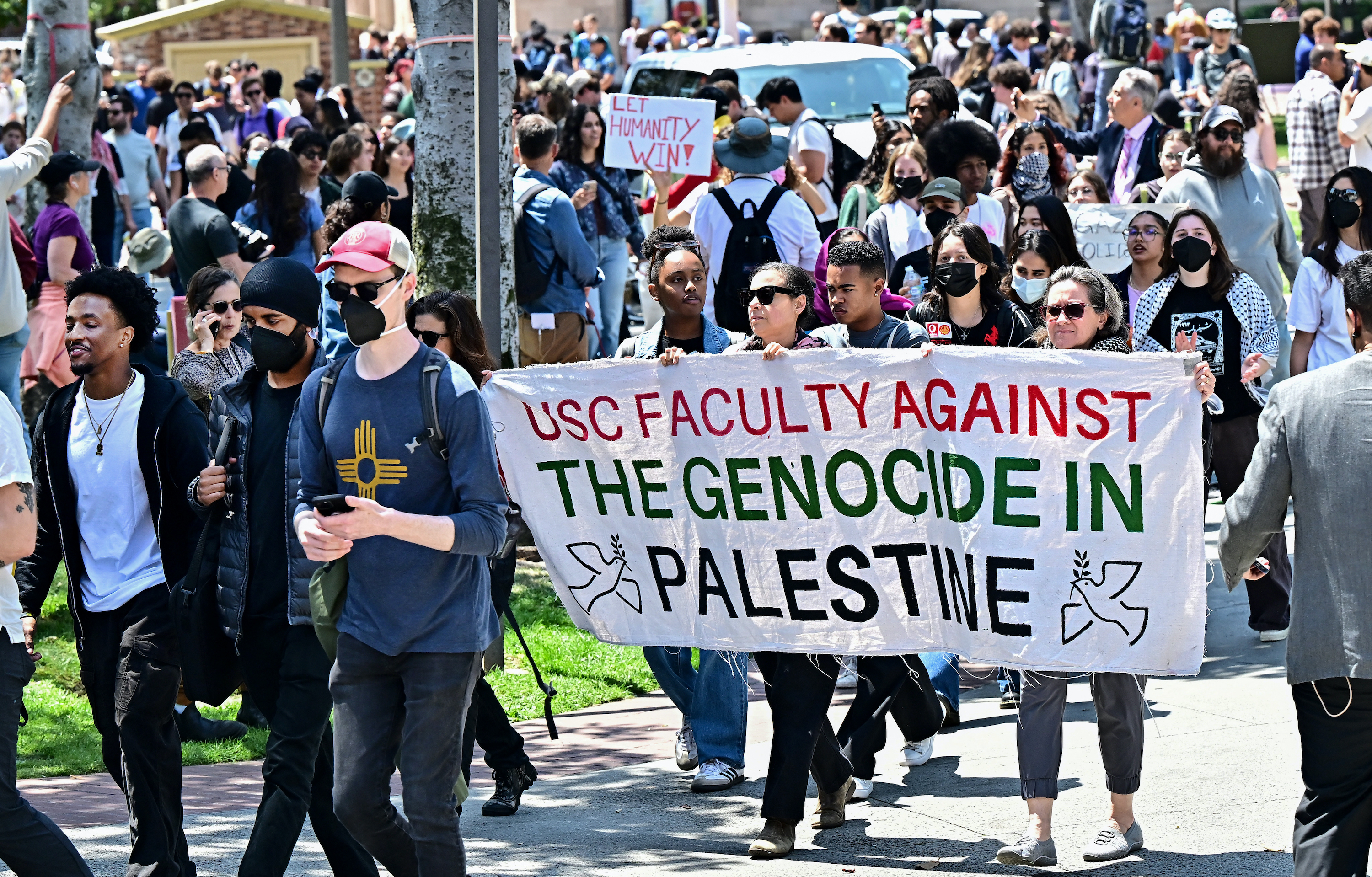

The University of Southern California (USC) faces a potential revenue loss of hundreds of millions of dollars in federal funds and staff layoffs amid a “volatile external environment,” Interim President Beong-Soo Kim said in a July 14 letter addressed to faculty members.
Since President Donald Trump began his term in office in January, his administration has sought to implement policy changes in the nation’s educational institutions, opposing males’ participation in women’s sports; anti-Semitism on campus; and diversity, equity, and inclusion (DEI) programs. Federal funding is now contingent upon institutions aligning with the administration’s policies.
“Like our peer institutions,“ Kim wrote in his letter, ”we are experiencing significant shifts in federal support for our research, hospitals, and student financial aid, along with potential decreases in international student enrollment.”
The potential annual revenue loss for USC in federally sponsored research funding alone could be $300 million or more, he said, adding that the institution ended its 2025 fiscal year with an operating deficit of more than $200 million, higher than last year’s $158 million deficit.
To address these challenges, USC has taken steps that include a freeze on hiring and salary increases, staff layoffs, reductions in discretionary spending, selling unused properties, consolidating duplicative functions, and “adjusting compensation for the most highly compensated members of [USC’s] community,” Kim wrote.
Kim pointed out that it was not feasible to increase tuition, draw more from USC’s endowment, or take on additional debt.
Based in Los Angeles, USC employs about 4,000 instructional staff and about 17,000 non-instructional staff, according to numbers from Univstats.
The number of full- and part-time undergraduate students enrolled in degree or certificate programs comes to about 20,817, based on government data.
In fiscal year 2024, the university received roughly $1.35 billion in federal funding, including $569 million for federally funded research and about $650 million in student financial assistance, which included direct student loans, Pell Grants, and work-study programs, according to the university’s website.
So far, USC has not received any termination or stop-work notices on federal contracts or grants, except for some projects involving the State Department and the Department of Transportation.
On May 2, Transportation Secretary Sean Duffy defunded about $9 million earmarked for USC research on how “the transportation system creates and perpetuates inequities.”
The Department of Education sent a letter on March 10 to USC warning the institution of potential enforcement actions if it does not fulfill its obligations under Title VI of the Civil Rights Act to protect Jewish students on campus. USC was among 60 universities that the administration claimed failed to deal properly with on-campus anti-Semitism.
After Trump took office, the university created a webpage detailing the different executive orders and presidential memos issued by the president that have a direct impact on the institution’s functioning.
The orders include implementing measures on combating anti-Semitism, keeping men out of women’s sports, carrying out cost-cutting initiatives recommended by the Department of Government Efficiency, and requiring institutions of higher education to report significant sources of foreign funding.
Several universities have been affected by the orders, with the administration withholding federal funds and threatening other severe consequences for non-compliance.
On July 16, the education department launched an investigation into the University of Michigan over concerns about undisclosed or improperly disclosed foreign funding.
Earlier, on July 10, an investigation was opened into whether George Mason University engaged in unlawful DEI hiring practices.
Harvard University has also been at loggerheads with the Trump administration over several issues, including anti-Semitism, non-disclosure of foreign funding, and DEI initiatives.
On July 9, the administration warned Harvard that it may no longer meet accreditation standards because of its management’s mishandling of anti-Semitism issues.