LOS ANGELES—Arson and wildland fire experts in the federal trial accusing a 29-year-old Uber driver of starting a blaze that would lead, days later, to the deadly Palisades Fire, on Monday and Tuesday told a jury that the government’s case was corrupted by bias, shoddy investigative work, and a lack of forensic evidence establishing arson as the cause of the fire.
Testifying for the defense, Edward Nordskog, an arson investigator and retired L.A. County sheriff’s detective, said he reviewed more than 50,000 pieces of evidence in the case and came to the conclusion that none point to arson.
“There is no evidence this was a serious attempt to start a fire or even intentional. There’s more evidence to suggest it’s something else, fireworks in this case,” Nordskog said in U.S. District Court.
Witnesses for the prosecution, including experts in arson, explosions and fireworks, earlier in the trial disputed that idea, explaining how their analysis of video surveillance footage, witness testimony, topography, sound profiles and weather conditions led them to eliminate fireworks as a potential cause.
But Nordskog and Tom Guzman, a wildland fire investigation expert and former firefighter with the U.S. Forest Service, on Monday told the jury their independent review of the same evidence led them to conclude fireworks were the most likely culprit—and that a lack of due diligence, biased work, or pressure to solve the high-profile case had led federal investigators astray.
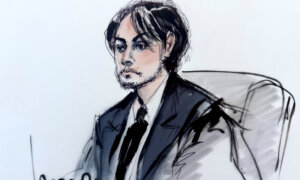
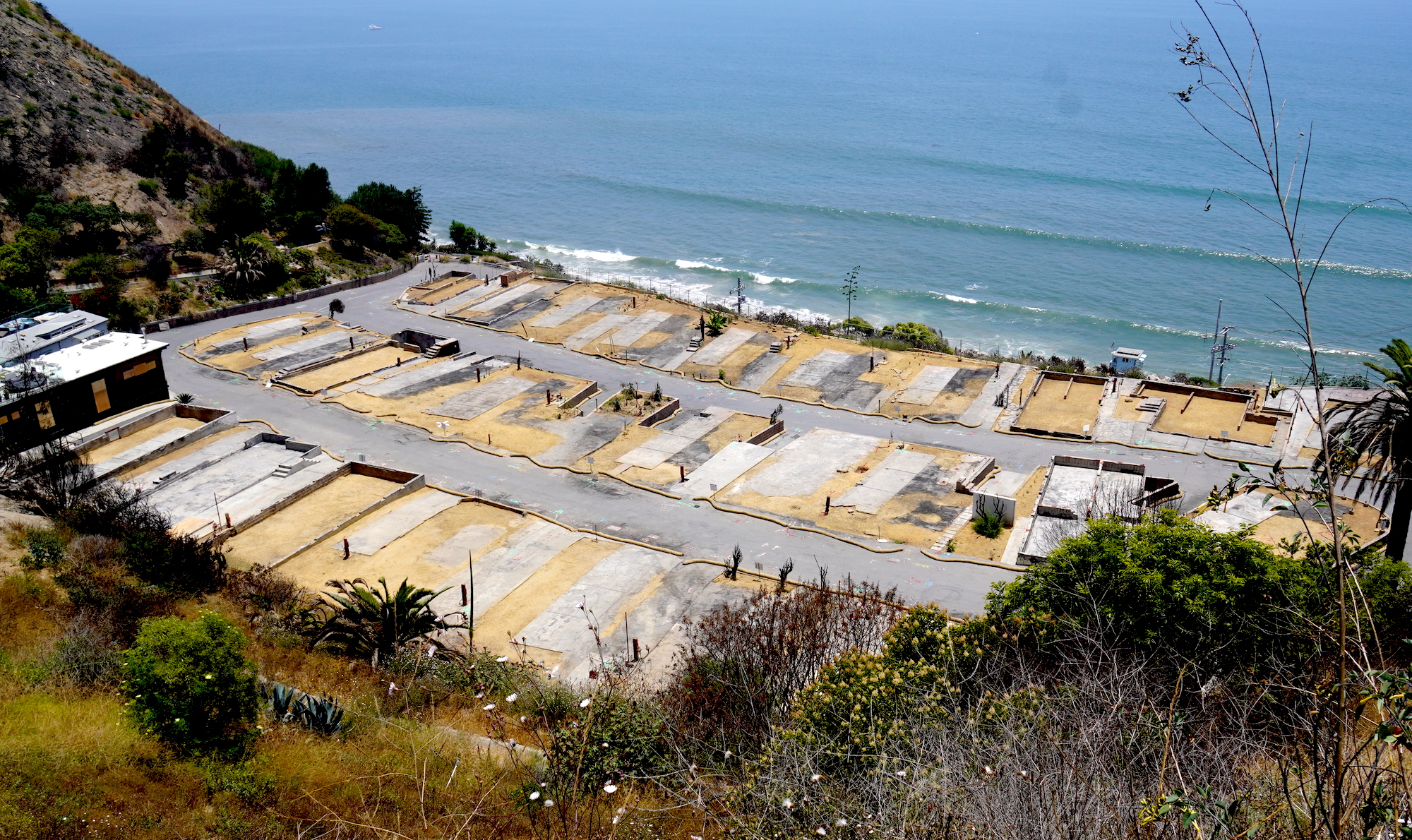
Prosecutors have argued Jonathan Rinderknecht, jilted and ruminating on New Year’s Eve 2024, sought “revenge on society” when he allegedly ignited the Lachman Fire, a small blaze in the Santa Monica Mountains that would resurface on Jan. 7 as the deadly inferno that killed 12 people and leveled more than 6,000 homes in the wealthy coastal enclave of the Pacific Palisades.
The so-called “holdover fire,” federal investigators say, smoldered underground for seven days before reemerging through a single shrub—where historic Santa Ana winds whipped it into one of the most destructive fires in U.S. history.
Defense experts argued the government lacked evidentiary basis for this conclusion.
“Looking at the way the scientific process was followed or not followed. I did not see enough evidence to give me the confidence this was a holdover,” Guzman said.
Both witnesses suggested the fact that investigators with the U.S. Bureau of Alcohol, Tobacco, Firearms and Explosives (ATF) didn’t arrive on the scene until 13 days after the Lachman Fire started meant potentially exculpatory evidence would likely have been eliminated.
“If the scene is so destroyed by firefighters or they can’t find it, there’s a case killer,” Nordskog said. A good investigator may be able to overcome such circumstances, he added, “but this was an extraordinary case where a major catastrophic fire burned over the scene where whatever evidence might have been there is gone.”
If a scene is disturbed and investigators lose evidence, Guzman argued, they can’t analyze it, test or eliminate hypotheses, or otherwise follow the scientific method. “All the way down the line it completely disrupts the ability to support your conclusion.”
Normally, he added, a wildland fire investigator will move to protect a fire scene within a few hours.
The fact that the fire scene remained open to the public and was disrupted by hurricane force winds, fire suppression, and a subsequent fire before investigators arrived, Guzman said, was “the worst-case scenario.”
By challenging the foundations of the government’s case—its technical fire investigation, and its determinations about Rinderknecht’s behavior—both witnesses bolstered the defense’s claims that prosecutors have been heavy on motive but offered no evidence to prove their claims beyond a reasonable doubt.
“You can have all the motive in the world, but if you can’t actually do the fire scene correctly or don’t have the ability to because of conditions, then you don’t have a case,” Nordskog said.
‘Background Noise’
In particular, Nordskog raised concerns with testimony from one of the government’s star witnesses, an arson behavioral analyst who testified that Rinderknecht’s behavior before, during, and after the fire constituted evidence of his revenge motive.
Dr. Kevin Kelm, a retired supervisory special agent with ATF, now in private practice, who specializes in behavioral analysis and criminal profiling related to arson, testified on June 18 that Rinderknecht was motivated by an “expressive,” or emotionally driven, and opportunistic desire for revenge on society at large.
While revenge is perhaps the most common motive for arson, Nordskog said, “expressive revenge”—an FBI motive typology Kelm used in his analysis of Rinderknecht—is too broad to be useful.
“It’s emotionally based and that’s just guessing. The profiler has no ability to come to that conclusion. It’s a classification I’ve seen used when they just don’t know why someone set a fire. ... That way they don’t have to explain it any further and they’re never wrong.”
Kelm had testified that Rinderknecht’s behavior in the months leading up to the fire, including in fraught interpersonal relationships and thousands of increasingly frustrated interactions with the artificial intelligence chatbot, ChatGPT, offers evidence of an escalating mental instability that drove him to commit arson.
Digital records uncovered in the investigation reveal that Rinderknecht was fixated on a tableau pitting the world’s rich and powerful against the rest of society and the environment, and related feelings of loneliness and helplessness, as well as a fascination with vigilantism.
Uber passengers who rode with him around the time of the fire testified about vitriolic, threatening rants and erratic behavior.
Steve Haney, his attorney, has argued that none of this makes him an arsonist.
Nordskog on Monday said the government’s behavioral analysis of the defendant amounted to vilifying a “normal human action,” referring to Rinderknecht’s rants about wealth disparity.
Nordskog suggested the prosecution’s case and investigators’ reporting was corrupted by confirmation bias that allowed them to get ahead of forensic evidence.
Cross-examining the witness, Assistant U.S. Attorney Danbee Kim asked, “isn’t only focusing on the crime scene and not on surrounding circumstances also confirmation bias?”