
Los Angeles firefighters will beef up staff during future dangerous weather warnings and pre-deploy engines to prepare for catastrophic fires, after also removing nearly 20 leadership officials following January’s deadly Palisades Fire.
Despite being hampered by inadequate communication, staff shortages, and a poor safety alert system, firefighters reached victims within minutes and requested water-dropping helicopters, according to an after-action report published Oct. 8 by the Los Angeles City Fire Department (LAFD).
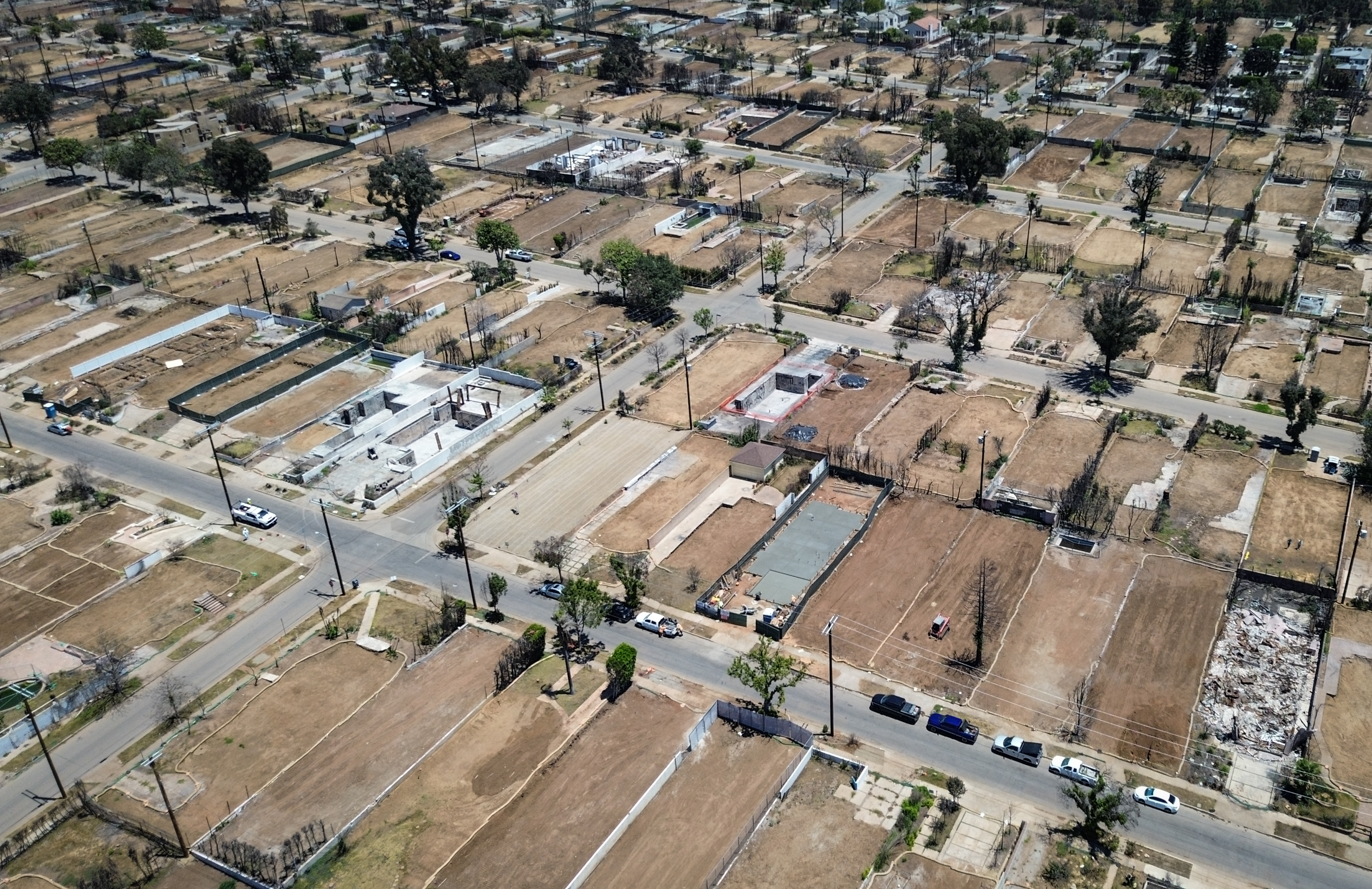
Twelve people died in the catastrophic blaze that started Jan. 7, destroying more than 6,800 homes and buildings in Pacific Palisades and Malibu.
The review issued by officials details actions taken during the first three days of the fire, and improvements made to the department since the incident.
“Since January, LAFD has made key improvements to protect Angelenos and the City is committed to do everything possible to bring families back home,” Mayor Karen Bass said about the report.
The goal of the After-Action Report is to provide greater clarity and accountability for the events surrounding the Palisades Fire, the department explained in a press release.
“We hope that it strengthens public confidence in the Los Angeles Fire Department’s readiness to respond to any future wildfires,” the LAFD stated.
The department has implemented several new processes since the fires, including strengthening coordination with other agencies, upgrading communications technology, enhancing wildfire training and evacuation drills, and improving other protocols, according to LAFD.
Authorities announced on Oct. 8 that they believe Uber driver Jonathan Rinderknecht, 29, of Melbourne, Florida, deliberately started a New Year’s Day fire that smoldered and erupted a week later, causing the deadly Palisades Fire.
Rinderknecht was arrested after a nine-month investigation into the fire’s origin. He faces a maximum sentence of 20 years in federal prison.
LAFD leadership interviewed 100 officers, units, and staff after the fire. They also reviewed documents, analyzed radio communications, photos, and videos. They also gathered eyewitness accounts and collected other evidence during the review.
The fire was ignited in the Santa Monica Mountains during extreme weather conditions. Santa Ana Winds whipped through the mountains and the region, reaching as high as 98 miles per hour on Saddle Peak.
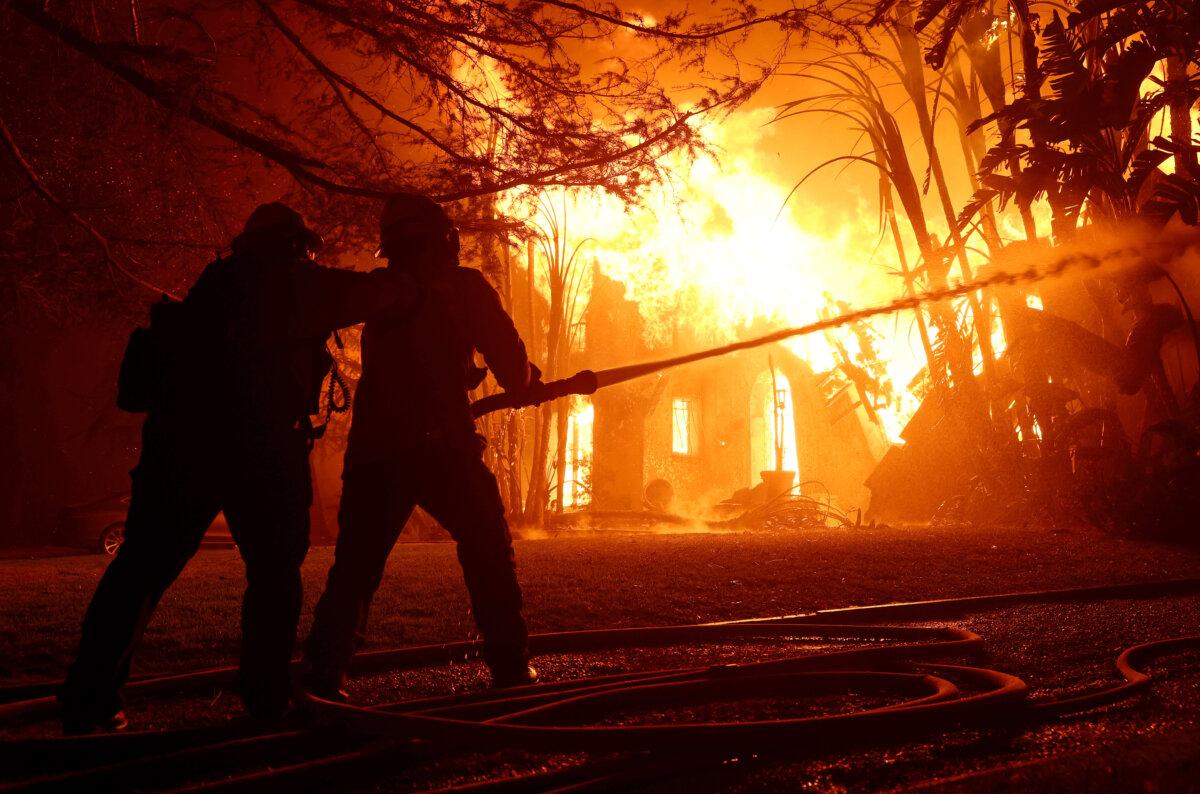
Los Angeles County firefighters spray water on a burning home as the Eaton Fire moves through the area in Altadena, Calif., on Jan. 8, 2025. (Justin Sullivan/Getty Images)
The fire agency reported details of its response, dealing with hurricane-force offshore winds, steep terrain, low humidity, and “critically dry fuels.” The strong winds blew burning embers up to three miles ahead of the fire, sparking new flames in every direction.
“Responders were faced with the inevitable consequences of a perfect storm: dry vegetation, unrelenting and unusual wind activity, significant ember cast, a landscape packed with combustible vegetation, large vulnerable structures, a diminishing water supply, and a loss of aerial suppression support,” the LAFD stated in the review.
Water supplies dwindled as firefighters worked to contain the blaze, according to LAFD.
“The local water infrastructure was never designed to support firefighting operations at this scale and intensity,” according to the report.
Thousands of breaches in residential supply lines from open pipes also cause water to diminish.
“The system is primarily engineered for residential and commercial use, not to sustain the extraordinary water demands of a large, fast-moving vegetation fire combined with the leaking open residential pipes,” the LAFD stated.
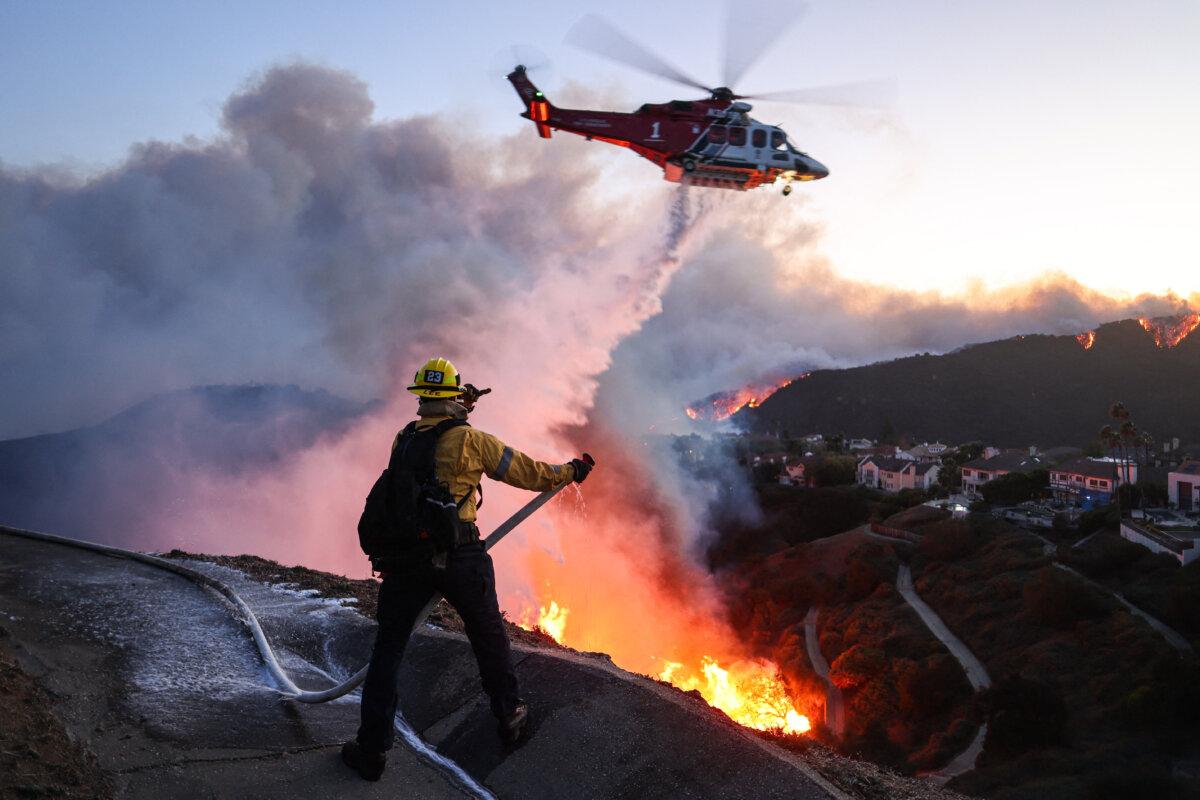
Fire personnel respond to homes destroyed while a helicopter drops water as the Palisades Fire grows in Pacific Palisades, California, on January 7, 2025. (David Swanson/AFP via Getty Images)
The water problems resulted in decreased pressure and availability, according to the agency.
Despite the challenges, fire strike teams, task forces, crews, aircraft, specialized resources, and volunteers worked beyond normal periods without hesitation, they added.
Lives were saved as a result of the efforts, according to the agency. The LAFD estimates that 30,000 residents were safely evacuated, including elderly and vulnerable populations. Many people were also rescued under extremely hazardous conditions.
At about 10 p.m. on the first day of the fire, authorities received a harrowing call from an assisted living center. The facility housed 24 staff members and 40 patients, 14 of whom were disabled and not able to walk on their own. After considering sheltering them in place, the conditions became severe, and officials decided to evacuate the building. Emergency crews were able to get 12 ambulances to help evacuate the patients and transport them to a sister facility.
“By dawn, multiple structures around the facility had burned to the ground,” the LAFD reported. “All 64 lives were saved.”
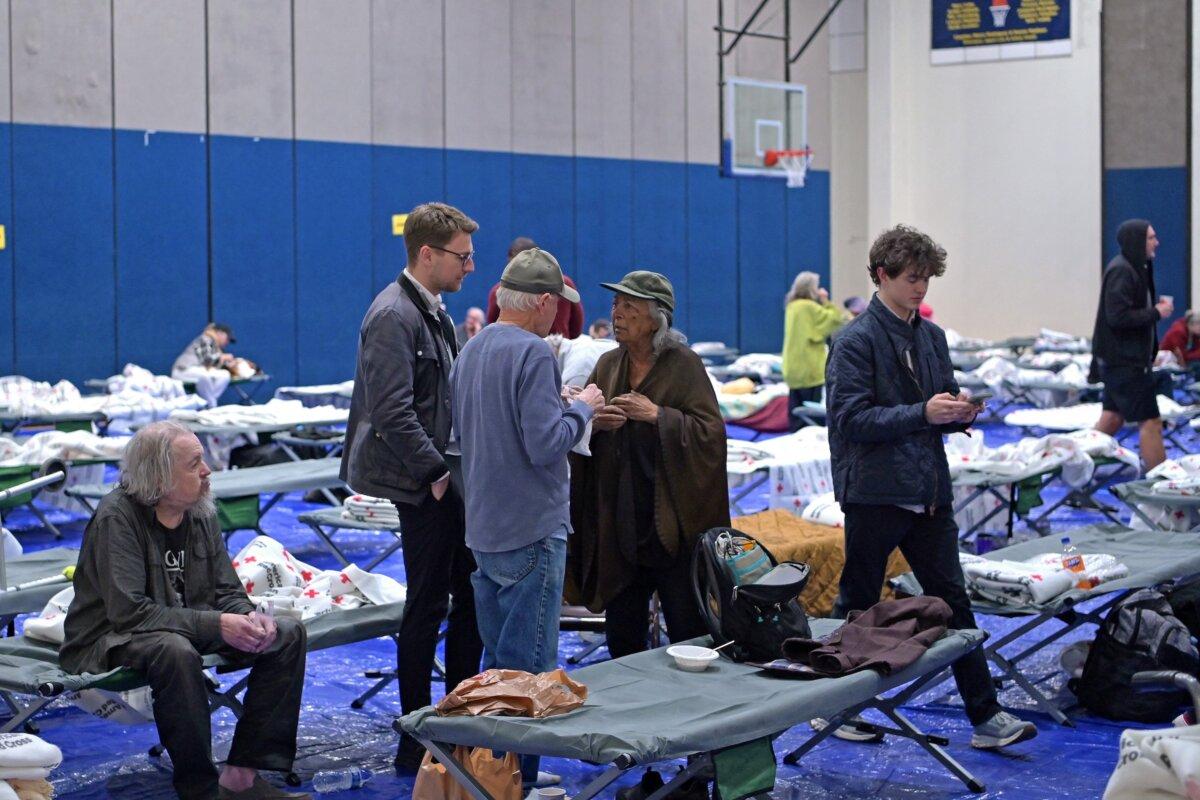
Evacuees from the Palisades fire at an evacuation and shelter center at Westwood Recreation Center in Los Angeles on Jan. 8, 2025. (Agustin Paullier/AFP via Getty Images)
In another case, several hikers were rescued from a hiking trail by the first responders to the scene. Crews were also searching inside homes for people who did not evacuate when they found an elderly person sleeping under a bundle of clothes to keep warm. A firefighter found them and took them to safety.
Crews also successfully removed art, documents, computers, photos, sport memorabilia, antique furniture, and vehicles while multiple homes were on fire around them, according to the report.
They also saved dozens of homes using alternative water supplies, including pulling water from backyard pools as hydrants ran dry.
“Firefighters risked their own lives to hold the line and defend neighborhoods from fire and weather conditions that showed no mercy,” the LAFD stated.
They also saved their own fire station after surrounding homes burned to the ground, recognizing it would need to remain operational to serve fire victims.
Responders were limited by staffing shortages caused by a lack of budget funding by the city, overtime fatigue, and approved absences, which limited available crews and equipment, the LAFD reported.
At one point, aircraft were grounded because of the hurricane-force winds.
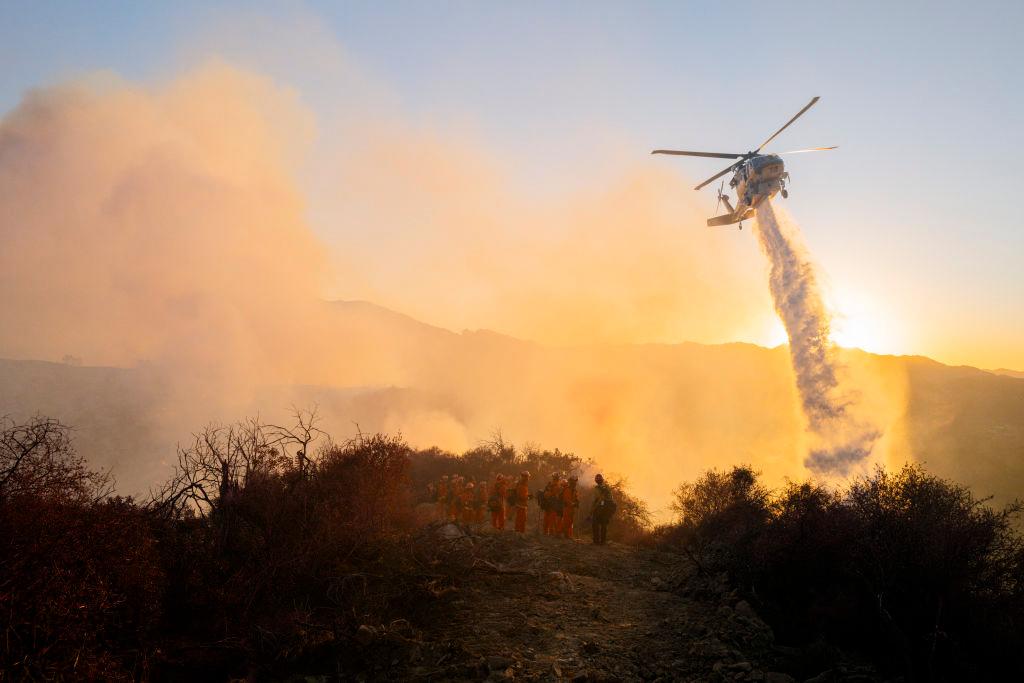
A firefighting helicopter drops water while smoke rises from the growing Palisades fire in Los Angeles on Jan. 11, 2025. (Ali Matin/Middle East Images/AFP via Getty Images)
Homes in the Pacific Palisades were made mostly of wood-frame construction, which is common in Southern California. They featured stucco exteriors, which are known for their fire-resistant properties. Some used stone materials and brickwork exteriors. Roofing materials used were mostly clay or concrete times, which offer excellent resistance to embers.
The homes were vulnerable, however, if they had wooden decks, fences, and balconies, often made of redwood or softwoods, according to the fire agency.
Pacific Palisades is located in a high-fire danger region and has had major fires going all the way back to 1938, according to LAFD records. Most of the fires were wind-driven.
The fire agency reported making several improvements after reviewing the Palisades Fire response, the LAFD stated.
Since January, the LAFD has made 19 leadership changes, including Bass’s decision to terminate Fire Chief Kristin Crowley on Feb. 21. She later appointed Interim Fire chief Ronnie Villanueva, who has more than 41 years of leadership and crisis management experience.
The LAFD also now requires all staff to immediately be recalled and all available apparatuses to be staffed during red flag weather warnings.
They also strengthened coordination with other emergency agencies and upgraded weather-tracking tools, and are improving staff recall systems to alert the community faster.
The LAFD will also receive more hands-on training in wildfire response, evacuation, and protecting homes, plans to run a yearly evacuation drill, and will make sure every high-risk neighborhood has at least two safe ways out, according to the report.
Fire staff is being trained on how to get water when hydrant systems fail, including getting it from pools and reservoirs.
The fire agency has also upgraded its drone system with fire-mapping software and hotspot detection, and has improved its evacuation systems.