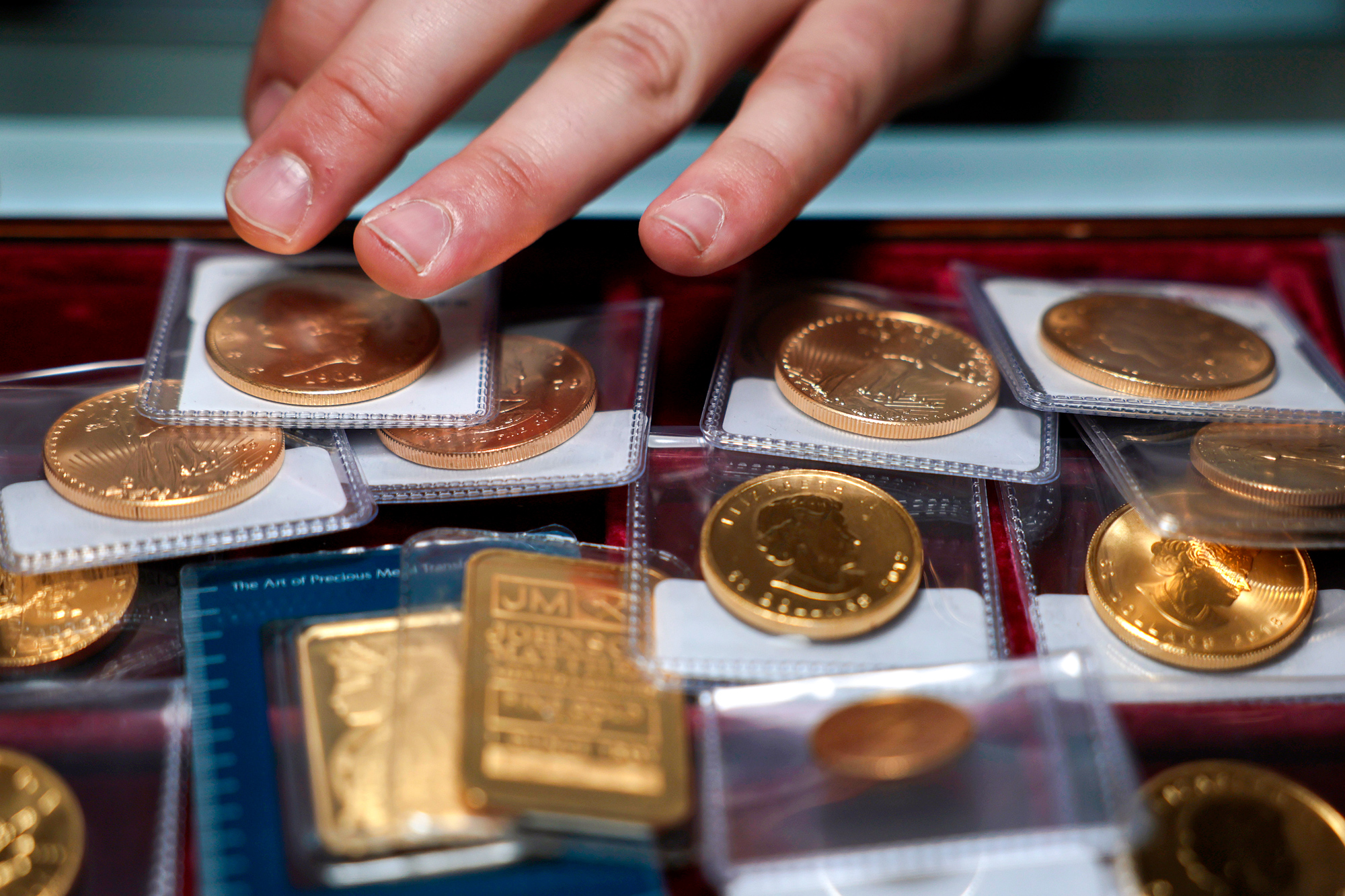

Gold prices are on track for the best annual performance in four decades as prices surpassed $4,400 per ounce to kick off the trading week. Silver joined the rally.
Gold prices increased by $75 per ounce, or 1.7 percent, to $4,462.30 per ounce on Dec. 22—a fresh intraday record—on the COMEX division of the New York Mercantile Exchange.
The yellow metal is coming off a weekly gain of around 2 percent and is up 69 percent year to date. This represents the largest annual increase for the precious metal since 1979.
Silver, the sister commodity to gold, topped $69 for the first time. The white metal climbed $1.58 per ounce, or 2.34 percent, to $69.07 per ounce.
Last week, silver jumped 7 percent and has outpaced gold’s rise this year, soaring 136 percent.
Silver prices have rocketed this year amid persistent supply deficits, intensifying industrial consumption, and robust investment demand.
The latest rally has been fueled by growing optimism that the Federal Reserve will cut interest rates more than once in 2026, following recent inflation and employment data.
In November, the annual inflation rate eased to 2.7 percent, firmly below the market consensus of 3.1 percent. Twelve-month core inflation, which strips out food and energy prices for their volatility, slowed to 2.6 percent—the lowest level since March 2021.
Employment conditions continue to cool, with the unemployment rate rising to 4.6 percent last month, the highest since September 2021.
These developments could be enough to support further rate cuts by the U.S. central bank.
“The Fed will be cheered to see inflation rising more slowly and especially encouraged by the multi-year low in core CPI. The cool November inflation report further bolsters the case for additional rate cuts in 2026,” Bill Adams, chief economist at Comerica Bank, said in a note emailed to The Epoch Times.
Comerica expects the Fed to lower the benchmark federal funds rate—a key policy rate that influences borrowing costs for businesses and consumers—by 75 basis points in 2026.
Investors also anticipate at least two rate reductions next year, according to the CME FedWatch Tool.
By comparison, the Summary of Economic Projections—a quarterly survey of officials’ expectations for policy and the economy—signaled a single rate cut in 2026.
2026 Outlook
Still, lower interest rates are a boon for metals because they impact yields and the U.S. dollar.
A falling-rate climate can reduce the opportunity cost of holding non-yielding bullion. Likewise, a weaker greenback can make it cheaper for foreign investors to purchase dollar-denominated commodities.
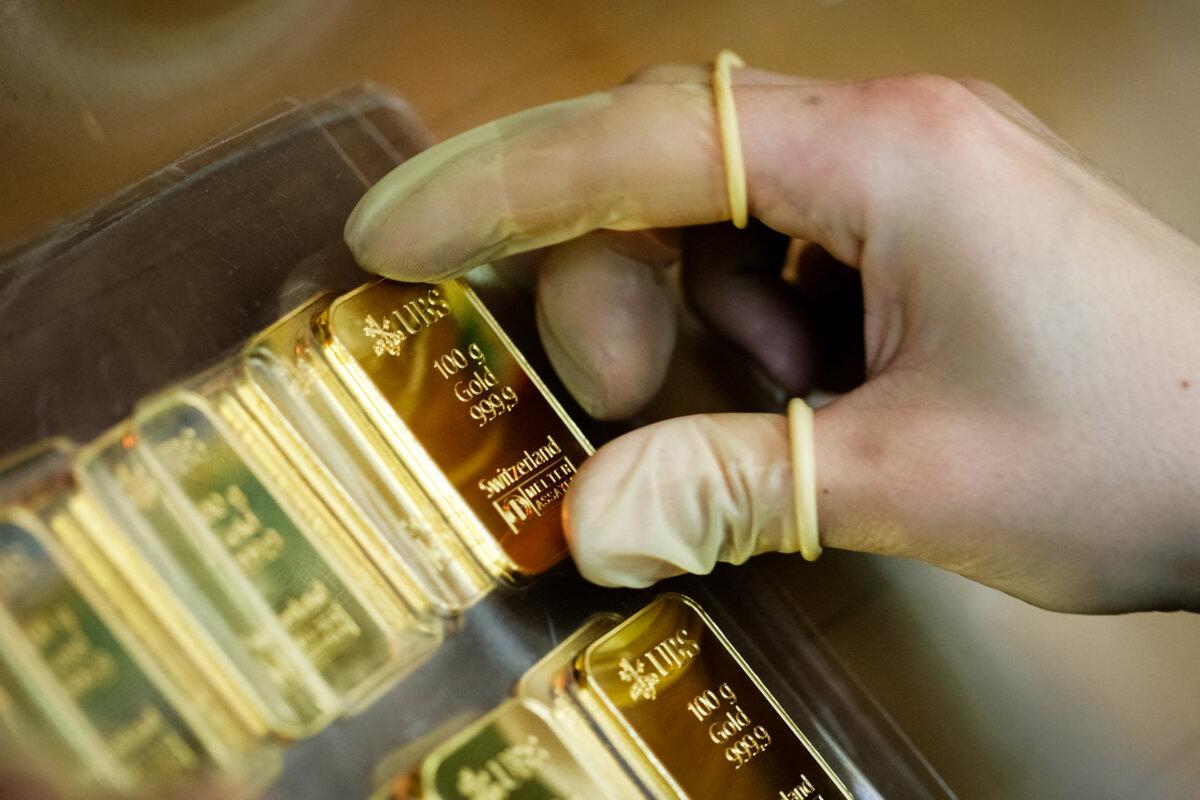
An employee wears gloves while holding a 100g gold bar, engraved with the logo and name of the Swiss bank UBS, at a plant of gold refiner and bar manufacturer Argor-Heraeus SA in Mendrisio, southern Switzerland, on April 6, 2009. (AFP/Sebastian Derungs)
The U.S. dollar index, a gauge of the buck against a weighted basket of currencies, declined 0.35 percent on Dec. 22, adding to its year-to-date loss of almost 9.5 percent—the sharpest annual loss in eight years.
As a result, the outlook for gold remains solid, say ING commodity strategists.
“We remain positive on our gold outlook, with macro tailwinds and fundamentals pointing to further upside next year,” they said in a note on Dec. 18.
“We expect gold prices to reach new record highs in 2026. The downside should be limited, as any weakness will likely attract renewed interest from both retail and institutional buyers.”
In addition, ongoing exchange-traded fund (ETF) inflows point to strong investor engagement, they added. Structural demand from solar PV deployment and battery manufacturing continues to reinforce a constructive outlook through 2026.
JPMorgan Chase also revised its gold price expectations for next year.
The bank forecasts gold rising to $5,000 an ounce by the fourth quarter of 2026, and to $6,000 in the long term.
“While this rally in gold has not, and will not, be linear, we believe the trends driving this rebasing higher in gold prices are not exhausted,” Natasha Kaneva, head of Global Commodities Strategy at JPMorgan, said in a Dec. 18 note.
“The long-term trend of official reserve and investor diversification into gold has further to run.”
Red Wave
While copper prices were little changed at the start of the trading week, the industrial metal has performed well over the past 12 months.
Copper prices were flat at $5.50 per pound. However, they rose almost 2 percent last week and are up 37 percent this year.
Requests to withdraw red metal from London Metal Exchange (LME) warehouses have contributed to concerns about an international supply shortage. This has been driven by copper’s recent addition to the U.S. list of critical minerals.
Additionally, there are expectations that the White House could impose new tariffs on refined copper imports.
“The potential for new tariffs on imports of refined copper, combined with production disruptions, and surging demand by power grids, data centers, and electric vehicles, has helped U.S. copper prices climb to multi-month highs,” Adam Turnquist, chief technical strategist at LPL Financial, said in a note emailed to The Epoch Times.
“Copper trading on the LME, which could face an even tighter supply backdrop if new U.S. tariffs are added, has already broken out to record highs this month.”
Other industrial metals have been among the top-performing assets this year.
Platinum prices have soared by more than 132 percent to $2,115 per ounce, while palladium has advanced 104 percent to above $1,850 per ounce.