
Wholesale used-vehicle prices fell in September from a year earlier for the first time since early 2025, as higher fuel costs and interest rates weighed on the market.
The Manheim Used Vehicle Value Index, which measures the prices car dealerships pay for used cars at auctions, fell to 205.9 in September, Cox Automotive said on Tuesday.
That was down 0.6 percent from a year earlier and 1.1 percent from August, after adjusting for differences in vehicle mix, mileage, and seasonality.
On an unadjusted basis, wholesale prices fell 1.2 percent from September 2025 and 1.3 percent from August, as depreciation accelerated through the third quarter.
The September decline was a reversal from the first half of the year, when wholesale used-vehicle values appreciated more than usual.
As recently as August, the Manheim index remained 0.4 percent above its year-earlier level.
A separate measure, published on Monday by Black Book, pointed to an even steeper decline in used-vehicle values.
Black Book’s seasonally adjusted Used Vehicle Retention Index fell 3.1 percent in September to 139.7, from 144.3 in August.
The index was also 3.3 percent below its September 2025 level of 144.4.
Unlike the Manheim index, Black Book’s measure tracks the wholesale value of two- to six-year-old used vehicles as a percentage of their original manufacturer’s suggested retail price.
The value is weighted by vehicle registration volume and adjusted for age, mileage, and seasonality.
“The index declined again in September, and the size of the decline was more noticeable than what we saw earlier in the summer,” Laura Wehunt, Black Book’s vice president of data and analytics, said in a statement.
The firm expects depreciation to continue during the fourth quarter as seasonal pressures and manufacturer incentives weigh on used-vehicle values.
Cox similarly became more cautious about the remainder of the year.
The company now expects the Manheim index to finish 2026 just 0.2 percent higher than a year earlier, sharply lower than the 2 percent increase it forecast in July.
The revised projection would also fall below the index’s long-term average annual gain of 2.3 percent.
“We are in the weakest season for wholesale valuations, and as September closed, depreciation was steeper than we typically see this time of year,” Jeremy Robb, Cox Automotive’s chief economist, said in a statement.
“The first half of the year actually showed more appreciation than usual, even in the face of higher fuel prices,” he added.
“But with the conflict in the Middle East ongoing, diesel prices at record highs, and interest rates climbing rapidly, increasingly worrying both businesses and consumers, wholesale prices have felt the sting.”
High Fuel Costs Reshape Demand
Both reports noted that demand shifted toward electric vehicles and smaller, more fuel-efficient models, while large trucks and SUVs generally performed worse as buyers became more sensitive to fuel expenses.
Diesel-powered vehicles accounted for just over 3 percent of wholesale inventory, but their days’ supply rose to 39 days, 27 percent higher than a year earlier, according to Cox.
Electric vehicles moved in the opposite direction.
Wholesale EV sales through Manheim increased 22 percent from the second quarter and 45 percent from a year earlier.
EVs accounted for a record 4.9 percent of Manheim transactions during the third quarter, up from 3.9 percent in the second quarter.
Used retail EV sales also reached a record of about 124,000 vehicles during the quarter, up 11.4 percent from a year earlier, although they still represented only about 2.8 percent of overall used retail sales.
Black Book’s monthly data showed a similar pattern of weakness among larger vehicles.
Full-size pickups, full-size crossovers and SUVs were among the segments recording some of the largest declines in September.
Sporty cars were the only segment to gain value from August, while prestige luxury and near-luxury cars also held up better than the broader market, Black Book said.
“As we move through the fourth quarter, we expect depreciation to continue, especially as seasonal pressure and manufacturer incentives weigh on used vehicle values,” Wehunt said.
Retail Prices Remain Elevated
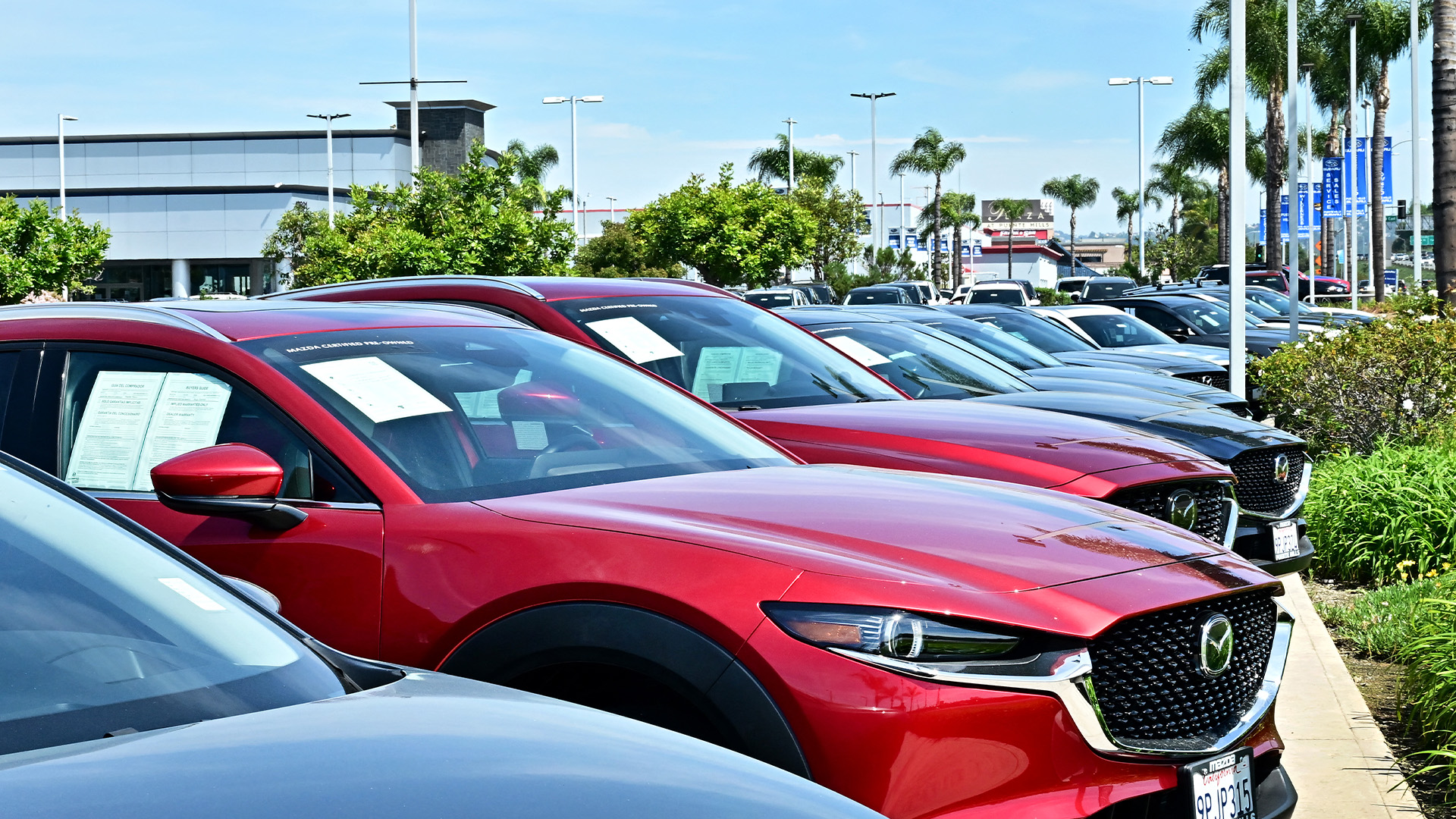
The decline in wholesale prices has not yet translated into significantly cheaper vehicles on dealer lots.
In August, the average used-vehicle listing price rose to $27,239. That was 7 percent higher than a year earlier and the highest monthly level since December 2022, according to Cox.
Inventory stood at about 2.13 million vehicles, with 44 days of supply.
Affordable vehicles remained especially scarce.
Used vehicles priced below $15,000 had only 29 days of supply in August, while inventory in that price range was down nearly 26 percent from a year earlier.
Borrowing costs added to the affordability challenge.
According to vehicle sales platform Edmunds, the average interest rate on financed used vehicles was 10.6 percent in the third quarter.
The average monthly payment reached $582, up from $566 a year earlier, while the average amount financed climbed above $30,700, Edmunds said.
A record 6.5 percent of used-car buyers took on monthly payments of $1,000 or more.
Despite the weaker price outlook, Cox slightly raised its forecast for retail used-vehicle sales to 20.5 million, from 20.4 million.