
The U.S. government is to become a shareholder in xLight, an American startup developing free-electron lasers.
The Department of Commerce said on Dec. 1 that it has signed a non-binding preliminary letter of intent to provide up to $150 million in federal incentives to xLight through the CHIPS and Science Act, with the government taking an equity stake in the company in return.
The department said the potential incentives would support xLight, led by former Intel CEO Pat Gelsinger, in developing a free-electron laser prototype that will serve as an alternative light source for extreme ultraviolet lithography. This marks the first CHIPS Act award issued during the Trump administration’s second term, as the government seeks to enhance U.S. leadership in cutting-edge semiconductor manufacturing, it stated.
“For far too long, America ceded the frontier of advanced lithography to others. Under President [Donald] Trump, those days are over,” Secretary of Commerce Howard Lutnick said in a statement. “This partnership would back a technology that can fundamentally rewrite the limits of chipmaking. Best of all, we would be doing it here at home.”
xLight CEO Nicholas Kelez said in a separate statement that the federal incentives would enable the startup to construct its first free-electron laser system at the Albany Nanotech Complex, which is the national semiconductor technology center.
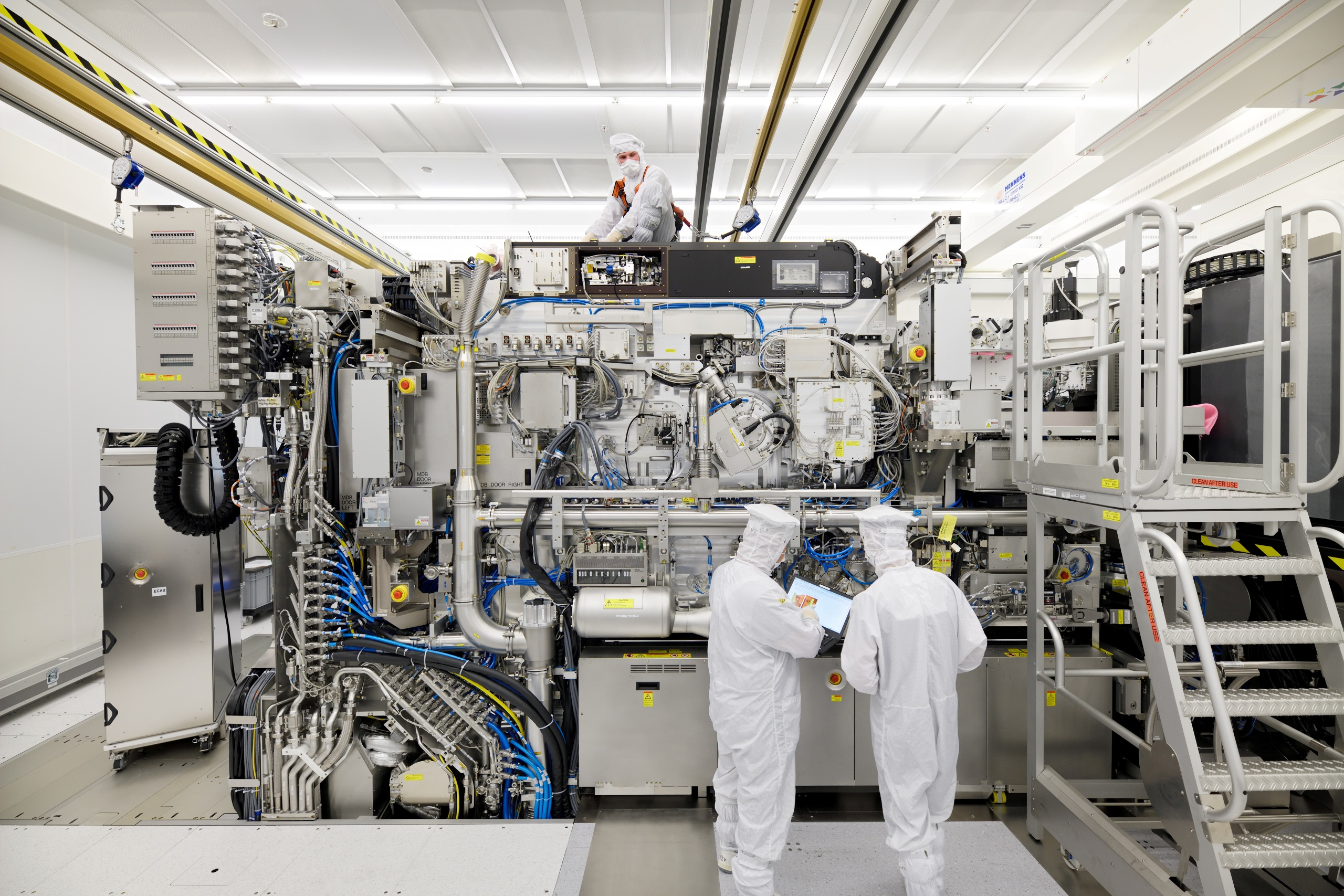
The most critical tool in advanced chip manufacturing is the extreme ultraviolet lithography machine used to print the pattern of chips onto silicon wafers.
The Netherlands-based ASML is currently the only company in the world that makes such a machine, though startups such as Substrate are trying to develop rivals.
xLight has proposed using technology derived from particle accelerators to create a laser that would use far less electricity than current ones, and is working with U.S. national labs to develop a prototype that could be connected to machines made by ASML or others.

Pat Gelsinger, as chief executive officer of Intel Corp., speaks during a panel session of the World Economic Forum in Davos, Switzerland, on May 25, 2022. (Hollie Adams/Bloomberg via Getty Images)
Gelsinger, who retired from Intel last year and became xLight’s executive chairman in March, said the partnership with the U.S. government would enable xLight to revive Moore’s Law in the semiconductor industry.
Moore’s Law posits that the number of transistors per chip on an integrated circuit should double every two years.
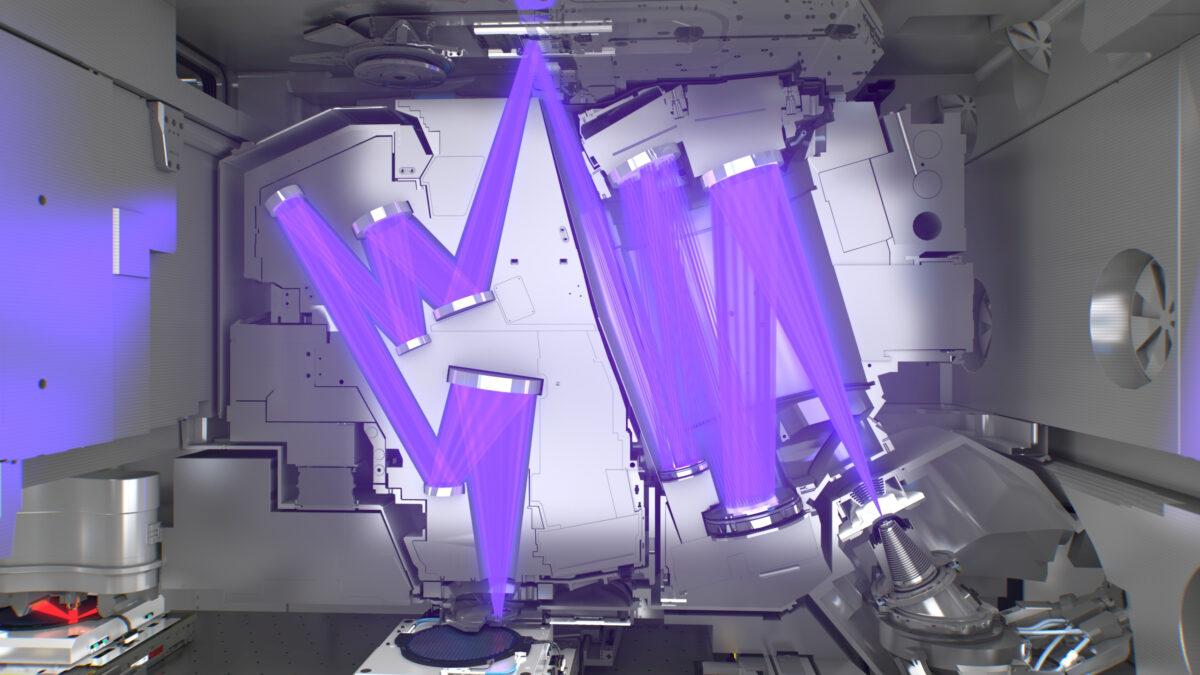
An undated Illustration shows the optical light path inside ASML's semiconductor lithography tool. (ASML/Reuters)
“Reviving Moore’s Law and restoring American leadership in light is a once-in-a-generation opportunity and with the support of the federal government, xLight will turn opportunity into reality,” Gelsinger said.
“Building an energy-efficient EUV [extreme ultraviolet lithography] laser with tenfold improvements over today’s technology will drive the next era of Moore’s Law, accelerating fab productivity, while developing a critical domestic capability.”
Reuters contributed to this report.